
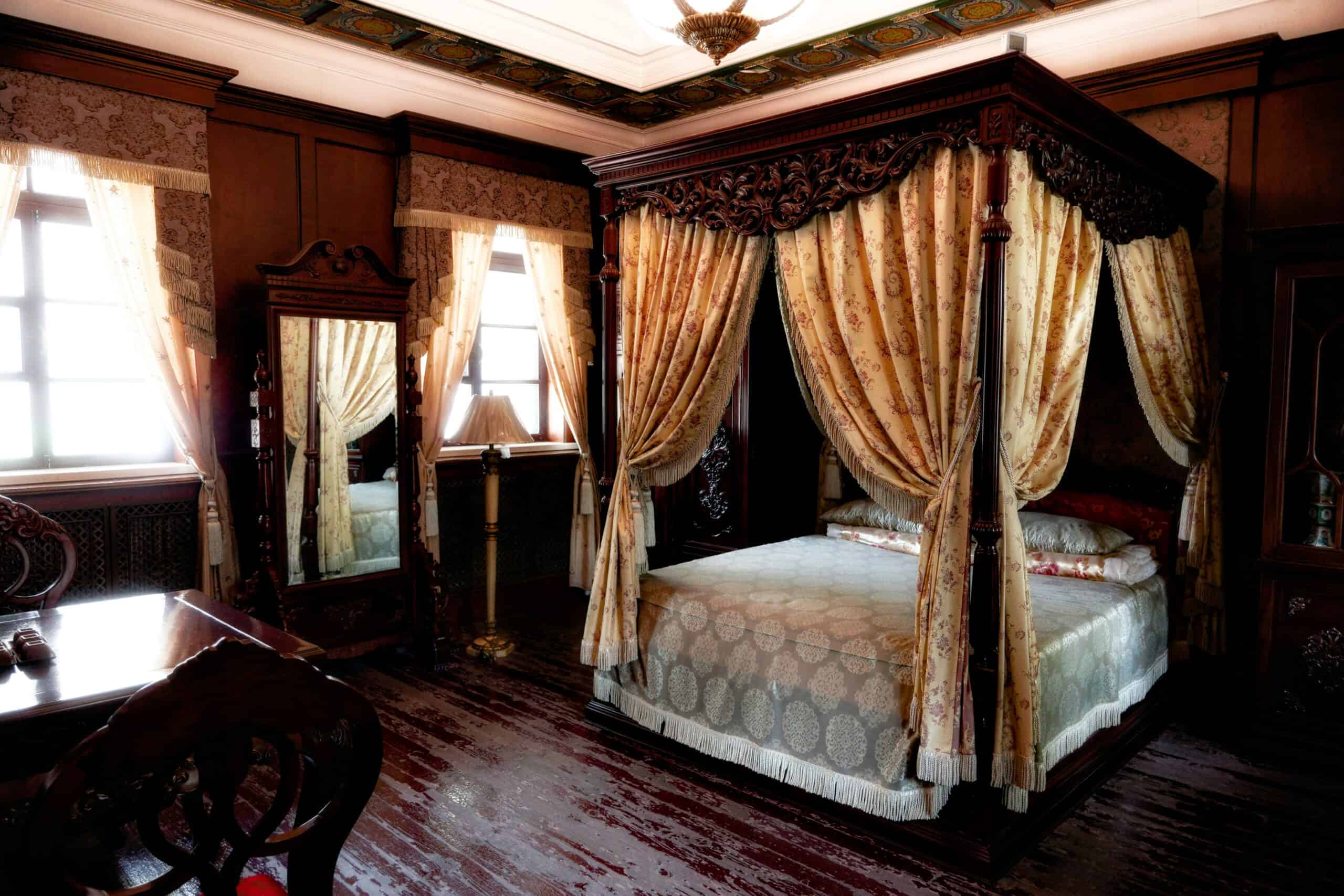
A bed canopy does not raise the temperature of the room, but it does trap a pocket of warmer air around the bed by slowing the airflow across it. Bed canopies feel hotter for the person inside them for that reason, even though a thermometer on the far wall reads the same as before. The distinction matters, because the fix is airflow rather than air conditioning.
Body heat has to go somewhere. In an open room it drifts up and away, and a fabric enclosure interrupts that path before the heat clears.
How much this matters comes down to fabric weight, how far the panels reach, and whether anything is moving air through the space. Our roundup of bed canopies covers the styles, and this covers the heat side of the decision.
The Short Version
The room stays the same temperature, the bed gets warmer. Sheer, open-topped canopies barely register, while heavy closed drapes noticeably raise the pocket of air around you. If you sleep hot, choose light fabric, leave the top open, and keep the panels tied back on warm nights.
Key Points
- Canopies do not add heat, they slow the escape of the heat you produce.
- Fabric weight and weave decide almost everything about the effect.
- An open top vents the warm air that would otherwise pool above you.
- Tied-back panels give you the look without the enclosure.
- A moving air source cancels most of the effect on its own.
| Canopy style | Effect on the bed | Suits |
|---|---|---|
| Sheer, open top | Barely noticeable | Hot sleepers |
| Sheer, closed top | Slightly warmer | Most rooms |
| Lined or velvet drapes | Clearly warmer | Cold bedrooms |
| Mosquito-net style | Warmer than it looks | Insect control first |
| Panels tied back | No measurable change | Look without heat |
What Actually Happens Inside a Canopy
Your body sheds heat into the air immediately around it all night. That warmed air rises, and cooler air moves in underneath to replace it, which is the quiet convection loop that keeps an open bed comfortable.
Fabric panels slow that exchange. The warm air still rises, but it now meets a ceiling of cloth and spreads sideways instead of dispersing into the room.
Humidity follows the same path. Moisture from breathing and sweating lingers in the enclosed volume, and damp warm air feels considerably hotter than dry warm air at the same reading.
That perception gap is why people describe canopies as stuffy rather than hot. The number barely moves and the sensation does.
Fabric Weight Decides Most of It
A loose voile or cotton gauze lets air pass through the weave itself, so the pocket vents almost as fast as it forms. These are the canopies that hot sleepers get away with.
Lined curtains, velvet and blackout fabrics do the opposite. They are built to stop air and light, which is exactly what you do not want around a bed on a warm night.
Mosquito netting sits in an awkward middle. The mesh looks airy, but a fine enough weave to stop insects also slows air more than people expect, especially when it reaches the floor on all sides.
If the canopy is there for warmth in a cold bedroom, heavier fabric is the point rather than the problem. Pair it with the rest of a seasonal bedding layer plan and it works with you.
The Top Panel Is the Part That Matters
Warm air rises, so the roof of the canopy is where it collects. An open frame with panels only at the corners lets that column escape and behaves almost like an open bed.
A solid fabric top turns the same frame into a low tent. This single detail separates canopies that feel fine from canopies people quietly take down after a month.
Height helps as well. A tall four-poster leaves a deep volume of air above you, so the warm layer sits well clear of your face, while a low or bed-mounted hoop puts it right there.
If you already have a closed-top canopy, removing or gathering the top panel is the cheapest change available and usually enough.
How to Keep a Canopy and Still Sleep Cool
Move some air. A quiet fan aimed under the panels rather than at your face restores the exchange the fabric interrupted, and our roundup of quiet fans for sleeping covers the units that do it without noise.
Tie the panels back on warm nights and release them when it turns cold. Treating the canopy as seasonal rather than fixed gets you both outcomes.
Match the bedding to the enclosure. A canopy plus a heavy comforter compounds, so lighter layers or a cooling blanket offsets the pocket rather than adding to it.
Get the room right underneath it all. Our guide to bedroom temperature for sleep sets the baseline the canopy then modifies.
When a Canopy Is Not the Real Problem
Plenty of beds run warm without any fabric above them. If yours felt hot before the canopy went up, the mattress or the bedding is the likelier cause, and our note on why a bed feels hot works through the usual suspects.
Room airflow is another. A bedroom with no cross-ventilation and a closed door traps heat regardless of what is over the bed.
Try one night with the panels fully tied back before blaming the canopy. If the difference is small, the enclosure was not the main factor.
Frame Style Changes the Answer
A full four-poster carries fabric on four sides and a roof, which is the most enclosing arrangement available. It is also the one with the most height above the sleeper, so the warm layer has somewhere to sit.
Ceiling-mounted hoops and crown canopies drape a single panel over the bed. These enclose less, though they funnel air upward into a narrow point that can hold heat right above your head.
Bed-frame canopies with a low rail are the warmest for their size. The fabric sits close, the volume inside is small, and a small volume warms quickly.
Freestanding frames are the easiest to adapt, since panels can be removed one side at a time. Taking off the panel on the side you sleep nearest usually solves the problem without changing the look much.
Recommended Reading
See our guide to keeping a bedroom cool in summer, our roundup of ceiling fans for bedrooms, our roundup of fan and air conditioner combinations, and our roundup of blackout curtains if darkness rather than enclosure is what you are after.
Bed Canopy Heat FAQ
Do bed canopies make a room hotter overall?
No. The room temperature stays where it was, since a canopy adds no heat and does not insulate the walls or windows. What changes is the pocket of air immediately around the bed, which warms because your own body heat escapes more slowly.
Which canopy fabric sleeps coolest?
Loose-weave cotton gauze and sheer voile, because air passes through the cloth itself rather than only around the edges. Anything lined, blackout-backed or velvet will hold heat, which is useful in winter and unpleasant in summer.
Does a mosquito net make a bed hotter?
Slightly, yes, and more than most people expect. A mesh fine enough to stop insects also slows airflow, and nets that reach the floor on every side enclose more than a corner-panel canopy does.
Can I use a fan with a canopy?
Yes, and it is the most effective fix. Aim it low so the air enters under the panels and moves through the space rather than blowing directly at your face all night.
Are canopies a problem for hot sleepers?
Not automatically. A sheer canopy with an open top and panels tied back is close to no canopy at all in terms of airflow. The combination that causes trouble is heavy fabric, a closed top, and panels drawn all the way round.
Do canopies help in a cold bedroom?
They do, and this is the traditional reason four-posters had curtains. A closed canopy holds a warmer layer of air around the bed, which makes a cold room noticeably more comfortable without heating the whole space.
Will a canopy make the room stuffy rather than hot?
That is usually the more accurate description. Trapped humidity from breathing and sweating is what most people are reacting to, and venting the top of the canopy addresses it faster than lowering the thermostat.
