
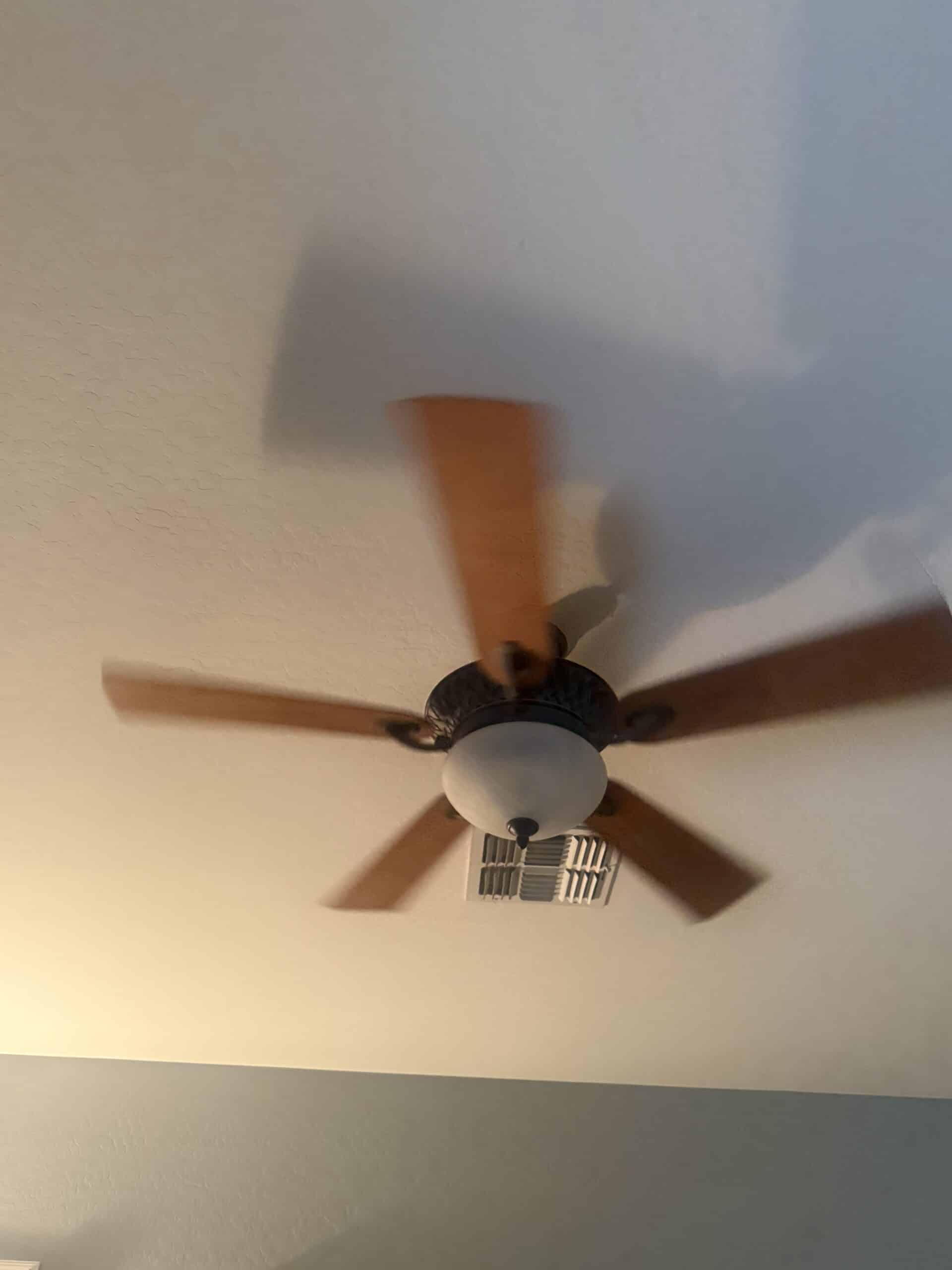
My bedroom ceiling fan runs seven nights a week, year round, and I keep it on medium because high is more noise than I want to sleep through. I live in Arizona, and I will say plainly what a lot of fan guides will not: in summer here, the ceiling fan alone is not enough. It runs alongside the AC and a floor fan, and the three together are what makes the room sleepable.
That is the honest frame for this category. The best ceiling fans for bedrooms are the ones that move usable air quietly enough to sleep under, and they work as one layer of a cooling setup rather than the whole solution. For the temperature side of the question, see our guide to the best bedroom temperature for sleep.
How We Picked These Ceiling Fans
Quick Verdict
For most bedrooms a quiet DC-motor fan is the right default, since noise is what decides whether you can sleep under it. Choose a low-profile flush mount for low ceilings, a larger blade span for bigger rooms, and a reversible model if you want winter use. Quiet operation matters more than maximum airflow in a room you sleep in. A reversible motor is only useful if the setting is right, and our note on ceiling fan direction for sleeping covers which way.
We weighted noise first, because a bedroom fan is different from a living room fan. Airflow you cannot sleep through is not useful, and the highest speed on most fans is the one you will never use at night. DC motors generally run quieter than older AC motors at comparable airflow, which is why they dominate this list.
We then looked at airflow relative to room size and ceiling height, since a fan that is undersized for the room moves air in a small column rather than circulating it. Blade span and mounting type both feed into that.
Reversibility came third, because a fan that can run in both directions earns its place across the whole year rather than only in summer. Every pick is a widely available type, and none of the reasoning depends on claims we cannot support.
Quiet DC-Motor Ceiling Fan
Why It Stands Out
A DC-motor fan is the sensible bedroom default because it moves comparable air at noticeably lower noise than older AC-motor designs. In a room where the whole point is sleeping, that difference decides whether you run the fan at a useful speed or turn it down until it stops doing anything.
Most DC models also offer more speed steps, which matters when the gap between medium and high is the difference between comfortable and too loud.
Worth Knowing
DC fans cost more than basic AC models and usually depend on a remote rather than a wall switch, which is one more thing to lose. It is the pick for quiet operation. For more on this, see our guide to replacement remote controls.
Best for bedrooms where fan noise affects your sleep. Skip it if budget leads and noise does not bother you.
Low-Profile Flush Mount Ceiling Fan
Why It Stands Out
A flush mount, sometimes called a hugger, sits close to the ceiling for rooms where a downrod would put blades at head height. Standard eight-foot bedroom ceilings are exactly the case this exists for.
Keeping blades clear of the walking space matters more in a bedroom than a living room, since you move around in the dark in one.
Worth Knowing
Mounting close to the ceiling reduces airflow somewhat compared with a fan hung lower on a downrod. It is a tradeoff you accept for clearance rather than a free win.
Best for standard or low ceilings. Skip it if you have height to spare and want maximum airflow.
Large-Span Ceiling Fan for Bigger Bedrooms
Why It Stands Out
A wider blade span moves air across a larger footprint, which matters in a primary bedroom where a small fan circulates a column over the bed and leaves the rest of the room still. Matching span to room size is the most common sizing mistake people make.
Larger fans can also move usable air at lower speeds, which helps the noise problem.
Worth Knowing
A large fan in a small room is overkill and can feel like wind rather than circulation. Measure the room before choosing span.
Best for larger bedrooms. Skip it if the room is compact.
Reversible Ceiling Fan for Year-Round Use
Why It Stands Out
A reversible fan runs downward in summer to push air over you, and upward in winter to pull air up and push warm air back down along the walls without a direct draft. That second mode is what turns a seasonal appliance into one that earns its place all year.
Since I run mine year round, this is the feature that matters most to me personally.
Worth Knowing
The reverse switch is sometimes on the motor housing rather than the remote, which means getting up on something to flip it seasonally. Check before buying.
Best for anyone running the fan outside summer. Skip it if you only use a fan in hot months.
Ceiling Fan With Integrated Light
Why It Stands Out
In most bedrooms the ceiling fan occupies the only ceiling fixture point, so a model with an integrated light keeps your overhead lighting rather than forcing you onto lamps alone. Dimmable versions let you drop the room low at night.
For a room where you want dim light before sleep, dimming is worth prioritizing over brightness.
Worth Knowing
Integrated LED panels usually cannot be replaced like a bulb, so the light and the fan share a lifespan. Our guide to bedroom floor lamps covers the alternative.
Best for bedrooms with one ceiling fixture point. Skip it if you light the room with lamps.
Smart Ceiling Fan With App or Voice Control
Why It Stands Out
A smart fan can be scheduled or adjusted without getting out of bed, which sounds like a luxury until it is three in the morning and the room has changed temperature. Scheduling also means the fan is already running when you go to bed.
For a fan that runs nightly, automating the on and off is genuinely useful.
Worth Knowing
Smart models cost more and add a dependency on an app or hub. Confirm it works with whatever ecosystem you already use.
Best for people who want scheduled or voice control. Skip it if you want a simple pull chain or remote.
Bedroom Ceiling Fans at a Glance
| Type | Noise | Best ceiling | Best for |
|---|---|---|---|
| Quiet DC motor | Lowest | Any | Sleeping under it |
| Low-profile flush | Moderate | Low or standard | Head clearance |
| Large span | Moderate | Standard or high | Bigger rooms |
| Reversible | Varies | Any | Year-round use |
| With light | Varies | Any | Single fixture point |
| Smart control | Varies | Any | Scheduling |
What Running One Nightly in Arizona Has Taught Me
Medium Is the Setting That Gets Used
I keep mine on medium almost always. High moves more air, but the noise at that speed is more than I want to sleep through, so in practice the top setting exists and goes unused. That is worth knowing before you shop on airflow numbers, because the highest figure on the box may describe a speed you will never run at night.
It also means the number that actually matters is how much air the fan moves at its middle setting, not its maximum.
It Runs Year Round, Not Just in Summer
Mine is on seven nights a week regardless of season. Air movement is not only about temperature; a still room feels different from one with gentle circulation, and that holds in winter as much as July. This is the argument for a reversible model, since the winter direction gives you the circulation without a draft blowing straight down on you.
In Real Heat It Is One Layer, Not the Answer
This is the part I would want stated honestly. In an Arizona summer, the ceiling fan on its own does not make the room cool enough. I run it with the AC, and I run a floor fan as well. The ceiling fan earns its place by moving the conditioned air around and keeping it over the bed rather than letting it stratify.
If you live somewhere genuinely hot, buy a ceiling fan as part of a cooling setup and plan the rest of it. Our guides to bedroom air conditioners and bedside fans cover the other layers.
What to Look For in a Bedroom Ceiling Fan
Noise at the Speed You Will Actually Use
Fan noise is the deciding factor in a bedroom, and the useful question is how loud it is at medium rather than at maximum. DC motors generally lead here. If a fan is only quiet at a speed that moves no air, it has not solved anything.
Ceiling Height and Mount Type
Standard eight-foot ceilings usually want a flush or low-profile mount to keep blades clear of head height, while higher ceilings benefit from a downrod that brings the fan into the room. Safety clearance comes before airflow optimization.
Blade Span for the Room
Match span to room size rather than buying the largest available. A fan that is too small circulates a narrow column; one that is too large feels like wind. Our guide to bedside fans versus tower fans covers supplementary airflow.
Reversibility and Controls
A reverse function extends usefulness into winter, and remote or smart control means adjusting without getting up. Our guide to cooling sheets covers the bedding layer of the same problem.
Ceiling Fan vs Portable Fan
What Each Does Well
A ceiling fan circulates air through the whole room from above and never takes floor space, which suits continuous overnight running. A portable or floor fan aims air directly where you want it and can be repositioned, which is more effective at cooling a specific person but noisier at close range. Anything hung above the bed interrupts that airflow, and whether a bed canopy traps heat covers how much it matters.
Why You Might Run Both
They are not competing so much as covering different jobs, which is why I run both in summer. The ceiling fan keeps the room’s air moving generally; the floor fan puts airflow where I need it. In a hot climate, layering beats choosing. Our guide to bed cooling systems covers the most direct option.
What Trips People Up
Buying on Maximum Airflow
The top speed is often too loud for sleeping, so the specification that matters is performance at the middle setting.
Ignoring Ceiling Height
A downrod fan on an eight-foot ceiling puts blades uncomfortably close to head height. Flush mounts exist for this reason.
Expecting a Fan to Cool the Room
Fans move air over you rather than lowering the room’s temperature. In real heat, plan a cooling setup rather than expecting the fan to carry it.
Forgetting the Winter Direction
A reversible fan run the wrong way in winter blows cold air straight down. Flip the direction seasonally if the fan supports it.
Recommended Reading
- The best bedroom temperature for sleep
- Bedroom air conditioners
- Bedside fans for cooling
- Cooling sheets for hot sleepers
- Cooling mattress pads
- Blackout curtains for sleep
- floor fans for bedrooms
Related: ceiling fans actually cool a room.
Related: ceiling fan vs floor fan for sleeping.
Frequently Asked Questions
Does a ceiling fan actually cool a bedroom?
It does not lower the room’s air temperature. What it does is move air across your skin, which makes you feel cooler while it is running. In a genuinely hot climate that is not enough on its own, which is why mine runs alongside an air conditioner and a floor fan in summer rather than instead of them.
What speed should you run a bedroom ceiling fan at?
Whatever speed moves useful air without keeping you awake, which for me is medium almost always. High moves more air but is louder than I want to sleep under, so it goes unused. Worth testing at night rather than during the day, since a noise level that seems fine at 6pm can be irritating at 2am.
Can you run a ceiling fan all night, every night?
Yes. Mine runs seven nights a week year round without issue. Ceiling fans draw relatively little power compared with cooling appliances, and continuous overnight running is what they are designed for. The practical limits are noise tolerance and whether a direct draft bothers you.
Should a bedroom ceiling fan run in winter?
It can, and a reversible fan run in the winter direction pulls air upward instead of pushing it down, which circulates warm air without a draft blowing onto you. I run mine year round for that reason. If your fan does not reverse, running it on a low speed still keeps air from going completely still.
What size ceiling fan does a bedroom need?
Match blade span to the room’s size rather than buying the largest that fits. A fan that is undersized circulates a narrow column over the bed and leaves the rest of the room still, while one that is oversized for a small bedroom feels like wind rather than gentle circulation. Measure the room before choosing.
Are DC ceiling fans quieter than AC ones?
Generally yes, and that difference matters more in a bedroom than anywhere else in the house. DC motors typically run quieter at comparable airflow and offer more speed steps, which helps when the gap between usable and too loud is narrow. They cost more and usually rely on a remote rather than a wall switch.
A fan moves air but does not remove heat from a room. For the fuller approach, see how the other cooling adjustments stack together.
