
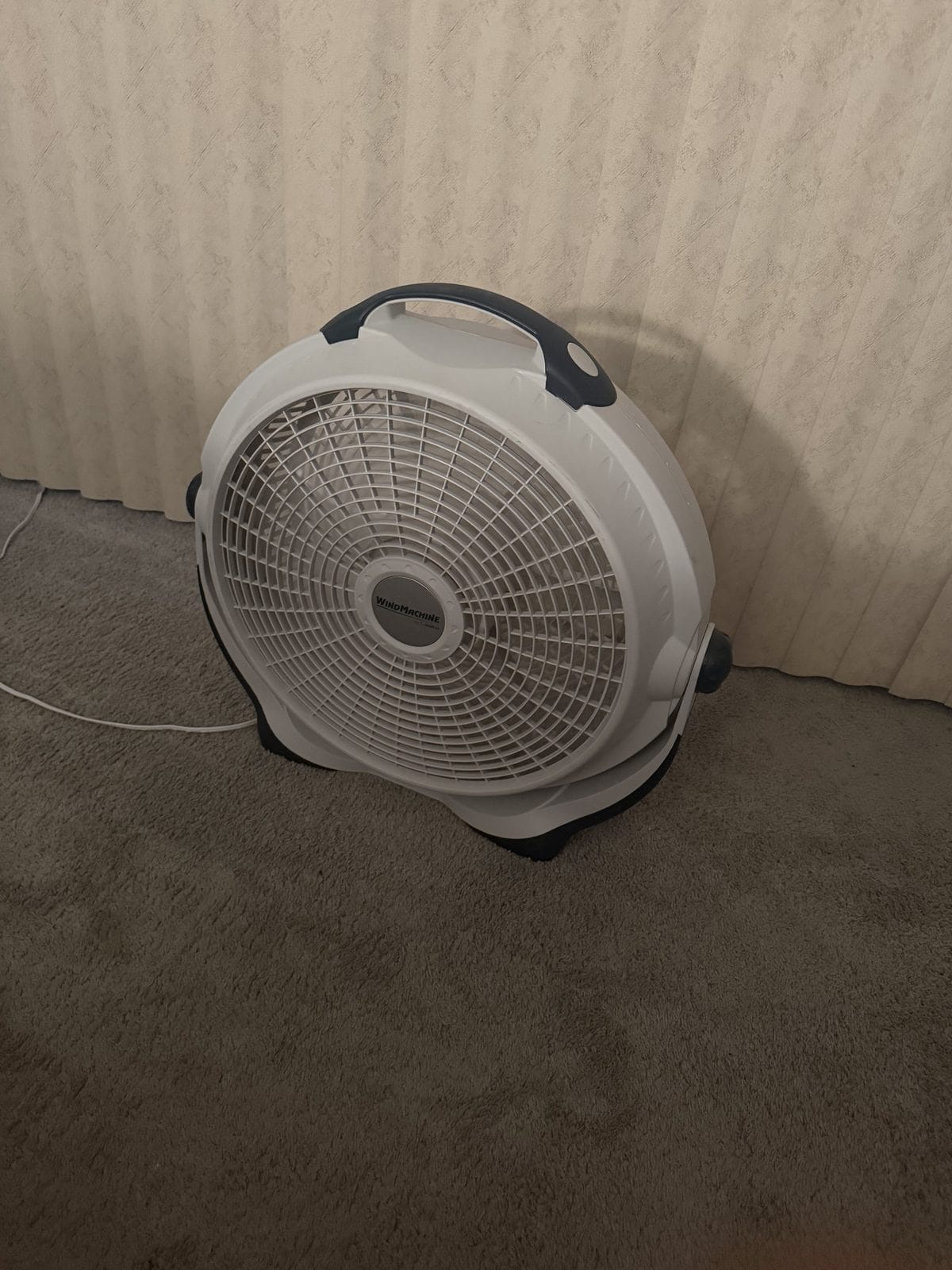
The best bedside fan for most people is the Lasko Wind Machine, a powerful air circulator that moves serious air and makes the steady sound a lot of us sleep better to. The best bedside fans do two jobs at once: they keep you cool through the night and produce consistent white noise that masks other sounds. The right one depends on how much airflow, how much quiet or sound, and how much space you have. Deciding between fan styles? See our bedside fan vs tower fan comparison.
I have slept with a fan every night since I was a child, and I genuinely cannot sleep without one, so this is a category I know from the inside. It is not only the cooling for me; the sound the fan makes helps just as much, because I do not like to sleep in silence. I will share what years with my own fan have taught me and keep the rest of the picks grounded in research.
Quick Verdict
The Lasko Wind Machine is the best overall for powerful cooling and white noise. For a compact, budget bedside option, the Honeywell HT-900 punches above its size. For the quietest air circulation, the Vornado 630 runs smooth and steady.
Why Trust This Guide
I have been a fan sleeper my entire life and use one every single night, so I know firsthand how cooling, sound, and durability play out over years of nightly use. The specific models below are research-based, drawn from independent testing and manufacturer specifications cited in Sources, since I have not used every one.
Key Takeaways
- A bedside fan cools you and adds steady white noise that masks disruptive sounds.
- Air circulators move the most air; tower fans save floor space; box fans are cheapest.
- For sleep, a consistent sound matters as much as raw airflow.
- Pivoting or tilting heads let you aim airflow without pointing it straight at your face.
- Durable motors matter, since a bedside fan runs for hours every night.
Disclosure: RestRight is reader-supported. As an Amazon Associate, we earn from qualifying purchases made through links on this page, at no extra cost to you.
What I Use and Why It Lasts
My own fan is a Lasko Wind Machine, and it has earned its spot on my nightstand floor for years. It is heavy duty in a way cheap fans are not, and in all that time it has never broken down or given me trouble. The head is adjustable, so I can aim the airflow where I want it rather than straight at my face, and it moves a lot of air on the high setting.
The part I value as much as the cooling is the sound. I have used a fan to sleep since childhood and cannot fall asleep in silence, and the Wind Machine produces a consistent, full sound that masks everything else in the house. If you are a fan sleeper for the noise as much as the air, an air circulator like this is the type to look at. For the broader case, see our guide on why people sleep better with a fan.
How a Bedside Fan Helps You Sleep
A fan helps sleep two ways. Moving air cools the skin and helps the slight drop in body temperature that supports falling asleep, which is why a fan feels good on warm nights. Cooler, moving air is one of the simplest ways to make a warm bedroom sleepable.
The second benefit is sound. A fan produces broadband noise that masks sudden sounds like traffic, a partner, or a creaking house, so they are less likely to wake you, which is the same principle behind a white noise machine. For many fan sleepers, including me, that steady sound is the main draw. If you are weighing the two approaches, our white noise machine vs fan comparison breaks it down.
1. Lasko Wind Machine: Best for Powerful Cooling and White Noise
The Lasko Wind Machine is the bedside fan most people should get. It is an air circulator that moves a large volume of air across three speeds, with a pivoting head that aims airflow anywhere from the floor to the ceiling. It is also famously durable and produces the full, steady sound many people sleep to.
Why It Stands Out
It moves more air than typical bedside fans and runs for years without trouble, and the pivoting head lets you direct airflow without aiming it at your face. The consistent sound doubles as effective white noise. For cooling power and sleep sound together, it leads, which matches my own years of nightly use.
Worth Knowing
On high it is loud, which is a feature for white-noise sleepers but much for those who want quiet. It is a floor-style circulator, not a small nightstand fan.
Get the Wind Machine if you want strong airflow and steady sound. Skip it if you want a quiet or compact tabletop fan.
2. Honeywell HT-900 TurboForce: Best Compact and Budget
The Honeywell HT-900 TurboForce is the pick for a small, affordable bedside fan that still moves real air. Despite its compact size, it pushes a focused stream of air, pivots up to 90 degrees, and costs very little. It fits on a nightstand or the floor beside the bed.
Why It Stands Out
It delivers surprisingly strong, directed airflow for its size and price, and the pivoting head aims it precisely. It is compact enough for tight bedside spaces and runs quieter than a full circulator on low. For budget cooling in a small footprint, it is the value pick.
Worth Knowing
The airflow is focused rather than room-filling, so it cools you more than the whole room. The sound is lighter than a large circulator for those who want heavy white noise.
Choose the HT-900 for compact, affordable cooling. Skip it if you want maximum airflow or heavy sound.
3. Vornado 630 Air Circulator: Best Quiet Circulator
The Vornado 630 is the pick for strong airflow with smoother, quieter operation. It uses vortex circulation to move air around the whole room rather than blasting one spot, runs across multiple speeds, and is built to last with a long warranty. It suits sleepers who want air movement without heavy noise.
Why It Stands Out
The vortex design circulates air throughout the room for even cooling, and it runs smoother and quieter than many circulators at comparable airflow. The build quality and long warranty make it a lasting buy. For quiet, whole-room circulation, it stands out.
Worth Knowing
The quieter sound means less white-noise masking for those who want it. It is a premium price for a circulator.
Get the Vornado 630 for quiet, even airflow. Skip it if you specifically want loud white noise or a budget price.
4. Lasko SlumberBreeze 2-in-1: Best Bedside Table Fan With White Noise
The Lasko SlumberBreeze is the pick for a small nightstand fan built specifically for sleep. It is a compact oscillating table fan with built-in white noise sounds, so you get airflow and a sleep soundtrack in one device. It is sized to sit right on the nightstand.
Why It Stands Out
It combines a quiet bedside fan with selectable white noise tones, purpose-built for sleep on a nightstand. The compact, oscillating design spreads gentle air without dominating the room. For a sleep-focused tabletop fan, it is the natural pick.
Worth Knowing
It moves far less air than a full circulator, so it cools lightly rather than strongly. It is best for sound and gentle airflow, not heavy cooling.
Choose the SlumberBreeze for a compact fan-and-sound combo. Skip it if you need strong cooling airflow.
5. Honeywell QuietSet Tower Fan: Best Tower for Bedrooms
The Honeywell QuietSet Tower is the pick for a quiet, space-saving fan that stands beside the bed. The tall tower design oscillates to spread air, offers multiple quiet speed settings, and includes a sleep-friendly timer and a dimming display. It fits neatly in tight bedroom corners.
Why It Stands Out
The graduated quiet settings let you dial in airflow versus noise, and the auto-off timer and dimming display suit a dark bedroom. The slim tower saves floor space next to the bed. For a quiet, tidy bedroom fan, it is the choice.
Worth Knowing
Tower fans move less concentrated air than circulators, so cooling is gentler. The quietest settings provide light masking rather than heavy white noise.
Get the QuietSet Tower for quiet, space-saving airflow. Skip it if you want maximum cooling or strong sound.
6. Amazon Basics 20-Inch Box Fan: Best Budget Box Fan
The Amazon Basics 20-inch Box Fan is the pick for the most cooling and white noise per dollar. The classic box design moves a lot of air across three speeds, produces a steady hum many sleepers love, and costs very little. It can sit on the floor or in a window.
Why It Stands Out
It delivers strong airflow and a consistent, full white-noise hum at a rock-bottom price, which is exactly what many fan sleepers want. It is simple, effective, and easy to replace. For budget cooling plus sound, it is hard to beat.
Worth Knowing
It is bulky and basic, with no oscillation or fine control. The look is utilitarian rather than tidy on a nightstand.
Choose the box fan for maximum cooling and sound on a budget. Skip it if you want a compact or refined design.
Bedside Fans at a Glance
The details below come from each maker and independent testing.
| Fan | Type | Standout | Best for |
|---|---|---|---|
| Lasko Wind Machine | Air circulator | Power, durability, sound | Best overall |
| Honeywell HT-900 | Compact | Small, strong, cheap | Compact budget |
| Vornado 630 | Air circulator | Quiet, even circulation | Quiet airflow |
| Lasko SlumberBreeze | Table fan | Built-in white noise | Nightstand combo |
| Honeywell QuietSet | Tower | Quiet, space-saving | Tower for bedrooms |
| Amazon Basics Box Fan | Box | Cooling and sound value | Budget |
How to Choose a Bedside Fan
Cooling vs Sound
Decide whether you mainly want strong airflow, steady white noise, or both, since that points you to a type. Air circulators and box fans give the most of both, while tower and table fans lean quieter. Buy for the job you actually want it to do.
Size and Placement
Match the fan to your space, a floor circulator for power, a slim tower for tight corners, or a small table fan for the nightstand. A pivoting or oscillating head helps aim air without pointing it at your face. Measure the spot before buying.
Noise Profile
If you sleep for the sound, a louder, fuller fan is a feature; if you want quiet, look for graduated quiet settings. Consistency matters more than volume for masking. Pick the sound profile that matches how you sleep.
Durability
A bedside fan runs for hours nightly, so motor quality and a solid build pay off, as my own long-lasting fan shows. A longer warranty signals confidence. Spend a little more for something that lasts years.
Common Bedside Fan Mistakes
Pointing It Straight at Your Face
Direct airflow on the face all night can dry out the eyes, nose, and throat. Aim the fan to circulate air past you rather than straight on, using a tilting or oscillating head. Indirect airflow is more comfortable for most sleepers.
Buying Too Small for the Job
A tiny fan will not cool a warm room or mask much sound. Match the airflow to your needs, sizing up if cooling is the priority. The right size prevents disappointment.
Ignoring Cleaning
Fans pull in dust that builds on blades and grilles and blows around as you sleep. Wipe the blades and vacuum the grille regularly. Clean airflow is better for allergies and the motor.
Relying on a Fan Alone in Real Heat
A fan moves air but does not lower the room temperature like air conditioning. In serious heat, pair it with cooling sheets, a cooling topper, or a cooling mattress pad. Layered cooling beats any single tool.
Recommended Reading
- White Noise Machine vs Fan
- why sleep better with fan
- white noise machines
- cooling blankets
- cooling weighted blankets
- bedroom temperature for sleep
- door draft stoppers for quiet bedrooms
- window insulation kits for quiet sleep
- overhead fans for the bedroom
- fans for running all night
- how many fans a bedroom needs
- floor fans for bedrooms
Bedside Fans FAQ
What is the best bedside fan?
For most people, the Lasko Wind Machine is the best overall, with strong cooling airflow, long durability, and the steady sound many fan sleepers want. The Honeywell HT-900 is the best compact budget pick, and the Vornado 630 is the quietest circulator. The right one depends on your space and whether you want cooling, sound, or both.
Is it healthy to sleep with a fan on every night?
For most people it is fine, and I have done it nightly for life, though direct airflow can dry out the eyes, nose, and throat or stir up dust. Aim the fan to circulate air past you rather than straight on, and clean it regularly. If you have allergies, keeping the blades dust-free helps.
Do fans actually cool a room?
A fan does not lower the room’s temperature; it cools you by moving air across your skin. That is why it feels cooler when you are in the airflow but does not reduce the thermostat reading. In real heat, pair it with cooling bedding or air conditioning.
Why do fans help people sleep?
Fans help two ways: moving air cools the skin to support the body’s natural temperature drop at sleep onset, and the steady sound masks disruptive noises. Many people, including me, sleep mainly for that consistent sound. Both effects make falling and staying asleep easier.
Are bedside fans good white noise?
Yes; a fan produces broadband noise that masks sudden sounds well, which is why many people use one instead of a white noise machine. Louder, fuller fans like circulators and box fans mask more. For a direct comparison, see our white noise machine vs fan guide.
What type of fan is best for a bedroom?
Air circulators move the most air and sound, tower fans save space and run quiet, table fans suit nightstands, and box fans give the most value. Match the type to whether you want cooling power, quiet, or sound. There is no single best type for everyone.
How do I stop fan air from drying me out?
Aim the fan to circulate air around the room rather than blowing straight on your face, using a tilting or oscillating head. A lower speed and a little distance also help. Indirect airflow keeps the cooling without the dryness.
Are loud fans or quiet fans better for sleep?
It depends on you; sleepers who like white noise prefer a fuller, louder fan, while light sleepers who want calm prefer quiet models with graduated settings. Consistency of the sound matters more than volume. Choose the profile that matches how you actually sleep.
Related Reading
Explore more: cooling pajamas, nightstands and bedside tables, and bedside lamps reading before bed. Also explore: earplugs for sleeping.
Recommended Reading
See also our guides to bedside lamps with usb charging, and touch control bedside lamps.
Related: ceiling fan vs floor fan for sleeping.
Noise decides whether a fan stays on overnight. quiet fans for sleeping covers decibel ratings.
