
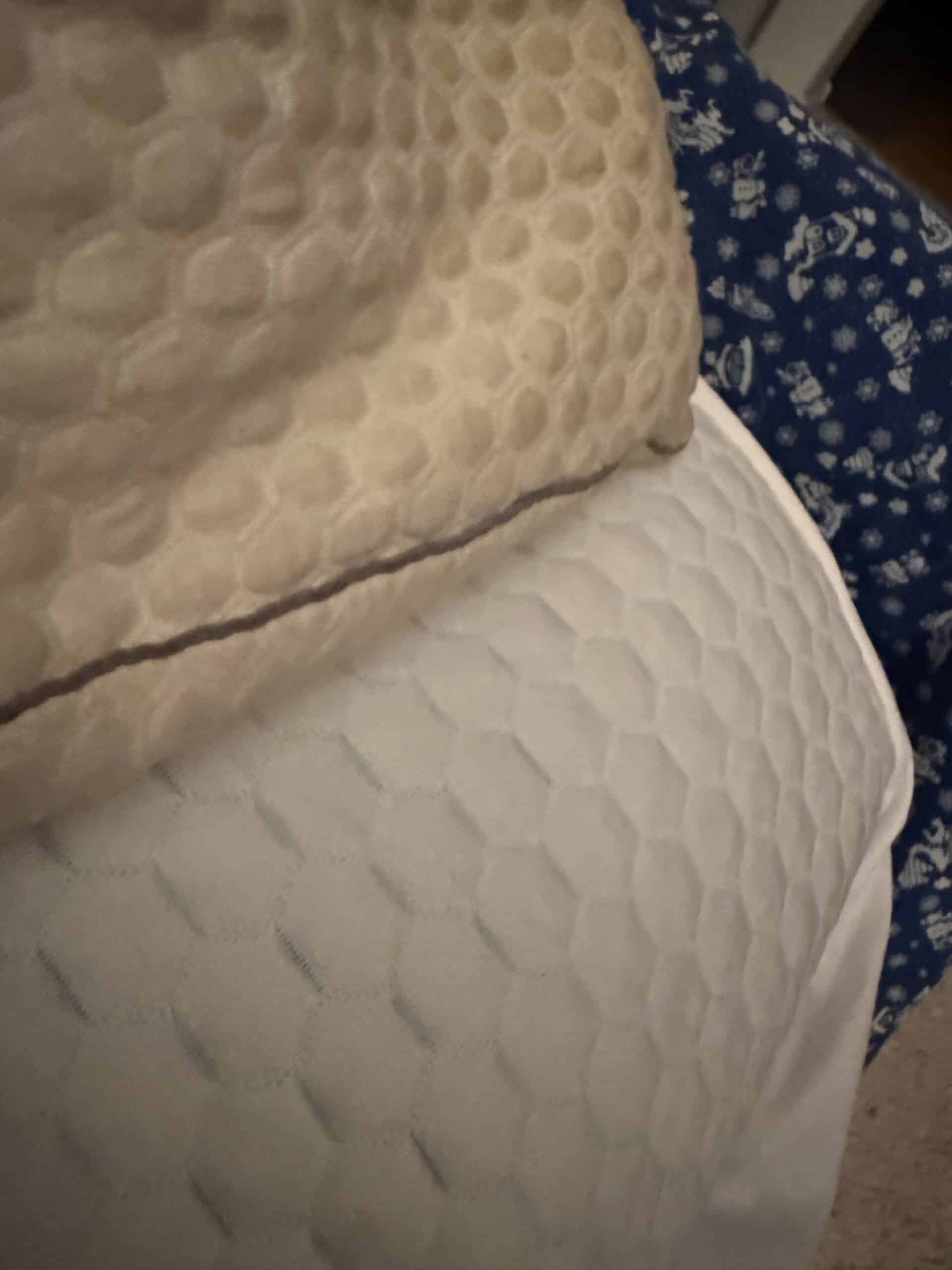
They solve different problems, so running both makes sense if you overheat in more than one place. A cooling pillow handles the head and neck, where heat concentrates fastest and where most people notice it first. A cooling topper handles the torso, which produces more heat overall but disperses it across a larger area.
If you only overheat in one of those places, buying both wastes money. Working out which surface wakes you comes before deciding how many to buy.
Quick Answer
Buy the pillow first if you flip it looking for a cold side, and the topper first if you wake up hot across your back and torso. Running both works and the effects add rather than cancelling. Neither creates cold, so a hot room limits what either can do.
Key Points
- A cooling pillow addresses the head, a topper addresses the torso
- Flipping the pillow constantly points at the pillow as your problem
- Both work at once and the effects combine rather than conflict
- Neither generates cold, they move heat away from you
- Sheets over a cooling topper reduce how much it can do
- A hot room limits both, since heat has to go somewhere
Which Surface Wakes You
| What you notice | Where the heat is | Buy first |
|---|---|---|
| Flipping the pillow for a cold side | Head and neck | Cooling pillow |
| Waking hot across your back | Torso against the mattress | Cooling topper |
| Sweating under the covers | Bedding is trapping heat | Cooling blanket or sheets |
| Whole room feels hot | Ambient temperature | Fan or air conditioning |
| Hot in several places at once | Multiple surfaces | Both, plus airflow |
What a Cooling Pillow Does
Your head loses a meaningful amount of heat, and it does so into a small area of pillow that has nowhere to send it. Standard memory foam makes this worse by trapping heat in the foam structure, which is why the surface warms within minutes and stays warm.
Cooling pillows attack this with gel infusions that conduct heat away, perforated foam that lets air move, or phase-change covers that absorb heat as they change state.
None of them refrigerate anything. They move heat away from the contact point faster than a plain pillow does, which delays the point at which the surface feels warm. How the different constructions compare sits in what makes a pillow cooling.
What a Cooling Topper Does
Your torso rests against a much larger area, and the mattress underneath it is usually the least breathable thing in the bed. Memory foam mattresses in particular hold heat, which is the complaint that sends people looking for toppers.
A cooling topper sits between you and that, using gel foam, open-cell structures, or breathable latex to move heat sideways rather than letting it build.
The limit is that a topper sits under sheets and under you, so its effect is more gradual than a pillow’s. You feel a cooling pillow within minutes and a topper across the whole night. Whether they deliver is covered in whether cooling toppers work.
Running Both, and What I Notice
I use a cooling pillow and a cooling topper together, and they do work together. Using both helps more than either one alone, and I have not hit a point where adding the second stopped making a difference.
I still flip the pillow a lot. That is worth saying plainly, because it is the honest limit of what a cooling pillow does for me. It buys time before the surface warms up, and it does not eliminate the flipping, and anyone expecting a pillow that stays cold all night will be disappointed by every option on the market.
The topper is less noticeable moment to moment and shows up in how the night goes overall. There is no obvious point where I feel it working, which is the opposite of the pillow, where the difference between a warm side and a cool side is immediate.
I also run a cooling blanket alongside both. My experience is in a hot dry climate on a memory foam mattress, which is close to the worst case for heat retention. Someone on an innerspring in a cool climate has a different starting point and may need neither.
Do They Cancel Each Other Out?
No. They act on separate parts of your body and there is no mechanism by which one would undo the other.
What can interfere is layering. A thick mattress protector over a cooling topper puts an insulating barrier between you and the thing meant to draw heat away, and heavy sheets do the same on a smaller scale.
Keep the layers between you and each cooling surface thin. A thin breathable sheet over a topper preserves most of the effect, and a thick quilted protector removes most of it.
Where the Money Goes Furthest
The pillow, if you are buying one thing. It costs less, the effect is immediate, and head heat is what most people actually notice.
The topper is the larger investment and the one that addresses more total heat. It is also the right call if your mattress is the underlying problem, since a topper is cheaper than replacing it. That comparison sits in topper against a new mattress.
Both together makes sense when you overheat in more than one place, which describes a lot of people on memory foam in warm rooms. Options sit in cooling pillows for hot sleepers and cooling mattress pads.
What Neither Will Fix
A hot room defeats both. Cooling products move heat away from your body and into the surrounding air, so if that air is already warm, there is nowhere for it to go. Airflow matters more than any bedding purchase in a genuinely hot bedroom.
Humidity blocks the other cooling route. Sweat evaporating is how your body sheds heat, and humid air stops that regardless of what your pillow is made of.
Night sweats that soak bedding are a different situation from feeling warm, and that pattern is worth raising with a doctor rather than solving with bedding.
One Product Versus Both
One is enough when the heat is concentrated in a single place. Someone who flips the pillow all night and sleeps comfortably otherwise needs a pillow, not a system.
Both earn their place when you overheat at the head and across the back, when your mattress retains heat, or when the room runs warm and you are trying to make the bed do more of the work. Adding a cooling blanket on top of that is a third layer, covered in cooling bedding layers.
Related Reading
- pillows built to shed heat
- what to expect from one
- why pillows warm up so fast
- comparing the other two layers
- getting more from the pillow you own
- when the mattress is the cause
Frequently Asked Questions
Can you use a cooling pillow and cooling topper together?
Yes, and they work on separate areas so the effects add rather than conflict. The pillow handles head and neck heat, the topper handles the torso, and neither interferes with the other.
Which should I buy first?
The pillow if you flip it looking for a cold side, since that points at head heat and the effect is immediate. The topper if you wake up hot across your back, which points at the mattress underneath you.
Do cooling pillows stay cold all night?
No. They move heat away faster than a standard pillow, which delays the surface warming rather than preventing it. Most people still flip a cooling pillow, just less often than a regular one.
Does a sheet stop a cooling topper working?
A thin breathable sheet preserves most of the effect. A thick quilted mattress protector between you and the topper insulates it and removes much of what you paid for.
Will these help in a hot room?
Only partly. Cooling products move heat into the surrounding air, so warm air limits how much they can do. Airflow from a fan does more in a genuinely hot bedroom than any bedding purchase.
Is a cooling blanket a third layer worth adding?
It can be, since it addresses heat trapped under the covers rather than at the pillow or mattress. Whether you need all three depends on how many surfaces are actually making you hot.
Are they worth it on a memory foam mattress?
Memory foam retains heat more than most constructions, so a cooling topper addresses a real problem there. It is one of the situations where both products together make the most sense.
Room temperature limits what bedding can do. cooling a bedroom covers the environment.
Recommended Reading
See our note on cooling toppers and portable AC units, and choosing a mattress.
