
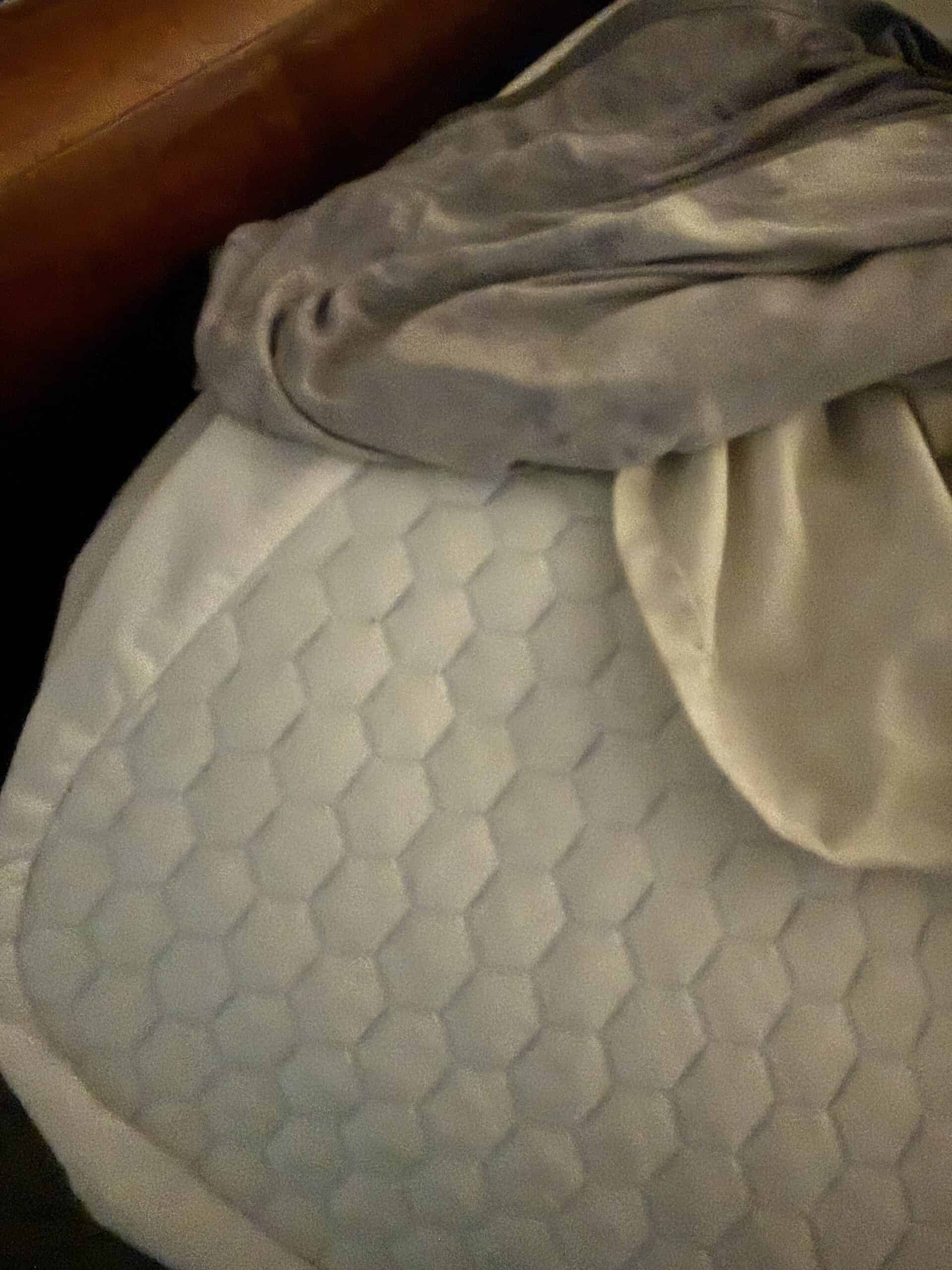
My bed is a cooling topper, then sheets, then a cooling blanket. Three layers, each doing a different job, stacked in that order for a reason. Most cooling bedding advice sells you individual products without ever mentioning that they sit on top of each other and that the arrangement decides whether any of it works. A cooling blanket under a heavy duvet is a decoration.
Quick Verdict
Topper, sheets, cooling blanket, in that order, with nothing insulating between them. The layer nearest your skin matters most, the layer on top matters second, and anything trapping vapor anywhere in the stack cancels the layers below it.
Key Takeaways
- Order decides outcome. A cooling layer under an insulating one does nothing.
- Three layers is enough: surface, sheet, top.
- Cooling blankets work by conducting heat away, and they keep doing it.
- Thin beats technical. Percale over sateen, every time.
- Subtracting a layer is free and usually the first thing to try.
Related: lightweight summer comforters.
Related: bedding for teens and dorm rooms.
1. A Cooling Topper, Best Base Layer
The bottom of the stack and the one doing the most work.
This is the layer between you and whatever your mattress is made of, which for most people is foam that holds heat by design. A cooling topper puts something with more air and better conduction in the way, and it is the reason my bed is tolerable in an Arizona summer.
I sleep on one every night and it has made a real difference. It also does something the layers above cannot: it addresses heat coming from underneath you, where your bodyweight is pressing you into the material and airflow is worst.
Order matters here more than anywhere. Nothing goes between the topper and the sheet except a breathable protector, and a plastic-backed one will undo the whole thing. Toppers for hot sleepers covers the range, and whether they work is worth reading before you spend.
Best for: anyone with a foam mattress. This is the foundation.
Skip if: your mattress already sleeps cool, which springs often do.
2. Percale Sheets, Best Middle Layer
Directly against your skin, which gives this layer influence out of proportion to its thickness.
Percale is a plain over-under weave and it is crisp, breathable, and does not cling. Sateen is a satin weave, feels smoother and more luxurious, and traps noticeably more heat. That is the choice, and the marketing rarely puts it that plainly.
Mine are thin percale and thin is doing as much as the weave is. A lightweight sheet moves air; a heavy sheet in a technically cool fiber does not. If you take one thing from this section it is that thinness beats the material story on the packaging.
They are also the cheapest layer to change, which makes them the sensible first experiment before committing to anything larger. Cooling sheets covers fibers and weaves, and percale vs sateen the distinction that decides most of it.
Best for: everyone. Cheapest meaningful change.
Skip if: you genuinely prefer how sateen feels, in which case the other layers carry it.
3. A Cooling Blanket, Best Top Layer
The top of the stack, and the one I was most skeptical about before owning one.
It has never stopped feeling at least a little cool. That is a specific claim and it is worth making, because the standard complaint about this category is that they feel cold for a minute and then become an ordinary blanket. Mine has not done that.
The mechanism is conduction rather than magic. A material that pulls heat away from your skin faster than cotton does will keep feeling cooler as long as it has somewhere to send that heat, which is why it works over time rather than as an initial hit.
What matters is that nothing goes on top of it. A cooling blanket under a comforter is insulated from the room and it becomes a layer of fabric. It is the top layer or it is nothing. Cooling blankets covers the styles, whether they work takes the question on, and why they stop feeling cool explains the complaint I have not had.
Best for: the top of the bed, year round, hot sleepers.
Skip if: you need real warmth in winter. Then it is a summer layer.
4. A Breathable Protector, Best Invisible Layer
The layer nobody counts and the one most likely to be sabotaging the rest.
Protectors are usually forgotten about, which is a problem because a waterproof one is plastic laminated to fabric. Plastic does not pass vapor. Put that between your topper and your sheet and everything below it is sealed off from you.
That is the single most common reason a cooling stack underperforms. Someone buys a topper, keeps the old protector, and concludes toppers do not work. The topper was fine and it was wrapped in a bag.
Breathable membrane protectors exist, do the same protective job, and let vapor through. If you use one at all, this is worth checking before buying anything else. Mattress protectors covers the options.
Best for: anyone using a protector, which should be most people.
Skip if: you do not use one. Then this layer is not your problem.
5. A Cooling Pillow, Best Separate Stack
Your head has its own layers and they follow the same logic.
A block of memory foam under your face is dense material with no airflow, pressed directly against skin, doing exactly what the mattress does and closer to you. It is a small version of the same problem and it gets almost no attention.
Shredded fill breathes because there are gaps between the pieces. Ventilated and gel foams try to solve it structurally. Either beats a solid block, and a pillow protector made of plastic will ruin whichever you choose, for the same reason as the mattress version.
Cooling pillows covers constructions, and memory foam vs down alternative the fill question.
Best for: anyone flipping the pillow at 3am, which is the tell.
Skip if: yours is shredded fill already. That breathes fine.
6. A Lightweight Quilt, Best Winter Compromise
For when a cooling blanket is not enough and a comforter is too much.
The problem with a three-layer cooling stack is that it is built for heat, and some nights are not hot. The instinct is to add a comforter on top, which insulates the cooling blanket and turns your careful stack into a warm bed with an expensive layer buried in it.
A lightweight quilt is the better answer because it adds warmth without much loft, and it can go on top without smothering everything underneath. It is the adjustment layer rather than a replacement for the blanket.
Cooling quilts covers the category, and cooling blanket vs lightweight blanket the choice.
Best for: shoulder seasons, people who run hot but not always.
Skip if: you are hot year round. Then the blanket is your top layer, full stop.
The Layer Order
| Position | Layer | Job |
|---|---|---|
| 1. Mattress | Whatever you have | Support, and often the heat source |
| 2. Protector | Breathable only | Protection without sealing |
| 3. Topper | Cooling foam or latex | Separates you from the mattress |
| 4. Sheet | Thin percale | Against your skin |
| 5. Top | Cooling blanket | Conducts heat away, faces the room |
| Never | Comforter over the blanket | Cancels layer 5 entirely |
Why the Order Decides It
This is the part missing from most of this category and it is not complicated.
Heat leaves your body and has to go somewhere. Every layer either helps it move or gets in the way, and they act in sequence. A cooling layer only works if the heat can keep traveling after it passes through, which means what is above it matters as much as what it is made of.
So a cooling blanket buried under a comforter cannot conduct heat anywhere, because the comforter is holding it in. A cooling topper under a plastic protector is sealed off from you and never gets the heat in the first place. In both cases the product is fine and the position is wrong.
My stack works because each layer has somewhere to send heat. Topper takes it from underneath, sheet passes it through, blanket conducts it to the room. Nothing insulating in the chain. That is the whole design.
Three Layers Is Enough
The stack does not need to be elaborate, and there is a real temptation to keep adding.
Surface, sheet, top. Topper, percale, cooling blanket. That is my bed and it took some years of adjustment to arrive at, and the honest conclusion is that a fourth cooling product does not have a job to do.
Each additional layer is another thing between you and the room, and past a point you are insulating yourself with cooling products, which is a genuinely funny way to end up hot. More is not the direction here.
If three well-chosen layers are not enough, the problem is probably the room rather than the bed, and that is a fan or a thermostat rather than another purchase. Bedside fans covers the cheap version of that.
Try Removing Something First
Free, and it works more often than it should.
Most beds have accumulated layers nobody chose deliberately: a mattress pad from a previous setup, a protector bought for one spill, a blanket that lives there because it always has. Any of them may be the thing holding your heat in.
Strip it back to mattress, sheet, one top layer, and sleep on that. If it is cooler, you have found a layer that was not earning its place and it cost you nothing to discover. Then add back only what has a job.
That is the honest first move before buying any of this, and it is the one a page selling cooling bedding is least inclined to suggest. Cooling blanket vs cooling topper is worth reading if you are deciding where to start rather than buying both.
Recommended Reading
See cooling blankets, toppers for hot sleepers, and percale vs sateen.
Cooling Bedding FAQ
What order should cooling bedding layers go in?
Topper, then sheets, then cooling blanket, with only a breathable protector anywhere underneath. That is my bed. Heat has to keep traveling after it passes through a layer, so what sits above each one matters as much as what it is made of.
Can I put a comforter over a cooling blanket?
You can and it cancels the blanket. A cooling blanket works by conducting heat to the room, and a comforter on top removes the room from the equation. It is the top layer or it is a decoration. Use a lightweight quilt if you need more warmth.
Do cooling blankets stop feeling cool?
That is the standard complaint and it has not been my experience. Mine has never stopped feeling at least a little cool. They work by conducting heat away rather than being cold, so as long as the heat has somewhere to go they keep working, which is mostly a question of what you put on top.
Percale or sateen for cooling?
Percale. It is a plain weave, crisp, and lets air through, where sateen feels smoother and traps more. Mine are thin percale, and thinness is doing as much work as the weave. A lightweight sheet beats a heavy one in a technically cooler fiber.
Is my mattress protector making the bed hot?
If it is waterproof, very likely. Those are plastic laminated to fabric and plastic does not pass vapor, so it seals off every layer beneath it. This is the most common reason a cooling stack underperforms, and checking it is free.
How many layers do I need?
Three. Surface, sheet, top. A fourth cooling product has no job left to do, and past a point you are insulating yourself with cooling gear, which is a funny way to end up hot. If three good layers are not enough, the room is the problem.
What should I try before buying anything?
Removing a layer. Most beds have accumulated things nobody chose on purpose, and any of them might be trapping your heat. Strip back to mattress, sheet, one top layer and sleep on it. If it is cooler, you found the problem for free.
Where should I start if I can only buy one thing?
Sheets, because they are cheapest and sit against your skin. If that is not enough, the topper is the one doing the most work, since it addresses heat from underneath where your weight presses you into the mattress and airflow is worst.
Part of our full guide: the foundation principles of a sleep-cool bedroom.
