
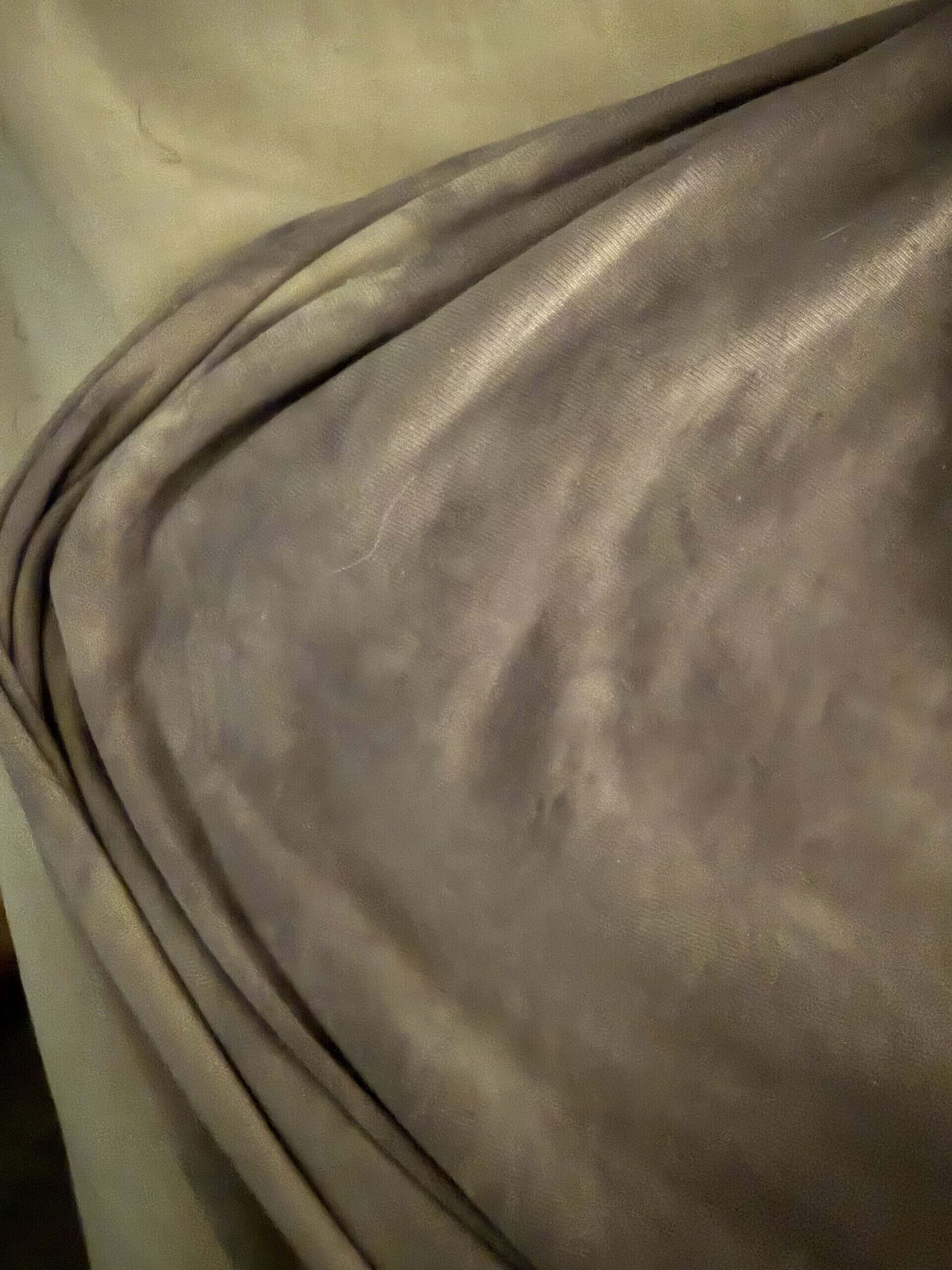
Not really, and this is the part the marketing skips. A cooling blanket moves heat away from your skin and into the surrounding air. If that air is already hot, there is nowhere for the heat to go, and the blanket stops doing anything useful.
Mine works well once the air conditioning has brought the room down. On a genuinely hot night before that happens, it does nothing. There is no point to it if the room is too warm, and I stopped expecting otherwise fairly quickly.
Quick Answer
Cooling blankets need somewhere to dump heat. They work in a room that is cool to moderately warm and stop working in a hot one. Cooling the room first is what makes the blanket effective, rather than the blanket substituting for a cool room.
Why the Room Sets the Limit
| Room condition | What the blanket does |
|---|---|
| Cool, air conditioned | Works as intended, noticeable |
| Moderately warm | Helps, less dramatically |
| Hot and still | Very little |
| Hot and humid | Effectively nothing |
| Cool with airflow | Best case |
Cooling fabrics work by conducting heat away from your skin faster than ordinary fabric does. That heat has to end up somewhere, and where it ends up is the air around you.
In a cool room there is a large temperature gap between your skin and the air, so heat moves readily. In a hot room the gap is small, and the same blanket has almost nothing to work with.
What I Have Found in Arizona
I have had my cooling blanket about eighteen months, and I run a portable air conditioner in the bedroom through the summer.
The pattern is consistent. Once the room has cooled down, the blanket does what it is supposed to. Before that, on a hot evening with the air conditioning still catching up, it may as well be an ordinary blanket.
That took me a little while to work out. The instinct is to expect the blanket to solve the heat, and what it actually does is work well in conditions you have already created.
I would not describe it as a disappointment, because in a cooled room it is genuinely good. It is more that I stopped thinking of it as a hot-weather product and started thinking of it as something that works alongside cooling the room.
One thing worth knowing: mine only has cooling on one side, which is common. That matters more than it sounds, since flipping it over gets you the ordinary side rather than a fresh cool surface.
Humidity Makes It Worse
Damp air is the harder case. Cooling fabrics rely partly on moving moisture away from your skin so it can evaporate, and in humid air evaporation slows down.
That is why the same blanket that feels effective in a dry cool room feels like nothing on a muggy night, even at the same temperature reading.
It also affects how the fabric feels. Cooling fabrics with a smooth finish can feel slightly clammy rather than cool once they have absorbed moisture and cannot shed it.
A dehumidifier addresses this where a better blanket does not, and bedroom humidity generally sits in bedroom humidity control products.
What Actually Cools a Hot Room
Air conditioning
The only thing that reliably lowers the air temperature. Everything else moves heat around or makes you feel cooler without changing the reading.
Airflow
A fan does not cool the room and it does move air across your skin, which speeds evaporation. In a hot room that does more than any bedding, covered in quiet fans for sleeping.
Blocking daytime heat
A bedroom that absorbs sun all day starts the night warm. Blackout or thermal curtains reduce that considerably before you ever get into bed.
Reducing humidity
In damp climates this changes perceived temperature more than a few degrees does, and it lets every other cooling measure work properly.
Why the Marketing Suggests Otherwise
Almost every cooling blanket is sold against the problem of being hot at night, which implies it solves being hot at night. The physics does not support that, and understanding why makes the product easier to judge.
The measurement most often quoted is Q-max, a figure for how cool a fabric feels on first contact. It is a real measurement and it describes the first few seconds rather than the night. A high Q-max fabric in a hot room still feels cool for a moment and then equalizes exactly like any other.
Product photography reinforces it. Blankets are shown in cool blue-lit rooms with the implication that the blanket produced the effect rather than the room.
The word cooling is also doing work it should not. Nothing in the blanket generates cold. It conducts heat away faster than cotton or fleece, which is a genuine property with a genuine limit.
None of this makes cooling blankets a bad purchase. It means the honest description is a blanket that delays you overheating in a reasonable room, which is less compelling on a product page and considerably more accurate.
Where a Cooling Blanket Does Help
In a cooled room it delays the point at which you warm up under bedding, which is the specific problem it exists to solve.
For people who run hot under a normal duvet but want some weight over them, it covers that gap well.
It also helps in mild conditions where the room is fine and ordinary bedding is slightly too warm, which is a large share of spring and autumn nights.
Airflow makes it noticeably better, since a fan carries away the heat the blanket moves off your skin rather than leaving it hanging around you. It pairs sensibly with other cooling layers rather than replacing them, covered in cooling bedding layers.
Setting Expectations Before You Buy
It is not air conditioning
No blanket lowers room temperature. If your bedroom is genuinely hot, the blanket is not the purchase that fixes it.
The cool feeling is temporary
Cooling fabrics feel coldest on first contact and then equalize with your body. That is normal rather than a fault, covered in why cooling blankets stop feeling cool.
Check whether both sides cool
Many are single-sided. If you expect to flip for a fresh cool surface, that only works on a double-sided one.
Cool the room first
The blanket performs in proportion to how much cooler the air is than you are. Fix the room and the blanket starts working.
Related Reading
- do cooling blankets actually work
- why they stop feeling cool
- cooling blankets compared
- cooling setups for hot climates
- cooling bedding layers
- waking up hot
- bedroom air conditioners
Part of our guide to cooling a bedroom for better sleep.
Frequently Asked Questions
Do cooling blankets work in a hot room?
Poorly. They move heat from your skin into the surrounding air, and in a hot room there is nowhere for that heat to go. Cooling the room first is what makes them effective.
Will a cooling blanket replace air conditioning?
No. Nothing about a blanket lowers room temperature. It changes how quickly you warm up under bedding in a room that is already reasonable.
Why does mine feel like nothing on humid nights?
Cooling fabrics rely partly on moisture evaporating from your skin, and humid air slows that down. A dehumidifier helps where a different blanket will not.
What temperature does a cooling blanket work at?
There is no fixed threshold, and the effect scales with how much cooler the air is than your body. The commonly recommended sleep range of the mid to upper sixties Fahrenheit works well.
Do both sides of a cooling blanket cool?
Often not. Many are single-sided, so flipping gets you the ordinary side. Worth checking before buying if you expect to flip for a fresh surface.
Does a fan make a cooling blanket work better?
Yes, since airflow carries away the heat the blanket moves off you. A fan plus a cooling blanket outperforms either alone in a warm room.
What should I buy instead for a hot bedroom?
Address the room first with air conditioning, airflow, blocking daytime sun, and reducing humidity. The blanket is worth adding once the room is manageable.
Is a cooling blanket worth it at all?
In a cooled or mild room, yes, particularly if you run hot under a normal duvet but want weight over you. In a genuinely hot room it will disappoint you.
