
Cooling blankets stop feeling cool because their cool-to-touch effect works by pulling heat from your skin, and once the fabric has absorbed as much body heat as it can hold, it warms to your temperature and the cool sensation fades. Understanding why cooling blankets stop feeling cool also points straight to the fixes: refresh the fabric, cool the room, and keep air moving. For all-night solutions, our bed cooling systems guide covers active options, and the steps below handle the everyday causes.
Quick Verdict
A cooling blanket feels cool by conducting heat off your skin, so it warms up once the fabric reaches your body temperature and can hold no more heat. This is normal physics, not a defect. Flipping to a fresh cool area, lowering the room temperature, and adding airflow all restore and extend the cooling.
Why Trust This Guide
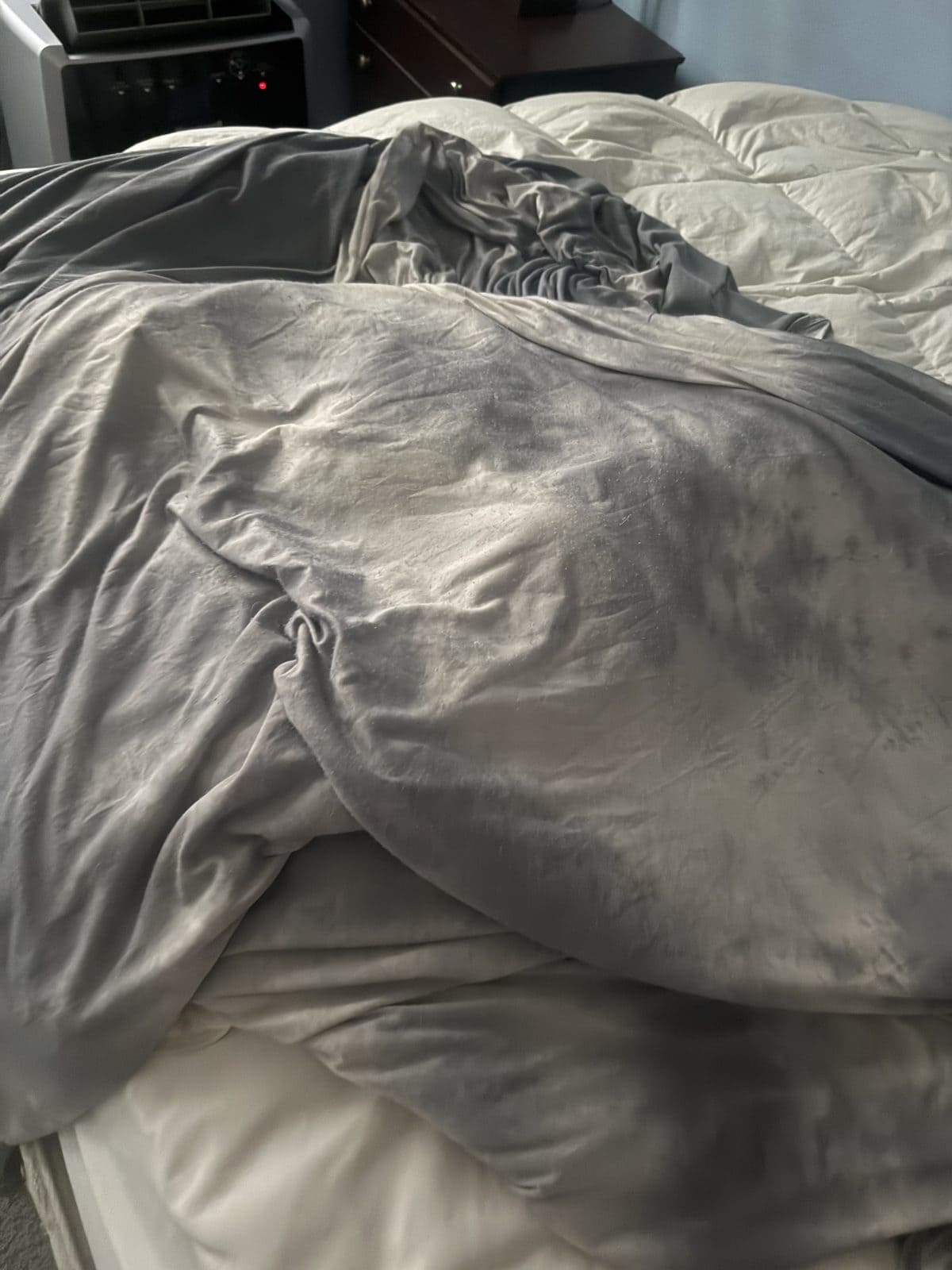
As an Arizona hot sleeper, I feel this every night with my gray dual-sided cooling blanket. The cooling side is genuinely cool when I first get in, then it warms after a while, and flipping to the fresh side or the regular side brings the relief back. That firsthand pattern is exactly what the science below describes.
Key Takeaways
- Cool-to-touch fabric cools by absorbing your body heat.
- It warms up once it reaches your skin temperature, which is normal.
- A warm room makes the cool feel fade much faster.
- Flipping to a fresh area or side restores the cool sensation.
- Airflow and a cooler room extend how long it stays cool.
Why Cooling Blankets Warm Up, and How to Fix It
| Cause | Why it happens | Fix |
|---|---|---|
| Fabric saturation | The weave absorbs heat until it matches your skin temperature | Flip to a fresh cool area or side |
| Warm bedroom | Too much ambient heat for the fabric to overcome | Lower the room to the mid-60s Fahrenheit |
| No airflow | Trapped heat has nowhere to dissipate | Run a fan or improve ventilation |
| Heat from below | A memory foam mattress radiates heat upward | Add a cooling topper or pad |
Why Does My Cooling Blanket Get Warm at Night?
Your cooling blanket gets warm because the fabric can only absorb so much heat before it matches your body temperature. Cool-to-touch materials feel cool by conducting warmth away from your skin, but that is a one-directional transfer with a limit. Once the weave has soaked up enough heat, there is no temperature gap left to move it, so the cool feel stops. The Sleep Foundation notes that an average adult gives off roughly 75 to 90 watts of heat, which is a steady load that will warm any contact fabric over time. This is physics working as intended, not a faulty blanket.
How to Keep a Cooling Blanket Cool Longer
The most reliable fix is to give the fabric a fresh, cooler surface and a cooler environment. Flip the blanket to an area you have not been lying on, or switch to the fresh side of a dual-sided blanket, and the cool-to-touch feel returns immediately. Beyond that, lower the room temperature, since the Sleep Foundation recommends a sleep range around 65 to 68 degrees Fahrenheit, and add airflow with a fan so absorbed heat can dissipate. Breathable sheets and lighter sleepwear reduce the heat load reaching the blanket in the first place.
Do All Cooling Blankets Warm Up?
All passive, cool-to-touch blankets warm up eventually, but active cooling systems behave differently. Any fabric that cools by conducting your heat away will reach your body temperature and lose the cool feel, which is why every cool-to-touch or phase-change blanket fades over a night. Water-cooled or air-cooled bed systems are the exception, because they actively remove heat and circulate a coolant, so they can sustain cooling for hours. If all-night cooling is your goal, a passive blanket alone will not deliver it, and an active system is the better tool.
Is a Warming Cooling Blanket Defective?
No, a cooling blanket that warms up over the night is almost never defective. The cool-to-touch property is a temporary transfer effect by design, so warming after a stretch of contact is expected behavior, not a fault. A genuine defect looks different, such as a blanket that never feels cool at all, sheds its finish, or falls apart in the wash. If your blanket felt cool on contact and simply warmed after a while, it is working exactly as intended, and the fixes above will refresh it.
Recommended Reading
- the best cooling blankets, start with a good one.
- do cooling blankets actually work, what they can and cannot do.
- what makes a blanket cooling, the fabric behind the fade.
- cooling mattress pads, tackle heat from below.
- how to cool a bedroom, the room-level fix.
Related: cooling blanket last.
How Long Should a Cooling Blanket Stay Cool?
A cool-to-touch blanket should feel cool for the first stretch after contact, not for the whole night, and setting that expectation prevents disappointment. The cool sensation is strongest in the opening minutes and gradually eases as the fabric absorbs body heat, which is why it works so well as a settling aid when you first climb into bed. How long it lasts depends heavily on the room: in a cool, well-ventilated bedroom the effect stretches noticeably longer, while a warm, still room shortens it to a brief window. That is a feature of the physics, not a flaw in the blanket. If you truly need cooling sustained for hours rather than minutes, that is the job of an active system that circulates coolant, not a passive blanket. Judge a cooling blanket by how well it helps you fall asleep comfortable and cool, and lean on a cooler room, airflow, and the flip-to-fresh trick to keep that window open as long as possible.
Common Misconceptions
A quality cooling blanket stays cold all night
No passive blanket does. Even the best cool-to-touch fabric warms to your body temperature over time. All-night cooling needs an active system.
Warming means the blanket is broken
It does not. Warming is the normal result of the fabric absorbing your body heat. A real defect is never feeling cool at all.
A cooling blanket alone will keep you cool in a hot room
It cannot. A warm room overwhelms the fabric quickly. Cooling the room and adding airflow are what make the blanket last.
Why Cooling Blankets Stop Feeling Cool FAQ
Why does my cooling blanket stop feeling cold?
Because its fabric cools by absorbing your body heat, and once it reaches your skin temperature it can hold no more, so the cool feel fades. Flipping to a fresh area or cooling the room restores the sensation.
How do I make my cooling blanket stay cool longer?
Flip to a fresh cool side, lower the bedroom to the mid-60s Fahrenheit, and run a fan for airflow. Breathable sheets and lighter sleepwear also reduce the heat load, helping the blanket stay cool longer.
Do cooling blankets lose their cooling over time?
Night to night, the cool feel fades as the fabric warms, which is normal. Over months, harsh washing can dull some cool-to-touch finishes, so following the care label helps preserve the effect long term.
Why is my cooling blanket hot on a memory foam mattress?
Memory foam traps and radiates heat upward, adding to the load the blanket must handle. The blanket cools the top layer, but the heat from below persists unless you add a cooling topper or pad.
Is it normal for a cooling blanket to warm up?
Yes, it is completely normal. Every passive cool-to-touch blanket warms to your body temperature over time. This is expected physics, not a sign of a defective or low-quality blanket.
What keeps you cool all night if a blanket cannot?
Active cooling systems, such as water-cooled mattress pads and bed cooling systems, sustain cooling for hours by circulating coolant. Pairing one with a cool room and airflow delivers the all-night cooling a passive blanket cannot.
Should I put my cooling blanket in the freezer to keep it cool?
It is not recommended. Freezing offers only a brief chill that vanishes in minutes and can damage some cooling fabrics or finishes. A cooler room, airflow, and flipping to a fresh side deliver far more reliable and lasting cooling than freezing the blanket.
Does washing ruin a cooling blanket’s cooling effect?
Frequent harsh washing can dull some cool-to-touch finishes over time, but proper care preserves them. Follow the label, usually a gentle cycle and low or no heat drying, and the cooling fabric keeps performing. The cool-to-touch feel fading each night, though, is normal and unrelated to washing.
