
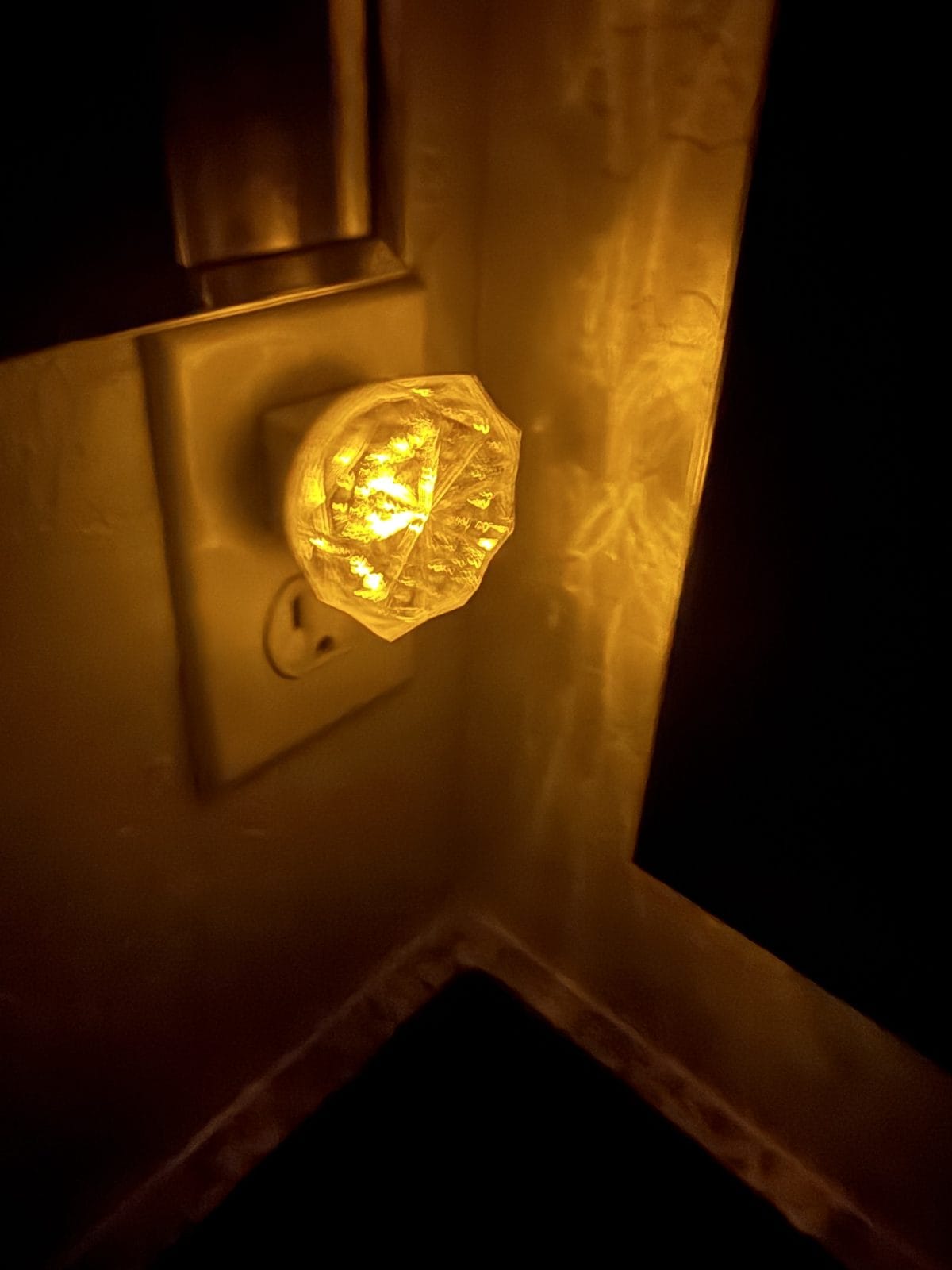
The best night lights for sleep use warm, dim, amber-toned light that guides you safely in the dark without the melatonin-suppressing effect of bright blue or white light. A good sleep night light gives just enough glow for a midnight trip to the bathroom or a child’s comfort while keeping the bedroom dark enough to rest. It works best as part of a darker sleep setup, alongside blackout curtains that block outside light. Here are the night light styles that protect your sleep and when each one fits. For more, see our guide on whether red light therapy is good for sleep. For more on this, see our guide to star projectors for sleep.
Quick Verdict
Choose a warm amber or red-toned night light that is dimmable and just bright enough to navigate by. Motion-sensor models suit hallways and bathrooms, dusk-to-dawn plug-ins handle automatic overnight glow, and a soft bedside light comforts children. Keep it low and warm, since bright, cool light works against the sleep you are trying to protect.
Why Trust This Guide
Independent picks, reader-supported through affiliate links at no cost to you. The night light I use lives in my bathroom rather than the bedroom, so a middle-of-the-night trip is lit safely without brightening the whole house. It has been genuinely useful for that, especially when I am groggy and half-asleep, and it shaped the emphasis here on safe, low, well-placed light rather than novelty.
Key Takeaways
- Warm amber or red light disturbs sleep less than blue or white.
- Dim is better; a night light should guide, not illuminate.
- Motion sensors light the way only when you need it.
- Dusk-to-dawn sensors turn the light on and off automatically.
- Match the type to the room and who is using it.
How We Picked These Night Lights
We weighed light color, brightness control, and how the light activates, since those decide whether a night light helps or hinders sleep. The research-backed idea behind our picks is that warmer, amber and red wavelengths interfere less with melatonin than the blue and cool-white light of screens and standard bulbs, so a sleep night light should lean warm and stay dim. Brightness you can lower, and sensors that light the way only when needed, keep the room as dark as possible the rest of the night. Picks below cover the main situations, from hallway safety to a child’s bedside.
Warm Amber Night Light
Why It Stands Out
A warm amber night light emits light in the color range least likely to suppress melatonin, making it the most sleep-friendly choice for a bedroom. Its soft glow lets you see without signaling your brain that it is daytime.
Worth Knowing
Amber light is dimmer and less crisp than white, which is the point but can feel too subtle for detailed tasks. For pure sleep-friendliness, that trade is worth it.
This is for the sleeper who wants the gentlest possible light in the bedroom itself. Someone who wakes at night but wants to protect their rest benefits most. Skip amber if you need bright, clear light for a task, where a brighter switched lamp is more practical.
Motion-Sensor Night Light
Why It Stands Out
A motion-sensor night light stays off until it detects movement, then lights the way and shuts off again, so the room stays dark except when you actually need light. It is ideal for hallways, bathrooms, and stairs.
Worth Knowing
Placement matters, since the sensor needs to catch your movement, and some models have adjustable timeout and brightness. Rechargeable or battery versions stick anywhere without an outlet.
This suits the person who wants safe passage at night without an always-on glow. Someone navigating a dark hallway to the bathroom gets exactly that. Skip a motion sensor for a child who needs a constant comforting glow, where a steady dusk-to-dawn light fits better.
Dusk-to-Dawn Plug-In Night Light
Why It Stands Out
A dusk-to-dawn plug-in uses a light sensor to switch on automatically when the room darkens and off at daylight, so you never touch it. Its set-and-forget simplicity makes it the easy default for outlets in hallways and bedrooms.
Worth Knowing
It provides a steady glow all night, so choose a warm, dim one for a bedroom. Some include a manual brightness or on-off override for flexibility.
This is for the person who wants reliable, automatic overnight light with no fuss. Someone who wants light present all night without switches benefits. Skip an always-on plug-in if you prefer total darkness except when moving, where a motion sensor is better.
Dimmable Bedside Night Light
Why It Stands Out
A dimmable bedside night light lets you dial the brightness down to the lowest usable level and often adjust color temperature, giving you control over exactly how much light reaches you. That control is the key to a sleep-safe glow.
Worth Knowing
Touch or app controls vary in ease, and some models double as a reading light on a brighter setting. Keep it on the warm, dim end for sleep.
This suits the sleeper who wants an adjustable light within reach on the nightstand. Someone who likes to fine-tune brightness benefits most. Skip a bedside model if you only need a light down the hall, where a plug-in or motion light suits.
Kids’ Night Light
Why It Stands Out
A kids’ night light provides a soft, comforting glow that eases bedtime fears while staying gentle enough not to keep a child awake. Many offer warm colors and cute designs that make the dark feel friendly.
Worth Knowing
Avoid overly bright or blue-lit designs, which can hinder a child’s sleep, and favor warm, dim options. Some include timers to fade off after the child is asleep.
This is for parents comforting a child who is scared of the dark. Someone easing a toddler into sleeping alone benefits most. Skip a colorful kids’ light for an adult bedroom, where a plain warm amber light is more appropriate.
Smart Night Light
Why It Stands Out
A smart night light adds app or voice control, scheduling, and adjustable color, letting you set a warm dim glow on a timer and change it as needed. The automation and flexibility appeal to gadget-minded sleepers.
Worth Knowing
Smart features add cost and setup, and you should still keep it warm and dim for sleep rather than using bright color modes at night. Reliability depends on the app and connection.
This suits the person who wants schedules, voice control, and integration with other smart devices. Someone building a smart bedroom benefits most. Skip the smart features if you want simple, reliable light without an app, where a plug-in sensor light is easier.
Night Lights at a Glance
| Type | Activation | Best for |
|---|---|---|
| Warm amber | Manual or sensor | Sleep-friendly bedroom glow |
| Motion sensor | On movement | Hallways, bathrooms |
| Dusk-to-dawn | Automatic all night | Set-and-forget light |
| Dimmable bedside | Manual, adjustable | Nightstand control |
| Kids’ light | Steady or timer | Children’s comfort |
| Smart light | App, schedule | Automation fans |
How to Choose a Night Light for Sleep
Prioritize warm color
Amber and red-toned light disturbs melatonin and sleep less than blue or cool white. For anything in or near the bedroom, choose a warm color over a bright white glow.
Keep it dim
A night light should let you see, not light the room. Choose one that is genuinely dim or dimmable, since less light means better-protected sleep.
Pick the right activation
Decide whether you want light only on movement, automatically all night, or on demand. Motion sensors keep rooms darkest, while dusk-to-dawn suits those who want steady light.
Match it to the room and user
A hallway wants a motion or plug-in light, a nightstand wants a dimmable one, and a child wants a soft steady glow. Fit the type to where and who it serves.
Where to Place a Night Light
Placement decides how useful a night light is and how little it disturbs your sleep. In the bedroom, keep it low, near the floor or at a low outlet, and aimed away from the bed so light does not fall on your face. For a bathroom trip, a warm light in the hallway or bathroom itself is often better than one in the bedroom, so you get light where you are walking without brightening the room you sleep in. On stairs and in hallways, a motion-sensor light placed to catch your approach lights the path only when you move. The night light I use sits in the bathroom for exactly this reason: if I get up during the night, it gives me enough light to move safely without ever lighting the bedroom, which matters most on those groggy, half-asleep trips. The goal throughout is a low, warm glow exactly where you need to see, and darkness everywhere else. What someone reaches for on that trip is covered in our grab bar guide.
Amber vs White Night Light
When amber wins
For anything in the bedroom or used right before or during sleep, amber and red light is the better choice, since it interferes least with melatonin. If protecting sleep is the goal, warm wins.
When white is acceptable
In a distant hallway or for a brief task where you need to see clearly, a brighter cool light can be more practical, as long as it is not in the bedroom itself. Keep white light out of the space where you actually sleep.
Common Night Light Mistakes to Avoid
Using bright or blue light
Cool, bright light near bedtime suppresses melatonin and works against sleep. Choose warm, dim light in and around the bedroom.
Making it too bright
A night light only needs to guide you, not illuminate the room. Turn it down to the lowest level that still lets you move safely.
Placing it where it shines on the bed
Light falling directly on your face disrupts sleep. Position the light low and aimed away from the bed.
Ignoring the activation type
An always-on light in the bedroom can be more than you need. Consider a motion sensor so the room stays dark except when you are up.
Recommended Reading
- blackout curtains, to keep outside light out of the bedroom.
- blue-light-blocking glasses, for evening screen use.
- sunset lamps, for warm wind-down ambiance.
- wake-up light alarm clocks, for a gentler morning.
- making a bedroom dark
Night Light for Sleep FAQ
What color night light is best for sleep?
Warm amber or red-toned light is best, since those wavelengths interfere least with melatonin and your sleep. Avoid blue and cool-white night lights in the bedroom, as they are more likely to keep you alert.
Is it bad to sleep with a night light on?
A dim, warm night light is generally fine and can improve safety, but bright or cool light can disrupt sleep. Keep any light in the bedroom low and warm, and aim it away from the bed to minimize any effect.
Are motion-sensor night lights better?
For keeping a room dark, yes, since they light up only when you move and shut off afterward. That leaves the bedroom in darkness the rest of the night, which supports better sleep than an always-on light.
What is the best night light for a bathroom trip?
A warm motion-sensor light in the hallway or bathroom is ideal, giving you enough light to move safely without fully waking you. Keeping the light dim and warm helps you fall back asleep afterward.
Are night lights okay for children’s sleep?
Yes, a soft, warm, dim night light can comfort a child without harming sleep. Avoid bright or blue-lit designs, and consider one with a timer that fades off once the child is asleep.
Where should I put a night light in the bedroom?
Place it low and aimed away from the bed, so it lights the floor or a path rather than shining toward your face. Keeping it near the floor and dim gives you enough to move by without brightening the room where you sleep.
Can a night light help me fall back asleep?
A dim, warm night light can help by letting you move safely without fully waking, which makes it easier to settle back down. The key is keeping it low and warm, since bright or cool light while you are up can leave you more alert and make returning to sleep harder.
Do night lights use much electricity?
Modern LED night lights use very little power, so running one overnight costs very little. Dusk-to-dawn and motion models further reduce use by lighting only when needed.
See the complete guide: the comprehensive choosing sleep aids guide.
Low light at night supports a routine you have already established. Establishing that routine in the first place is the step before.
Small indicator lights on chargers work against a dark room. Choosing bedside charging that does not glow covers that detail.
