
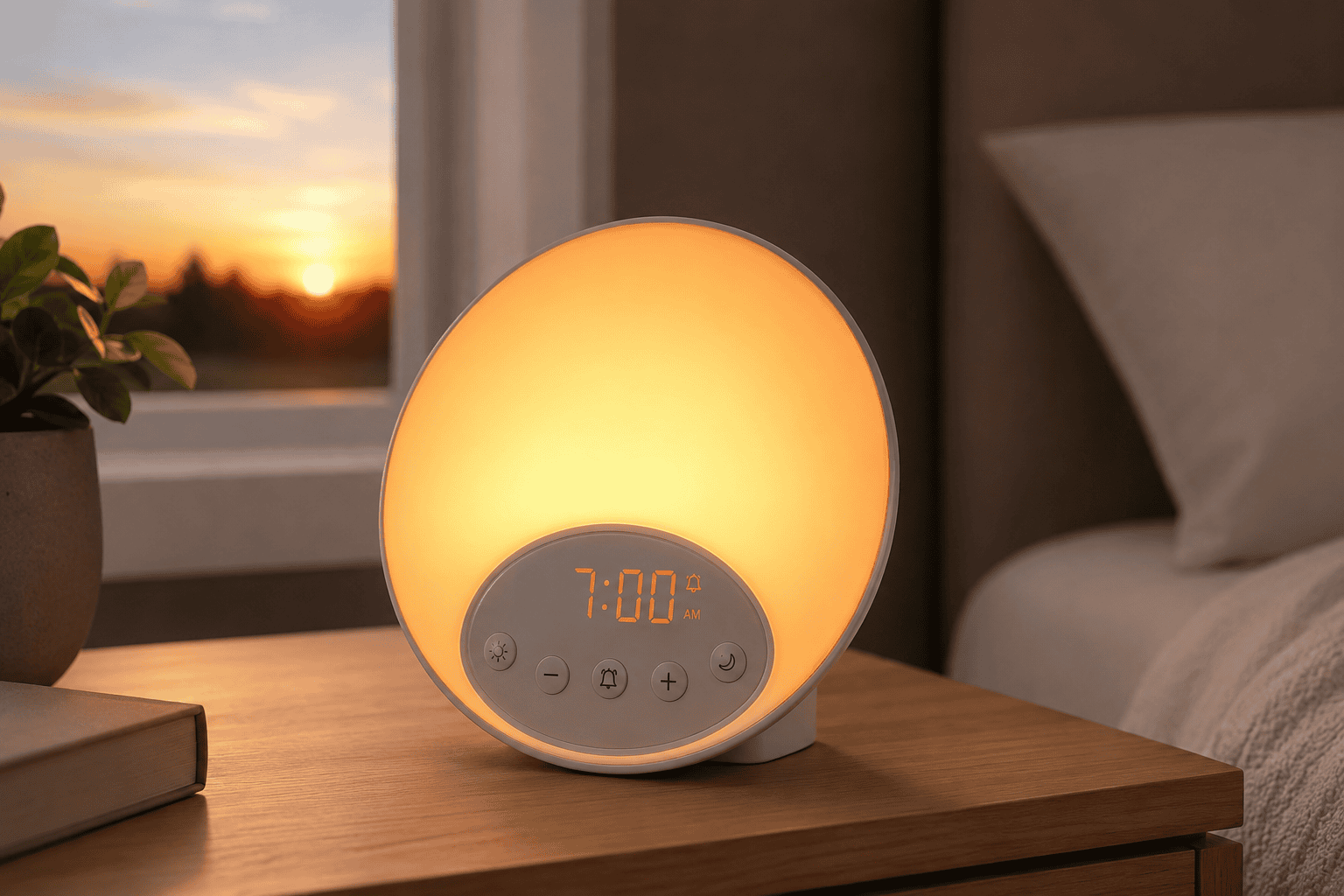
Waking to a blaring alarm in a pitch-black room is the sleep equivalent of a cold-water plunge, and it leaves plenty of people groggy for the first hour of the day. A wake-up light alarm clock does the opposite: it glows dim, then brighter, before your set time, so you drift up toward waking the way you would with a real sunrise. Below are six sunrise clocks worth considering in 2026, plus an honest word about what I still wake up to myself.
RestRight is reader-supported; purchases made through links on this page may earn a commission at no added cost to you.
Quick verdict: For a reliable, app-free classic that does one thing beautifully, the Philips SmartSleep is the safe pick. If mornings are only half the problem and you want a wind-down routine and great sound at night too, the Hatch Restore 3 is the do-everything choice. Want the brightest, most adjustable pure sunrise with no account attached? The Lumie Bodyclock Shine 300. On a budget, the Dreamegg Sunrise 1 covers the basics under a hundred dollars.
. For a stronger morning dose, our SAD lamp guide covers full-output light boxes.
Why a Wake-Up Light Is Worth Trying
Light, not sound, is the body’s main timekeeper. A brightening glow signals the brain that morning has arrived, which is why waking into darkness to a sudden alarm can leave you foggy while a gradual climb eases the shift toward alert. Sleep specialists point to this light-led wake-up as a gentler way to blunt the grogginess of sleep inertia and start the day in a steadier mood. The effect tends to matter most in winter or in a very dark bedroom, where you would otherwise wake into no natural cue at all. If getting up is a daily battle, our notes on how to wake up easier in the morning pair well with a light.
How We Chose These Wake-Up Lights
Picks were selected on the quality of the sunrise (a slow, gentle ramp that steepens only near the end), maximum brightness, ease of programming, sound options, and whether the clock leans on an app or subscription. Models were cross-checked against current reviews and specs, then sorted so there is a real choice at each price and level of complexity rather than six near-identical lamps. Real buyable products only, with links pointed at each current model.
What I Actually Wake Up To
Full disclosure about my own nightstand: I do not use a wake-up light. I wake to an old Dream Machine clock radio I have had for as long as I can remember. It is a plain black box with a red LED display and a handful of physical buttons, and after all these years it still keeps time, still works, and still gets me up. I know it without looking, it has quietly outlasted gadgets that cost far more, and there is a real case for hardware that simply refuses to quit. The one thing it cannot do is wake me with light instead of a beep, and that is exactly what a sunrise clock adds. If your old clock still works and a sudden alarm does not bother you, there is nothing wrong with keeping it. If the jolt is the part you dread, a wake-up light is the upgrade to reach for. That honest gap is why I put this list together.
1. Philips SmartSleep Wake-Up Light, Best Overall Classic
The Philips SmartSleep is the wake-up light most people picture, and it earns that status by nailing the fundamentals. Its colored sunrise fades from a deep red through amber to bright white, and a matching sunset helps you wind down at night. It runs entirely on the device, with no app or account to break, which is a large part of its appeal.
Why It Stands Out
The sunrise and sunset look realistic rather than like a dimmer switch, the display auto-dims so it does not glare all night, and setup is quick even without reading the manual. It doubles as a bedside reading lamp and includes natural wake sounds plus FM radio. Backup keeps your settings through a power blip.
Worth Knowing
The menu takes a moment to learn, and heavy sleepers should treat the light as the gentle part and lean on the sound alarm as insurance. It costs more than the budget picks, but it is the one I would hand someone who wants a light that just works for years. Pair it with blackout curtains so the sunrise, not the streetlight, is the first thing you see.
2. Hatch Restore 3, Best for a Full Night-and-Morning Routine
Where most wake-up lights only handle sunrise, the Hatch Restore 3 owns the whole night. It runs a warm sunset wind-down, plays a sleep sound through the night from a forward-facing speaker, and then sunrises you awake, all programmed once in the app. A big top button turns off the alarm and sound without touching your phone.
Why It Stands Out
The sound library is deep and the speaker is the loudest of this group, which makes it the strongest choice if falling asleep is as hard as waking up. It is screen-free by design, so nothing glows in your face at night, and app control makes it painless if your wake time changes often or you work shifts.
Worth Knowing
Full features run through the Hatch account and a paid tier, so it is the most phone-dependent pick here, and the price sits at the top of the list. If the night half matters to you, that trade is worth it. It also works as a capable white noise machine and a soft nightlight.
3. Lumie Bodyclock Shine 300, Best Pure Wake-Up Light
If you want the sunrise to be the star and nothing else to get in the way, the Lumie Bodyclock Shine 300 is the pick. It offers the brightest, longest, most adjustable dawn of the standalone clocks, with a fade you can stretch out for a long, easy climb, and it runs with no app and no subscription.
Why It Stands Out
Lumie tunes its LEDs with reduced blue-light content in the dim range, which suits evening use, and the low settings glow a warm red rather than a harsh white. It carries FM radio, nature wake sounds, and two programmable alarms. For anyone whose mornings drag hardest in winter, this is the light people reach for.
Worth Knowing
It skips the app conveniences of the Hatch, so you set everything on the unit itself, and some settings need re-enabling day to day. That simplicity is the point for buyers who want a light, not another connected device. It slots naturally into a wider plan; see fixing your sleep schedule for the bigger picture.
4. Lumie Bodyclock Luxe 700FM, Best Premium and Light-Therapy Pick
The Luxe 700FM is Lumie’s top model and the most capable light on this list for anyone eyeing light therapy alongside a gentler alarm. It reaches the highest brightness here, adds a full sunset, and layers in FM radio, Bluetooth, and a generous set of wake sounds. A separate alarm per day and a low-blue setting round it out.
Why It Stands Out
The brightness ceiling is what sets it apart, since a stronger light at your sleeping position is what makes a unit useful for shifting your rhythm or lifting a winter mood, not just nudging you awake. It also connects to your own playlist over Bluetooth.
Worth Knowing
It is the priciest option, so it makes sense mainly if you want the brightness and the extra features, not if you only need a soft sunrise. If seasonal low mood is your reason for looking, a dedicated therapy approach may matter more, and our overview of improving sleep quality naturally is a sensible companion read.
5. Dreamegg Sunrise 1, Best Budget Pick
Proof that a decent sunrise clock does not have to cost a small fortune, the Dreamegg Sunrise 1 keeps the price under a hundred dollars while still offering customizable routines and a big library of sounds. Dreamegg built its name on white noise machines, and that heritage shows in the audio side of this little light.
Why It Stands Out
It is compact enough for a crowded nightstand, the fabric-fronted glow is genuinely pleasant, and the sound selection punches above the price. For a first sunrise clock, or a low-risk way to find out whether waking to light suits you, it is an easy recommendation.
Worth Knowing
The light is not as strong as the Philips or the Lumie, so heavy sleepers will lean more on the sound alarm. Treat it as the friendly entry point rather than a light-therapy tool. If sound is your priority anyway, compare it against a dedicated white noise machine.
6. REACHER Wood Grain Sunrise Alarm Clock, Best for Bedroom Aesthetic
Not everyone wants a plastic gadget staring back from the nightstand, and the REACHER wood-grain sunrise clock answers that. Its warm wood-look finish reads more like furniture than tech, while it still delivers a sunrise glow, large easy controls, and a real brightness ceiling for the money.
Why It Stands Out
The big, obvious buttons make it one of the simplest here to operate in the dark, and the design blends into a bedroom instead of shouting for attention. It makes a thoughtful gift for someone who would never buy themselves a sleep gadget.
Worth Knowing
The interface is honest hardware rather than a polished app experience, and the controls can feel a touch fiddly at first. If looks and simplicity matter more than a deep feature set, that is a fair trade. It works nicely alongside warm evening light for a calmer bedroom.
Wake-Up Lights at a Glance
Prices move with sales and seller, so treat cost as a rough tier and confirm the current price before buying.
| Model | Best for | App / subscription | Sunset mode | Sunrise length | Sound |
|---|---|---|---|---|---|
| Philips SmartSleep | Classic all-rounder | No | Yes | Up to 40 min | Nature sounds, FM |
| Hatch Restore 3 | Night + morning routine | Yes (paid tier) | Yes | 5 to 60 min | Large library, loudest |
| Lumie Shine 300 | Pure, adjustable sunrise | No | Yes | 15 to 90 min | Nature sounds, FM |
| Lumie Luxe 700FM | Premium light therapy | No | Yes | 15 to 90 min | 20+ sounds, FM, Bluetooth |
| Dreamegg Sunrise 1 | Budget under $100 | Optional app | Yes | Adjustable | Many sounds |
| REACHER wood grain | Bedroom aesthetic | No | Yes | Adjustable | Several sounds, FM |
How to Choose a Wake-Up Light
Decide If You Want an App or Not
This is the biggest fork. App-connected clocks like the Hatch are easiest when your wake time shifts often or you work shifts, since you set everything on your phone. App-free clocks like the Philips and Lumie do less, but they keep working for years with no account, no subscription, and no update that can break your alarm one morning. Neither is wrong; it comes down to your relationship with your phone.
Match the Light to How Deeply You Sleep
A gentle glow suits light and average sleepers well, but if you routinely sleep through a phone, the light alone is not enough. Pick a brighter model, run the fade over a longer window closer to an hour, and keep a strong sound alarm as backup. Anyone who wrestles with this should also read our guide to alarm clocks for heavy sleepers.
Consider the Night, Not Just the Morning
If falling asleep is the harder half, a model with a sunset wind-down and a night sound, like the Hatch or the Luxe, earns its extra cost. Building the light into a consistent routine helps more than the device alone; our walk-through on creating a bedtime routine covers how.
Check How Dark the Display Gets
Almost every one of these has a clock face, and almost every face is too bright at default. Before you buy, confirm the model dims fully or turns the display off at night, or you will trade a jarring alarm for a glowing screen. The Hatch is screen-free, and the Lumie and Philips dim well.
Which Wake-Up Light Fits You
| Your situation | Philips | Hatch Restore 3 | Lumie Shine 300 | Lumie Luxe 700FM | Dreamegg / REACHER |
|---|---|---|---|---|---|
| Want app-free and simple | Best fit | Skip | Best fit | Best fit | Best fit |
| Need help falling asleep too | Workable | Best fit | Workable | Best fit | Workable |
| Heavy sleeper | Best fit | Best fit | Best fit | Best fit | Skip |
| Light therapy / winter mood | Workable | Skip | Workable | Best fit | Skip |
| Tight budget | Skip | Skip | Workable | Skip | Best fit |
| Care about how it looks | Workable | Best fit | Workable | Best fit | Best fit |
Frequently Asked Questions About Wake-Up Lights
Do wake-up lights actually work?
For most people, yes. Waking to a brightening light rather than a sudden noise tends to reduce the grogginess of sleep inertia and makes getting up feel gentler, an effect that is strongest in dark bedrooms and in winter. Heavy sleepers still want a sound alarm as backup, since the light alone may not be enough to rouse them.
Are they good for heavy sleepers?
They can be, but not on light alone. Choose a brighter model, stretch the sunrise fade over a longer window so the light has more time to lift you before the sound kicks in, and keep the audible alarm turned up. The Philips, both Lumies, and the Hatch all have the brightness and volume headroom for this.
Do I need the app or subscription?
Only for the app-based clocks. The Hatch relies on its app and a paid tier for full features, while the Philips, Lumie, and REACHER run entirely on the device with nothing to sign up for. If a subscription bothers you, stick with a standalone model.
Can a wake-up light replace my phone alarm?
That is the main reason many people buy one, and moving the alarm off your phone keeps the screen out of the bedroom. A dedicated clock also will not tempt you into scrolling first thing. Just make sure whichever model you pick has a sound alarm loud enough to trust.
Is a wake-up light the same as a light therapy lamp?
Not quite. A wake-up light is tuned to rouse you gently at a set time, while a therapy lamp is built to deliver a strong dose of light for mood or circadian reasons. The brightest models, like the Lumie Luxe, blur the line, but a dedicated therapy box does more if that is your goal.
Should I get a model with a sunset feature?
If you fall asleep easily, you can skip it. If winding down is the harder part of your night, a sunset that dims through warm light gives your body a clear cue to relax, and pairing it with a steady sound can help even more. The Hatch and the Luxe lead here.
Will the clock display keep me awake?
It can if it stays bright, which is a common complaint about cheaper units. Look for one that dims fully or shuts the display off overnight. A too-bright face defeats the purpose, since you have simply swapped a loud alarm for a glowing one.
Are wake-up lights a good gift?
They make a thoughtful one, especially for someone who dreads mornings but would never buy sleep tech for themselves. The REACHER suits a gift that looks like furniture, the Hatch fits a routine lover, and the Lumie Luxe is the splurge.
Recommended Reading
Round out an easier morning and a darker, calmer bedroom with our guides to why you wake up before your alarm, the best sleep masks, and blue-light blocking glasses. If mornings feel rough no matter what, start with dealing with insomnia naturally. See also our guides to why cant i remember my dreams, and why vivid dreams sometimes.
Light wakes people more reliably than sound. Why sound alarms fail explains where light helps most.
