
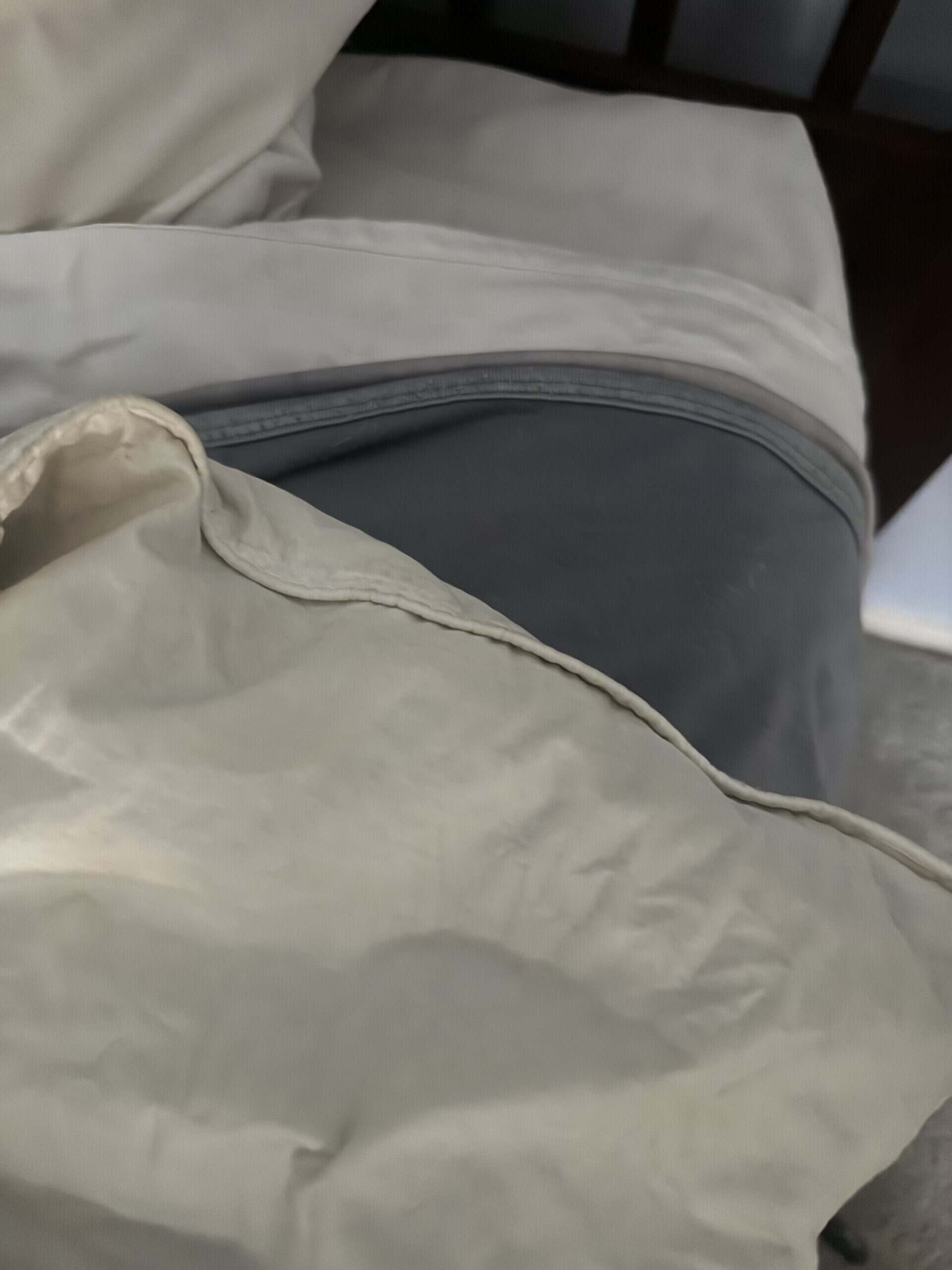
A cooling blanket does not stop working when the room gets cold. It carries on moving heat away from you, which is the problem, and the fix is adding a layer above it rather than swapping it out.
I add a blanket over mine when it gets cold, and a comforter with a throw on top if it is properly cold. That rarely comes up where I am now, and it came up constantly in a colder climate I used to live in. Our roundup of cooling blankets covers the base layer. Our note on telling the sides of a blanket covers that in more detail.
Quick Answer
Add insulation on top rather than replacing the cooling blanket. It stays against your skin doing its job while the layer above traps warmth in the space between.
Layering Options
| Layer on top | Adds | Suits |
|---|---|---|
| Lightweight throw | A little | Mildly cool nights |
| Comforter or duvet | A lot | Genuine cold |
| Second regular blanket | Moderate | Adjustable, easy to remove |
| Weighted blanket | Moderate, plus pressure | People who already use one |
| Quilt | Moderate | Breathable, less bulk |
| Nothing, swap instead | Full warmth | Sustained cold seasons |
Why Adding Beats Swapping
Keeping the cooling blanket against your skin preserves what it does, which is moving heat and moisture away rather than making you cold.
Overheating under a warm blanket is what wakes people in winter as much as being cold does, and a cooling layer next to skin manages that.
The layer above traps warmth in the space between it and you, so you get insulation without the sweaty feeling of heavy fabric directly on skin.
It is also adjustable. A layer added on top can be pushed off at two in the morning, where swapping blankets means getting up. Our note on using a cooling blanket in winter covers the seasonal question. Our note on cooling blanket sliding covers that in more detail.
What I Do
Add a blanket over it, and if it is really cold, a comforter with another throw on top of that.
Sometimes I use a different blanket entirely when it is genuinely cold, though that is the exception rather than the routine.
Where I am now this rarely comes up, because there is not much of a winter to speak of and the cooling blanket works year-round.
A colder climate I lived in previously is where the layering actually mattered, and the approach that worked there was building up rather than switching. Our note on how many cooling things you need covers the rest of the setup.
Why Cold Wakes You Differently
Being too cold and being too hot both disrupt sleep, and they do it at different points in the night.
Core temperature drops as you fall asleep and reaches its lowest in the early hours, which is when a bed that was comfortable at midnight becomes too cold.
That timing is why people wake around four in the morning reaching for a blanket, and why the layer you want is one you can pull up without getting out of bed.
Room temperature falls overnight as well in most homes, so the two effects arrive together.
Layering suits that pattern better than a single warm blanket does, since you can start under less and add without disturbing the bed. Our note on cooling sheets for hot sleepers covers the timing.
The Order Matters
Cooling blanket against skin
It only works by contact, so anything between you and it costs you the effect.
Insulation above
Whatever holds warmth goes on the outside, where its job is stopping heat leaving the bed.
Heaviest on top
A weighted blanket over everything applies pressure without interfering with the layers underneath.
Adjustable layers accessible
The layer you might remove at night should be the easiest to push off. Our note on why cooling blankets stop feeling cool covers the sensation fading.
Building the stack in that order takes no more effort than throwing a blanket on top, and it is the difference between a warm bed and a sweaty one.
When to Swap Instead
Sustained cold over a whole season makes layering fiddly, and at that point a warm blanket is simply the right tool.
Small beds are the other case, since three layers on a smaller bed is a lot of bulk to manage.
Anyone who runs cold generally may find a cooling blanket next to skin unpleasant in winter regardless of what is above it.
Storing it properly over a cold season and bringing it back out is straightforward, and it is what most people in genuinely cold climates end up doing. Our comparison of cooling and lightweight blankets covers the alternatives.
Bed Size Limits How Much You Can Layer
Layering sounds free and it is not, because every layer adds bulk that has to be tucked, pulled, and managed.
On a smaller bed three layers is a substantial amount of fabric, and the outer ones tend to slide off the sides rather than staying put.
Each layer also needs to be at least as wide as the one below it, or the cooling blanket ends up exposed at the edges where the warm layer does not reach.
That is why people with smaller beds tend to swap rather than layer, and people with larger beds can build up three deep without noticing.
Weight is the other limit, since three layers of anything substantial is heavy enough to restrict movement, which some people like and others find suffocating. Our roundup of lightweight blankets covers thinner options for layering.
Mild Climates Change the Question
Where winters are mild, a cooling blanket is a year-round item and the layering question comes up a handful of nights rather than for months.
That makes a single added blanket sufficient, and it removes the argument for owning a separate winter setup at all.
Air conditioning complicates it slightly, since a room cooled below comfortable at night produces the same need for a layer in the middle of summer.
Which is worth knowing before assuming this is only a winter problem. Our note on whether a portable AC blows air on you covers that.
Either approach is reasonable, and which suits you depends far more on your climate and your bed than on anything about the blanket itself.
What Not to Put Over It
Nothing that traps moisture, since the whole point of the cooling blanket is moving moisture away from you, and a non-breathable layer above simply holds it against your skin instead.
Waterproof mattress protectors used as an outer layer are the version of this people occasionally try, and it makes the bed clammy.
Electric blankets over a cooling blanket work against each other directly, one adding heat while the other removes it, which wastes both.
And nothing so heavy that it compresses the cooling blanket flat against you, since some cooling fabrics rely on airflow as well as conduction.
Layering a Cooling Blanket FAQ
What do you put over a cooling blanket when it gets cold?
A regular blanket, comforter, or quilt on top. I add a blanket, and a comforter with a throw over that if it is really cold.
Why not just swap it for a warm blanket?
Keeping the cooling layer against skin manages overheating and moisture, which wakes people in winter as much as cold does. Layering is also adjustable at two in the morning.
What order should the layers go?
Cooling blanket against skin, insulation above it, heaviest on top. Anything between you and the cooling blanket costs you its effect.
Can I use a weighted blanket over it?
Yes, on top of everything. It adds pressure and some warmth without interfering with the layers underneath.
What should I avoid layering over it?
Anything non-breathable, since the cooling blanket is moving moisture away and a sealed layer traps it. Electric blankets work directly against it.
Does this come up in a mild climate?
Rarely. Where I am now the cooling blanket works year-round and this is a handful of nights. Air conditioning can produce the same need in summer.
When should I just switch blankets?
Sustained cold across a whole season, small beds where three layers is too much bulk, or if you find cooling fabric unpleasant against skin in winter.
Will layering stop the cooling working?
Not against your skin, where it matters. The blanket keeps conducting heat away from you, and the layer above slows how fast that heat leaves the bed.
