
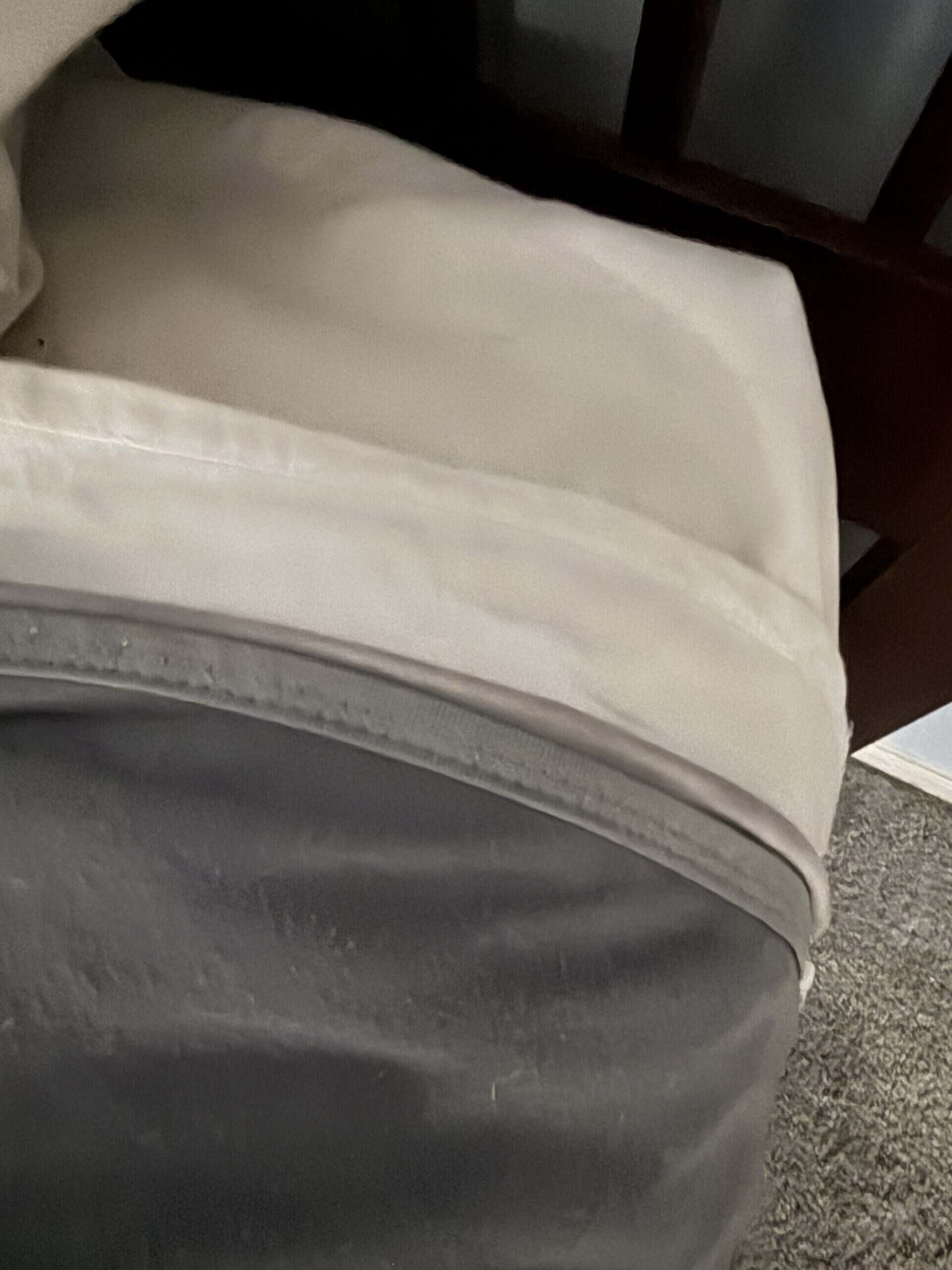
A cooling blanket works by touching you. The fabric moves heat away from skin, so anything between you and it is a layer the cooling has to work through.
I sleep under mine directly and do not use a sheet with it. I have tried it, and the sheet negates what the blanket is for. Our roundup of cooling blankets covers the category. Our note on layering over a cooling blanket in cold weather covers that in more detail.
Quick Answer
No, and a sheet reduces the effect. Cooling fabrics work by contact and conduction, so a layer in between insulates you from the thing you bought.
What a Sheet Changes
| Setup | Cooling effect | Trade |
|---|---|---|
| Blanket directly on skin | Full | Blanket needs washing more often |
| Thin percale sheet between | Reduced | Easier laundry |
| Flannel or jersey sheet between | Largely lost | Warmer, defeats the purpose |
| Sheet over the blanket | None from the blanket | Blanket is doing nothing |
| Duvet cover over it | Mostly lost | Protects the blanket |
Why Contact Is the Mechanism
Cooling fabrics do not generate cold. They conduct heat away from your skin faster than cotton does, which is why they feel cool when you first touch them.
That conduction requires contact. Heat has to move from you into the fabric, and a sheet in between means the heat moves into the sheet first.
Cotton is a poor conductor by comparison, so it holds that heat rather than passing it on, and you end up sleeping against warm cotton with a cooling blanket on the far side of it.
The blanket still helps a little, since it is pulling heat out of the sheet. It is doing a fraction of what it does against skin. Our note on what makes a blanket cooling covers the fabrics.
What I Do
Directly against skin, no sheet, and that has been the setup for the whole time I have had it.
I tried it with a sheet at some point and it was clearly worse. The fabric is the point of the blanket, and putting cotton in front of it removes the reason to own one.
That is not a subtle difference either. It is the difference between the blanket feeling cool when you get in and feeling like an ordinary blanket.
What it costs is laundry. The blanket goes against skin every night, which means it needs washing more often than it would with a sheet protecting it. Our note on washing a cooling blanket covers doing that without wrecking it.
What the Sheet Does to Moisture
Heat is only half of what a cooling blanket handles, and the moisture side is where a sheet does its quieter damage.
Sweat evaporating from skin carries heat away, and that only works if the moisture can move into fabric that passes it along rather than holding it.
Cotton absorbs and holds. A cotton sheet against skin takes on moisture and stays damp, which is the clammy feeling people describe on warm nights.
Cooling fabrics are generally chosen to move moisture through rather than absorb it, so it reaches the outer surface and evaporates.
Putting cotton in between interrupts that at the first step, which is why the sheet costs you more than the temperature difference alone suggests. Our note on bedding for humid climates covers the moisture question.
The Case for Using One Anyway
Less frequent blanket washing
A sheet takes the wear and washes easily. Cooling fabrics are frequently more delicate and lose performance with heavy washing.
Fitted sheet is separate
None of this applies to the fitted sheet under you, which is doing a different job and should stay.
Shared beds
A sheet gives each person something to pull without dragging the blanket off the other.
Habit
Some people find sleeping directly under a blanket unpleasant regardless of the fabric, and that is a legitimate preference. Our note on sharing a cooling blanket covers shared beds.
Knowing that distinction is what stops people concluding the blanket was oversold when the setup around it was the actual problem.
If You Want Both
A very thin percale or a lightweight bamboo sheet interferes least, since both conduct better than flannel or jersey.
Skip anything brushed, napped, or fleecy, because those are insulators by design and they are the worst possible layer under a cooling blanket.
Using a sheet on part of the bed rather than all of it is an option people arrive at on their own, with the blanket against the upper body and a sheet lower down.
The honest version is that any layer costs you something. If the cooling matters more than the laundry, sleep against it. Our comparison of cooling and lightweight blankets covers the alternative.
How It Changes Through the Night
The cool feeling on contact is the part people notice, and it is not the part that matters most over a full night.
That initial sensation comes from the fabric being at room temperature and conducting heat quickly. It fades within minutes as the fabric warms to your temperature, which is normal rather than a failure.
What continues is the ongoing conduction, moving heat from you into the fabric and out to the air. That is the property doing the real work, and it depends entirely on contact.
A sheet delays the initial cool feeling and reduces the ongoing conduction, so it costs you both halves rather than only the sensation.
People who add a sheet and conclude the blanket stopped working have frequently just insulated themselves from it. Our note on why cooling blankets stop feeling cool covers that.
Duvet Covers Are the Bigger Mistake
Putting a cooling blanket inside a duvet cover removes the cooling almost entirely, and people do it to protect the blanket.
The cover becomes the surface touching you, so whatever it is made of determines how the bed feels.
Cooling duvet covers exist and change the calculation, though at that point the cover is doing the work rather than the blanket inside it.
If a blanket needs protecting to that degree, a more durable cooling blanket is a better answer than covering the one you have. Our note on how long a cooling blanket lasts covers durability. Our note on telling the sides of a blanket covers that in more detail.
None of that is a reason to avoid protecting the blanket, and it is a reason to know what the protection costs before deciding it is worth it.
What to Wear Matters More Than the Sheet
Heavy pajamas do the same thing a sheet does, and more of it, since fabric against skin over most of your body is a larger barrier than a sheet.
Anyone sleeping in flannel under a cooling blanket has already undone the purchase.
Lighter sleepwear, or less of it, gets more from the same blanket without changing anything about the bedding.
That is the cheapest adjustment available here and it is the one people skip while buying more cooling products. Our note on how many cooling things you need covers the whole stack.
Cooling Blanket and Top Sheet FAQ
Do I need a top sheet with a cooling blanket?
No, and using one reduces the effect. Cooling fabric works by conducting heat away from skin, so a layer in between insulates you from it.
How much does a sheet reduce the cooling?
Noticeably. I have tried both and the difference is between the blanket feeling cool when you get in and feeling like an ordinary blanket.
Does the fitted sheet matter?
No. That is under you doing a different job and should stay. This is only about a top sheet between you and the blanket.
What if I want a sheet for hygiene?
A very thin percale or lightweight bamboo interferes least. Avoid flannel, jersey, or anything brushed, since those are insulators by design.
Can I put it in a duvet cover?
You can, and it removes most of the cooling. The cover becomes the surface touching you, so the blanket inside is doing very little.
Does sleeping directly under it wear it out faster?
It means washing more often, which is the real cost. Cooling fabrics are frequently delicate and lose some performance with heavy washing.
What about pajamas?
They matter more than a sheet does, since fabric covers most of your body. Heavy sleepwear under a cooling blanket undoes the purchase.
Is this different for couples?
A sheet gives each person something to pull without dragging the blanket off the other, which is a real reason to use one despite the cost.
For the wider picture, see our guide to best cooling sheets for hot sleepers.
