
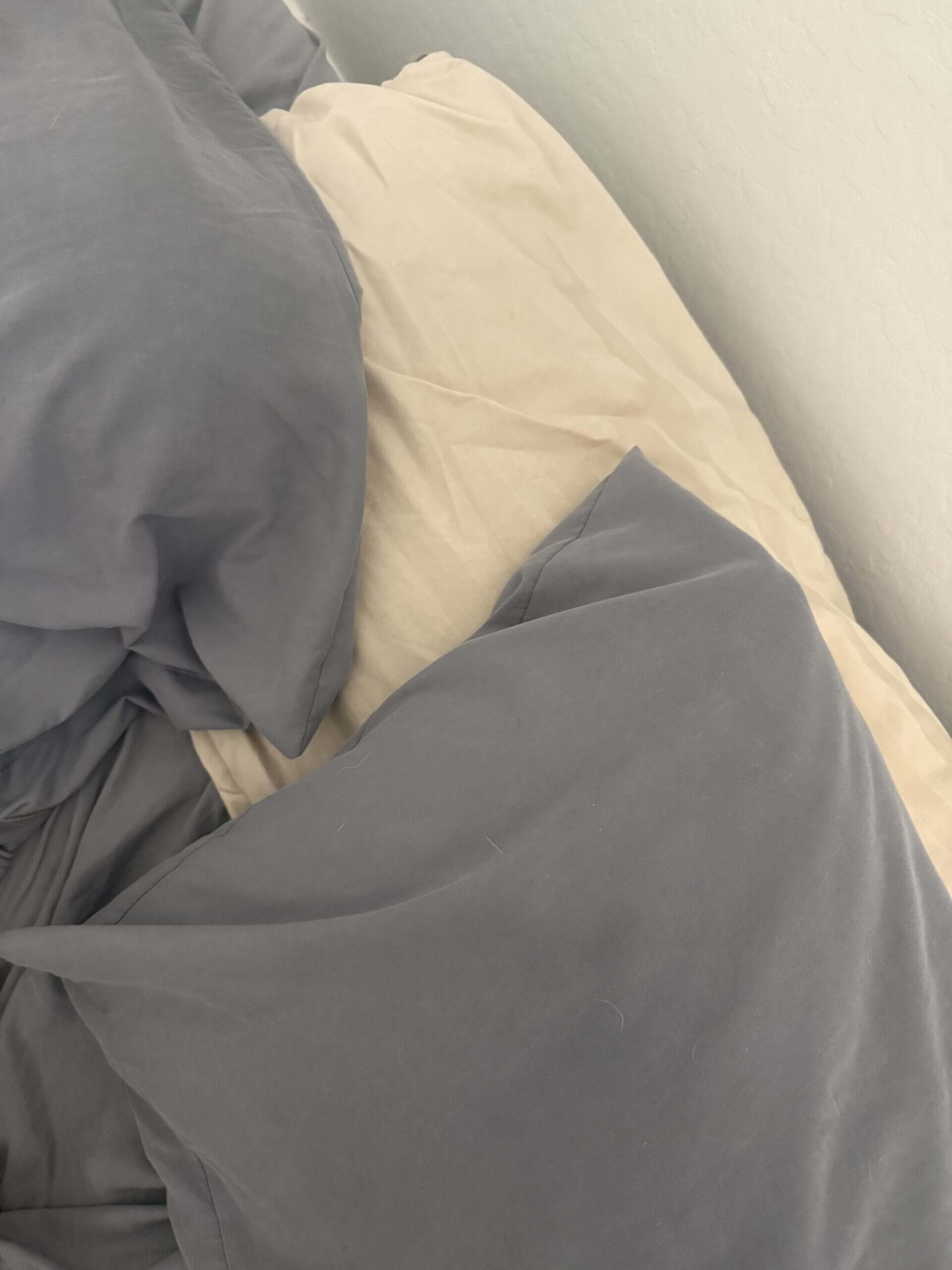
Not necessarily a different pillow, and possibly fewer of them. Every pillow on a bed holds heat, and a stack that feels supportive in winter traps warm air around your head and shoulders in a way one or two do not.
Changing the count is cheaper than changing the pillow, and for anyone who sleeps with several it does more.
Quick Answer
Reduce the number before replacing anything. Each pillow adds insulation, and dropping from five or six to three makes a noticeable difference. If one pillow still sleeps hot, the fill is the issue rather than the season, and a breathable pillowcase costs less than a new pillow.
Key Points
- Every pillow on the bed traps heat, not only the one under your head
- Reducing the count is free and often enough
- Dense memory foam holds heat more than any other common fill
- Pillowcase fabric matters as much as the pillow underneath
- Loft needs stay the same regardless of season
- Two pillows alternated give each a longer recovery
What Changes Between Seasons
| Factor | Winter | Summer |
|---|---|---|
| Pillow count | More is comfortable | Fewer sleeps cooler |
| Fill preference | Anything works | Breathable fills favored |
| Pillowcase | Flannel and heavy cotton fine | Percale or cooling weave |
| Loft requirement | Unchanged | Unchanged |
| Surface warming rate | Slower, room is cool | Faster, room is warm |
| Flipping frequency | Lower | Higher |
Count Matters More Than Type
People think of the pillow under their head and forget the others. A body pillow, a knee pillow, and two spares against the headboard all sit close enough to hold warm air around you.
Pillows are insulation. That is the same property that makes a stack feel cozy in January and stifling in July.
Reducing the count costs nothing and can be reversed the moment the weather turns, which makes it the first thing to try rather than the last.
What I Do
I use more pillows in winter than in summer. Three total in summer, and five or six in colder weather.
The reason is heat. A lot of them add up and hold warmth, and in an Arizona summer that is noticeable enough that dropping the count is worth it.
I do not change the type of pillow seasonally, only how many are on the bed. The gel cooling pillow stays year round and the others come and go.
That is a free adjustment, which is why I would suggest trying it before buying anything. Halving the stack changes how the bed feels more than most people expect.
My experience covers a dry hot climate with a gel cooling pillow used year round. It does not cover humid climates or people who sleep with one pillow, where there is nothing to reduce.
Two Pillows Beat One Flipped Twice
Alternating between two pillows is a middle option worth knowing about, since it addresses the same problem as reducing the count without giving anything up.
A pillow that has been lying unused for twenty minutes has fully returned to room temperature, which is more recovery than a flipped side gets in five.
That means swapping to a second pillow delivers a genuinely cool surface rather than a slightly cooler one, and it works with pillows you already own.
The cost is space on the bed and the second pillow adding some heat while it sits there. In a small bed or a very warm room that can cancel the benefit, and it is worth testing before assuming either way.
Loft Does Not Change
The pillow under your head needs to fill the gap between your head and the mattress, and that gap is determined by your shoulder width and sleep position rather than the weather.
Switching to a thinner pillow for summer sacrifices neck alignment for temperature, which trades one problem for another.
If you sleep on your side in January, you sleep on your side in July, and the loft requirement is identical. Position guidance sits in choosing a pillow for your sleep position.
The right seasonal change is fill and cover rather than height.
Fill Behaves Differently in Heat
Solid memory foam
Holds heat and restricts airflow. The worst common fill for summer, and the reason cooling versions exist at all.
Shredded foam
Air moves between the pieces, which breathes considerably better than a solid block while contouring similarly.
Latex
Open cell structure and naturally cooler than memory foam, without any treatment that fades over time.
Down and feather
Breathes well and compresses, which means less material against your head than the loft suggests.
Buckwheat
Air moves freely between hulls and it is among the coolest options, at the cost of noise and weight. Options sit in cooling pillows for hot sleepers.
The Pillowcase Is the Cheapest Change
A cooling pillow under a flannel case is a warm pillow. The cover is the layer touching you, and it can undo everything underneath it.
Percale breathes far better than sateen or satin, and cooling weaves do more again. Either costs a fraction of a new pillow.
For anyone whose pillow is fine in winter and hot in summer, swapping cases seasonally is the whole solution, covered in cooling pillowcases.
What the Extra Pillows Are Doing
A large stack usually accumulates for reasons that have nothing to do with sleeping on them, and separating those out makes the summer reduction easier.
Some are structural: a pillow between the knees for hip alignment, or one under the lower back. Those serve a purpose and belong on the bed year round.
Some are positional: propping up to read, or a wedge for reflux. Those can be removed at lights-out rather than kept in place all night.
The rest are decorative or habitual, sitting against the headboard because that is where they live. Those are the ones to take off first, since they cost heat and do nothing.
Sorting a stack that way usually finds two or three that can go without losing anything, which is the free version of a summer pillow change.
The Room Sets the Limit
Pillow surfaces warm to skin temperature within minutes regardless of fill. What differs is how fast, and how quickly the unused side recovers.
Both of those depend on room temperature. In a hot bedroom no pillow recovers well, which is why cooling pillows underperform in exactly the conditions people buy them for.
Cooling the room does more than changing anything on the bed, covered in cooling a bedroom without central air, and the flipping mechanism sits in why people flip pillows.
Worth Changing Against Not
Worth changing: the number of pillows on the bed, the pillowcase fabric, and whether a thick protector is insulating the pillow. All three are cheap or free and reversible.
Not worth changing: loft, which your body needs regardless of season. And buying a second pillow purely for summer rarely earns its cost when a case swap and a smaller stack achieve most of it. Replacement timing sits in how often to replace a cooling pillow.
Related Reading
- the flipping question
- the cheapest change
- how many belong on a bed
- getting loft right
- fills that breathe
- the rest of the bed
Frequently Asked Questions
Should I use a different pillow in summer?
Try using fewer first. Every pillow on the bed traps heat, so reducing the count costs nothing and often does more than switching to a different pillow.
Do extra pillows make you sleep hotter?
Yes. Pillows are insulation, and a stack around your head and shoulders holds warm air. That is welcome in winter and works against you in summer.
Should I use a thinner pillow when it is hot?
No. Loft needs to match your shoulder width and sleep position, which do not change seasonally. A thinner pillow trades neck alignment for temperature.
What pillow fill is coolest?
Buckwheat and latex breathe best, with shredded foam close behind. Solid memory foam is the warmest common fill, which is why cooling versions of it exist.
Does the pillowcase really matter?
Considerably. A cooling pillow under a flannel case is a warm pillow. Percale or a cooling weave costs a fraction of a new pillow and often solves the problem.
Why does my cooling pillow still get hot in summer?
Because the room sets the limit. Cooling materials delay the surface warming and rely on room air to shed that heat, and a hot bedroom means neither side recovers.
Is it worth owning two sets of pillows?
Rarely. Swapping pillowcases and reducing the count achieves most of the same effect for far less money and no storage.
