
Cooling pillows have two lifespans and the shorter one catches people out. Support usually lasts one to three years depending on fill, and the cooling effect fades sooner, often within the first year, because gel and phase-change materials degrade with repeated heat cycling.
That means a pillow can still hold your head correctly while doing none of what you bought it for. Judging by shape alone misses it.
Quick Answer
Expect one to three years overall, with the cooling effect fading first. Replace when it stays flat after fluffing, when you wake with neck discomfort, or when the cooling is noticeably weaker than it was. Both matter, and they rarely fail at the same time.
Key Points
- Cooling performance fades before support does
- Gel and phase-change materials degrade with heat cycling
- Solid memory foam compresses permanently at contact points
- Shredded fill can be topped up rather than replaced
- Neck discomfort on waking is the clearest support signal
- Pillowcases and protectors extend life meaningfully
Expected Lifespan by Fill
| Fill | Support life | Cooling life |
|---|---|---|
| Gel-infused memory foam | 2 to 3 years | Often under 2 years |
| Shredded foam | 2 to 3 years | Depends on treatment |
| Latex | 3 to 4 years | Inherent, does not fade |
| Phase-change cover | Varies with pillow | 1 to 2 years |
| Down and feather | 2 to 3 years | Minimal to begin with |
| Polyester fill | 1 to 2 years | Minimal to begin with |
Why Cooling Fades First
Gel infusions conduct heat away until the gel itself reaches the temperature around it. Repeated heating and cooling breaks down the gel’s structure over months, which reduces how quickly it moves heat.
Phase-change materials absorb heat while changing state, and that capacity diminishes with each cycle. A cover that felt cold to the touch when new feels neutral after a year of nightly use.
Perforated and ventilated foams work by moving air, and those channels compress and clog with skin oils and dust over time.
Latex is the exception, since its cooling comes from an open cell structure rather than a treatment, and that does not degrade the same way. What each type does sits in what makes a pillow cooling.
Where Mine Is After a Year
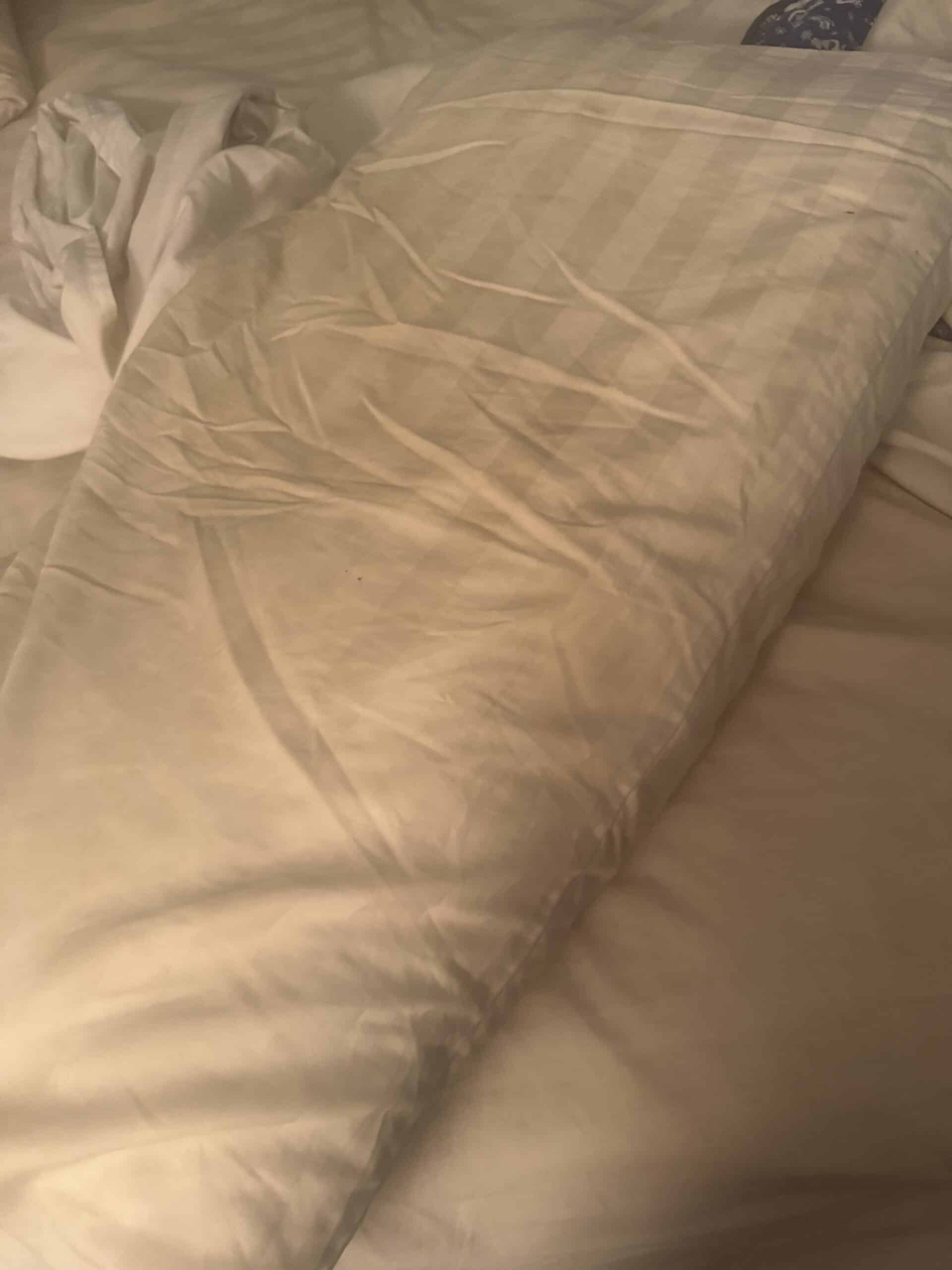
I have had my gel cooling pillow a bit over a year, and it has flattened a bit. It probably needs replacing soon.
The gel effect has faded too. Not gone, and noticeably weaker than it was, which lines up with how these materials behave over repeated heat cycling.
I plan to replace it rather than push it further. A year to eighteen months of useful cooling from a gel pillow seems about right based on this one.
The flattening and the fading arrived together in my case, which is not always how it goes. Plenty of people find the cooling stops working while the pillow still holds shape fine, and that is the harder situation to notice.
My experience covers one gel-infused pillow in a dry hot climate with nightly use. It does not cover latex or shredded-fill pillows, which age differently, or occasional-use pillows.
Signs It Needs Replacing
It stays flat after fluffing
Fold it in half and let go. A pillow that springs back has life left, and one that stays folded has lost its structure.
Neck or shoulder discomfort on waking
The clearest support signal. A pillow that no longer holds your head in line produces stiffness that was not there before.
Visible permanent dents
A hollow where your head goes that does not recover during the day means the foam has compressed permanently.
The cooling has faded
Harder to notice because it happens gradually. Comparing against a new pillow of the same type is the only reliable check.
Yellowing or odor
Sweat and skin oils accumulate over years. A protector delays this considerably and does not prevent it.
Cooling Fade Against Support Loss
Cooling gone, support fine
Common with gel pillows in the first two years. A cooling pillowcase restores part of the effect for far less than a new pillow, covered in cooling pillowcases. Our note on sizing a cooling pillow covers that in more detail.
Support gone, cooling fine
Less common and it happens with latex, where cooling is structural. Replacement is the only fix, since support cannot be restored.
Both gone
The straightforward case, and the pillow is finished. Options sit in cooling pillows for hot sleepers.
Neither gone but you flip constantly
That may be the mechanism rather than the pillow, covered in why people flip pillows.
Noticing Gradual Fade
Support failure announces itself and cooling fade does not, which is why the second one is usually caught late.
The decline happens across months, and each night is barely different from the one before. There is no point at which the pillow stops working, only a slow drift you adapt to without noticing.
The practical check is comparison rather than memory. Lying on a new pillow of the same type for a few minutes makes the difference obvious immediately.
Failing that, an increase in how often you flip is a rough proxy. If you turn the pillow more than you did last year with the same room conditions, the surface is warming faster than it used to.
Extending the Life
A protector under the pillowcase blocks sweat and skin oils, which are what degrade foam and cause yellowing. It is the cheapest thing that meaningfully extends life.
Washing according to the care label matters more with cooling pillows than plain ones. Heat damages gel and phase-change materials, so tumble drying is often the step that ends the cooling.
Airing a pillow regularly lets moisture out of the fill, which slows breakdown and reduces odor.
A thick pillowcase works against the cooling from day one, so using a breathable one gets more out of the pillow throughout its life rather than only at the end.
When Replacement Is Not the Answer
If the cooling faded but support is fine, a cooling pillowcase costs a fraction of a new pillow and restores part of the effect.
If you are hot regardless of the pillow, the room is the constraint and a new pillow will disappoint the same way, covered in cooling a bedroom without central air.
If the pillow is the wrong loft for your sleep position, replacing it with the same type repeats the mistake. Position guidance sits in choosing a pillow for your position.
And if a shredded-fill pillow has flattened, topping up the fill costs little and restores loft, which solid foam does not allow.
Still Good Against Done
Still good looks like a pillow that springs back when folded, holds your head level, and cools at least somewhat. Gradual cooling fade alone is not a reason to replace if support is intact.
Done looks like staying flat after fluffing, permanent dents, waking with neck stiffness, or persistent odor that washing does not fix. Any of those means the pillow has reached the end regardless of how long you have had it.
Related Reading
- the flipping question
- how each type works
- replacement options
- extending what you have
- getting loft right
- disposing of the old one
Related: does my gel pillow go flat.
Frequently Asked Questions
How long does a cooling pillow last?
One to three years for support depending on fill, and the cooling effect often fades sooner, sometimes within the first year. The two rarely fail at the same time.
Why did my cooling pillow stop feeling cool?
Gel and phase-change materials degrade with repeated heat cycling, and perforated foams clog with skin oils and dust. Latex is the exception, since its cooling is structural rather than a treatment.
How do I know if my pillow is worn out?
Fold it in half and let go. A pillow that stays folded has lost its structure. Waking with neck stiffness and permanent dents are the other clear signals.
Can I restore the cooling?
Not to the foam itself. A cooling pillowcase restores part of the effect for far less than a new pillow, which is worth trying when support is still fine.
Does washing damage a cooling pillow?
Heat can. Tumble drying often ends the cooling on gel and phase-change materials, so following the care label matters more here than with a plain pillow.
Do protectors help?
Considerably. They block sweat and skin oils, which are what degrade foam and cause yellowing, and they are the cheapest way to extend a pillow’s usable life.
Is it worth replacing if only the cooling has gone?
Not necessarily. If support is intact, a cooling pillowcase addresses it for a fraction of the cost. Replace when support fails, since that cannot be restored.
