
Cooling one room is a different problem from cooling a house, and the order you work in matters more than what you spend. Blocking heat before it arrives costs least and does most, air movement comes next, and a cooling appliance only has to handle what the first two steps left behind.
| Step | What it does | Rough cost |
|---|---|---|
| Block daytime sun | Stops the room loading with heat | Low |
| Seal and close the room | Keeps cooled air where you are | None |
| Move air across skin | Makes the same temperature feel cooler | Low |
| Change bedding layers | Removes trapped heat at the surface | Low to moderate |
| Add a cooling appliance | Actually lowers air temperature | Moderate to high |
| Manage humidity | Lets evaporation work | Moderate |
Key Points
- Blocking sun during the day beats cooling the room at night
- Fans cool people rather than air, so they need someone in the room
- A closed bedroom cools faster than an open one
- Comforters undo most of what cooling layers do
- Portable and window units cool one room for far less than central air
- Dry heat and humid heat need different approaches
Block the Heat First
A bedroom that bakes all afternoon starts the night warm, and every cooling measure then works against a deficit rather than from neutral.
Blackout curtains and closed blinds during the day stop a large share of solar gain before it becomes heat in the room. That is the cheapest intervention available and the one most people skip because it happens hours before bedtime.
Shutters and exterior shading do more, since sunlight stopped outside the glass never becomes heat inside. Whether the two are worth layering sits in whether you need curtains with shutters.
West-facing rooms take the worst of it, since afternoon sun is both intense and low enough to come through a window rather than over it.
Contain the Room
Cooling one room only works if the cooled air stays in it. An open door means cooling a hallway and everything beyond.
Closing the door an hour before bed lets whatever you are running work on a smaller volume, which is why single-room cooling beats whole-house cooling for a bedroom.
Gaps matter less than people think for temperature and more for airflow. A draft stopper at the base of the door helps in a room being actively cooled, covered in door draft stoppers.
How It Works in a Hot Climate
My setup came together in stages rather than at once, and it runs the same way every summer.
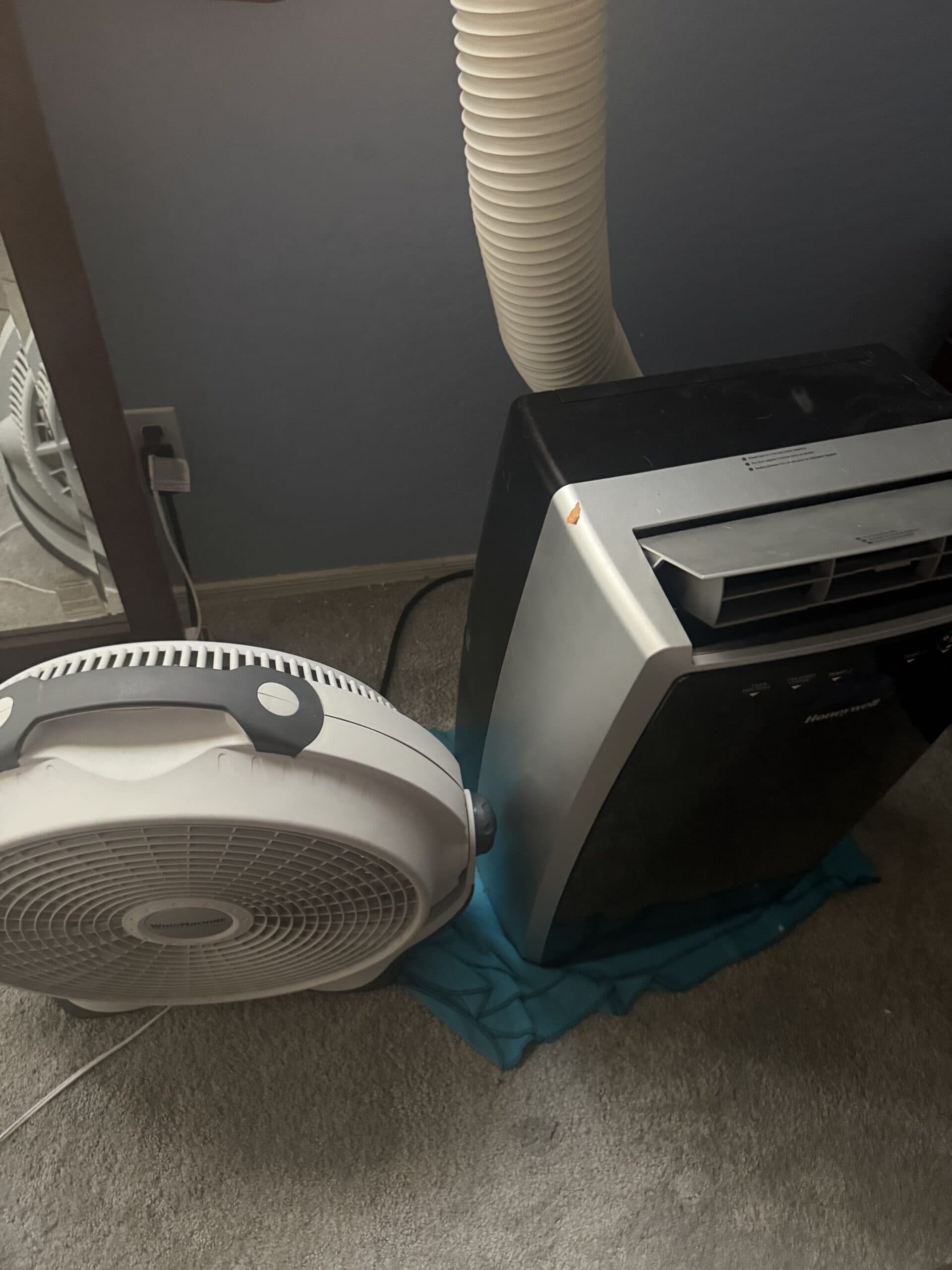
Shutters stay closed with blackout curtains over them, which is the daytime heat block. A ceiling fan and a floor fan run year round. A portable air conditioner comes out for summer and runs overnight in the bedroom only.
Cooling bedding sits underneath all of that: cooling pillows, a cooling blanket, a cooling topper, and no comforter through summer.
What I would point at as the useful lesson is the order. The blanket made the most difference of anything I bought, and it was the third thing I purchased rather than the first.
The portable unit is worth its cost specifically because the alternative is running central air on low through the whole house, which would be much more expensive for one occupied room.
My experience covers a dry desert climate. It does not cover humid heat, where evaporative cooling works less well and humidity management matters more than anything here.
Move Air Across Yourself
Fans do not lower air temperature. They move air across skin, which speeds evaporation and makes a given temperature feel several degrees cooler.
That means a fan pointed at the bed does more than one circulating the room, though both have a place. Ceiling fans distribute, and a floor or bedside fan produces the direct effect.
The corollary is that a fan in an empty room does nothing useful and adds a small amount of heat from its motor.
Running one alongside any cooling appliance improves the result at almost no cost, covered in running a fan and AC together. Options sit in bedside fans and ceiling fans.
Deal With the Bedding
A comforter over cooling layers cancels most of what they do. Dropping it for summer costs nothing and is the change with the best return of anything in this list.
The layer against your skin matters most, since it is closest and traps least. A cooling blanket is cheaper than a topper and touches you directly, which is why it is often the better first purchase.
Sheets in percale or linen breathe considerably better than sateen or satin, which sit closer against the skin and hold warmth.
The full picture for hot climates sits in bedding for desert climates, and buying order sits in what to change first if you sleep hot.
Cooling Appliances Compared
Portable air conditioner
Cools one room properly, needs a window vent, and is noisier than alternatives. Suits renters and overnight bedroom use, covered in whether a portable AC is worth it.
Window unit
More efficient than portable and requires a window it can mount in, plus landlord permission in many rentals.
Evaporative cooler
Adds humidity while cooling, which works in dry climates and makes humid ones worse.
Dehumidifier
Removes moisture rather than heat. In humid climates it can make a room feel considerably more comfortable at the same temperature, covered in whether a dehumidifier helps sleep.
Dry Heat Against Humid Heat
Dry heat
Evaporation works well, so fans and airflow deliver a lot. Cooling layers perform closer to their promise, and humidity control is rarely the issue.
Humid heat
Sweat evaporates slowly, which limits what fans achieve. Removing moisture often improves comfort more than lowering temperature, and cooling bedding is fighting a harder problem. Approaches for either sit in sleeping in hot weather without AC.
Timing Through the Day
Close curtains and windows in the morning before the heat builds, rather than after the room is already warm.
Open windows once the outside temperature drops below the inside temperature, which in desert climates is often well after dark.
Start any cooling appliance an hour before bed rather than at bedtime, so the room is comfortable when you get in rather than working toward it.
Turn fans off when leaving the room, since they cool people rather than air and contribute nothing to an empty one.
Cheapest Changes First
Free: close curtains during the day, shut the bedroom door, drop the comforter, open windows only when outside is cooler than inside.
Low cost: a fan, blackout curtains if you have none, a cooling blanket, breathable sheets.
Moderate: a cooling pillow, a cooling topper, a dehumidifier where humidity is the problem.
Higher: a portable or window air conditioner, which is the only thing on this list that actually lowers air temperature and the last step rather than the first. The complete build sits in bedroom cooling setups for hot climates.
Worth reading next: what to change first covers the buying order in detail, bedding for desert climates handles the layers, and portable AC economics covers the appliance decision. For the room itself, whether curtains block heat and keeping a bedroom cool are the relevant guides.
Frequently Asked Questions
What is the cheapest way to cool a bedroom?
Closing curtains during the day, shutting the door, and dropping the comforter cost nothing and address the largest sources of heat. A fan is the cheapest purchase worth making after that.
Do fans actually cool a room?
No. They move air across skin, which increases evaporation and makes a temperature feel cooler. The room temperature is unchanged, which is why a fan in an empty room achieves nothing.
Should I open windows at night?
Only once the outside temperature is below the inside temperature, which in hot climates can be well after dark. Opening them earlier lets warm air in.
Is a portable AC or a window unit better?
Window units are more efficient and need a suitable window and often landlord permission. Portable units are noisier and less efficient and easier to install anywhere with a window to vent through.
Does a dehumidifier help with heat?
In humid climates, considerably. It removes moisture rather than heat, and lower humidity lets sweat evaporate, which makes the same temperature feel more comfortable. In dry climates it does little.
What should I buy first?
Blackout curtains if the room gets sun, then a fan, then a cooling blanket. Appliances that lower air temperature are the most expensive step and belong after the cheaper ones.
Why does my room stay hot after dark?
Because it absorbed heat all day and releases it slowly. Walls, furniture, and floors hold that heat for hours, which is why blocking sun during the day matters more than cooling at night.
Room temperature is one input among several. the wider cooling picture covers everything else.
