
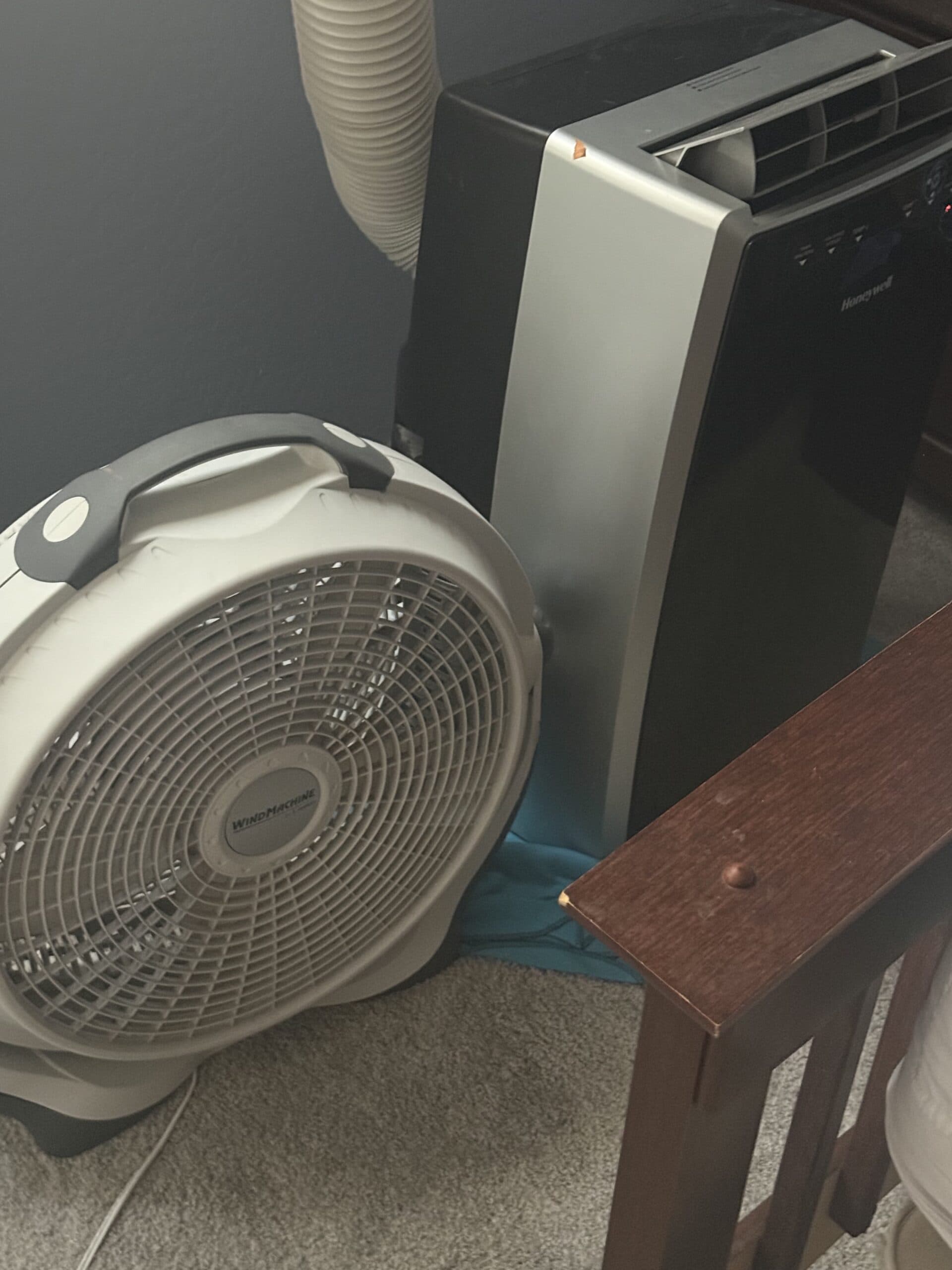
Yes, and it works for a reason people usually skip past. Air conditioning lowers air temperature, and a fan moves that cooled air across your skin, which increases evaporative cooling and makes the same temperature feel cooler. The two do different things rather than duplicating each other.
That combination also lets you set the thermostat higher for the same comfort, which is where the running-cost argument comes from.
Quick Answer
Run both. The fan does not lower air temperature and it makes a given temperature feel several degrees cooler by moving air across skin. That means a higher thermostat setting for the same comfort, and a fan costs a fraction of what air conditioning does to run.
Key Points
- AC lowers temperature, fans move air across skin
- Moving air makes the same temperature feel cooler
- A higher thermostat setting with a fan matches a lower one without
- Fans cost far less to run than air conditioning
- Fans do nothing in an empty room, since they cool people rather than air
- Consistent fan noise helps some people sleep
What Each One Does
| Air conditioning | Fan | |
|---|---|---|
| Lowers air temperature | Yes | No |
| Increases evaporative cooling | No | Yes |
| Removes humidity | Yes | No |
| Cools an empty room | Yes | No |
| Running cost | High | Very low |
| Produces steady noise | Varies | Yes |
Why the Combination Works
Your body loses heat partly through evaporation from the skin. Still air lets a humid layer sit against you, which slows that process, and moving air carries it away and lets evaporation continue.
That is why a fan feels cooling despite adding a small amount of heat to a room through its motor. The sensation is real even though the thermometer does not move.
Air conditioning handles what a fan cannot: actually reducing air temperature and removing humidity. In a genuinely hot room a fan alone circulates hot air, which does less as the temperature climbs.
What I Run
I use both a ceiling fan and a floor fan, and those run year round rather than seasonally. The air conditioning only comes on during Arizona summer.
It does work better together, and the fans on their own are not enough once summer arrives.
The part I would add is that I like the consistent noise, and it helps me sleep. That is a separate benefit from the cooling and it is part of why the fans stay on through winter when there is no cooling reason for them.
So the honest version is that the fans serve two purposes in my setup and only one of them is temperature. Someone who dislikes noise would use them differently.
My experience covers a dry hot climate with fans running year round. It does not cover humid climates, where evaporative cooling works less well, or homes without air conditioning at all.
Ceiling Fans and Direction
Ceiling fans should run counterclockwise in summer, which pushes air downward and creates the draft that produces the cooling sensation.
In winter the reverse setting pulls air up and pushes warm air near the ceiling back down the walls without a direct draft, which helps in rooms with high ceilings.
Speed matters for sleep. High speed produces more cooling and more noise and more disturbance from moving bedding, and most people settle on a middle setting overnight. Options sit in ceiling fans for bedrooms.
Fan Placement With Air Conditioning
Ceiling fan
Distributes cooled air through the whole room, which reduces the temperature differences that make one corner cold and another warm.
Floor or bedside fan
Directs air at you specifically, which produces the strongest cooling sensation for the least energy. Options sit in bedside fans.
Both together
Circulation from above and a direct draft where you sleep. That covers the room and the person, which is different work.
Near the AC vent
A fan positioned to move air away from a vent spreads cooled air faster into the rest of the room rather than letting it pool.
What This Feels Like in Practice
The effect is easiest to notice by removing it rather than adding it. Turning a fan off in a room at a comfortable temperature makes the room feel warmer within a minute, even though nothing about the air has changed.
That gap is the perceived difference, and estimates commonly put it at around four degrees Fahrenheit for moderate air movement.
It also explains why the same setting feels different in different rooms. A room with poor circulation feels warmer than its thermostat reading suggests, and one with a fan running feels cooler.
For sleep the effect matters most at the moment of falling asleep, since core body temperature drops as you fall asleep and anything assisting that helps.
The Cost Argument
Fans use a small fraction of the electricity air conditioning does. Running one continuously costs very little compared with lowering a thermostat by a few degrees.
The practical version is setting the thermostat higher and letting the fan make up the difference in perceived comfort. Several degrees higher with a fan can feel equivalent to a lower setting without one.
That only works while someone is in the room. A fan running in an empty room adds a small amount of heat and cools nothing, which is why turning fans off when you leave is the correct habit.
When a Fan Alone Is Not Enough
Above roughly body temperature, moving air stops helping much and can feel like a hairdryer, since the air is warmer than your skin.
High humidity limits it too. Evaporation slows when the air already holds a lot of moisture, which is why fans work better in dry heat than humid heat.
A room that has absorbed heat all day starts the night warm regardless of air movement. Blocking that heat during the day does more than any fan, covered in whether blackout curtains block heat.
Where a whole-house system is expensive to run, cooling one room is a middle option, covered in whether a portable AC is worth it.
The Noise Side
Steady fan noise masks intermittent sounds from outside or elsewhere in the house, and intermittent sounds disturb sleep more than constant ones at the same volume.
That makes a fan two things at once for a lot of people, and it explains why fans stay on in winter when there is no cooling reason.
Whether a fan or a dedicated machine suits better depends on whether you want the airflow too, compared in white noise machine against fan.
Worth Doing Against Not
Worth doing whenever you are in the room and the air conditioning is running. The fan costs almost nothing, improves comfort at the same thermostat setting, and lets you raise that setting.
Not worth doing in an empty room, where a fan adds heat and cools nobody, or in very high humidity where evaporative cooling does little. The wider setup sits in bedroom cooling setups for hot climates.
Related Reading
- the full setup
- ceiling fan options
- choosing a room fan
- the noise question
- why fans help sleep
- blocking heat first
Related: ceiling fans actually cool a room.
Frequently Asked Questions
Does running a fan with the AC save money?
It can, by letting you set the thermostat higher for the same perceived comfort. Fans use a small fraction of the electricity air conditioning does, so the trade usually favors the fan.
Do fans actually lower the temperature?
No. They move air across skin, which increases evaporative cooling and makes a given temperature feel cooler. A thermometer in the room shows no change.
Should I leave a fan on in an empty room?
No. Fans cool people rather than air, and one running in an empty room adds a small amount of heat from the motor while cooling nobody.
Which way should a ceiling fan turn in summer?
Counterclockwise, which pushes air downward and creates the draft that produces cooling. The reverse setting suits winter by circulating warm air without a direct draft.
Is a ceiling fan or a floor fan better with AC?
They do different jobs. A ceiling fan distributes cooled air through the room, and a floor or bedside fan directs air at you, which produces the stronger cooling sensation.
Do fans work in humid climates?
Less well, since evaporation slows when air already holds moisture. They still help, and dry heat is where the effect is strongest.
Why do people run fans in winter?
Often for the noise rather than the air. Steady sound masks intermittent noises that disturb sleep, and many people keep a fan on year round for that reason alone.
Airflow and temperature work together. building a cooling setup covers the layers.
Recommended Reading
See our note on fan and AC combinations.
