
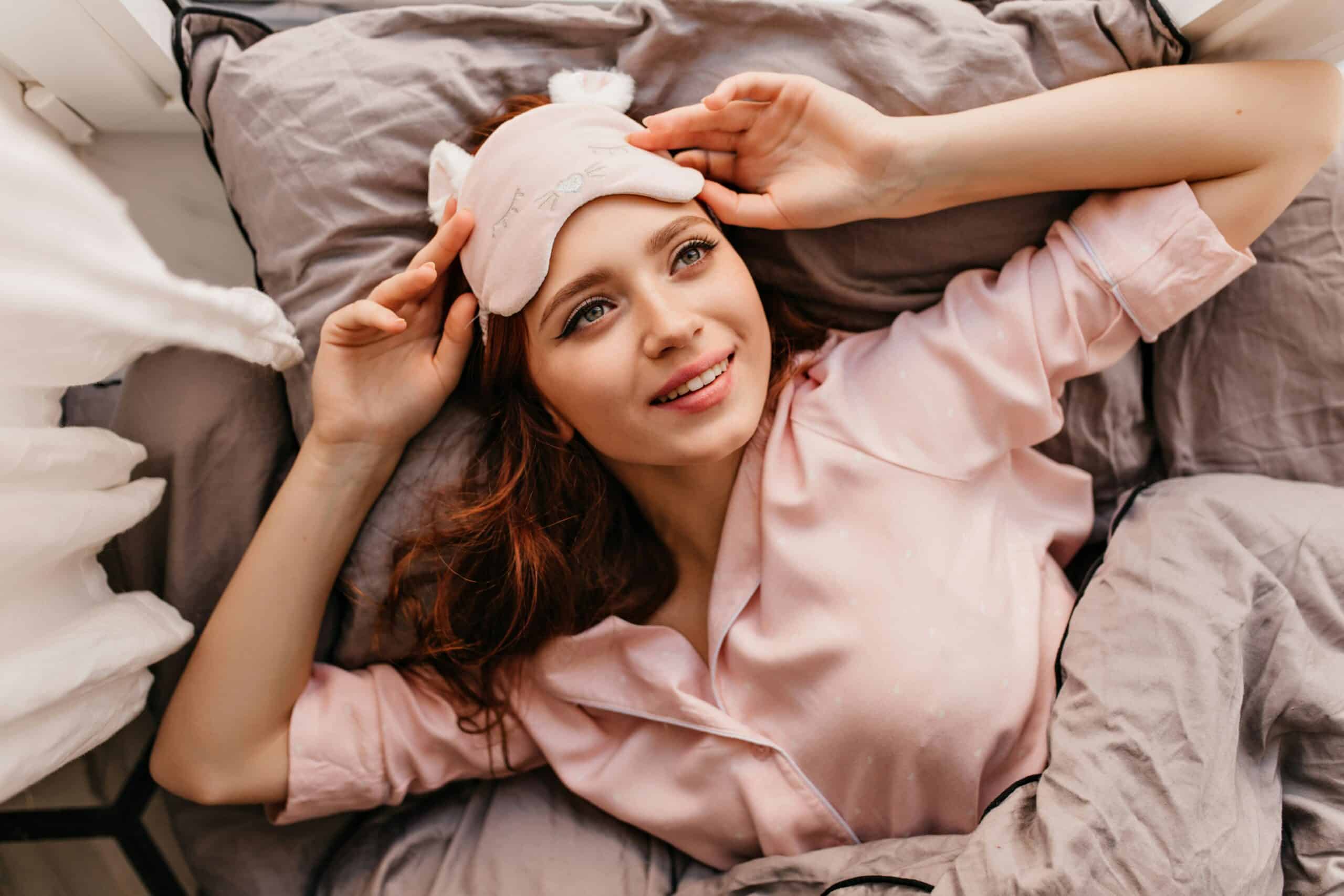
Sleep masks help by blocking light that reaches your eyes, and light exposure at night is one of the more established influences on sleep. Whether a mask makes a noticeable difference depends mostly on how much light your bedroom already has.
A Quick Note
This article covers sleep environment rather than medical advice. Persistent difficulty falling or staying asleep, or daytime sleepiness despite adequate time in bed, is worth raising with a doctor rather than solving with equipment.
Quick Answer
A mask blocks light at the source that matters, which is your eyes. In an already dark room the benefit is small. In a bright bedroom, a room you cannot darken, or during daytime sleep, it does real work that curtains alone cannot match.
Key Points
- Light exposure at night affects sleep timing and quality
- A mask blocks light at the eye rather than at the window
- Benefit scales with how bright your room currently is
- Contoured designs avoid pressure on the eyelids
- Fit and strap tension cause most complaints
- Masks travel where blackout curtains cannot
What the Evidence Suggests
| Situation | Likely benefit |
|---|---|
| Already fully dark bedroom | Small |
| Streetlight or thin curtains | Moderate to large |
| Shift work, daytime sleep | Large |
| Hotels and travel | Large |
| Sharing with someone who reads | Large |
| Hospital or unfamiliar settings | Large |
Light reaching the eyes suppresses melatonin production and signals wakefulness, which is why sleep guidance consistently recommends a dark bedroom.
The Sleep Foundation and the American Academy of Sleep Medicine both list darkness among the basic conditions for good sleep, alongside cool temperature and quiet.
A mask is one way to achieve that, and the reason it can outperform curtains is that it travels with your head rather than covering one opening.
Why a Mask Can Beat Blackout Curtains
Curtains block light at the window, and light gets into a bedroom from more places than that.
Gaps at the sides and top of curtains pass light regardless of fabric weight, which is why extending a rod past the frame does more than buying heavier material.
Standby lights on electronics, a hallway light, a partner’s screen, and light under the door all continue after the window is handled.
A mask handles all of them at once, which is the argument for it in a room you cannot fully darken, and the direct comparison sits in sleep mask against blackout curtains.
Where Masks Fall Short
They can shift or come off
Anyone who moves a lot in their sleep may wake with the mask around their neck, which is the most common complaint.
Pressure on the eyes
Flat masks press against the eyelids, which some people find uncomfortable and which prevents the eye movement that happens during sleep.
They do nothing about noise
A dark room that is still loud is only half solved, and masking sound is a separate purchase, covered in white noise machines.
They block your morning light too
Morning light exposure helps set your body clock, so a mask worn late into the morning works against the schedule it was meant to support.
What Separates a Good Mask From a Bad One
Contoured designs with molded eye cavities leave space for your eyes to move and avoid pressure on the lids. Flat masks are cheaper and this is where they lose people.
The nose bridge is where light most commonly leaks, and a mask that seals there blocks considerably more than one that does not.
Strap adjustment matters both ways. Too tight causes headaches and marks, and too loose slides off during the night.
Breathable fabric prevents the warmth and moisture that builds under a mask over hours, which matters more in a warm bedroom, and options sit in sleep masks for better sleep.
How Much Light Is Too Much
Most people overestimate how dark their bedroom is, because eyes adapt over the twenty minutes after the light goes off.
The practical test is standing in the room for a few minutes with everything off and then looking around. If you can read the time on a clock across the room, or make out the pattern on the curtains, light is reaching you.
Standby indicators are the usual surprise. A television, a router, a charger, and a smoke alarm each contribute a small amount, and together they light a room more than people assume.
Light under a door counts too, particularly in shared homes where someone else is up later.
Sleep guidance generally describes the target as dark enough that you cannot see your hand clearly in front of you. Very few bedrooms reach that without deliberate effort.
Which is the honest case for a mask. Getting a room to that standard takes curtains, tape over indicators, and a door seal, and a mask gets you there in one step.
Who Benefits Most
Shift workers sleeping during daylight get the largest benefit, since daylight is far brighter than anything encountered at night and rooms are rarely built to block it.
People in rentals who cannot install proper blackout coverage get most of the same result for a fraction of the cost and effort.
Anyone sharing a bedroom with someone on a different schedule, where a partner reading or getting ready produces light at the wrong times.
Frequent travelers, since hotel curtains are unreliable and a mask packs into any bag, covered in sleep gear for frequent travelers.
Giving One a Fair Trial
Expect an adjustment period
Wearing something on your face is unfamiliar, and a few nights is a fairer test than one. Judging it on the first night usually produces a no.
Try the fit before bed
Adjusting straps in the dark while half asleep goes badly. Setting the tension while you can see it takes a minute.
Try a contoured one if a flat one failed
Most people who dislike masks tried a cheap flat one. The pressure complaint largely disappears with a molded design.
Combine rather than choose
A mask plus reasonable curtains covers more than either alone, and neither has to do the whole job, covered in blackout curtains.
What a Mask Will Not Fix
If you are lying awake in an already dark room, light is not your problem, and a mask will not change that.
Insomnia, sleep apnea, and pain all keep people awake regardless of how dark the room is, and each needs different handling.
Caffeine timing, an irregular schedule, and alcohol before bed all affect sleep quality more than residual light in most bedrooms.
A mask is a small environmental fix. It works well for the specific problem it addresses, and it is not a treatment for poor sleep generally, which is worth knowing before buying one with high expectations.
Related Reading
- sleep masks compared
- mask against curtains
- blackout curtains
- travel sleep masks
- sleeping during the day
- sound masking
- falling asleep faster
Frequently Asked Questions
Do sleep masks actually work?
They block light at your eyes, which is where it matters for sleep. The benefit depends on how bright your bedroom is, and it is largest for daytime sleep and travel.
Are sleep masks better than blackout curtains?
For total light blocking, often. Curtains leave gaps and do nothing about standby lights or a hallway, while a mask handles every source at once.
Why do sleep masks feel uncomfortable?
Usually a flat design pressing on the eyelids, or a strap set too tight. Contoured masks with molded eye cavities remove most of that complaint.
Do sleep masks stay on all night?
Not always. People who move a lot often wake with one displaced, and a well-fitted contoured mask with an adjustable strap stays put better than a cheap flat one.
Can wearing a mask cause problems?
Pressure marks and headaches from an overtight strap are the common ones. Any eye irritation or persistent discomfort is worth raising with a doctor.
Is it bad to block morning light?
Morning light helps set your body clock, so wearing a mask well past your wake time works against your schedule. Taking it off when you wake matters.
Will a mask fix my insomnia?
No. If you are lying awake in an already dark room, light is not the cause, and persistent difficulty sleeping is worth discussing with a doctor.
Sources
- American Academy of Sleep Medicine. Healthy Sleep Habits. https://sleepeducation.org/healthy-sleep/healthy-sleep-habits/
- Sleep Foundation. Light and Sleep. https://www.sleepfoundation.org/bedroom-environment/light-and-sleep
- National Institute of General Medical Sciences. Circadian Rhythms. https://www.nigms.nih.gov/education/fact-sheets/Pages/circadian-rhythms.aspx
Recommended Reading
See our note on making a bedroom dark.
