
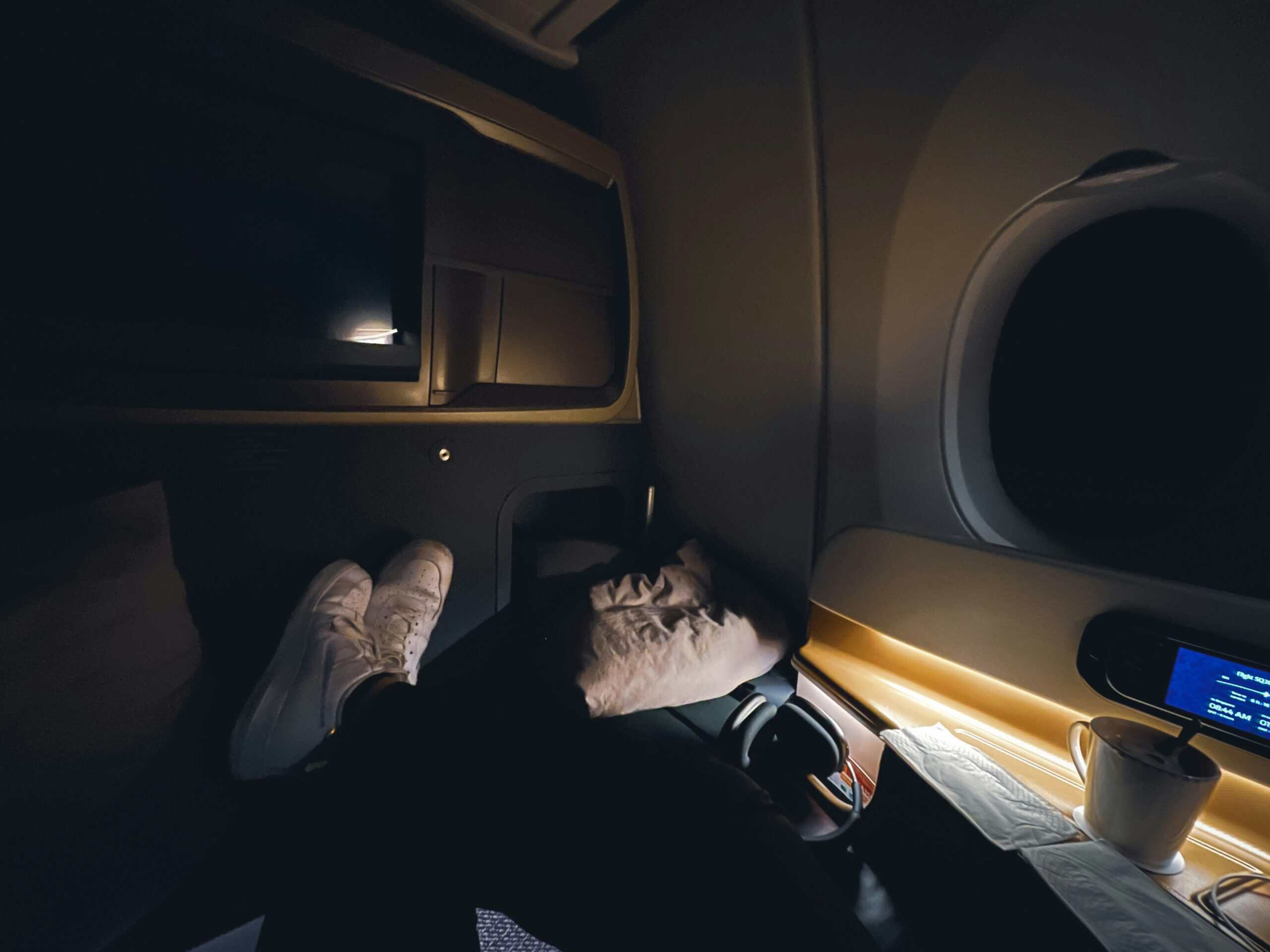
Travel sleep fails for reasons a home bedroom never presents: rooms you cannot darken, noise you cannot control, unfamiliar pillows, and a schedule shifting under you. A travel sleep kit addresses the first three, and nothing in a bag addresses the fourth.
Weight and pack size decide what actually gets carried. A kit that fits in a personal item travels every trip, and a comprehensive one stays home after the second journey. Gear handles the flight, and plan the clock shift before you fly handles the days either side of it.
Quick Verdict
Build around a contoured mask and earplugs, since light and noise are the two problems every unfamiliar room presents. Add a compressible pillow if you fly often. Everything else depends on whether you drive, fly, or sleep in the same hotel chain repeatedly.
Key Takeaways
- Mask and earplugs cover most travel sleep problems
- Hotel curtains rarely close fully at the center
- Compressible pillows beat inflatable ones for comfort
- Weight determines whether a kit gets carried at all
- Time zone adjustment is behavioral rather than equipment
- A consistent kit provides familiarity in unfamiliar rooms
How We Picked
Pack size came first. Anything that does not fit alongside clothes in a carry-on gets left behind, which makes it worthless regardless of performance.
Light and sound ranked next, since those are the problems every unfamiliar room shares. Temperature and mattress quality vary by destination and cannot be packed for.
Durability counted because travel gear takes abuse. Items crushed in a bag repeatedly need to survive it.
We excluded anything requiring power or setup time. A kit that needs unpacking and arranging gets used on the first night and skipped afterward.
Contoured Sleep Masks
Why It Stands Out
Hotel curtains almost never close fully at the center, and the gap sits at eye level from a bed. A mask handles that regardless of the room.
Contoured designs with eye cups block light without pressing on the eyelids, which matters for anyone who sleeps in one position for hours.
Worth Knowing
Light leaks at the nose on most designs. Masks with an adjustable nose bridge close that gap and cost slightly more.
Wide flat straps stay in place better than thin elastic, which slides during the night for people who move.
Best as the first item in any travel kit. Skip flat masks if eye pressure bothers you, and options sit in sleep masks for travel.
Reusable Earplugs
Why It Stands Out
Corridors, lifts, aircraft cabins, and neighboring rooms all produce noise you cannot leave. Earplugs travel in a pocket and work anywhere.
Reusable silicone or flanged designs wash and last a trip, which suits repeated travel better than disposable foam.
Worth Knowing
Fit is individual. A variety pack on the first trip avoids committing to a shape that turns out to be uncomfortable.
Full occlusion makes some people more aware of their own heartbeat, which is unpleasant when trying to fall asleep.
Best for flights and hotels alike. Skip if you need to hear alarms or announcements, and options sit in earplugs for sleeping.
Compressible Travel Pillows
Why It Stands Out
Hotel pillows are wrong in a predictable direction: too soft, too many, and the wrong loft for most people. A compressible pillow with real fill gives you the loft you actually sleep on.
Shredded foam and down alternative both compress into a stuff sack and recover their shape, unlike inflatables.
Worth Knowing
They take real bag space even compressed, which is the tradeoff against an inflatable that packs to nothing.
Recovery after compression takes an hour or two, so unpacking on arrival rather than at bedtime helps.
Best for anyone who wakes with neck pain in hotels. Skip if bag space is the binding constraint, and hotel pillow behavior sits in why hotel pillows feel different.
Portable White Noise Machines
Why It Stands Out
Masking works better than blocking for unpredictable hotel noise, and a small machine covers a room in a way earplugs cover only your ears.
Continuous fan-based sound avoids the loop that becomes noticeable in recorded tracks over a long night.
Worth Knowing
Battery life varies enormously, and a machine that dies at three in the morning is worse than none, since the sudden silence wakes people.
A phone app achieves much of this for free, at the cost of tying up the phone and its battery.
Best for light sleepers in busy hotels. Skip if bag weight matters more than the marginal gain over earplugs, and options sit in white noise machines.
Neck Pillows for Transit
Why It Stands Out
Sleeping upright is a different problem from sleeping in a bed. A neck pillow stops the head dropping forward, which is what jolts people awake on planes and trains.
Wrap-around designs support the chin as well as the neck, which addresses the failure mode standard horseshoe shapes leave open.
Worth Knowing
Memory foam versions support better and pack larger. Inflatable ones pack small and support less.
A pillow that pushes the head forward is worse than none, so trying one before a long flight is worth the effort.
Best for flights over a few hours. Skip for car travel as a passenger where a headrest already helps, and options sit in travel pillows for neck pain.
Portable Blackout Solutions
Why It Stands Out
Suction cup blackout panels and travel curtain clips close the gaps hotel curtains leave. Clips in particular weigh almost nothing and solve the center gap that every hotel room has. For cab sleeping specifically, see our truck driver sleep gear guide.
For anyone who sleeps badly in masks, this is the alternative that addresses the room rather than the face.
Worth Knowing
Suction panels need smooth glass and fail on textured or dirty windows.
Clips work on almost any curtain and do nothing about light at the top or sides.
Best for extended stays where a mask each night gets tiresome. Skip for one-night trips where a mask is faster, and the comparison sits in masks against curtains.
Travel Sleep Kit at a Glance
| Item | Problem it solves | Pack size |
|---|---|---|
| Contoured mask | Curtain gaps, cabin lights | Tiny |
| Reusable earplugs | Corridor and cabin noise | Tiny |
| Compressible pillow | Wrong hotel loft | Moderate |
| White noise machine | Unpredictable hotel noise | Small |
| Neck pillow | Sleeping upright in transit | Moderate |
| Curtain clips | The center gap | Tiny |
How to Build a Travel Sleep Kit
Start with light and sound
Every unfamiliar room has those two problems. A mask and earplugs weigh almost nothing and cover the majority of travel sleep failures.
Add based on how you travel
Frequent flyers need transit support. Long hotel stays justify a pillow and blackout clips. Road trips need neither.
Keep it permanently packed
A kit assembled per trip gets forgotten. Duplicating a few cheap items so they live in the bag removes the decision.
Weigh it once
Anything that pushes a bag toward a limit competes with clothes, and it will lose. Knowing the total keeps the kit honest.
Familiarity Is Part of the Benefit
The same mask and the same pillow across every trip do something the individual items do not, which is give an unfamiliar room a few things that are yours.
Sleep onset depends partly on cues, and a bedroom accumulates them without anyone arranging it. A hotel room has none, which is why the first night somewhere new is usually the worst.
Carrying a consistent kit imports a handful of those cues. The pillow smells like your detergent and the mask sits the way it always does, and both signal something the room cannot.
That argues for keeping the same items rather than upgrading frequently, since the familiarity is part of what you are packing.
Flying Against Driving
Flying
Cabin pressure, dry air, upright sleeping, and hand luggage limits all apply. The kit has to be small, and transit support matters as much as hotel sleep.
Driving
No size constraint and no upright sleeping, so a full pillow travels easily. The problems are the destination room rather than the journey, and hotel-specific tactics sit in sleeping in a hotel.
Common Mistakes to Avoid
Packing too much
A comprehensive kit gets carried once. Four items you use beat twelve you leave at home after the second trip.
Buying an inflatable pillow for comfort
Inflatables pack small and support poorly. Compressible fill costs bag space and actually resembles sleeping on a pillow.
Relying on a phone for white noise
It works and it ties up the device you need for an alarm, and battery anxiety wakes people more than noise does.
Expecting gear to fix jet lag
Time zone adjustment is behavioral: light exposure, meal timing, and sleep scheduling. No product in a bag addresses it, and the approach sits in fixing a sleep schedule.
Recommended Reading
- hotel sleep tactics
- the pillow question
- transit support
- earplug options
- adjusting to a new time zone
- masks compared
Part of our guide to falling asleep faster.
Related: sleep gear for camping and van life.
Frequently Asked Questions
What should be in a travel sleep kit?
A contoured mask and reusable earplugs cover the two problems every unfamiliar room presents. Add a compressible pillow and a neck pillow if you fly often.
Why do hotel rooms never get properly dark?
Hotel curtains rarely close fully at the center, and that gap sits at eye level from the bed. Travel curtain clips or a mask both close it.
Are inflatable travel pillows any good?
They pack small and support poorly. Compressible shredded foam or down alternative takes more bag space and gives you loft that resembles a real pillow.
Earplugs or a white noise machine?
Earplugs weigh nothing and travel anywhere. A machine masks a whole room and needs battery and bag space, which suits longer hotel stays more than short trips.
Do neck pillows actually help on planes?
They stop the head dropping forward, which is what jolts people awake. Wrap-around designs that support the chin work better than standard horseshoe shapes.
How do I stop forgetting my sleep kit?
Keep it permanently packed. Duplicating a few cheap items so they live in the bag removes the decision, and a kit assembled per trip gets left behind.
Will a travel kit help with jet lag?
No. Jet lag is a circadian problem addressed through light exposure, meal timing, and sleep scheduling. The kit helps you sleep once you are trying to, which is a different thing.
