
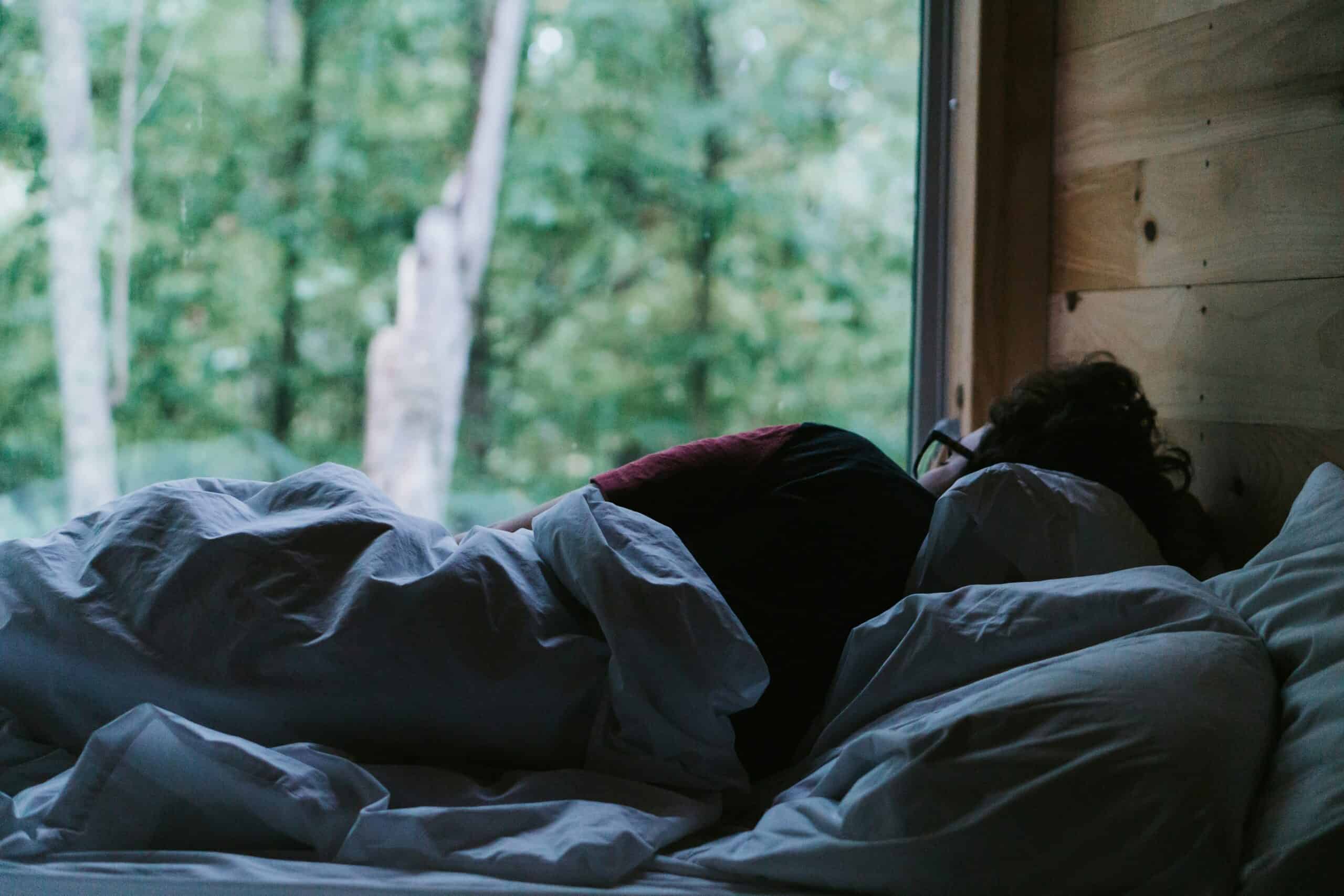
Sleeping during the day means fighting three things a night sleeper never faces: full daylight, household and street noise at its peak, and a body clock signalling that it should be awake. Equipment addresses the first two well and the third barely at all.
Light is the one worth spending on first. Daylight reaching your eyes suppresses melatonin, and a bedroom that never gets properly dark undermines everything else in the room.
Quick Verdict
Total darkness first, then sound masking, then temperature. Blackout curtains that extend past the window frame beat panels hung inside the recess. A white noise machine handles daytime activity better than earplugs alone. Household agreement about interruptions does more than any purchase.
Key Takeaways
- Light leaking at the edges matters more than fabric thickness
- Daytime noise is constant rather than intermittent
- Sound masking works better than sound blocking
- Rooms heat up during the day, so cooling matters more than at night
- Phones and doorbells interrupt more than traffic does
- No setup fully overrides circadian signalling
How We Picked
Light blocking came first, since daylight is the difference between day sleep and night sleep. Anything that leaves a glow around the edges of a window fails at the one job that matters most.
Sound masking ranked above sound blocking. Daytime noise is continuous and varied, and covering it works better than trying to eliminate it.
Temperature counted because a bedroom used from morning to afternoon absorbs heat throughout the sleep period rather than cooling overnight.
We excluded anything promising to reset a body clock. Circadian adjustment is a behavioral and clinical matter rather than a product one.
Blackout Curtains With Extended Rods
Why It Stands Out
Light enters at the edges rather than through the fabric. A rod extending well past the window frame on both sides removes the side gaps that panels hung inside a recess always leave.
Mounting close to the ceiling and hanging past the sill closes the top and bottom gaps in the same way.
Worth Knowing
Blackout panels are heavy, and standard tension rods often fail under them. Weight ratings matter more here than for ordinary curtains.
Renters face a mounting constraint, since extending past the frame usually means drilling. Options sit in no-drill blackout curtain rods.
Best as the first purchase for any day sleeper. Skip inside-recess mounting, which leaves the gaps that matter, and panels sit in blackout curtains for sleep.
Room Darkening Shades
Why It Stands Out
Shades fitted inside the window frame block light closer to the source, and layering them under curtains handles what each alone leaves through.
Side channel designs seal the edges properly, which is the version that achieves genuine darkness rather than dimness.
Worth Knowing
Standard roller shades leave a light gap on both sides. Without side channels they reduce light rather than blocking it.
Installation is more involved than hanging curtains, and most versions need drilling.
Best layered with curtains for a room that must be fully dark. Skip standard rollers if darkness is the goal, and options sit in room darkening shades.
White Noise Machines
Why It Stands Out
Daytime noise is continuous and unpredictable: deliveries, traffic, neighbors, and household activity. Masking raises the background level so those sounds stop standing out against silence.
A machine running all sleep period works better than earplugs, which many people find uncomfortable across a full seven or eight hours.
Worth Knowing
Sound type matters. Lower-frequency brown or pink noise masks traffic and voices better than higher-frequency white noise.
Looping recordings become noticeable once you know the loop. Continuous fan-based machines avoid that entirely.
Best for households with daytime activity. Skip looping app recordings for long sleep periods, and options sit in white noise machines.
Sleep Masks
Why It Stands Out
A mask covers what a room cannot. Rented rooms, hotels, and bedrooms where drilling is not an option all leave light a mask handles for a fraction of the cost.
Contoured designs block light without pressing on the eyes, which matters across a long sleep period.
Worth Knowing
Masks shift during the night, particularly for people who move. Wide adjustable straps stay put better than thin elastic.
They also do nothing about light reaching skin, which some research suggests contributes to circadian signalling.
Best as a supplement to curtains and as the whole answer while traveling. Skip flat masks if eye pressure bothers you, and the comparison sits in sleep mask against blackout curtains.
Door Draft Stoppers and Seals
Why It Stands Out
The gap under a bedroom door lets in hallway light and household sound at the same time. A seal addresses both for a few dollars.
For day sleepers in shared homes that gap is often the largest remaining leak once the windows are handled.
Worth Knowing
Adhesive seals fail on textured doors and in heat. Weighted stoppers that sit against the door need repositioning each time it opens.
Sealing a door reduces airflow, which matters if the room relies on the hallway for ventilation.
Best in shared households with daytime activity. Skip full seals if the room has no other airflow, and options sit in door draft stoppers.
Bedroom Cooling
Why It Stands Out
A room used for sleep from morning to afternoon heats up throughout, which is the opposite of a night sleeper’s experience. Temperature climbs as the sleep period progresses.
A fan or a portable unit running through the sleep period holds the room steady rather than letting it drift warmer hour by hour.
Worth Knowing
Blackout curtains already reduce solar gain considerably, so the cooling requirement drops once light is handled.
Fan noise doubles as sound masking, which suits day sleepers who want both from one device.
Best in rooms that face the sun during your sleep hours. Skip a dedicated cooling purchase until curtains are in place, and the approach sits in cooling a bedroom without central air.
Shift Worker Setup at a Glance
| Problem | Solution | Priority |
|---|---|---|
| Daylight through windows | Blackout curtains, extended rod | First |
| Light around window edges | Shades with side channels | Second |
| Daytime household noise | White noise machine | Second |
| Hallway light and sound | Door seal or stopper | Third |
| Room heating through the day | Fan or portable cooling | Third |
| Light while traveling | Sleep mask | Supplement |
How to Set Up a Room for Day Sleep
Test the room at your actual sleep time
Stand in the room at midday with everything closed and let your eyes adjust for two minutes. Whatever you can still see is what needs addressing.
Work outward from the windows
Windows leak most, doors second, and everything else after. Spending on a mask before fixing the curtains solves the smaller problem first.
Mask rather than block sound
Daytime noise is too varied to eliminate. Raising the background level so individual sounds stop standing out works better and costs less.
Handle the interruptions
Phones, doorbells, and deliveries wake more day sleepers than traffic does. A sign on the door and a silenced phone do more than any equipment.
Household Agreement Does the Rest
Equipment handles what comes through walls and windows. It does nothing about people in the house who forget you are asleep.
A visible sign on the bedroom door works better than reminders, because it addresses whoever is standing there rather than relying on memory.
Deliveries are the interruption people plan for least. Turning off the doorbell, leaving delivery instructions, and switching a phone to silent handle more disturbance than any product in this article.
Agreeing quiet hours with a household matters more in shared homes than in single-occupancy ones, and it costs nothing. Most day sleepers who fix their room and still wake early are being woken by people rather than by noise.
Blocking Light Against Masking Sound
Light
Worth eliminating completely. Partial darkness still signals daytime, and the difference between dim and dark is where most of the benefit sits.
Sound
Not worth trying to eliminate. Masking is cheaper, more comfortable across long periods, and handles the variety of daytime noise better than blocking does.
Common Mistakes to Avoid
Hanging curtains inside the recess
Light comes around the edges regardless of how heavy the fabric is. Extending past the frame is what produces darkness.
Relying on earplugs for a full sleep period
Most people find them uncomfortable past a few hours, and full occlusion makes some people more aware of their own pulse.
Ignoring the door gap
In a shared home that gap is often the biggest remaining leak once windows are handled, and it passes both light and sound.
Expecting equipment to fix the schedule
A dark quiet room removes obstacles and does not override circadian signalling. Anyone struggling persistently with shift sleep should raise it with a doctor, and the behavioral side sits in sleeping during the day for shift workers.
Recommended Reading
- the behavioral side
- managing the shift itself
- curtains compared
- sound masking options
- resetting a schedule
- napping around shifts
Part of our guide to improving sleep quality naturally.
Frequently Asked Questions
What is the most important thing for sleeping during the day?
Total darkness. Daylight reaching your eyes suppresses melatonin, and a room that stays dim rather than dark undermines everything else you set up.
Why do my blackout curtains still let light in?
Because light enters at the edges rather than through the fabric. Curtains hung inside the window recess leave gaps on all four sides regardless of how heavy they are.
Are earplugs or a white noise machine better?
A machine, for most day sleepers. Earplugs become uncomfortable across a full sleep period, and masking handles varied daytime noise better than blocking does.
What type of noise masks daytime sound best?
Lower-frequency brown or pink noise masks traffic and voices more effectively than higher-frequency white noise, which suits masking sharper sounds.
Does the room get hotter during day sleep?
Yes, which is the reverse of night sleeping. Temperature climbs through the sleep period, so a fan or cooling unit holds it steady rather than letting it drift.
Will a dark room fix shift work sleep problems?
It removes the obstacles and does not override circadian signalling. Persistent difficulty sleeping around shifts is worth raising with a doctor rather than solving with equipment.
What wakes shift workers most?
Interruptions rather than ambient noise. Phones, doorbells, and deliveries account for more disturbed day sleep than traffic, and none of them are solved by purchases.
