
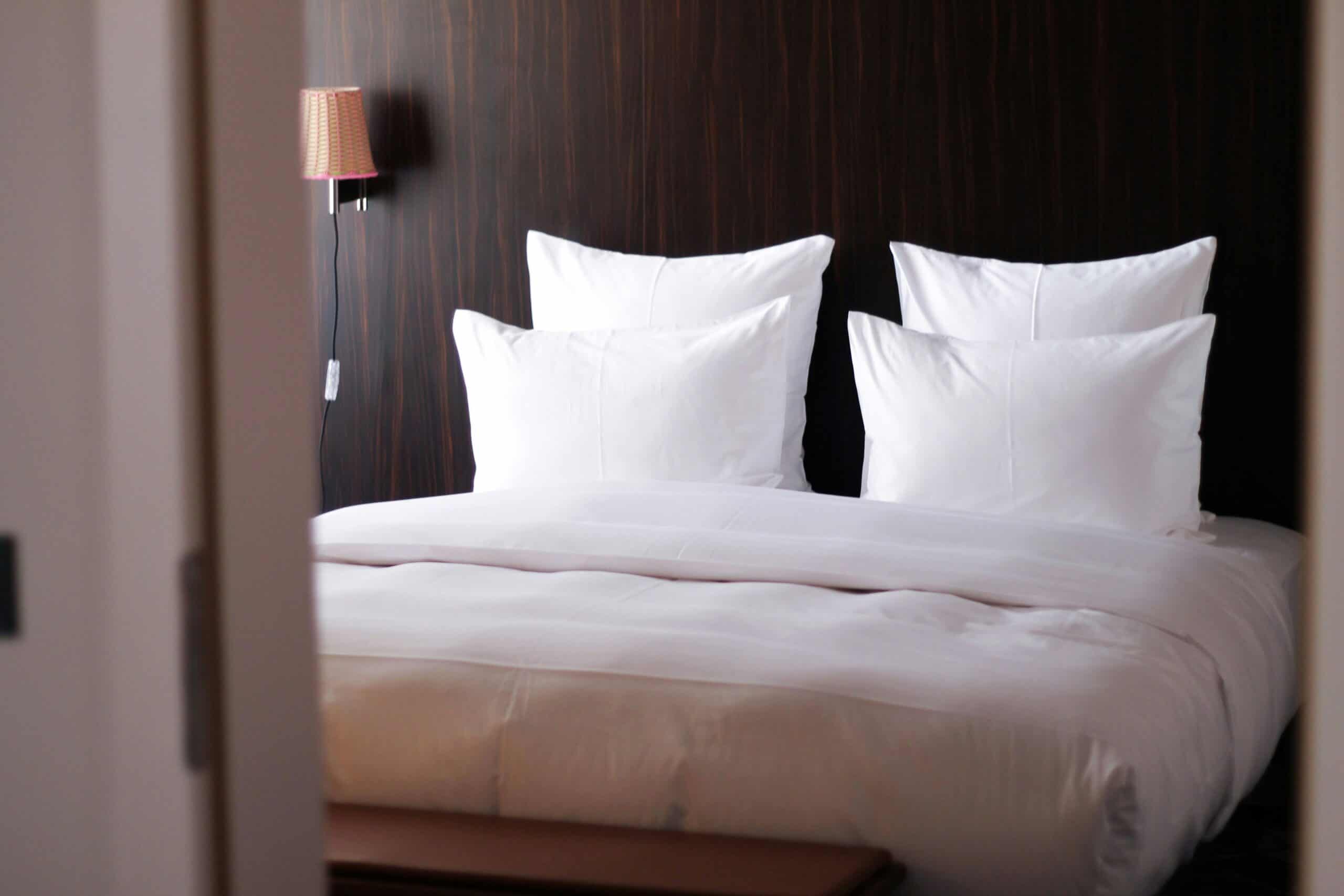
Hotel pillows feel better for three reasons that have little to do with the pillow being expensive. They are newer than yours, there are two or three of them so you can choose the loft that suits you, and they are laundered and fluffed to full volume before every stay.
The rest of the room is doing work too. Blackout curtains, a cool quiet space, and a bed you have no obligations in all improve sleep independently of what is under your head. People come home, buy the pillow the hotel sells, and find it disappointing, which is the clue that the pillow was never the whole story.
They Are Newer Than Yours
This is the largest single factor. Hotels replace pillows on a schedule, and a pillow with its original loft supports the head the way it was designed to. Most household pillows are older than their owners realize.
Loft loss is gradual. Fiber flattens, down compresses, and foam softens over months, so the pillow that felt right two years ago now lets your head sit an inch lower without you ever noticing the change happen.
The fold test settles it. Fold your pillow in half, hold for a few seconds, and release. A pillow with structure left springs back open. One that stays folded has lost what made it work, and no amount of fluffing restores it.
You Get to Choose Your Loft
A hotel bed typically has two to four pillows, often in mixed firmness. You try one, it feels wrong, you swap it, and within a minute you are on the one that suits your position. At home you sleep on whichever pillow you own.
That self-selection is doing more than people credit. Loft is the single most important variable in whether a pillow works, and hotels solve it by providing options rather than by providing better pillows.
Some chains keep a pillow menu at reception for exactly this reason. The insight worth taking home is that the right loft matters more than the brand, which is covered in choosing loft by sleep position.
They Are Laundered and Fluffed Before You Arrive
Housekeeping shakes and reshapes pillows every day, redistributing fill that has clumped and restoring volume. A pillow slept on for six nights and never touched sits flatter than the same pillow after a shake.
Covers and cases are fresh, crisp, and often ironed, which changes how the surface feels against your face. Some of what reads as a better pillow is a better pillowcase.
The habit transfers home easily. Shaking a pillow out each morning takes seconds and keeps fill distributed, which slows the flattening that makes a pillow feel dead.
The Room Is Set Up for Sleep
Hotel rooms are dark, cool, quiet, and free of the things that keep people awake at home. Blackout curtains block streetlights. Air conditioning holds a steady temperature. There is no laundry pile, no laptop, and nothing you meant to do before bed.
Each of those improves sleep on its own, and together they change the experience enough that the pillow gets credit for the whole effect. The room is why hotel sleep often feels different, and the pillow is the part you can hold.
Most of it is reproducible. Curtains, temperature control, and keeping work out of the bedroom are covered in cooling a bedroom and blackout curtain choices.
The Bedding Around the Pillow
Hotel sheets are usually a crisp percale or a smooth sateen, laundered hot and pressed. That surface feels different from sheets washed at home, and freshness affects perceived comfort more than thread count does.
The bed is also made tightly, which stops sheets bunching under you through the night. A duvet that stays put and a fitted sheet that stays on contribute to sleeping undisturbed, and neither has anything to do with the pillow.
Protectors under the case add a subtle firmness to the surface too. Hotels use them universally for hygiene, and the side effect is a slightly crisper feel than a bare pillow in a soft case.
The Novelty Effect
A bed you have never slept in gets attention that your own bed stopped receiving years ago. You notice the sheets, the weight of the duvet, and how the pillow gives under your head, because none of it is familiar enough to fade into the background.
That attention cuts both ways. Some people sleep badly the first night anywhere new, which sleep researchers have documented often enough to have a name for. Others find the same unfamiliarity pleasant and read it as quality.
It also means a single good night in a hotel is thin evidence. Sleeping well for three nights running on the same pillow tells you considerably more than one night does, and it is worth remembering before ordering the pillow when you get home.
What Hotels Actually Use
Down and down alternative
Mid-range and upper hotels use these because they feel plush, mold around the head, and can be fluffed back to full volume daily. They compress a long way under head weight, which suits back sleepers better than side sleepers.
Polyester fiber fill
The workhorse of the industry. Cheap enough to replace on a schedule, washable, and available in multiple firmness levels so a room can offer a choice.
Two or more per bed
Near universal, and the reason guests find something that works. This is easier to replicate at home than any particular fill type.
Protectors and crisp cases
Standard for hygiene and part of why the surface feels different. A zippered protector under a fresh case is inexpensive to copy.
How to Get It at Home
Replace the pillow if it fails the fold test, and match the new one to your sleeping position rather than to what a hotel used. Loft is what matters, and yours depends on your shoulder width and your mattress.
Shake and reshape the pillow each morning. Use a protector under a case you launder often. Cool the room and block the light. Keep the bed for sleep rather than for laptops and admin.
If you liked a specific hotel pillow enough to want it, many chains sell theirs. Worth knowing before you order: it will feel different in a home bedroom, and it will lose loft on the same schedule as any other pillow rather than staying as it was on that first night.
Why Buying the Hotel Pillow Often Disappoints
The pillow arrives new and performs well for a while, which is the same thing your old pillow did when it was new. Without daily fluffing, a scheduled replacement cycle, and the option to swap between several, it becomes an ordinary pillow within months.
It also arrives into a different room. The pillow is one of maybe six things that made hotel sleep feel better, and it is the only one that fits in a box.
Related Reading
- matching loft to how you sleep
- restoring loft between washes
- down alternative options
- sheets and how they feel
- setting up the whole bed
- protectors that change the surface
Frequently Asked Questions
Are hotel pillows better quality?
In most cases, no. Most use mid-range fiber or down alternative pillows chosen for washability and cost. What differs is that they are newer, fluffed daily, and offered in multiples so you can pick one that suits you.
Should I buy the pillow my hotel used?
You can, and expect it to feel different at home. The pillow was one part of a room set up for sleep, and it will lose loft on the same schedule as any other pillow once daily housekeeping stops.
How often do hotels replace pillows?
Practices vary by property and price point, and replacement on a defined schedule is standard across the industry. That regular renewal is a large part of why hotel pillows feel fresh.
Why do I sleep better in hotels generally?
Dark rooms, cool steady temperature, quiet, fresh bedding, and no domestic obligations all contribute. The pillow gets credit for an effect several things produced together.
How do I know if my pillow needs replacing?
Fold it in half and let go. If it stays folded rather than springing open, it has lost the structure that supports your head. That is a more reliable check than counting years.
Do hotel pillowcases make a difference?
They contribute. Crisp laundered percale over a protector feels different from a soft worn case at home, and freshness affects perceived comfort more than people expect.
