
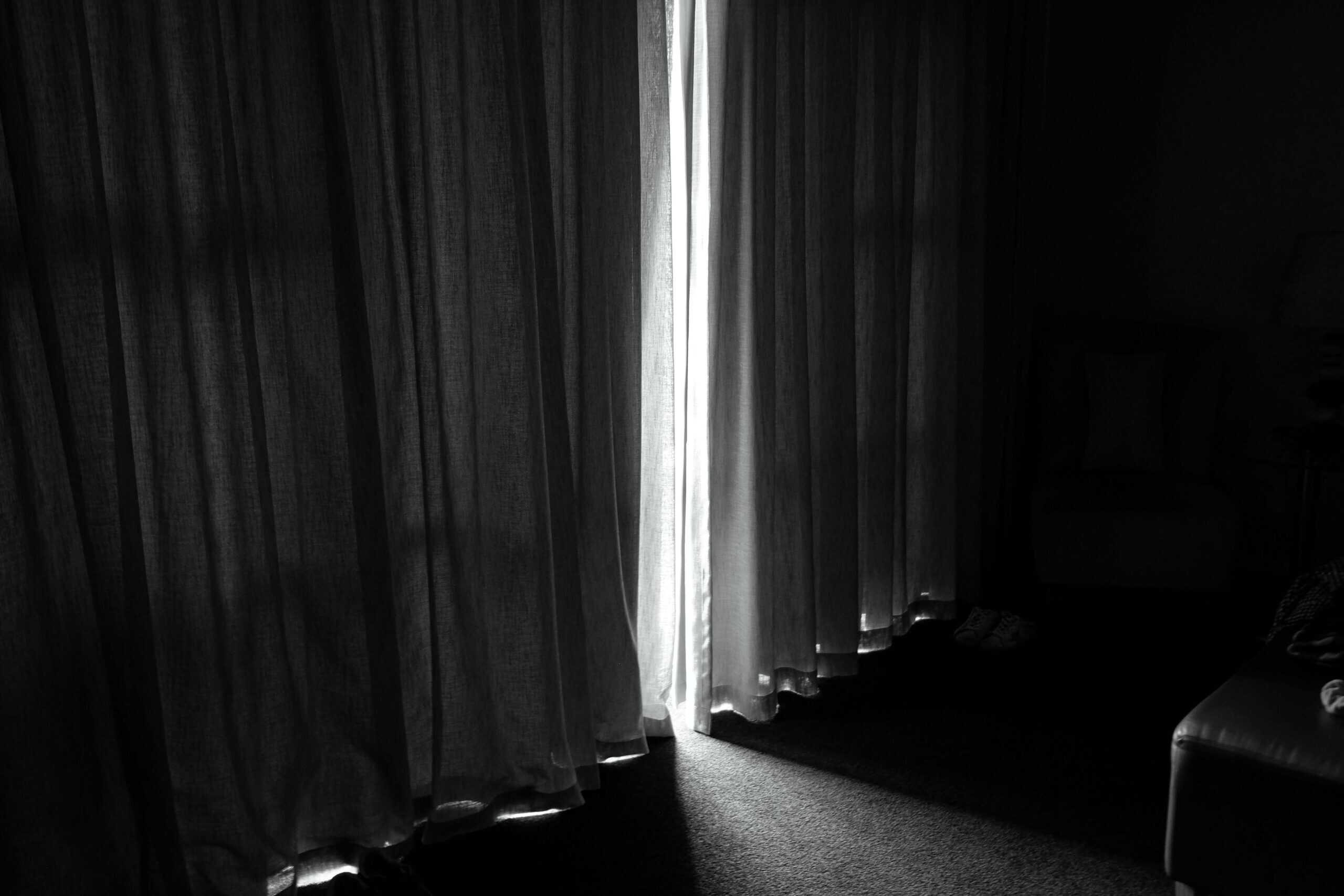
A straight curtain rod ends level with the window, and so does the fabric hanging from it. That leaves a vertical gap at each side where light comes straight past the curtain, which is why a room with good blackout panels can still be too bright to sleep in. Wrap-around rods and ceiling tracks carry the fabric back toward the wall, closing the one gap that better curtains cannot fix. Our guide to stopping light leaks around curtains covers the full set of gaps.
Quick Verdict
A wrap-around rod is the simplest fix and mounts where a standard rod already does. Ceiling-mounted tracks give the tightest seal and need something solid overhead. Renters should look at no-drill tension options before committing to either.
Key Takeaways
- Side gaps are the largest light path in most rooms.
- Wrap-around rods return the fabric to the wall at each end.
- Ceiling tracks seal tightest and need a fixing point above.
- Rod weight rating matters, since blackout fabric is heavy.
- Curtain heading type has to match the track you choose.
How We Picked
Hardware is grouped by how it handles the ends of the run, since that is the difference between a rod that hangs curtains and one that blocks light. Weight capacity is weighted alongside it, because blackout fabric is considerably heavier than decorative curtains and sagging opens a gap at the top.
Selections reflect documented mounting methods and load ratings. Descriptions come from product research rather than from installations carried out.
1. A Wrap-Around Blackout Rod, Best Overall
Why It Stands Out
Wrap-around rods curve back toward the wall at each end, so the curtain finishes against the wall rather than in mid-air beside the window. That single change closes the side gap without any other adjustment.
They also mount using standard bracket positions, so this is usually a direct swap for an existing rod.
Worth Knowing
The return depth has to clear whatever is already on the wall, including blinds, shutters, and window trim. Measure from the wall to the front of the existing covering before ordering.
Cheaper wrap-around rods sag under blackout fabric, and a sagging rod opens a gap along the top. Check the weight rating rather than the length. Our note on how high to hang blackout curtains covers positioning.
This suits most bedrooms. Skip it if there is no clearance for the return.
2. A Ceiling-Mounted Track, Best Seal
Why It Stands Out
Mounting to the ceiling puts the curtain flat against the wall for its whole run and removes the gap at the top that any wall-mounted rod leaves above it.
Tracks also carry heavy fabric better than rods, since the load spreads across multiple fixings rather than two brackets.
Worth Knowing
This needs joists or a solid header to fix into, and it is a permanent installation. In most rentals it is not an option.
Curtains need the correct heading for the track’s glider system, so buy hardware and fabric together rather than assuming compatibility. Our roundup of blackout curtains covers the panels themselves.
This suits owned homes wanting genuine darkness. Skip it if you cannot drill the ceiling.
3. A Bendable Track, Best for Bays and Corners
Why It Stands Out
Flexible track bends to follow a bay window, a curved wall, or a corner, which rigid rods cannot do without splitting the run into sections and leaving gaps at each join.
Continuous fabric around a bay is the only way to black one out properly.
Worth Knowing
Bendable track needs more fixing points than straight track, particularly through the curves, or it deflects under the weight of blackout fabric.
Bending it accurately takes patience and it does not forgive a mistake. Measuring a template first is worth the time.
This suits bays and awkward shapes. Skip it on a flat wall where a straight rod works.
4. A Double Rod System, Best for Layering
Why It Stands Out
Two rods let a blackout panel hang behind a decorative one, so the room keeps its look and gains the light blocking. The blackout layer sits closer to the glass where it works best.
Double systems also allow using the sheer layer alone during the day.
Worth Knowing
Two layers of fabric is heavy, and the brackets carry both. Weight rating matters more here than on any single rod.
The inner rod also needs enough return depth to clear the window frame, or the blackout panel sits proud of the wall and leaks at the sides. Our guide to layering blackout curtains covers the combination.
This suits rooms where appearance matters. Skip it if one blackout layer is enough.
5. A No-Drill Tension Rod, Best for Renters
Why It Stands Out
Tension rods sit inside the window recess with no fixings, which suits rentals and anyone unwilling to drill. Mounting inside the recess also removes the side gap by putting the fabric within the frame.
They install in minutes and leave nothing behind.
Worth Knowing
Tension rods carry far less weight than fixed hardware, and heavy blackout fabric is exactly what makes them slip. Check the rating honestly against the panels you plan to hang.
Inside-mount also means light passes around the recess edges unless the fit is tight. Our roundup of no-drill blackout curtain rods covers the options in detail.
This suits renters and light panels. Skip it for heavy full-length curtains.
6. Return Brackets for an Existing Rod, Best Cheap Upgrade
Why It Stands Out
Return brackets and side-gap clips attach to a rod you already own and pull the curtain edge back to the wall, achieving most of what a wrap-around rod does for a fraction of the cost.
They also install in minutes with no replacement hardware.
Worth Knowing
The seal is less complete than a proper return, since the fabric is being held rather than following a curve. Some light still passes at the very edge.
Clips can also mark or crease the curtain edge over time. Our comparison of blackout curtains and blinds covers when hardware is not the answer.
This suits testing whether side gaps are your problem. Skip it if you are replacing the rod anyway.
Tracks and Rods at a Glance
| Type | Closes side gap | Mounting | Rental friendly |
|---|---|---|---|
| Wrap-around rod | Yes | Wall brackets | Needs drilling |
| Ceiling track | Best | Ceiling or header | No |
| Bendable track | Yes, around bays | Multiple fixings | No |
| Double rod | Depends on return | Wall brackets | Needs drilling |
| Tension rod | Inside recess only | None | Yes |
| Return brackets | Mostly | Existing rod | Yes |
What to Look For in Blackout Hardware
How deep is the return?
The curve or bracket has to reach past whatever is already at the window, including blinds and trim. Measure from the wall to the front of the existing covering.
What is the weight rating?
Blackout fabric is heavy, and a rod rated for decorative curtains sags in the middle. Sagging opens a gap along the top, which replaces one problem with another.
Can you fix into the ceiling?
Tracks seal best and need joists or a header. If that is not available, a wrap-around rod is the next best option and mounts where a standard rod already does.
Does the heading match?
Track glider systems need specific curtain headings. Buying hardware and panels separately without checking is the common way this goes wrong.
Rod or Track?
The case for a wrap-around rod
It mounts where your existing rod does, costs less, and closes the side gap without touching the ceiling. For most bedrooms this is the sensible answer.
The case for a ceiling track
It removes the top gap as well as the sides, carries heavy fabric across multiple fixings, and gets closest to genuine darkness. The cost is a permanent installation that a rental will not allow. Our note on whether you need curtains with shutters covers a different starting point.
Common Misconceptions
That better curtains fix side gaps
Fabric rating does nothing about light passing beside the panel. The gap is a hardware problem and needs a hardware solution.
That any rod will hold blackout panels
Blackout fabric is heavy enough to bow an underrated rod, and a bowed rod lets light over the top. Check the load rating rather than the length.
That inside-mount removes all gaps
Mounting inside the recess closes the sides and leaves light around the recess edges unless the fit is tight. It helps considerably and is not a complete seal.
That tracks are only for large windows
Ceiling tracks work on ordinary bedroom windows and are often the better choice there, since the top gap matters as much as the sides in a room you sleep in during daylight. Our roundup of room darkening shades covers the alternative approach.
Related Reading
See our note on how long blackout curtains last, our guide to washing blackout curtains, our window insulation kit picks, and a note on whether blackout curtains help with noise.
Curtain Track FAQ
Why is light coming in beside my blackout curtains?
Because a straight rod ends level with the window and so does the fabric. The gap between the curtain edge and the wall is a direct light path, and no fabric rating closes it. Wrap-around rods and ceiling tracks return the fabric to the wall.
Is a track better than a rod?
For light blocking, yes. A ceiling track removes the gap above the curtain as well as at the sides and spreads heavy fabric across multiple fixings. The trade is a permanent installation that most rentals will not permit.
Can I add a return to my existing rod?
Return brackets and side clips pull the curtain edge back toward the wall on hardware you already own. The seal is less complete than a proper wrap-around, and it is a cheap way to find out whether side gaps are your main problem.
What weight rating do I need?
More than you would guess, since blackout fabric is considerably heavier than decorative curtains. An underrated rod bows in the middle, which opens a gap along the top and trades one light path for another.
Will a tension rod hold blackout curtains?
Light panels, often. Heavy full-length blackout curtains are what makes tension rods slip, sometimes in the middle of the night. Check the stated rating against your panels rather than assuming it will cope.
How do I black out a bay window?
Bendable track is the only way to run continuous fabric around the curve. Splitting a bay into straight sections leaves a gap at every join, which defeats the purpose in a room you need dark.
Do curtain headings matter for tracks?
Yes. Track glider systems need compatible headings, and buying panels and hardware separately without checking is a common mistake. Confirm compatibility before ordering either.
Should I mount inside or outside the recess?
Outside with a return closes the sides against the wall and generally blocks more light. Inside-mount looks tidier and leaks around the recess edges unless the fit is tight. For a room you sleep in during daylight, outside usually wins.
Recommended Reading
See our note on making a bedroom dark.
