
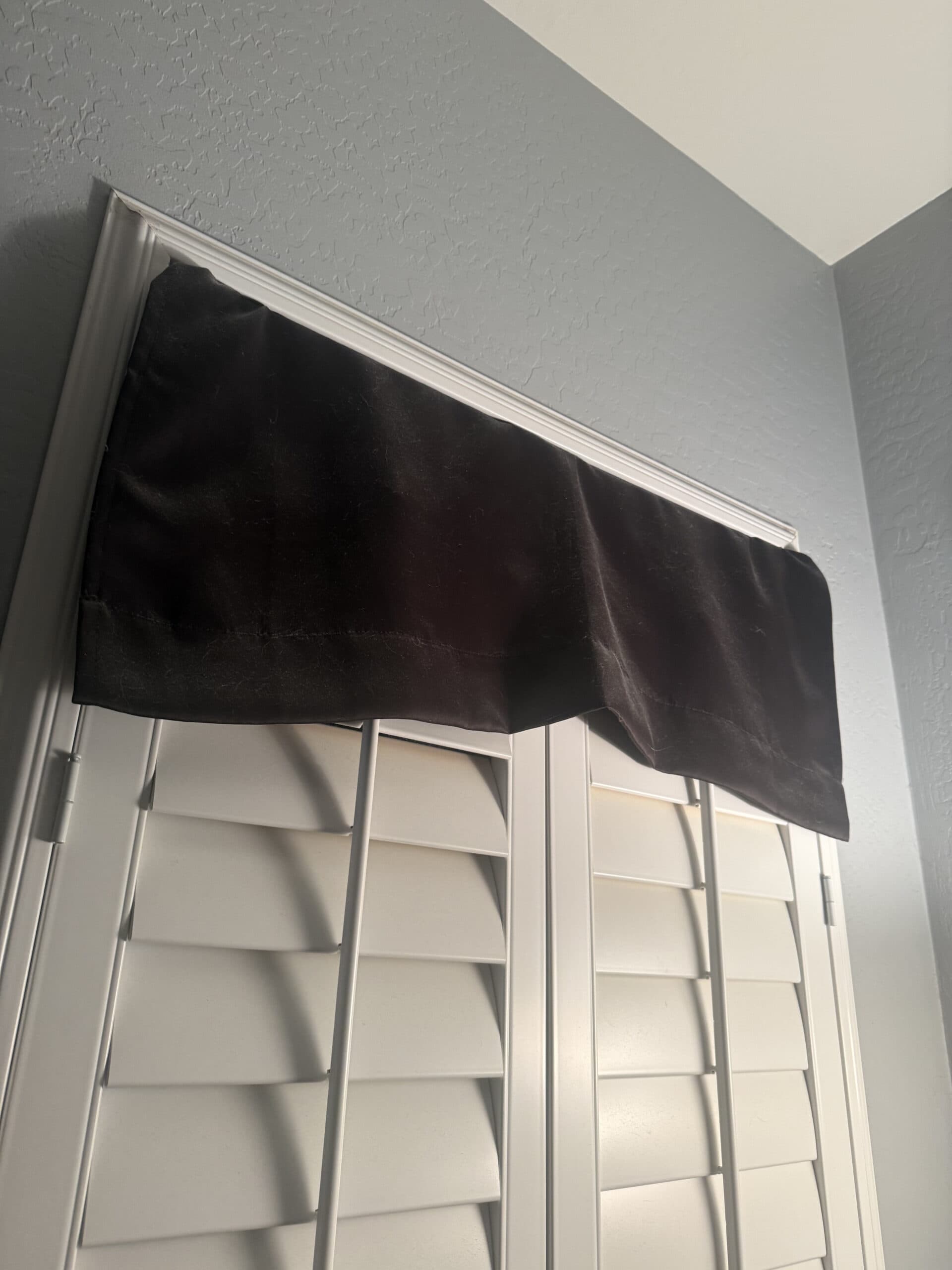
Yes, and it is the standard way to get proper light blocking without a bedroom that looks like a hotel. A blackout panel goes on the inner rod against the window, and the decorative curtain hangs on the outer rod facing the room.
My own layering is a slightly different version. The blackout panels are fitted in with shutters rather than paired with decorative curtains, so the shutters are doing the job the outer layer usually does.
Quick Answer
Use a double rod with blackout closest to the window and the decorative panel outside it. That order matters. Layering also adds insulation and some sound absorption, and it costs you window space and adds bulk when the curtains are open.
Which Layer Goes Where
| Position | Panel | Why |
|---|---|---|
| Innermost, against glass | Blackout | Blocks light at the source |
| Outer, facing the room | Decorative | What you see, softens the look |
| Optional third | Sheer | Daytime privacy with light |
Reversing that order is the common mistake people make. A decorative panel against the glass with blackout hanging in front of it does still block light, and it exposes the decorative fabric to sun damage while leaving the blackout layer where you can see its plain backing from the room.
Why Layering Works Better Than One Panel
Two layers of fabric block more light than one does, which sounds obvious enough and matters most at the edges where a single panel tends to leak.
The outer panel covers the gap between the blackout panel and the wall, since the two rods sit at slightly different depths and the offset closes that channel.
Insulation improves because of the air trapped between the layers, which works on the same principle as double glazing and does considerably more than either panel manages alone.
Sound absorption improves modestly for the same reason, though the effect is smaller than curtain marketing suggests, covered in whether blackout curtains help with noise.
How My Setup Compares
Mine layers blackout panels together with shutters rather than with decorative curtains, which makes it a functional pairing rather than an aesthetic one.
The shutters handle a good deal of light on their own, so the curtain is dealing with what gets past them rather than working alone.
That combination produces a dim room rather than a genuinely dark one, and the reason is a sliding door that has blinds rather than curtains, covered in whether you need blackout curtains with shutters.
A blind or shutter inside the recess with a blackout panel outside it is the same principle as double curtains, and in some ways it blocks better because the two sit at very different depths.
What it does not fix is side leak, which is a width problem rather than a layering one.
Hardware for Layering
Double rods
Two rods on shared brackets, with the inner rod closer to the wall. The simplest and most common approach.
Separate rods at different heights
Mounting the blackout rod slightly lower and closer than the decorative one gives more separation and better coverage of the top gap.
Track systems
Ceiling-mounted double tracks handle heavy panels better than rods and remove the gap above entirely.
Bracket weight rating
Two layers of fabric is considerably heavier than one, and brackets sized for a single panel will sag, covered in no-drill blackout curtain rods.
The Liner Alternative
Blackout liners attach behind an existing curtain rather than hanging as a separate panel, which achieves much of the same effect with less hardware.
Some clip onto the same rings, some attach with hooks into the header, and some are sewn in permanently.
The advantage is a single layer to draw and no second rod, which suits narrow windows and rooms where bulk is a problem.
The disadvantage is that a liner moves with the decorative panel, so the two cannot be adjusted independently and washing gets more complicated, covered in washing blackout curtains.
Adding Sheers as a Third Layer
Three-layer setups exist and solve a problem the two-layer version leaves open, which is daytime privacy without darkness.
The order runs blackout innermost, sheer in the middle, decorative outermost, though sheer and decorative are sometimes swapped depending on which you want visible.
The sheer is the working daytime layer. It obscures the view in while letting light through, which is what a bedroom facing a street or a neighbor actually needs during the day.
That leaves the blackout panel free to stay open through the day rather than being drawn for privacy, which extends its life since ultraviolet exposure is the main thing that ages it.
Triple rods exist and are heavier and more expensive than double, and the bracket weight question becomes serious rather than a caution.
The bulk problem compounds too. Three panels stacked at each side of a window take up a substantial amount of wall, which rules the approach out on narrower windows.
For most bedrooms two layers is enough, and the third only earns its place where daytime privacy is a genuine requirement rather than a preference.
What Layering Costs You
Bulk when open is the main one. Two panels stacked at each side take up considerably more wall than one, which matters on narrow windows.
Window space is reduced, since the stacked panels intrude further across the glass and block some daytime light even when open.
Weight adds up, and a heavy double setup on marginal brackets sags visibly within months.
Cost roughly doubles on the fabric side, plus the hardware, which is the argument for a liner where budget matters more than flexibility.
Drawing Them Independently
The practical advantage of two panels over a sewn-in liner is that they move separately, and that turns out to matter more day to day than the blocking difference does.
Through the day the decorative panel can stay open while the blackout stays drawn, or the reverse, depending on whether you want light or want the room to look finished.
Shift workers get the most from this, since a room that needs to be dark at midday still needs to look like a room the rest of the time.
It also spreads wear. Alternating which panel takes the daily handling means neither accumulates hand marks and header stress as quickly as a single working curtain would.
Seasonal use becomes possible too, with both layers drawn through summer for heat and only the blackout drawn in cooler months when insulation matters less.
A sewn-in or clipped liner gives up all of that, since the two move as one, which is the real trade against its lower cost and simpler hardware.
Getting the Look Right
The decorative panel is what the room sees, so it can be light, patterned, or sheer without affecting the blocking at all.
Matching the two panel lengths matters, since a blackout panel visible below a shorter decorative one looks like a mistake.
The blackout panel does not need to be attractive, which means buying plain and cheap for the inner layer is entirely reasonable.
Where the decorative panel stays open permanently, the blackout layer becomes the working curtain and only needs to look acceptable when drawn, covered in blackout curtains for sleep.
Related Reading
- blackout curtains for sleep
- how high to hang them
- stopping light leaks
- curtains against blinds
- do they block heat
- curtain rods
Frequently Asked Questions
Can you layer blackout curtains with regular curtains?
Yes, and it is the standard approach. Blackout goes on the inner rod against the window with the decorative panel outside it facing the room.
Which layer goes closest to the window?
Blackout. Reversing it still blocks light and exposes the decorative fabric to sun damage while leaving the blackout backing visible from the room.
Does layering block more light?
Yes, particularly at the edges where a single panel leaks. The outer panel covers the gap between the blackout panel and the wall.
Is a blackout liner as good?
For blocking, close. A liner attaches behind an existing curtain with less hardware, and the two layers cannot be drawn independently.
Do I need a double rod?
Usually, or two separate rods at different depths. Check the bracket weight rating, since two layers weigh considerably more than one.
Does layering help with heat and noise?
Insulation improves from the trapped air between layers. Sound absorption improves modestly, and less than curtain marketing generally suggests.
Can I add a sheer as a third layer?
Yes, running blackout innermost, sheer in the middle, decorative outside. The sheer handles daytime privacy, which lets the blackout panel stay open and age more slowly.
What are the downsides?
Bulk when open, reduced window space, added weight on the brackets, and roughly double the fabric cost.
Recommended Reading
See our note on making a bedroom dark.
