
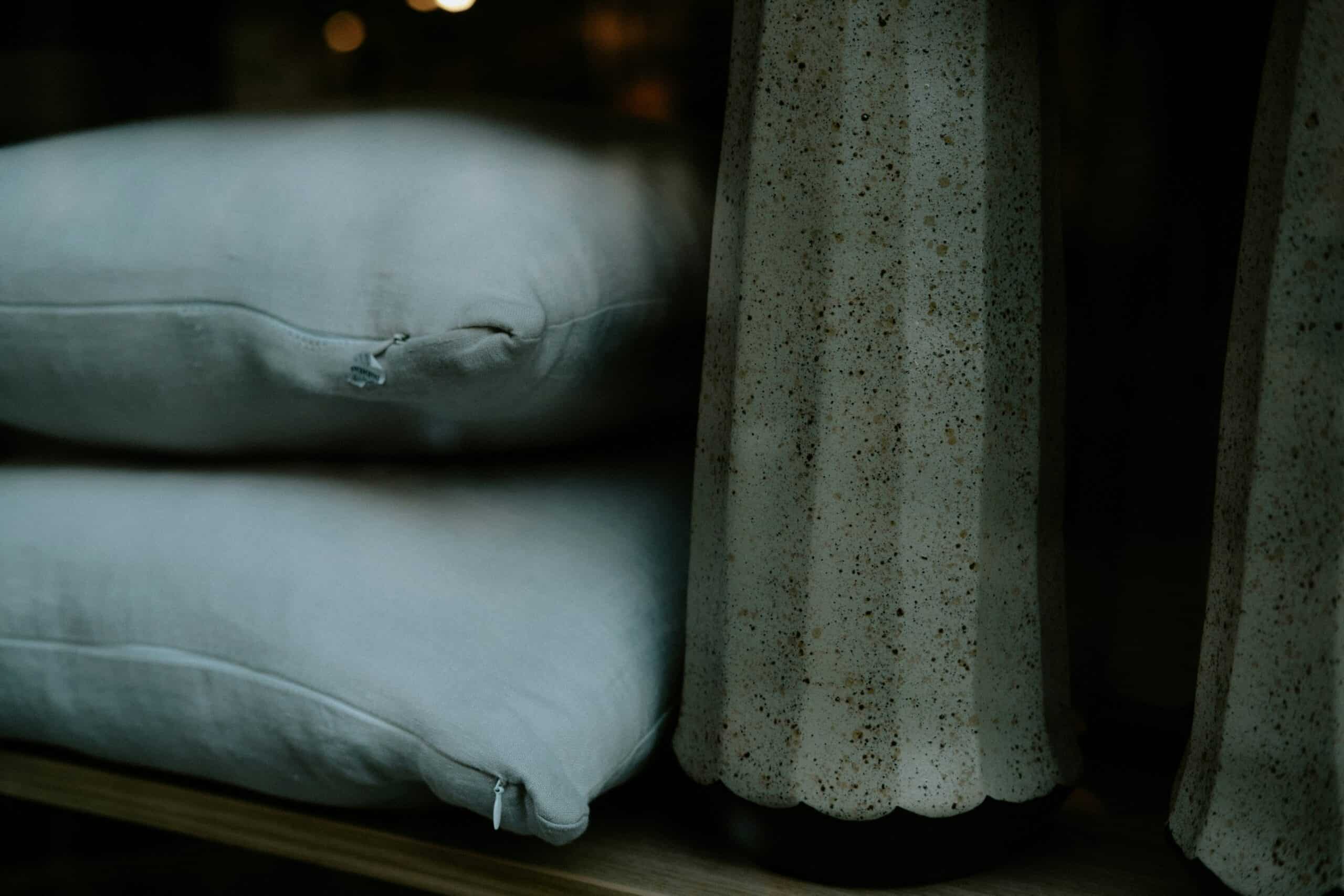
The clearest sign a pillow needs replacing is when it no longer holds its shape, staying flat or lumpy after you fluff it, which means it has stopped supporting your head and neck. Pillows wear out faster than people expect, and a worn one quietly costs you comfort and neck support night after night. A few plain signs tell you when a pillow has given up, and a simple test settles borderline cases.
Quick Answer
Replace a pillow when it stays flat or lumpy after fluffing, when you wake with neck or shoulder stiffness, or when it has yellowed and smells despite washing. The fold test confirms it: a pillow that does not spring back is done.
Key Takeaways
- A pillow that stays flat or lumpy after fluffing is worn out.
- Waking with neck or shoulder stiffness points to lost support.
- Yellowing and odor that washing does not fix signal replacement.
- The fold test checks whether a pillow still has life.
- Most pillows need replacing every one to three years.
Quick Signs Your Pillow Is Done
| Sign | What it means |
|---|---|
| Stays flat after fluffing | Fill has broken down, no support |
| Lumpy or uneven | Fill has clumped, uneven support |
| Waking stiff or sore | Neck no longer supported |
| Yellowed, smells after washing | Saturated with oils and sweat |
| Fails the fold test | No resilience left |
It Will Not Hold Its Shape
The main job of a pillow is to hold a supportive shape through the night, and the first sign of a worn one is that it stops doing this. If your pillow stays flat after you fluff it, or has developed permanent lumps and thin spots, the fill has broken down and no longer springs back. A pillow that needs constant fluffing to feel usable, or that you fold in half for enough height, has lost its structure. Once the shape is gone, so is the support. Choosing the right pillow for your sleep position covers picking a replacement.
You Wake Up Stiff or Sore
How you feel in the morning is a strong signal. A pillow that no longer supports your head lets your neck bend out of a neutral line all night, and you wake with neck stiffness, shoulder tension, or a dull ache that eases as the day goes on. If you find yourself waking sore when you did not before, and nothing else about your sleep has changed, a worn pillow is a likely cause. The right pillow keeps your head aligned; a worn one cannot. Pillows for neck pain cover supportive options. Persistent neck pain is worth raising with a doctor.
It Is Stained and Smells
Over months and years a pillow absorbs sweat, oils, and skin, which is why old pillows yellow and can hold an odor even after washing. Heavy yellowing and a smell that laundering does not remove mean the pillow is saturated, which is both a hygiene issue and usually a sign the fill is past its best. A pillow protector slows this, but once a pillow is deeply stained and will not freshen up, replacement is the sensible call. Appearance and smell are honest indicators of age. Mattress pads and protectors cover protecting bedding from the same wear.
The Fold Test
For borderline cases, a simple test gives a clear answer. Fold the pillow in half and hold it for a few seconds, then let go. A pillow with life left springs back to its shape. A worn pillow stays folded or only slowly, partly recovers. For a firmer test with a synthetic pillow, fold it and place a light object on top; a good pillow pushes the object off as it springs back, while a dead one holds the fold. If your pillow fails this, its resilience is gone and it is time to replace it. Pillows for side sleepers cover replacements by sleep style.
How Long Pillows Usually Last
Most pillows need replacing somewhere in the one to three year range, though it varies by type and care. Inexpensive synthetic pillows tend to break down toward the shorter end, while higher-quality foam or specialty pillows can last longer. Use, washing, and whether you use a protector all affect the lifespan. Rather than watching the calendar, watch for the signs above, since a pillow that has lost its shape, leaves you sore, or fails the fold test needs replacing regardless of its age. Trust the condition over the date. Cervical pillows cover support-focused options.
How to Make a Pillow Last Longer
While every pillow eventually wears out, a few habits stretch the useful life. A pillow protector under the case is the biggest one, keeping sweat, oils, and dust out of the fill so it stays cleaner and breaks down more slowly. Washing the pillow according to its care label, when the type allows, keeps it fresh between replacements. Fluffing a pillow daily helps redistribute the fill and delays permanent flattening, and airing it out reduces trapped moisture. None of this makes a pillow last forever, but good care can push a decent pillow toward the longer end of its range rather than the shorter. When the signs of a worn pillow appear despite good care, though, replacement is still the answer, since care slows wear without reversing it. Protective bedding layers apply the same principle to the mattress.
Recommended Reading
Worth reading next: choosing the right pillow, pillows for neck pain, pillows for side sleepers, and cervical pillows. It also helps to understand the right number of pillows.
Choosing a Replacement
When a pillow fails the signs above, replacing it well means matching the new one to how you sleep rather than grabbing whatever is nearest. Side sleepers need a thicker, firmer pillow to fill the gap between head and shoulder, back sleepers a medium loft, and stomach sleepers a thin, soft one. The fill type matters too, since memory foam holds shape and support longer than loose synthetic fill that flattens faster. Buying a pillow suited to your position and made of a durable fill both improves your sleep now and pushes off the next replacement. Treating the replacement as a chance to upgrade the match, not just swap like for like, gets more from the purchase.
Signs Your Pillow Needs Replacing FAQ
How do I know if my pillow needs replacing?
The clearest sign is that it no longer holds its shape, staying flat or lumpy after fluffing. Waking with neck or shoulder stiffness, and heavy yellowing or odor that washing does not fix, are other signs. The fold test confirms borderline cases.
What is the fold test?
Fold the pillow in half, hold it briefly, and release. A pillow with life springs back to shape; a worn one stays folded or recovers slowly. For synthetic pillows, a folded pillow that cannot push a light object off the top is done.
How often should I replace my pillow?
Most pillows last one to three years, varying by type and care. Cheap synthetics wear faster; quality foam and specialty pillows last longer. Rather than the calendar, watch for lost shape, morning soreness, or a failed fold test, and replace based on condition.
Can an old pillow cause neck pain?
It can contribute. A worn pillow that no longer supports your head lets the neck bend out of alignment overnight, which can leave you stiff or sore in the morning. If you wake sore without another cause, a worn pillow is a likely factor. Persistent pain warrants a doctor.
Why has my pillow turned yellow?
Pillows absorb sweat, oils, and skin over time, which yellows them and can hold odor even after washing. Heavy yellowing usually means the pillow is saturated and often past its best. A pillow protector slows this, but deep staining points toward replacement.
Does washing a pillow extend its life?
Proper washing and a protector help with hygiene and can slow breakdown, but they do not restore fill that has already collapsed. A clean pillow that still stays flat or fails the fold test has reached the end regardless. Care delays wear; it does not reverse it.
Is it worth replacing a pillow if the mattress is fine?
Yes. The pillow supports your head and neck independently of the mattress, so a worn pillow undermines your sleep even on a good mattress. Replacing a dead pillow is a small, low-cost change that can noticeably improve comfort and morning neck feel.
