
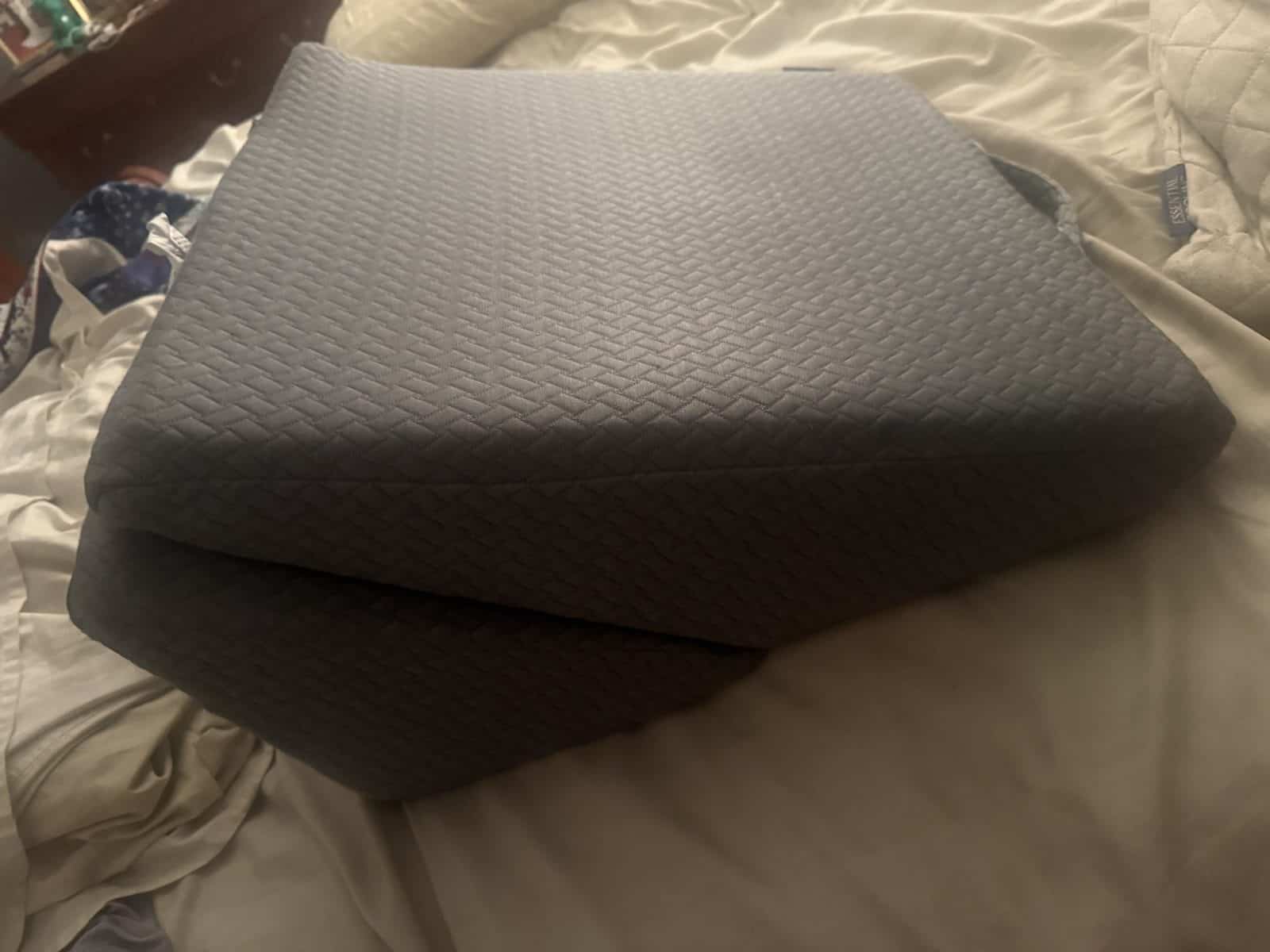
To stop a wedge pillow from sliding down, brace it against the headboard or wall, add grip underneath with a non-slip pad or a textured cover, tuck it under your fitted sheet or the mattress edge, and make sure the wedge is firm and correctly sized for your body. Stopping a wedge pillow from sliding is usually a mix of anchoring it and choosing the right shape. If yours slides because it is too soft or the wrong size, our bed wedge pillow picks can point you to sturdier options, and the fixes below handle the rest.
Quick Verdict. When a pillow is not in use, there is a right way to storing pillows so they stay fresh.
Wedge pillows slide when they are too soft, too smooth, or the wrong size, so the fixes are to anchor and grip them. Brace the wedge against the headboard or wall, add a non-slip pad or grippy cover, tuck it under the fitted sheet, and pick a firm, well-fitted wedge. A contoured shape with a body cradle also helps keep you in place.
Why Trust This Guide
My own folding multi-position wedge stays put most of the time, and the reasons come down to the things below: it is sturdy, it is firm enough not to shift under weight, and it fits the bed so I do not slide off. When a wedge does drift, bracing it and adding grip are what I rely on to keep it steady.
Key Takeaways
- Wedges slide when too soft, too smooth, or the wrong size.
- Brace the wedge against a headboard or wall.
- Add grip with a non-slip pad or textured cover.
- Tuck it under the fitted sheet to lock it in place.
- A firm, contoured, well-fitted wedge slides the least.
Why Your Wedge Slides and How to Fix It
| Cause | Why it happens | Fix |
|---|---|---|
| Too soft | Foam compresses and shifts under weight | Choose a firmer, denser wedge |
| Smooth cover | Slick fabric slides on sheets | Add a non-slip pad or grippy cover |
| Nothing to brace against | Wedge drifts across open bed | Push it to the headboard or wall |
| Wrong size or shape | Body slides off a poor fit | Size it to your body; try a contour |
Why Does My Wedge Pillow Slide Down?
A wedge pillow slides down because there is nothing holding it or you in place. The most common reasons are a wedge that is too soft, so it compresses and creeps under your weight, a slick cover that slips against smooth sheets, or a wedge sitting in the open middle of the bed with nothing to brace against. Size and shape play a part too, since a wedge that does not match your body lets you slide off it, which then pushes the wedge itself out of position. Once you know which of these is happening, the fix is usually quick and simple.
How to Keep a Wedge Pillow in Place
The most reliable fix is to anchor the wedge and add grip. Push the wedge firmly against the headboard or the wall so it has something solid to brace against and cannot drift upward. Add friction underneath with a non-slip mat, a rug gripper, or a textured cover so it stops sliding on the sheets. Tucking the back edge of the wedge under your fitted sheet, or wedging it against the mattress edge, locks it down further. Combining an anchor with grip underneath solves the large majority of sliding problems without any special equipment.
Does the Wedge Shape Matter?
Yes, the shape of the wedge has a real effect on sliding. A plain triangular wedge offers a straight slope that your body can slip down, while a contoured wedge with a gentle curve or a dip cradles you and holds you in position. My folding multi-position wedge is sturdy enough that it mostly stays put while my legs rest on it. The one thing I notice is that the fabric gets a little slippery when the room is cold. If you slide off a basic wedge no matter what you try, switching to a contoured shape designed to hold the body is often the cleanest fix, since it addresses the cause rather than just anchoring the pillow.
How to Stop Yourself From Sliding Off the Wedge
Sometimes it is you sliding, not the wedge, and firmness and fit are the answer. A firm wedge holds its angle so you are not slowly sinking and slipping, whereas a soft one lets you slide as it collapses. Getting the right size matters too, since a wedge that is too short or too steep pushes your body downward. A gentle incline for the legs and a wedge long enough to support your whole torso keep you seated in place. Grippier sheets or a cotton cover, rather than slick satin, also give your body more traction against the surface.
What Kind of Wedge Pillow Slides the Least?
If sliding is a constant battle, the wedge itself may be the problem, and some designs simply stay put better. Firmer, denser foam holds its shape and grips the bed far better than a soft wedge that compresses and creeps. A contoured shape with a curve or a knee dip cradles your body so you are not sliding down a bare slope, which addresses the cause rather than just fighting the symptom. A cover in cotton or another textured fabric grips sheets better than a slick, glossy one. And a wedge sized correctly for your body keeps you centered rather than sliding off the edge. My contoured leg wedge checks these boxes, firm, dipped, and well-fitted, which is the main reason it stays put while I use it. If you have tried every anchoring trick and still slide, switching to a wedge built this way is often the real fix.
Recommended Reading
- the best bed wedge pillows, sturdier options.
- foam wedges for leg elevation, firm leg wedges.
- how to use a wedge pillow, positioning it right.
- what height wedge pillow you need, get the fit right.
- the benefits of elevating your legs, why bother.
Common Mistakes to Avoid
Using a wedge in the open bed
With nothing to brace against, a wedge drifts freely. Always push it against the headboard or wall so it has an anchor.
Pairing it with slick sheets
Satin or very smooth sheets let a wedge slide easily. Cotton sheets or a non-slip pad underneath add the friction it needs.
Choosing a wedge that is too soft
Soft foam compresses and creeps under weight. A firm, dense wedge holds its shape and stays where you put it.
Ignoring the fit
A wedge that does not match your body lets you slide off. Size and shape it to you, and a contour helps hold you in place.
Wedge Pillow Sliding FAQ
Why does my wedge pillow keep sliding down the bed?
Usually because it is too soft, has a slick cover, or has nothing to brace against. Push it against the headboard, add a non-slip pad underneath, and choose a firmer wedge. Those three steps solve most sliding problems.
How do I keep my wedge pillow from moving?
Anchor it against the headboard or wall, add grip with a non-slip mat or textured cover, and tuck the back edge under your fitted sheet. Combining an anchor with friction underneath keeps the wedge locked in position.
Do non-slip pads work under wedge pillows?
Yes. A rug gripper or non-slip mat under the wedge adds friction against the sheets and stops it sliding. It is one of the simplest and cheapest fixes, especially on smooth or satin bedding.
Why do I slide down my wedge pillow at night?
Often the wedge is too soft or too steep, so your body slips as the foam compresses or the angle pushes you down. A firmer wedge, a gentler incline, and grippier sheets help you stay in place.
Are contoured wedge pillows less likely to slide?
Generally yes. A contoured wedge with a curve or a dip cradles your body and holds you in position, unlike a plain slope you can slip down. The shape addresses the cause of sliding rather than just anchoring the pillow.
Should I put my wedge pillow under the fitted sheet?
Tucking the back edge under the fitted sheet is a good way to lock a wedge in place, especially against the mattress edge or headboard. It stops the wedge drifting, though you will still want it firm and correctly sized so you do not slide off it.
For the full picture: the foundation principles of pillow selection by sleep position.
