
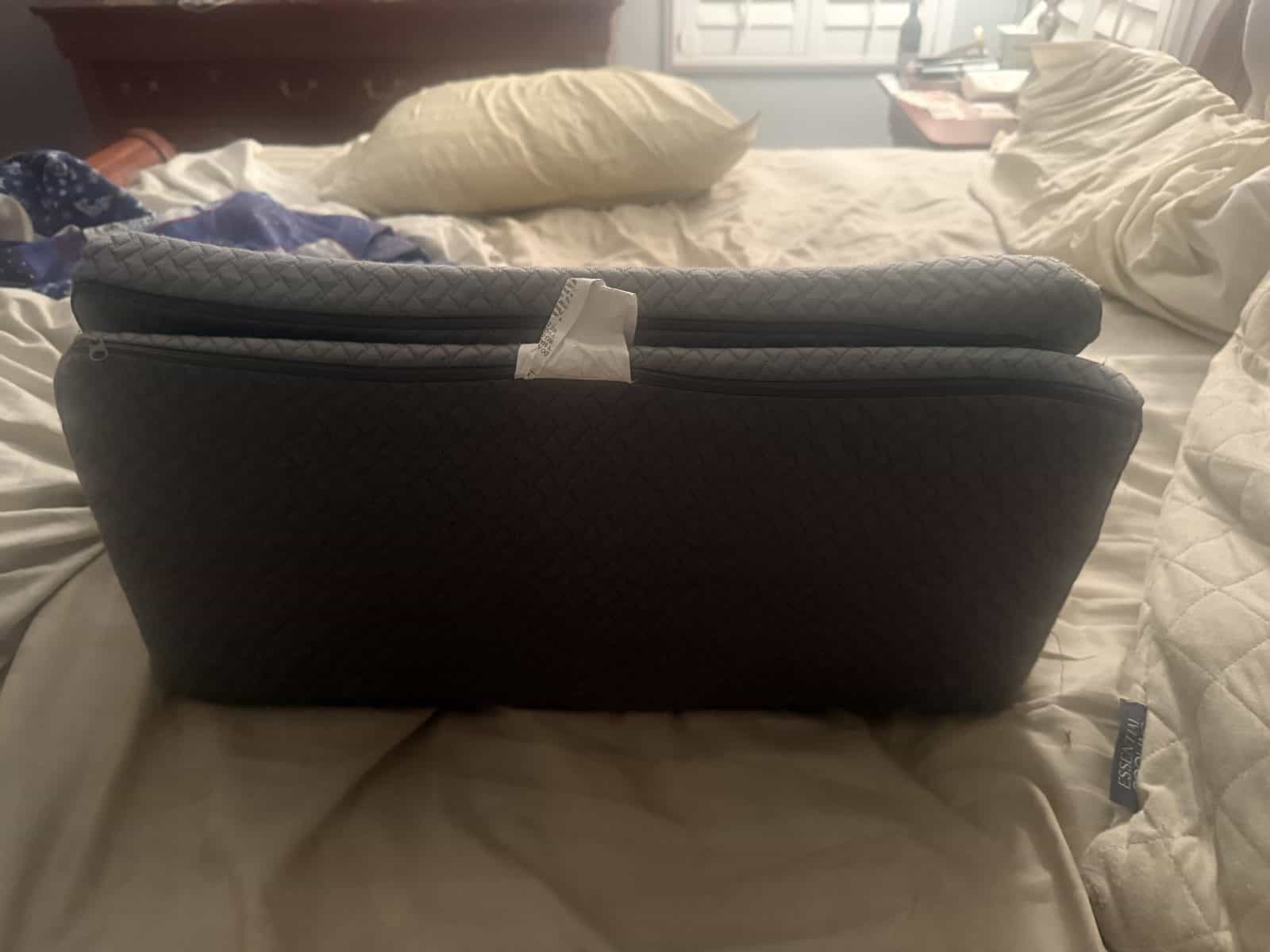
The wedge pillow height you need depends on how you will use it: a lower incline of roughly 6 to 8 inches suits leg elevation, a mid incline around 6 to 12 inches (about a 30 to 45 degree angle) suits acid reflux, and a higher incline near 45 degrees suits sitting up to read or work in bed. Choosing the right wedge pillow height is really about matching the angle to the job. If you want to browse options first, see our bed wedge pillow picks, or read on to size yours.
Quick Verdict. It also helps to know about keeping spare pillows fresh in storage.
Match the height to the use. Around 6 to 8 inches and a gentle angle suits leg elevation. A mid incline of 6 to 12 inches, roughly 30 to 45 degrees, suits acid reflux and must lift the torso. A steeper angle near 45 degrees is best for sitting up to read or work. Width of 20 to 24 inches fits most people and beds.
Why Trust This Guide
My own wedge is a lower, gentler leg-elevation ramp, which is exactly the shape that suits legs, and I have also propped up at a steeper angle to sit and lean back. Using it at different heights for different jobs is what informs the size guidance here, alongside the medical sources cited for reflux angles.
Key Takeaways
- Leg elevation: a lower incline, roughly 6 to 8 inches.
- Acid reflux: a mid incline of 6 to 12 inches, about 30 to 45 degrees.
- Sitting up or reading: a steeper angle near 45 degrees.
- For reflux, the height must lift the torso, not just the head.
- Most wedges are 20 to 24 inches wide to fit the body and bed.
Wedge Pillow Height by Use, at a Glance
| Use | Recommended angle | Approx height |
|---|---|---|
| Leg elevation | Lower, gentle incline | About 6 to 8 inches |
| Acid reflux | 30 to 45 degrees | 6 to 12 inches (torso) |
| Sitting up or reading | Around 43 to 45 degrees | Higher |
| General relaxation | Whatever feels supportive | Personal preference |
What Height Wedge Pillow for Legs?
For leg elevation, a lower, gentler incline of about 6 to 8 inches works best. The goal is to raise your calves and knees comfortably above the mattress so gravity can help, without forcing your legs up so steeply that it becomes tiring. A folding multi-position wedge, like the one I use, can be set within this gentle range for leg elevation. You want your legs supported along the whole slope rather than bent sharply at one point. A too-tall wedge under the legs tends to feel awkward, so err toward a moderate height for comfort you can hold while you relax.
What Angle Wedge Pillow for Acid Reflux?
For acid reflux, aim for a mid incline of roughly 30 to 45 degrees that raises the torso 6 to 12 inches. The Sleep Foundation notes that wedge pillows for reflux generally sit around a 30 to 45 degree angle and elevate the head and torso between about 6 and 12 inches. The Cleveland Clinic makes the key point that the elevation has to lift the whole upper body, not just the head, so gravity can keep stomach acid down. This is general information rather than medical advice, so anyone treating reflux or GERD should follow their doctor’s specific guidance on height and position.
What Height for Sitting Up or Reading?
For sitting up to read, work, or watch TV, a steeper wedge near a 43 to 45 degree angle is best. This higher incline keeps your upper body upright and supported like a backrest, rather than reclined, which is what you want when you are awake and propped against the headboard. A wedge that is too low leaves you slouching, while a steeper one holds you comfortably upright. When I lean back to sit on mine, the steeper the support, the more it works like a chair, which is ideal for a long stretch of reading or working in bed.
How Wide Should a Wedge Pillow Be?
Most wedge pillows are 20 to 24 inches wide, which suits the average body and standard beds. Width matters as much as height: the wedge needs to be broad enough to support your shoulders and torso, or your legs, without you rolling off the side, yet still fit on your mattress alongside a partner if you share the bed. The Sleep Foundation notes that wedge pillows commonly measure around 20 to 24 inches in length and width. Check the width against your bed and your frame before buying so the wedge fits both you and the space.
How to Check a Wedge Pillow’s Height Before Buying
A little checking before you buy prevents the frustration of a wedge that is wrong for you. Product listings usually give both a height in inches and an angle in degrees, so read both and picture how they map to your use: a lower number for legs, a mid range for reflux, a steeper one for sitting up. Check the length too, not just the peak height, because a short wedge lifts only your head or bends your legs, while a longer one supports the whole torso or leg along the slope. Compare the width against your mattress so it fits, especially if you share the bed. If you can, feel the firmness, since a soft wedge will compress and lose the height on the label the moment you lie on it. Reading the full dimensions rather than just the headline height is what gets you a wedge that actually holds the angle you paid for.
Recommended Reading
- the best bed wedge pillows, browse by height.
- foam wedges for leg elevation, the lower incline.
- the best pillows for acid reflux, the reflux angle.
- how to use a wedge pillow, positioning.
- wedge pillow vs adjustable bed, another way to elevate.
Common Mistakes to Avoid
Buying one height for every use
Legs, reflux, and sitting up each want a different angle. A single mid wedge is a compromise; match the height to your main use.
Going too steep for the legs
A tall, sharp incline under the legs feels awkward and tiring. A gentle 6 to 8 inch rise is more comfortable to hold.
Choosing a wedge that is too short
A short wedge lifts only your head for reflux or bends your legs sharply. Length matters so the whole torso or leg is supported.
Ignoring width
A narrow wedge lets you roll off the side. Aim for 20 to 24 inches so your body stays supported and centered.
Wedge Pillow Height FAQ
What is the best wedge pillow height for acid reflux?
A mid incline that raises the torso 6 to 12 inches, roughly 30 to 45 degrees, is the common recommendation. The key is lifting the whole upper body, not just the head. Because reflux is medical, follow your doctor’s guidance on the exact height.
Is a 7-inch or 12-inch wedge pillow better?
It depends on the use. A lower wedge around 7 inches suits leg elevation and gentle upper-body lift, while a taller 12-inch wedge gives steeper reflux or sitting-up support. Choose by your main purpose and what feels comfortable to maintain.
What angle is best for a wedge pillow?
Around 30 to 45 degrees covers most uses. Lean toward the lower end for legs and gentle elevation, and the higher end, near 45 degrees, for sitting up to read or work. Reflux typically falls in the middle of that range.
How tall should a wedge pillow be for sleeping?
For sleeping with elevation, a mid height of 6 to 12 inches that lifts the torso is typical, sized so you can hold the position without sliding. Firmness and length matter as much as height for staying comfortable all night.
Does wedge pillow width matter?
Yes. A width of 20 to 24 inches keeps your shoulders, torso, or legs supported without rolling off the side, while still fitting your bed. Check the width against your mattress, especially if you share it with a partner.
What height wedge is best for elevating legs?
A gentle 6 to 8 inch incline is ideal for legs, raising them comfortably above the mattress without a steep, tiring angle. A contoured leg wedge with a knee dip in this range supports the legs naturally along the whole slope.
Related guides: how to tell if you need a new pillow.
For the full picture: the foundation principles of pillow selection by sleep position.
