
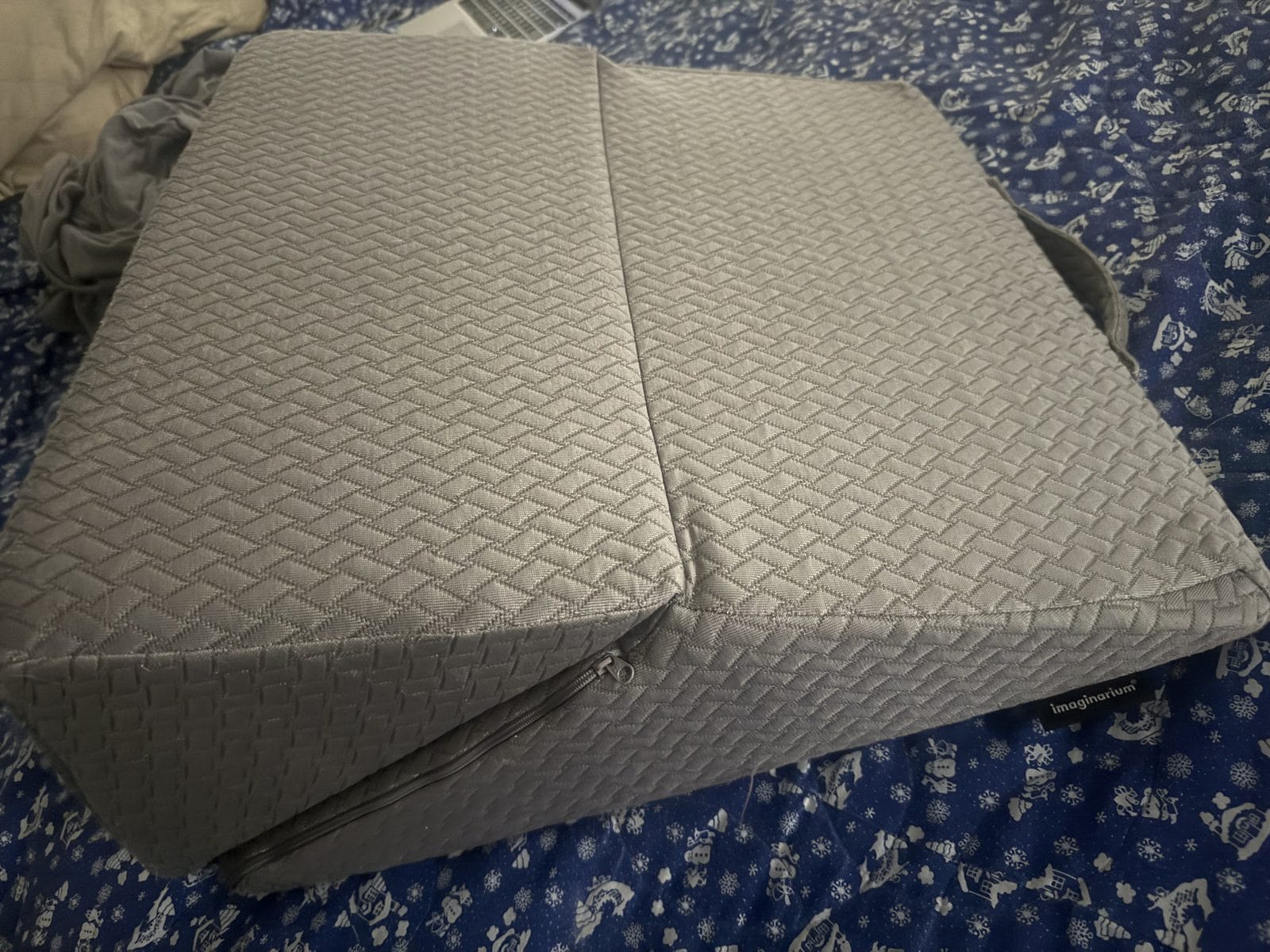
If your main goal is dedicated, comfortable leg elevation for circulation or swelling, a leg elevation pillow is purpose-built for it; if you want one versatile pillow that elevates your legs and your upper body, a wedge pillow is the more flexible pick. That is the heart of the wedge pillow vs leg elevation pillow question, and it comes down to versatility versus a shape tailored to your legs. Both raise your legs to take advantage of gravity, but they do it differently. I use a wedge pillow to elevate my legs, so this guide pairs that hands-on experience with product research and the sources below. If you want to see the full range of options first, our roundup of bed wedge pillows is a good companion. This is general information, not medical advice.
Quick Verdict
Choose a leg elevation pillow if your priority is targeted, comfortable leg support for circulation, swelling, or recovery. Choose a wedge pillow if you want one adaptable pillow that handles leg elevation plus upper-body needs like reflux or reading. Many people who mainly need versatility, as I do, reach for the wedge. Learn how to use a wedge pillow.
Why Trust This Guide
Reader-supported through affiliate links at no cost to you. I use a folding multi-position wedge to elevate my legs, so I can speak firsthand to how a wedge performs for that. First-person notes describe the wedge I actually use, in my own words with no brand claimed, while the leg elevation pillow side and all health-related points stay research-voice and follow the sources cited. For circulation problems, swelling, or recovery, follow your doctor’s guidance. Keep it in place: how to stop a wedge pillow sliding down.
Key Takeaways
- Both pillows elevate the legs, ideally above heart level, to aid venous return and reduce swelling.
- A wedge pillow is a versatile triangular incline for legs or upper body; a leg elevation pillow is shaped specifically for the legs.
- Leg elevation pillows tend to be more comfortable and targeted for the legs; wedges are more flexible and portable.
- Persistent swelling, circulation issues, or post-surgery needs warrant a doctor’s guidance, not just a pillow.
How We Compared Wedge Pillows and Leg Elevation Pillows
We compared these two on what actually matters for elevating your legs: effectiveness, comfort, versatility, and support. Elevation mechanics led, since raising the legs above heart level uses gravity to improve venous return and reduce swelling, which both pillows can do when the height is right. We weighed how each fits the legs, how firmly foam holds its shape versus stacked pillows, and how many jobs each can handle. Where it helps, I add what I have noticed using a wedge for leg elevation, kept to comfort and positioning rather than medical claims.
Wedge vs Leg Elevation Pillow at a Glance
| Factor | Wedge Pillow | Leg Elevation Pillow |
|---|---|---|
| Shape | Triangular incline | Contoured for legs |
| Best for | Legs and upper body | Dedicated leg elevation |
| Versatility | High, many uses | Focused on legs |
| Leg comfort | Good | Excellent, targeted |
| Upper-body use | Yes, reflux and reading | No |
| Portability | Very portable | Portable |
Wedge Pillow: Pros and Cons
Pros
- Versatile, elevating either the legs or the upper body for reflux, snoring, or reading.
- Holds its shape far better than a stack of soft pillows, so your position stays put.
- Portable and usable on a bed, couch, or chair.
- One purchase covers several needs, which is efficient and space-saving.
Cons
- A flat incline is less contoured to the legs than a dedicated leg pillow.
- A single fixed angle may not be ideal for every use.
I use a folding multi-position wedge to elevate my legs, and what I appreciate most is that it is sturdy and holds a steady incline instead of collapsing like piled-up pillows, and I can refold it to prop up my upper body when I want. The one thing I would change is the fabric, which gets a little slippery when the room is cold. For versatile, dependable elevation, it does the job. It suits people who want one adaptable pillow, and it is less ideal if you want a shape molded precisely to your calves.
Leg Elevation Pillow: Pros and Cons
Pros
- Contoured specifically for the legs, supporting from calf to heel for a comfortable, secure fit.
- Designed to hold the legs at an effective elevation for circulation and swelling.
- Memory foam versions cradle the legs and reduce pressure points.
- Excellent for targeted needs like post-surgery recovery or edema, under a doctor’s guidance.
Cons
- Single-purpose, since it is built only for leg elevation, not upper-body use.
- Takes up storage space for one job.
A leg elevation pillow is the more specialized tool, shaped to hold your legs at a comfortable, effective angle. Sources note that leg elevation pillows are widely used for reducing swelling, improving circulation, and supporting recovery when legs are raised above heart level. It suits people focused specifically on leg elevation, and it is less ideal if you also want upper-body support.
Head-to-Head on Leg Elevation and Circulation
The leg elevation pillow wins on targeted leg support, though a wedge is close. Both work by raising the legs above heart level to encourage venous blood flow back to the heart and reduce swelling. A dedicated leg pillow is contoured to hold the legs securely at that height with calf-to-heel support, which many find more comfortable for longer sessions. A wedge achieves similar elevation with a flat incline, which works well but supports the legs less precisely. If dedicated circulation and swelling support is your main goal, the leg pillow has the edge, and either way, see a doctor about ongoing circulation concerns.
Head-to-Head on Versatility
The wedge wins decisively on versatility. Because it is a simple incline, a wedge can elevate your legs one moment and prop up your upper body the next, which makes it useful for acid reflux, easier breathing, snoring, or reading in bed, not just legs. A leg elevation pillow does one job. For anyone who wants a single pillow that adapts to several needs, the wedge is the clear choice, which is a big part of why I use one.
Head-to-Head on Comfort and Fit for the Legs
The leg elevation pillow wins on leg-specific comfort. Its contoured shape cradles the legs from calf to heel, distributing weight and easing pressure in a way a flat wedge cannot fully match, and memory foam versions add gentle cushioning. A wedge is comfortable and stable, but its straight ramp is a more general surface. For long stretches of leg elevation focused purely on comfort, the dedicated pillow is the more restful fit.
Which Should You Choose
| If this is you | Better choice |
|---|---|
| You want versatile leg and upper-body elevation | Wedge pillow |
| You focus on dedicated leg elevation | Leg elevation pillow |
| You need reflux or breathing support too | Wedge pillow |
| You want the most comfortable leg fit | Leg elevation pillow |
| You are recovering from lower-body surgery | Leg elevation pillow, per your doctor |
| You want one pillow for many jobs | Wedge pillow |
How to Choose Between Them
Start with your primary goal and the elevation height. For circulation and swelling, aim to raise the legs above heart level, often around 6 to 12 inches, while a lower incline suits gentle back and spinal comfort. Then pick the form: choose a wedge if you want that height for legs and the option to switch to upper-body support, or a contoured leg pillow if legs are your sole focus. Favor supportive foam over soft filling, since denser foam holds the angle and keeps its shape, and consider pairing either with a knee pillow or a bolster pillow for added positioning.
The Verdict
Neither pillow is simply better; they solve slightly different problems. The leg elevation pillow is the specialist, shaped to cradle your legs for the most comfortable, targeted elevation, which makes it the pick for circulation, swelling, and recovery focused squarely on the lower body. The wedge is the generalist, elevating your legs capably while also handling reflux, breathing, and reading, so it is the pick when you want one adaptable pillow. As someone who uses a wedge for leg elevation and values that flexibility, I lean wedge, but if your needs are purely leg-focused and comfort-driven, the dedicated pillow is worth it. For any medical reason to elevate, let your doctor guide the specifics.
Common Mistakes to Avoid
Elevating Below Heart Level
A slight lift does little for circulation. To get the intended benefit, the legs generally need to rest above heart level, so choose a height that achieves that, and follow the elevation time your doctor suggests for any medical condition.
Using Soft, Collapsing Pillows
Stacking regular pillows is lumpy and shifts as you move, undermining consistent elevation. A firm foam wedge or a contoured leg pillow holds its shape and keeps your legs steady, which is one of the main reasons to buy a purpose-made pillow rather than improvising.
Ignoring Medical Warning Signs
A pillow is a comfort and positioning tool, not a treatment. Persistent swelling, one-sided leg swelling, pain, or suspected circulation problems such as blood clots need a doctor, not just leg elevation, so seek care rather than relying on a pillow to fix a medical issue.
Buying the Wrong Height
Too low does nothing and too high can feel uncomfortable or strain the back. Match the incline to your goal, a higher lift for swelling and circulation and a gentler one for back comfort, and check the dimensions against your body and bed before buying.
Recommended Reading
- wedge pillows for leg elevation
- knee pillows for side sleepers
- pillows for acid reflux
- sleeping with restless legs
- restless legs at night
- choosing the right pillow
- cervical pillows
Frequently Asked Questions
What is the difference between a wedge pillow and a leg elevation pillow?
A wedge pillow is a triangular incline that can elevate your legs or your upper body, while a leg elevation pillow is contoured specifically to support and raise the legs. The wedge is more versatile, and the leg pillow is more targeted and often more comfortable for the legs.
Which is better for circulation and swelling?
A dedicated leg elevation pillow has a slight edge because it is shaped to hold the legs securely above heart level, which aids venous return and reduces swelling. A wedge works too. For ongoing circulation issues, talk to your doctor about the right approach.
Can a wedge pillow be used to elevate legs?
Yes, and many people use it that way. Placed with the incline under the legs, a wedge raises them to a helpful height and holds the position better than stacked pillows. Its advantage is that the same pillow can also prop up your upper body when needed.
How high should I elevate my legs?
For circulation and swelling, aim to raise the legs above heart level, often around 6 to 12 inches, while a gentler lift suits back comfort. Choose a comfortable height, and for a medical condition, follow the elevation and timing your doctor recommends.
Is a wedge or leg elevation pillow better after surgery?
For lower-body surgery recovery, a contoured leg elevation pillow is often preferred for its targeted, comfortable support, but always follow your surgeon’s instructions. They can advise the right height and duration, since post-surgical needs vary by procedure and person.
Can I use a wedge pillow for acid reflux and legs?
Yes, that flexibility is a key wedge advantage. You can use it under your upper body to reduce nighttime reflux and, on another night, under your legs for elevation. A leg elevation pillow, by contrast, is designed only for the legs.
What material should I look for?
Supportive foam is best, since denser memory foam or polyurethane foam holds the incline and keeps its shape, unlike soft filling that collapses. Memory foam adds contouring comfort, and a removable, washable cover keeps either pillow fresh over time.
Do I need both pillows?
Not usually. If your needs are purely leg-focused, one good leg elevation pillow is enough, and if you want versatility, a single wedge covers legs and upper body. Some people keep both for different rooms or purposes, but most do fine with one that fits their main goal.
Related in this cluster: our guide: how to relieve pain better sleep.
