
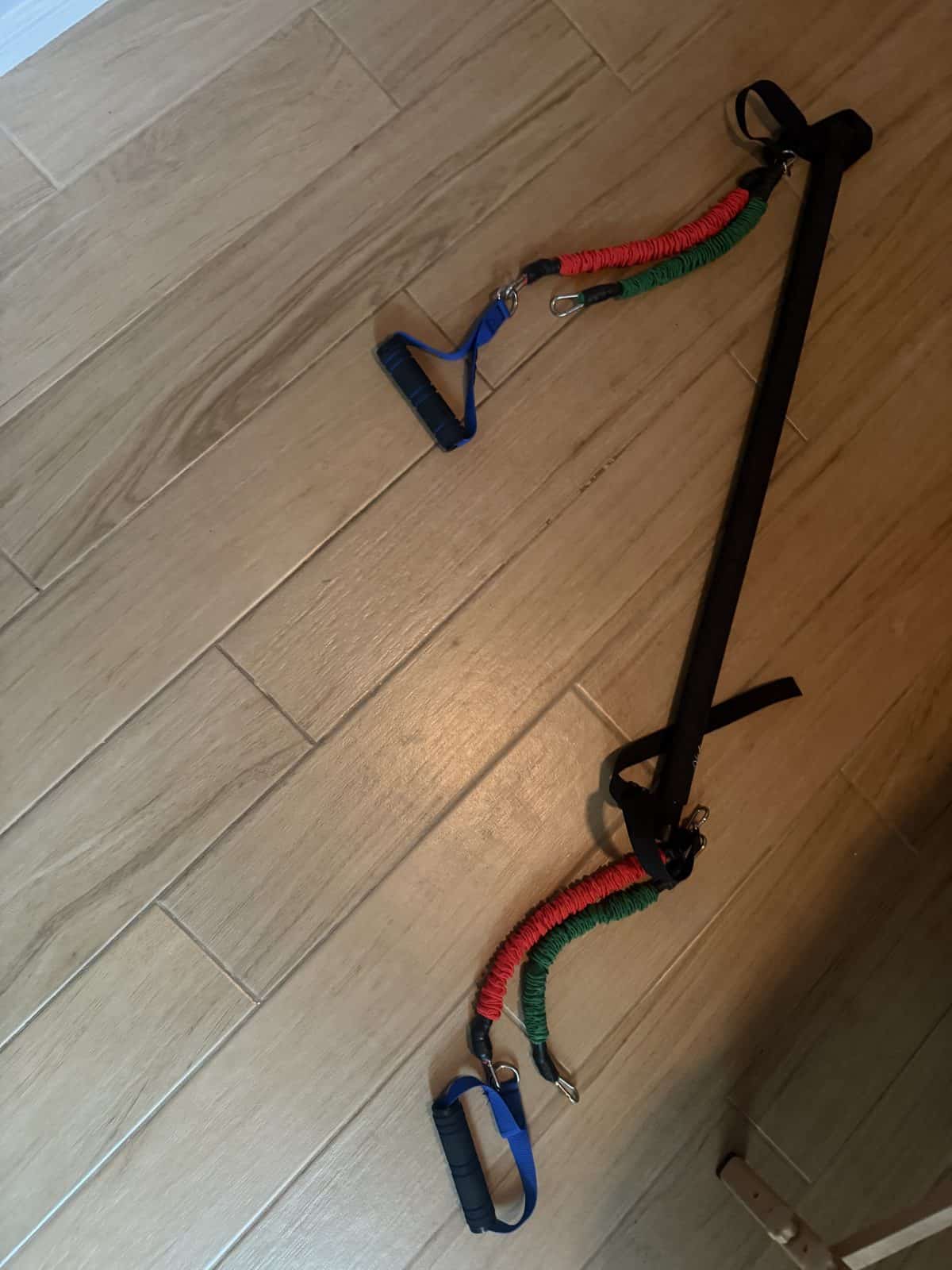
A set of resistance bands is one of the simplest ways to stretch deeper, move better, and unwind at the end of the day. The best resistance bands for stretching give you gentle, controlled tension that helps you reach positions bodyweight alone cannot, improving flexibility and range of motion while staying easy on your joints. I use a heavy-duty set with a bar, and they let me stretch out nicely, so this guide pairs that hands-on use with product research and the sources cited below. Because gentle stretching before bed can ease tension and help you wind down, resistance bands also fit naturally into an evening routine alongside a stretching mat. The six picks below span loop bands, therapy bands, stretching straps, and heavy-duty sets, including the kind of sturdy bands I reach for.
Quick Verdict
The Fit Simplify loop set is the easy all-around pick, versatile for stretching and light strength. TheraBand is the gentlest option for therapy-style stretching, a dedicated strap helps with guided stretches, and a heavy-duty loop set like the one I use holds up to deep, repeated stretching. Match the resistance to your body, not your ego.
Why Trust This Guide
Independent picks, reader-supported through affiliate links at no cost to you. I use a heavy-duty resistance band set with a bar for stretching, so I can speak to how sturdy bands feel and perform. First-person notes describe the bands I actually use, in my own words with no brand claimed, and the stretching and safety guidance follows the sources cited below. This is general wellness information, not medical advice.
Key Takeaways
- Resistance bands deepen stretches with gentle, controlled tension, improving flexibility and range of motion.
- They are low-impact and joint-friendly, which suits recovery, mobility work, and sensitive joints.
- Gentle stretching before bed can reduce muscle tension and promote relaxation for sleep.
- Choose a resistance that allows a full range of motion with tension, and inspect bands for wear before use.
How We Picked the Best Resistance Bands for Stretching
We focused on what makes a band good for stretching rather than just strength: material quality, durability, resistance range, and versatility. Durability and safe tension led, since the right band allows a full range of motion with tension without compromising form, and worn bands should be replaced to avoid snapping. We valued sets that span light to heavy resistance so you can progress, and we kept the focus on gentle, controlled stretching, which the Sleep Foundation notes can reduce muscle tension and promote relaxation when done slowly before bed. The picks range from therapy bands to heavy-duty loops.
1. Fit Simplify Resistance Loop Bands
Why It Stands Out
The Fit Simplify set is the versatile all-rounder. It includes five loop bands in graduated resistance levels, so you can start light and progress, and the loop design works well for both lower-body stretches and light strength work. It is compact, affordable, and a common first set for good reason.
Worth Knowing
Thin loop bands are lighter-duty than thick pull-up-style bands, so they suit gentle stretching more than heavy resistance. The lightest bands can roll or dig in on larger limbs, which a fabric band avoids.
Buy it if you want an affordable, versatile starter set. Skip it if you specifically want heavy-duty tension.
Check Price on Amazon2. The Heavy-Duty Bands I Use
Why It Stands Out
This is the resistance band set I actually use, so I will speak plainly about it. Mine came with a bar, and the bands themselves are heavy duty, which is the part I appreciate most: they feel sturdy and dependable rather than flimsy, and they let me stretch out nicely and get a real, satisfying stretch without worrying about them giving out. For working through tight spots and loosening up, that combination of solid resistance and durable build is exactly what I want from a set of bands.
Worth Knowing
Because mine is unbranded here, look for the same things I value: a heavy-duty, durable build, enough resistance to give a genuine stretch, and secure attachment points if the set uses a bar. Even sturdy bands should be checked for nicks or wear over time, since that is what leads to snapping.
Buy a heavy-duty set like this if you want durable bands for deep, repeated stretching. Skip it if you only need the lightest therapy-level tension.
Check Price on Amazon3. TheraBand Flat Resistance Bands
Why It Stands Out
TheraBand is the pick for gentle, therapy-style stretching. These flat bands are a physical-therapy staple, offering smooth, low-level resistance that is ideal for rehab, mobility work, and easing into stretches without straining. Their gradual resistance makes them forgiving for sensitive joints or a slow evening routine.
Worth Knowing
Flat latex bands are less durable than thick loops and can tear if nicked, so handle them with care. They are best for gentle work rather than heavy resistance stretching.
Buy it if you want gentle, PT-style stretching. Skip it if you want heavy resistance or a loop shape.
Check Price on Amazon4. WODFitters Pull-Up Assist Bands
Why It Stands Out
The WODFitters loops are the heavy-duty pick. Built from thick, durable latex, they deliver strong tension that holds up to deep stretches and mobility work, and they double as pull-up assistance. For anyone who finds thin bands too light, these provide the sturdy resistance that makes a stretch feel substantial.
Worth Knowing
Heavy bands can be too much for gentle therapy stretching, so choose a lighter one in the range for delicate areas. Anchor them securely, since a thick band that slips can snap back hard.
Buy it if you want durable, heavy resistance. Skip it if you only need light, gentle tension.
Check Price on Amazon5. Gradient Fitness Stretching Strap
Why It Stands Out
The Gradient Fitness strap is the pick for guided stretching. Rather than elastic tension, it uses a strap with numbered loops so you can hold a leg or arm at a set depth and ease into a stretch with control, which is great for hamstrings, hips, and shoulders. It is a simple, foolproof way to stretch deeper safely.
Worth Knowing
A strap is non-elastic, so it assists a stretch rather than adding springy resistance like a band. It is a stretching aid rather than a strengthening tool.
Buy it if you want controlled, guided stretches. Skip it if you want elastic resistance for strength too.
Check Price on Amazon6. Bodylastics Resistance Bands With Handles
Why It Stands Out
The Bodylastics set is the pick for anchored, upper-body stretching. Tube bands with handles give you a comfortable grip and can be anchored to a door or a bar, making them ideal for chest, shoulder, and back stretches as well as strength work. The stackable design lets you dial in resistance.
Worth Knowing
Tube bands with handles are bulkier to store than simple loops and rely on their anchors and clips. Check the door anchor and clips periodically, as these are the parts that wear.
Buy it if you want handled bands for upper-body stretches and strength. Skip it if you want the simplest loop for floor stretching.
Check Price on AmazonResistance Bands at a Glance
| If you want this | Reach for | Why |
|---|---|---|
| A versatile starter set | Fit Simplify Loop Bands | Five graduated loops, stretch and strength |
| Durable, heavy resistance | A heavy-duty set like the one I use | Sturdy build for deep, repeated stretching |
| Gentle therapy-style stretching | TheraBand Flat Bands | Smooth, low-level PT resistance |
| The heaviest tension | WODFitters Pull-Up Bands | Thick latex loops for deep stretches |
| Controlled guided stretches | Gradient Fitness Strap | Numbered loops hold a set depth |
| Anchored upper-body stretches | Bodylastics With Handles | Grips and door or bar anchoring |
How to Choose Resistance Bands for Stretching
Resistance Level and Progression
Pick a resistance that lets you move through a full range of motion with tension but without breaking form. A set with several levels is ideal, so you can use lighter bands for gentle stretches and heavier ones as your flexibility improves, progressing gradually rather than forcing a stretch.
Band Type
Match the type to your goal. Loop bands suit lower-body stretches, tube bands with handles are great for anchored upper-body work, flat therapy bands are gentlest for rehab, and a non-elastic strap helps you hold a guided stretch. Many people keep a couple of types on hand, and pair them with foam rollers or massage balls for fuller recovery.
Material and Durability
Look for high-grade latex or sturdy fabric and clean, even construction. Durability matters most on bands you will stretch hard and often, and inspecting them for wear prevents the snapping that causes injury, so replace any band showing nicks or thinning. Heavy-duty builds hold up best to deep, repeated stretching.
How and When You Will Use Them
Consider your routine. For an evening wind-down, gentle, slow stretching is best, since the Sleep Foundation notes that low-intensity stretching before bed can ease tension and aid relaxation, while vigorous exercise close to bedtime may interfere with sleep. Pair bands with a calming routine and a comfortable spot to relax before bed.
Common Resistance Band Mistakes to Avoid
Using Too Much Resistance
Grabbing the heaviest band to look strong usually wrecks your form and cuts your range of motion. Choose a resistance you can control through the whole movement, keeping tension steady, and save heavier bands for when your flexibility and control have improved.
Skipping the Wear Check
A nicked or thinning band can snap mid-stretch and cause injury. Inspect your bands regularly, especially heavy-duty ones under high tension, and replace any that show damage rather than pushing them until they fail.
Anchoring Insecurely
A band that slips off a door, bar, or your foot can snap back hard. Make sure anchors are secure before applying tension, keep your face and eyes out of the line of recoil, and check door anchors and clips on handled sets before each use.
Doing Vigorous Work Right Before Bed
Intense band workouts late at night can rev you up rather than wind you down. If you are stretching in the evening, keep it slow and gentle to promote relaxation, and save energetic resistance training for earlier in the day.
Recommended Reading
- pilates bars
- stretching mats
- foam rollers
- back stretchers
- acupressure mats
- massage guns
- easing pain for better sleep
- low-impact vibration platforms
- cold therapy for sore joints
Frequently Asked Questions
Are resistance bands good for stretching?
Yes, they are excellent for it. Bands provide gentle, controlled tension that helps you deepen a stretch and reach positions bodyweight alone cannot, improving flexibility and range of motion. They also let you stretch specific muscles safely with good alignment, which is why they are popular for warm-ups and recovery.
What resistance level should I choose for stretching?
Choose one that lets you move through a full range of motion with tension but without breaking form. A multi-band set is ideal, so you can use lighter resistance for gentle stretches and heavier bands as your flexibility improves. Start lighter than you think and progress gradually.
Can stretching with bands before bed help me sleep?
Gentle stretching before bed may reduce muscle tension and promote relaxation, helping prepare your body for sleep. Keep it slow and low-intensity, since vigorous exercise close to bedtime can interfere with sleep for some people. Pair it with a calming wind-down routine.
What is the difference between loop bands, tube bands, and straps?
Loop bands are continuous loops good for lower-body stretches, tube bands have handles and anchor well for upper-body work, and a stretching strap is non-elastic with loops to hold a guided stretch at a set depth. Each suits different stretches, and many people use a mix.
Are resistance bands safe for joints and recovery?
Generally yes, because they are low-impact and provide smooth resistance that is gentle on joints, which is why physical therapists use them for rehab and mobility. Use controlled movements and appropriate resistance, and check with a professional if you are recovering from an injury.
How do I keep resistance bands from snapping?
Inspect them regularly and replace any band with nicks, thinning, or damage before it fails. Anchor bands securely, avoid overstretching beyond their range, keep them out of direct sun and heat, and store them clean and dry to extend their life.
Can I use resistance bands every day?
Gentle stretching and mobility work with bands can be done daily for many people, and consistency helps maintain flexibility. Listen to your body, avoid pain, and give hard-worked muscles recovery time. For an evening routine, daily gentle stretching is a reasonable, low-impact habit.
Do I need a bar or anchor to use them?
Not always. Loop bands and straps work with just your body and the floor, while tube bands often use a door anchor or a bar for anchored stretches. A bar or anchor expands your options for upper-body and standing stretches, but plenty of effective stretches need nothing extra.
