
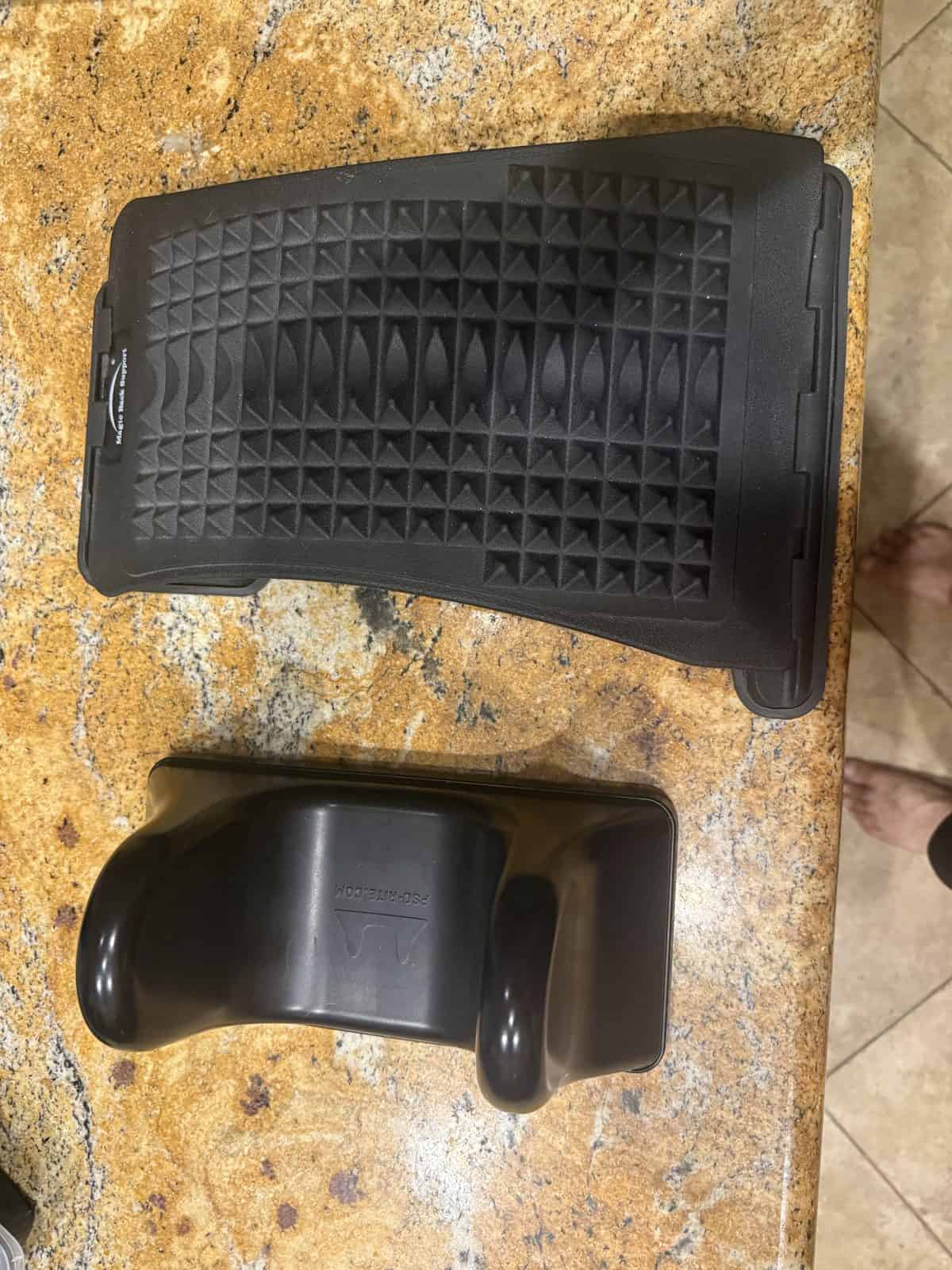
A back stretcher and a neck traction device are not really rivals, because one decompresses your lower back and the other stretches your neck, so the right choice comes down to where your pain or tightness actually is, and some people use both. A back stretcher vs neck traction device decision is less about which is better and more about matching the tool to the region that bothers you. This comparison walks through what each does, who each suits, and the safety points that matter, drawing on my own use of both. For our current top picks, see the best neck traction devices guide.
RestRight is reader-supported; purchases made through links on this page may earn a commission at no added cost to you. This article is for general information only and is not medical advice.
Quick Verdict
Choose a back stretcher if your tightness sits in your lower back, and a neck traction device if it sits in your neck, since each targets a different region. They complement rather than replace each other, so people with both areas often use both. Neck traction in particular warrants a doctor’s or physical therapist’s guidance before you start.
Why You Can Trust This Comparison
I use both a back stretcher and a neck traction device as part of my own stretching routine, so this comes from hands-on use rather than theory. I deal with mild back and neck tightness, and I find lying back over the arch of the stretcher and resting my neck in the traction cradle a relaxing way to stretch out at the end of the day. I am not a medical professional, though, and a routine that works for me is not a treatment recommendation. If you have real pain, please talk to a doctor or physical therapist first, especially before trying neck traction.
Please Read First: Not Medical Advice
This is an educational comparison of two device types, not medical advice or a treatment plan. Back and neck pain can have serious underlying causes. See a doctor or physical therapist before starting either device, and especially before neck traction. Stop immediately and seek care if you feel numbness, tingling, dizziness, weakness, or pain that worsens or radiates into your arms or legs.
How We Compared These Two Devices
We compared the two on the region each targets, ease and comfort of use, safety and who should be cautious, cost, and portability, alongside firsthand use of both. For the neck traction side, we leaned on medical guidance rather than marketing: Cleveland Clinic advises that you should never begin cervical traction on your neck or spine without first talking to your healthcare provider, often as a supervised trial. That safety-first lens shaped the whole comparison.
Back Stretcher vs Neck Traction Device at a Glance
| Factor | Back stretcher | Neck traction device |
|---|---|---|
| Target area | Lower back, lumbar spine | Neck, cervical spine |
| How it works | Arches and extends the lower back | Gently stretches the neck |
| Typical form | Arch board or foam arch | Cradle, inflatable collar, or over-door kit |
| Ease of use | Lie back on it, mostly self-guided | Varies; some need more care and setup |
| Caution level | Gentler, still use sensibly | Higher; professional guidance advised first |
| Best for | Lower-back tightness | Neck tightness, under guidance |
The Back Stretcher: Strengths and Limits
A back stretcher passively arches your lower back to encourage a gentle stretch through the lumbar area. You lie back over its curved surface, let gravity extend your spine, and relax, which many people find is an easy way to counter a day of sitting.
What It Does Well
- Targets lower-back and lumbar tightness specifically
- Simple and mostly self-guided: lie back and relax
- Many arch models let you adjust the intensity of the curve
- Inexpensive and takes up little space
Where It Falls Short
- Does nothing for neck pain, which is a different region
- The deepest arch settings can be too much if you ease in too fast
- Not appropriate for everyone, including some spine conditions
Best for: people whose tightness sits in the lower back and who want a simple, gentle stretch. Approach with care if: you have a diagnosed spine condition or acute back pain, in which case check with a professional first. For product options, see our back stretchers guide.
Check Price on AmazonThe Neck Traction Device: Strengths and Limits
A neck traction device gently stretches the cervical spine to create a little space between the neck vertebrae. Forms range from curved cradles you rest your head in to inflatable collars and over-the-door kits, and this is the device that most calls for professional guidance before use.
What It Does Well
- Targets neck and cervical tightness specifically
- May offer short-term relief for some people, per current guidance
- Cradle styles are simple to lie back into
- Compact and usable at home once cleared for it
Where It Falls Short
- Evidence is mixed, and WebMD notes it is best viewed as short-term relief that a doctor should evaluate first
- Not a first-line option; at-home kits especially warrant medical guidance
- Has real contraindications, so it is not for everyone
Best for: people with neck tightness who have checked with a doctor or physical therapist first. Approach with care if: you have any spine condition, unexplained neck pain, or neurological symptoms, in which case do not start without professional clearance. For product options, see our neck traction devices guide.
Check Price on AmazonWhich One Targets Your Pain?
The back stretcher wins for lower-back tightness and the neck traction device wins for neck tightness, because they simply address different parts of the spine. This is the single most important distinction: a back stretcher will not help a stiff neck, and a neck device will not touch your lumbar area. Identify where your discomfort actually sits, and the choice usually makes itself.
Which Is Easier and More Comfortable to Use?
The back stretcher is generally the more straightforward of the two to use on your own. You lie back over the arch, adjust the curve, and relax, with little that can go wrong if you ease into it. Neck traction varies more by design and, given the sensitivity of the cervical spine, benefits from being shown the correct setup by a professional. For simple, self-guided use, the back stretcher is the easier starting point.
Which Is Safer, and Who Should Be Careful?
The back stretcher is the gentler device, but neck traction is the one that demands real caution and professional input. Cleveland Clinic is explicit that you should not start cervical traction without first talking to your provider, and it is often trialed under a physical therapist’s supervision. Both devices are inappropriate for certain conditions, and anyone with numbness, tingling, dizziness, weakness, or radiating pain should stop and seek care rather than push through. When in doubt, get evaluated first.
Which Costs Less and Travels Better?
Both are affordable and portable, with the back stretcher usually the simplest to store and move. Arch-style back stretchers are typically inexpensive and slim, while neck traction cradles are compact too, though over-door kits involve a bit more setup. Cost is rarely the deciding factor here; the region you need to treat and the safety considerations matter far more.
Which Should You Choose?
| Your situation | Back stretcher | Neck traction device |
|---|---|---|
| Lower-back tightness only | Best fit | Skip |
| Neck tightness only | Skip | Best fit, after clearance |
| Both areas bother you | Use for back | Use for neck, after clearance |
| Want the simplest self-guided tool | Best fit | Get guidance first |
| Have a spine condition or nerve symptoms | Ask a doctor first | Ask a doctor first |
How to Choose, and When to See a Doctor
Match the device to the region that bothers you, ease in gently, and get professional input before neck traction. Start with where your tightness sits: lower back points to a back stretcher, neck points to a traction device. Begin with the gentlest setting and short sessions, and never force a stretch. Most importantly, see a doctor or physical therapist before starting neck traction, and see one promptly for either device if you have severe, persistent, or worsening pain, pain that radiates into the arms or legs, or any numbness, tingling, weakness, or dizziness. Those can signal problems that a stretching device will not fix and could aggravate.
The Verdict
These two devices are complementary, not competing, so the honest answer to “which one” is usually “the one that matches where your pain is,” and for some people that means both. A back stretcher is the simpler, gentler pick for lower-back tightness, while a neck traction device addresses the neck but calls for a doctor’s or physical therapist’s guidance before you begin. I use both myself for mild tightness in each area, but I want to be clear that is my personal routine, not a medical recommendation. Decide based on your body and, especially for your neck, a professional’s input rather than any single article.
Recommended Reading
Ready to look at specific models? See our back stretchers guide and neck traction devices guide. For related relief, see our inversion tables, neck massagers, posture correctors, and heating pads guides. To support your neck and back overnight, see our pillows for neck pain and lumbar support pillows guides, plus sleep tips in how to sleep with lower back pain and how to sleep with neck pain.
Related guide: back stretcher vs foam roller.
Related: neck brace vs neck hammock.
Frequently Asked Questions
Can a back stretcher help with neck pain?
Not really, because a back stretcher is designed to arch and stretch the lower back, not the neck. For neck tightness you would want a device made for the cervical spine, such as a neck traction cradle, ideally after checking with a professional. Using the wrong tool for the region rarely helps and can be uncomfortable.
Is a neck traction device safe to use at home?
It can be for some people, but it is not a first-line option and warrants medical guidance first. Cleveland Clinic advises never starting cervical traction without talking to your provider, and WebMD notes at-home kits should not be your first step. Get evaluated, learn the correct setup, and stop immediately if you feel dizziness, numbness, or worsening pain.
Do I need both devices?
Only if both your lower back and your neck bother you, since each device targets a different region. Someone with only lower-back tightness needs just a back stretcher, and someone with only neck tightness needs a neck device. People who deal with both areas, as I do, may find a use for each, but there is no reason to buy both otherwise.
Which is gentler for a beginner?
A back stretcher is generally the gentler, more forgiving starting point, especially arch models with adjustable intensity. You control how much curve you use and can ease in slowly. Neck traction involves the more sensitive cervical spine, so beginners should get professional guidance before trying it rather than experimenting on their own.
How long should I use a stretching device?
Start with short sessions of a few minutes and never force a stretch, increasing only gradually if it feels comfortable. There is no universal number, and more is not better. If any session causes pain, numbness, or dizziness, stop and do not resume until you have spoken with a professional about what is safe for you.
When should I see a doctor instead of using a device?
See a doctor before relying on either device if your pain is severe, persistent, or worsening, or if it radiates into your arms or legs or comes with numbness, tingling, weakness, or dizziness. Those symptoms can point to problems a stretching device will not fix and might worsen. A professional can tell you whether traction or stretching is appropriate at all.
