
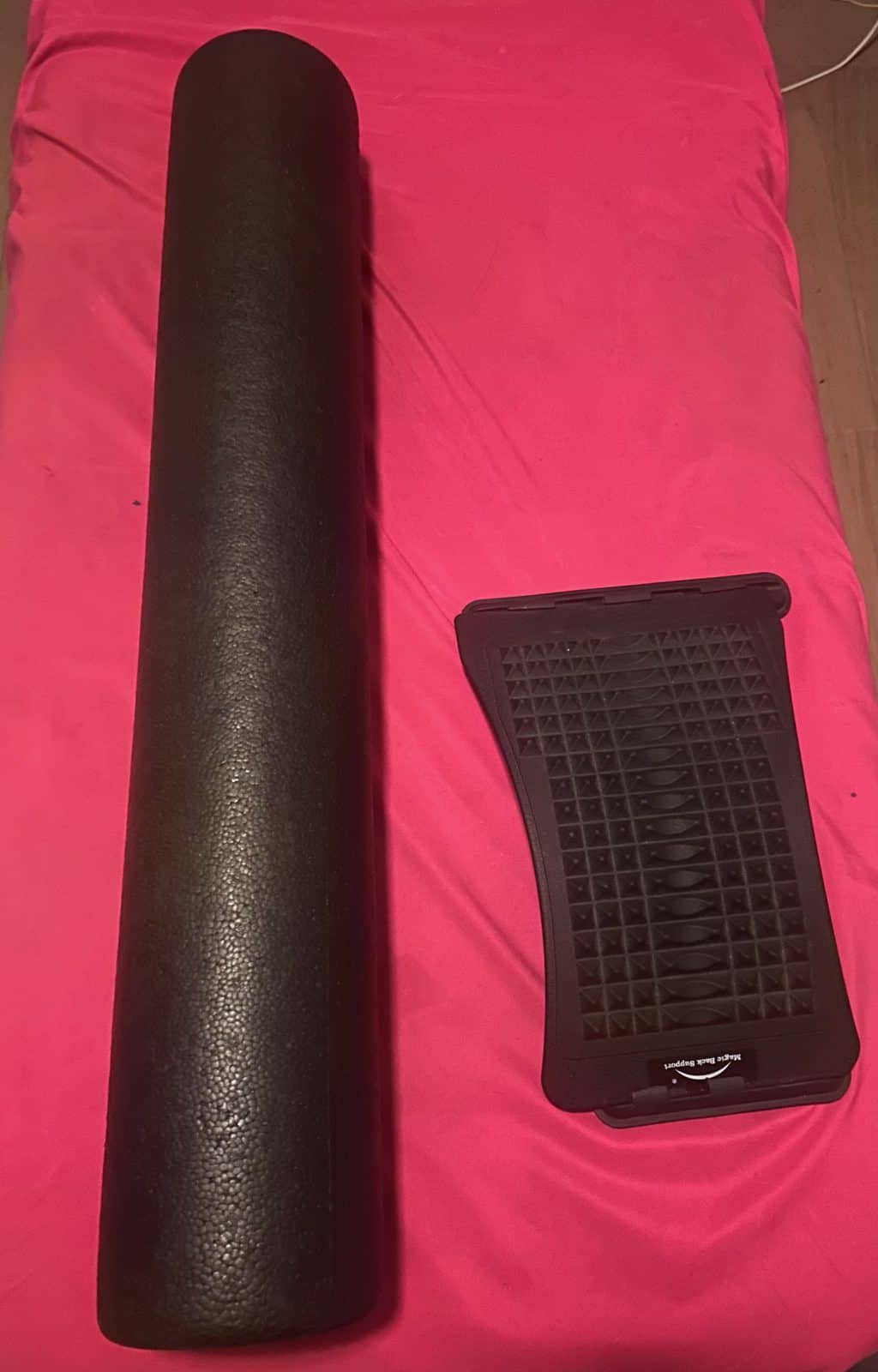
If your back feels tight after a day at the desk, two cheap tools come up again and again: the arched back stretcher you lie back over, and the foam roller you roll along your muscles. They are not really the same thing. A back stretcher puts your spine into a gentle, passive extension to ease stiffness, while a foam roller works your muscles through self-massage to loosen tension and aid recovery. I use both an arched back stretcher and a foam roller myself, so this comparison pairs that hands-on familiarity with research and the source below. This is general information, not medical advice, and back pain is worth discussing with a doctor or physical therapist before you start.
Quick Verdict
For lower-back tightness and stiffness from too much sitting, an arched back stretcher’s gentle, supported extension is the easier, more targeted choice. For overall muscle soreness and recovery across your legs, hips, and upper back, a foam roller is the more versatile tool. Notably, physical therapists often caution against rolling the lower back directly, which tips low-back stiffness toward the stretcher. Many people end up using both.
Why Trust This Guide
Independent picks, reader-supported through affiliate links at no cost to you. I actually use both tools: an arched back stretcher I lie back on to stretch after sitting, and a plain high-density foam roller I have owned for years. So I can speak to what each is like in daily use. Those are comfort, durability, and routine observations from my own use, not medical claims about relief, and any health guidance is research-based and reflects the source cited below.
Key Takeaways
- A back stretcher passively extends the spine to ease stiffness; a foam roller self-massages muscles for recovery.
- Back stretchers are better for targeted lower-back stiffness from sitting; foam rollers are better for full-body muscle soreness.
- Therapists often advise against foam rolling the lower back directly, favoring gentler options there.
- Start gently with either, and check with a doctor first if you have any back condition, injury, or are pregnant.
How We Compared Back Stretchers vs Foam Rollers
We compared the two on how they work, what they help with, ease and safety of use, and versatility. Because this is a health topic, we leaned on how physical therapists and trainers describe each tool rather than marketing claims, and we flagged the safety cautions that matter, including the common advice against rolling the lower back on a foam roller. The goal is to help you pick the tool that matches your specific need, with a professional’s input for any real back problem.
Back Stretcher vs Foam Roller at a Glance
| Factor | Back Stretcher | Foam Roller |
|---|---|---|
| How it works | Passive spinal extension over an arch | Self-massage by rolling muscles |
| Best for | Lower and mid-back stiffness | Full-body muscle soreness, recovery |
| Effort | Passive, just lie back | Active, you control the rolling |
| Lower back | Gentle extension, targeted | Often not advised directly |
| Versatility | Mainly the back | Legs, hips, back, whole body |
| Learning curve | Very low | Some technique needed |
The Back Stretcher
An arched back stretcher is a curved surface, usually hard plastic with a padded center, that you lie back over so your spine moves into a gentle extension. It lets you hold a stretch passively, opening up the front of the body after long sitting and encouraging movement in stiff lower-back joints. Many models have adjustable arch levels so you can start shallow and increase the stretch over time. It is better thought of as a simple daily stretching tool than a true decompression device.
Pros
It is passive and easy, since you just lie back and let the arch do the work, which suits stiffness from sitting. It targets the back specifically, adjustable models let you build up gradually, and it is inexpensive and compact.
Cons
It mainly serves the back rather than the whole body, and a stretcher that arches too aggressively can be uncomfortable or unsuitable if extension aggravates your pain. It stretches but does not strengthen, so pairing it with core and back exercises helps.
Who It’s For
It suits people whose backs feel tight and stiff from desk work and who want a low-effort, targeted stretch. As someone who sits a lot and keeps a stretching routine, I reach for a back stretcher for exactly that reason.
The Foam Roller
A foam roller is a firm cylinder you roll along your muscles for self-myofascial release, a form of self-massage. Done properly, you roll slowly, find a tender spot, and hold sustained pressure until the muscle relaxes, which can ease tension and soreness and support range of motion. It shines for full-body recovery, working the quads, hamstrings, calves, glutes, and upper back, which makes it a staple for athletes and anyone with general muscle soreness.
Pros
It is highly versatile across the whole body, aids muscle recovery and flexibility, and gives you active control over pressure and location. It is affordable and travels reasonably well.
Cons
It takes some technique, since rolling too fast changes only the sensation of pain rather than releasing the muscle. Importantly, therapists frequently advise against rolling the lower back directly, because the lumbar spine is hard to control on a round roller and most low-back pain is mechanical.
Who It’s For
It suits people with general muscle soreness and tightness across the body, especially active people and athletes recovering from workouts, who want one tool for legs, hips, and upper back. My own roller is a plain, smooth high-density model, and what stands out to me most is durability: it has held its shape through years of heavy use with no flat spots or softening. I find it works well for me on the everyday knots and soreness that build up in my back and legs, and I keep the pressure gentle near the neck.
Head-to-Head
Lower-Back Stiffness From Sitting
Winner: back stretcher. Its gentle, supported extension targets the lower back directly, whereas foam rolling the lumbar area is commonly discouraged. For desk-driven stiffness, the stretcher is the safer, more targeted pick.
Full-Body Muscle Soreness and Recovery
Winner: foam roller. It works muscles all over the body, from quads to upper back, which a back stretcher cannot do. For post-workout soreness and general recovery, the roller wins easily.
Ease and Low Effort
Winner: back stretcher. You simply lie back and relax into the arch, with almost no technique to learn, while a foam roller requires slow, controlled rolling to be effective.
Versatility and Value
Winner: foam roller. One roller handles many muscle groups, making it the more flexible buy, though the two tools do genuinely different jobs, so versatility is not the whole story.
Decision Matrix
| If your main goal is… | Choose |
|---|---|
| Easing lower-back stiffness from sitting | Back stretcher |
| A passive, effortless back stretch | Back stretcher |
| Full-body muscle recovery | Foam roller |
| Loosening legs, hips, and upper back | Foam roller |
| Post-workout soreness relief | Foam roller |
| One targeted, low-effort tool for the back | Back stretcher |
How to Choose Between Them
Match the tool to your actual complaint. If your back is stiff and achy from sitting and you want a gentle, targeted stretch, an arched back stretcher fits, and you can pair it with a stretching mat for comfort. If your muscles are sore all over from activity, a foam roller covers far more ground, though you should keep it off the lower back and use it on your legs, hips, and upper back instead. For stronger decompression, some people also look at inversion tables. Whichever you choose, start gently, and consider that many people keep both for different jobs.
Safety comes first with any back tool. Start at the lowest intensity for just a few minutes, and stop if the stretch turns into sharp or nerve-like pain, since a gentle stretch is fine but sharp pain is not. Do not use these tools without medical guidance if you are pregnant or have osteoporosis, fused vertebrae, a recent back injury, or recent spinal surgery. When back pain is persistent or severe, see a doctor or physical therapist, who can identify what is actually going on and design the right program. You can also look at mattress toppers for back pain and how you sleep with lower back pain, since your bed matters too.
Verdict
These tools solve different problems, so the better one depends on your need. For targeted lower-back stiffness from sitting, the back stretcher’s gentle, passive extension is the more suitable and safer choice, especially since foam rolling the lower back is widely discouraged. For overall muscle soreness and full-body recovery, the foam roller is far more versatile. If your main issue is a tight, achy back from desk work, start with a back stretcher; if it is general muscle soreness from activity, start with a foam roller. Plenty of people find a place for both in a routine, as I do, keeping a back stretcher for stiffness and a durable foam roller for sore muscles. For any real back problem, let a professional guide you.
Common Mistakes to Avoid
Foam Rolling Directly on the Lower Back
Rolling a foam roller over the lumbar spine is commonly advised against, because the low back is hard to control on a round roller and most low-back pain is mechanical. Use the roller on your legs, hips, and upper back, and choose a gentle back stretcher or professional guidance for the lower back. Point pressure works differently from a broad roller, and how hard to press a massage ball covers the amount that helps.
Going Too Aggressive Too Soon
Jumping to the deepest arch on a stretcher or grinding hard on a roller can aggravate things. Start at the lowest level for a few minutes and build up gradually as your body adapts.
Ignoring Sharp or Nerve-Like Pain
A gentle stretch or mild muscle soreness is expected, but sharp, shooting, or nerve-like pain is a signal to stop. Pushing through pain can make a back problem worse rather than better.
Skipping the Doctor for Real Back Problems
Neither tool replaces a diagnosis. If your back pain is persistent, severe, or comes with numbness or tingling, see a doctor or physical therapist rather than relying on a self-care gadget.
Recommended Reading
- back stretchers
- foam rollers
- sleeping with lower back pain
- easing back pain while working from home
- massage balls for trigger points
- back massagers
Frequently Asked Questions
Is a back stretcher or foam roller better for lower back pain?
For lower-back stiffness, a gentle arched back stretcher is often the more targeted and comfortable option, since therapists frequently advise against foam rolling the lower back directly. For real lower back pain, though, see a doctor or physical therapist before relying on either tool.
Can you foam roll your lower back?
It is commonly discouraged. The lumbar spine is hard to stabilize on a round roller, and most low-back pain is mechanical, so rolling there can be counterproductive. Foam rolling is better suited to the legs, hips, glutes, and upper back.
What does a back stretcher actually do?
An arched back stretcher places your spine into a gentle, passive extension as you lie back over it, which can ease stiffness and open up the front of the body after prolonged sitting. It is best viewed as a simple daily stretching tool rather than a medical decompression device.
What is a foam roller best for?
A foam roller is best for self-myofascial release, easing muscle tension and soreness and supporting range of motion across the body. It is especially useful for the quads, hamstrings, calves, glutes, and upper back after activity or workouts.
Do I need both a back stretcher and a foam roller?
Many people do use both, because they address different things. A back stretcher targets back stiffness with a passive stretch, while a foam roller handles full-body muscle recovery, so the two complement rather than replace each other.
Are back stretchers safe for everyone?
No. You should avoid them without medical guidance if you are pregnant or have osteoporosis, fused vertebrae, a recent back injury, or recent spinal surgery. Start gently at the lowest level, and stop if the stretch turns sharp or nerve-like.
How long should I use a back stretcher or foam roller?
Start with just a few minutes at a low intensity and see how your body responds. Short, gentle sessions are safer than long or aggressive ones, and you can build up gradually as you get comfortable.
Will these tools fix my posture or back pain?
They can be part of a routine, but neither is a cure. A stretcher stretches without strengthening, and a roller loosens muscles, so lasting improvement usually also needs strengthening exercises and, for real problems, guidance from a physical therapist.
Both need correct use to help. safe back stretcher technique covers the method.
