
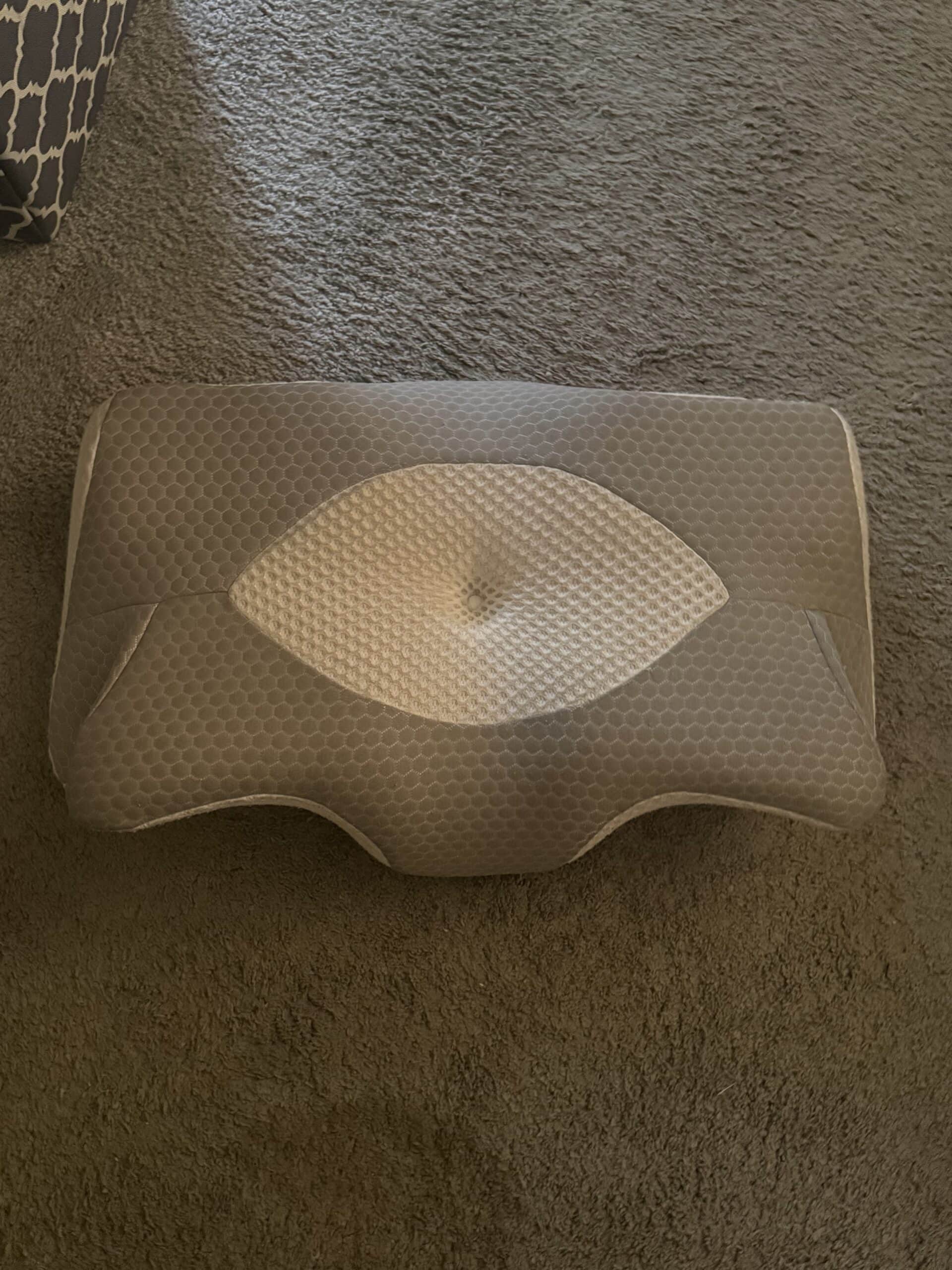
I own a cervical pillow, and I do not use it every night. I reach for it when my neck is extremely tense, and the rest of the time I sleep on my usual pillow. That surprises people who assume a cervical pillow is an all-or-nothing switch, but it has become the honest way I use mine: as a targeted tool for bad-neck nights rather than a permanent replacement. This is when a cervical pillow earns its place and when it does not need to.
Key Takeaways. It also helps to recognize the signs a pillow needs replacing.
- I use my cervical pillow only when my neck is extremely tense, not nightly.
- A cervical pillow can be a targeted tool rather than an every-night switch.
- Its shaped contour supports the neck when tension is high.
- On normal nights I go back to my regular pillow.
- How you use it depends on whether your neck issue is constant or occasional.
Related: you have to sleep on a cervical pillow to benefit.
How I Actually Use Mine
The honest pattern, which is not what the marketing assumes.
A cervical pillow is usually sold as the pillow you switch to and sleep on every night. I do not use mine that way. I keep my regular pillow for normal nights and bring out the cervical pillow specifically when my neck is very tense and needs the extra support. It is a tool I reach for when there is a problem to solve, not a fixed part of every night.
This works for me because my neck is not tense every night. Most nights my usual pillow is fine, and on the nights it is not, the cervical pillow is there for the job. Treating it as an occasional, targeted tool rather than a permanent switch fits how my neck actually behaves.
That is a legitimate way to own one, and it is worth saying because the all-or-nothing framing puts people off. Cervical pillows covers the pillows themselves.
What a Cervical Pillow Does
The design, because it explains when it helps.
A cervical pillow has a shaped contour, typically with a dip for the head and raised support under the neck, meant to hold the neck in a supported position through the night. That structure is what makes it different from a standard pillow, which you can shape however you like. The cervical pillow enforces a particular neck position rather than leaving it to chance.
When my neck is extremely tense, that enforced support is exactly what helps. The contour holds my neck steady in a supported position instead of letting it settle into whatever angle a regular pillow allows, and on a bad-neck night that difference is worth having. The pillow does one specific thing, and it does it when that specific thing is needed.
Understanding that it is a support tool clarifies when to reach for it: when your neck needs holding, not just any night. Pillows for neck pain covers the broader category.
When to Reach for It
The situations where a cervical pillow earns its place.
The clearest trigger, in my experience, is a night when the neck is noticeably tense and a regular pillow is not giving it the support it wants. On those nights the cervical pillow’s contour does real work. If your neck tension is occasional like mine, using it on the bad nights and your normal pillow the rest of the time is a sensible, targeted approach.
If instead your neck issue is constant, a cervical pillow every night may make more sense, since the support you need is not occasional. The right pattern follows the problem: occasional tension calls for occasional use, persistent tension might call for nightly use. There is no rule that it has to be all or nothing.
Matching how often you use it to how often your neck actually needs it is the whole idea. choosing the right pillow covers picking one that fits your situation.
When You Do Not Need It
The other half, because a support tool is not for every night by default.
On nights when my neck feels fine, I do not use the cervical pillow. My regular pillow is comfortable and my neck does not need the enforced support, so there is no reason to switch to the more structured option. Using a cervical pillow when your neck does not need it is not harmful, but it is not necessary either, and a normal pillow you find comfortable is perfectly good on a normal night.
This is the part the all-or-nothing framing misses. Owning a cervical pillow does not obligate you to sleep on it forever. It can sit ready for the nights you need it while you sleep on whatever is comfortable the rest of the time. That flexibility is a feature, not a compromise.
So the honest guidance is to use it when it helps and set it aside when it does not. It is a tool, and tools come out when there is a job for them.
Giving It a Fair Try
One caveat about adjusting to a cervical pillow.
A cervical pillow feels different from a regular pillow, and the contour takes some getting used to. If you are trying one for the first time, it is worth giving it more than a single night before deciding, because the initial unfamiliarity is not the same as the pillow not working. The support can feel strange at first and then become the thing that helps.
That said, if it consistently feels wrong even on the nights your neck is tense, it may not be the right pillow or the right height for you, and that is worth sorting out rather than pushing through. The goal is genuine support that helps, not enduring an uncomfortable pillow on principle.
Give it a fair trial on the nights you need it, and let how your neck feels be the judge. If it helps when your neck is tense, it has earned its spot as your bad-night tool.
The Takeaway on Timing
Pulling it together.
When to use a cervical pillow depends on your neck, not on a rule that says always. I use mine only when my neck is extremely tense, and my regular pillow the rest of the time, and that targeted approach fits occasional tension well. If your neck tension is constant, nightly use may suit you better. Either way, match the use to the need.
The freeing part is realizing it does not have to be all or nothing. A cervical pillow can be the tool you reach for on bad-neck nights while you sleep normally otherwise, which is exactly how mine has earned its place. Use it when it helps; that is the whole answer. Sleep gear for neck and back tension covers what pairs with it.
Recommended Reading
See cervical pillows, pillows for neck pain, and choosing the right pillow.
When to Use a Cervical Pillow FAQ
When should I use a cervical pillow?
When your neck needs the support, which may not be every night. I use mine only when my neck is extremely tense and my regular pillow the rest of the time. If your neck tension is occasional, that targeted approach works well; if it is constant, nightly use may suit you better.
Do I have to use a cervical pillow every night?
No, and that surprises people. Owning one does not obligate you to sleep on it forever. It can be a tool you reach for on bad-neck nights while you sleep on your usual pillow otherwise. It does not have to be all or nothing.
What does a cervical pillow do?
It has a shaped contour, usually with a dip for the head and raised support under the neck, that holds the neck in a supported position. That enforced support is what helps on a tense-neck night, when a regular pillow lets the neck settle wherever it wants.
When do I not need it?
On nights your neck feels fine. If your regular pillow is comfortable and your neck does not need enforced support, there is no reason to switch. Using a cervical pillow when your neck does not need it is not harmful, just unnecessary.
Is it normal to use one only sometimes?
Yes, and it is how I use mine. Occasional neck tension calls for occasional use. The all-or-nothing framing is misleading; matching how often you use it to how often your neck actually needs it is the sensible approach.
How long does it take to get used to a cervical pillow?
It feels different, and the contour takes some adjusting. Give it more than one night before deciding, since initial unfamiliarity is not the same as it not working. The support can feel strange at first and then become the thing that helps.
What if it still feels wrong?
If it consistently feels wrong even on tense-neck nights, it may be the wrong pillow or height for you, which is worth sorting rather than pushing through. The goal is genuine support that helps, not enduring an uncomfortable pillow on principle.
Should everyone with neck tension use one nightly?
Not necessarily. It depends on whether your tension is constant or occasional. Constant tension may justify nightly use; occasional tension, like mine, is better served by reaching for it on the bad nights. Match the use to the need rather than a fixed rule.
More in this guide: how to use a wedge pillow.
