
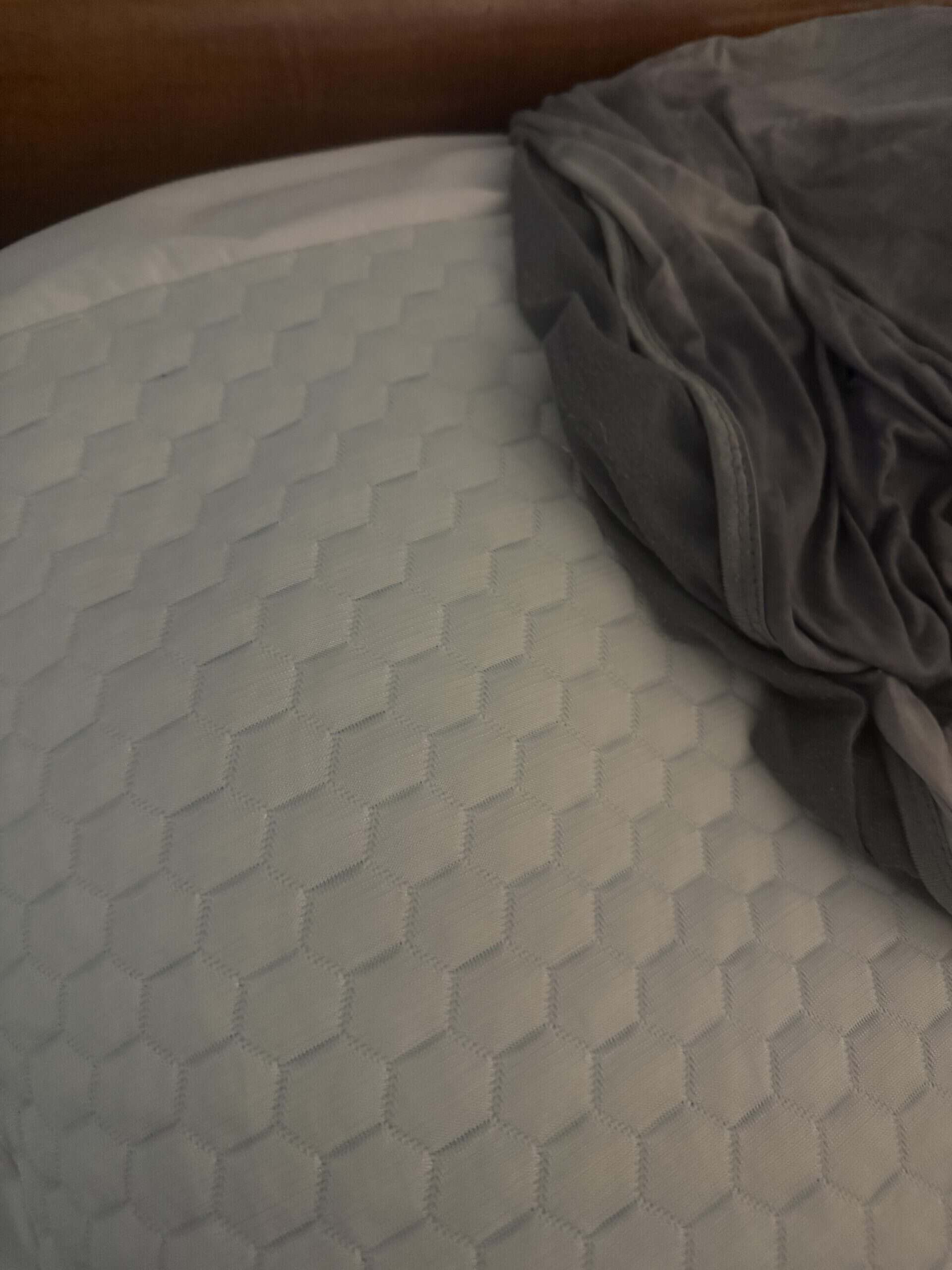
The Nectar I slept on for years ran hot. I kept it anyway, because I liked the support and replacing a mattress you otherwise like because of one flaw is an expensive way to solve a problem that has a cheaper answer. A cooling topper helps a lot. That is the entire argument of this page: the mattress is not wrong, it is warm, and warm is fixable from above. For more on this, see our guide to toppers for a mattress that runs hot.
Quick Verdict
A cooling topper does most of the work and it is the first thing to buy. A cooling mattress pad is the lighter version. Protectors matter because a cheap one undoes everything above it. None of this requires giving up a mattress you like.
Key Takeaways
- Memory foam runs hot by design. That is the material, not a defect.
- A topper changes the surface without changing the support.
- A waterproof protector will trap heat and cancel your topper.
- Fixing beats replacing when you like everything except the temperature.
- The topper is the layer that matters most. Start there.
1. A Cooling Mattress Topper, Best Overall
The purchase that made keeping my mattress viable, and it is not a close call.
I sleep on a cooling topper every night here in Arizona, and through long brutal summers it has made a real difference. It helps a lot, which is a deliberate phrase rather than a claim that it solved everything. The mattress still is what it is underneath.
What a topper does is change the surface you are actually in contact with while leaving the support beneath untouched. That distinction is the whole reason it worked for my situation: I wanted the mattress support and I wanted to sleep cool, and those are two different layers of the same object.
Gel foam, latex, and open-cell constructions all approach it differently, and the honest note is that none of them make foam behave like a spring mattress. They move heat better than the foam underneath. Toppers for hot sleepers covers the range including the one I use, choosing a topper the decision, and do they actually work takes the question seriously.
Best for: anyone who likes their mattress and not its temperature.
Skip if: the mattress is also wrong on support. Then you have two problems.
2. A Cooling Mattress Pad, Best Lighter Option
The thinner relative, and the right answer if the support is already correct.
A topper is thick enough to change how the bed feels. A pad is thin enough that it does not, which is a feature if you like your mattress exactly as it is and only want the surface to move heat better.
That is a real distinction people miss. Adding two inches of foam to a mattress you already find comfortable can make it worse while making it cooler, which is a bad trade. A pad avoids that by barely being there.
The tradeoff is that less material does less. A pad moves heat at the surface; it does not insulate you from the foam below the way a proper topper does. Cooling mattress pads covers the category, and pad vs topper the choice between them.
Best for: mattresses that are comfortable and hot, where feel should not change.
Skip if: you run very hot. A pad may not be enough on its own.
3. A Breathable Protector, Best Fix You Forgot
The most likely reason your mattress is hotter than it should be, and almost nobody checks it.
Waterproof protectors are frequently a sheet of plastic laminated to fabric. That plastic is a vapor barrier, which is exactly what you want against spills and exactly what you do not want against heat and moisture leaving your body. It traps both.
Which means a cheap protector sits between you and every cooling layer you bought and quietly cancels them. You can spend properly on a topper and then wrap it in plastic, and plenty of people have.
Breathable membrane protectors exist and do the same protective job while letting vapor through. If your bed got hotter after you bought a protector, that is the answer and you can stop looking. Mattress protectors covers what to look for, and encasements if you need the fully sealed kind and have to accept the trade.
Best for: anyone with a protector who has not thought about it.
Skip if: you do not use one, though you probably should.
4. Cooling Sheets, Best Everyday Layer
The layer directly against you, which gives it more influence than its thickness suggests.
Percale over sateen for heat. Percale is a plain weave, crisp, more air through it, and it does not cling. Sateen feels luxurious and traps more, which is the trade you are making without being told.
Thin matters more than fiber in my experience. A thin percale sheet does more for temperature than a heavier sheet in a supposedly cooler material, because what you want is air moving rather than a technology.
They are also the cheapest layer to experiment with, which makes them a sensible place to start before committing to a topper. Cooling sheets covers weaves and fibers, and percale vs sateen the distinction that decides most of it.
Best for: everyone. Cheapest thing that helps.
Skip if: you love your sateen sheets. Then the topper is doing the work.
5. A Cooling Pillow, Best Overlooked Piece
Your head is a disproportionate amount of the problem and the pillow gets ignored.
A solid block of memory foam under your head is a small mattress with the same flaw as the big one: dense foam, no airflow, heat with nowhere to go. And unlike the mattress, your face is pressed directly into it.
Shredded fill, gel layers, and ventilated foam all address it, and they work for the same reason a topper works. Air moves or it does not.
For a side sleeper this compounds, because you need loft to fill the shoulder gap, and loft means more foam, which means more heat. Cooling pillows covers the constructions, and side sleeper pillows if that is you.
Best for: anyone waking with a hot head and a cold room.
Skip if: your pillow is already shredded fill, which breathes fine.
6. A Bedside Fan, Best Cheap Insurance
The one that does not touch the mattress and helps anyway.
Everything above manages heat at the surface. A fan removes it from the air around you, which is a different mechanism and it stacks rather than competes. Moving air also helps sweat evaporate, which is most of how a body actually cools itself.
It is the cheapest thing here and it works on a mattress you have not modified at all, which makes it a reasonable first test. If a fan fixes it, you have saved yourself a topper.
Bedside fans covers the options, and why fans help sleep the mechanism.
Best for: testing whether heat is really the problem, cheaply.
Skip if: moving air bothers you, which it does bother some people.
Fixing a Hot Mattress, In Order
| Layer | What it does | Order |
|---|---|---|
| Cooling topper | Changes surface, keeps support | Buy first |
| Breathable protector | Stops cancelling everything else | Check first, cheap fix |
| Cooling sheets | Layer against you | Cheap, try early |
| Cooling pad | Lighter topper | If feel must not change |
| Cooling pillow | Your head | Often overlooked |
| Fan | Moves air, aids evaporation | Cheapest test |
| New mattress | Solves it expensively | Last resort |
Why Memory Foam Runs Hot
Worth understanding, because it tells you what is fixable and what is not.
Memory foam works by responding to your body heat, softening where you are warm so it contours. That is the feature. The consequence is a dense material with very little air in it, wrapped closely around you, holding the heat it needed in order to do its job.
So a foam mattress running hot is not a defect or a cheap product. It is the material behaving exactly as designed. That mattress slept hot because it was memory foam, and no amount of buying a better memory foam mattress escapes the physics. Understanding the cause helps before buying anything, and our note on why a mattress runs hot covers the mechanism.
Which is why the fix is a layer rather than a replacement. You are not repairing something broken, you are putting something between you and a material that is doing its job a bit too enthusiastically. Memory foam vs gel memory foam covers what the gel versions actually change, and mattresses for hot sleepers if you decide to replace after all.
Fix or Replace
The decision this page exists for, and it comes down to one question: is the mattress wrong, or is it just warm?
If the support is right and the temperature is the only complaint, fix it. A topper costs a fraction of a mattress and addresses the surface, which is the part you are in contact with. I liked the support and I wanted to sleep cool, and a topper gave me both without a large purchase and a disposal problem.
If the mattress is also too firm, too soft, sagging, or old, then the temperature is not really the issue and a topper is a way of avoiding the real conversation. A topper cannot fix a crater and it cannot add support that is not there.
Be honest about which one you have. Topper vs new mattress works through it, and memory foam vs hybrid if you conclude the material itself is the problem.
Check the Protector Before You Spend
The cheapest possible outcome of reading this page, so it is worth repeating.
If you have a waterproof protector, take it off for a night. If the bed is noticeably cooler, you have found your problem and it costs almost nothing to fix. A plastic-backed protector traps heat and moisture against you and it sits above every cooling layer you own, which means it wins.
People buy a topper, put the old protector back on top, and conclude toppers do not work. The topper was fine. The plastic was the issue, and the order of the layers meant the topper never got a chance.
Recommended Reading
See toppers for hot sleepers, topper vs new mattress, and cooling sheets, and whether blackout curtains block heat, and choosing a mattress.
Hot Mattress FAQ
Can I fix a mattress that sleeps hot?
Usually, and a cooling topper is the way. It changes the surface you are in contact with while leaving the support underneath alone, which is the right fix when you like the mattress and not its temperature. Mine runs hot and I kept it, because the support is what I wanted.
Why does my memory foam mattress sleep hot?
Because that is how it works. Memory foam softens in response to your body heat in order to contour, which means a dense material with little air, wrapped closely around you, holding heat. It is the material doing its job rather than a defect, and buying a better foam mattress does not escape it.
Should I replace the mattress instead?
Only if it is also wrong on support. If the temperature is the sole complaint, a topper costs a fraction and fixes the layer you actually touch. If it is sagging or too firm as well, a topper is avoiding the real problem.
Is my mattress protector making it hot?
Quite possibly, and this is the cheapest thing to check. Waterproof protectors are often plastic laminated to fabric, which traps heat and moisture and sits above every cooling layer you own. Take it off for one night and see. People buy toppers and then cancel them with the old protector.
Topper or mattress pad?
A topper is thick enough to change how the bed feels; a pad is not. If your mattress is comfortable and only hot, a pad avoids changing something you already like. If you need real separation from the foam below, the topper does more.
Do cooling toppers actually work?
They help, which is the honest word. Mine has made a real difference through Arizona summers and the mattress underneath is still memory foam. They move heat better than the foam below them; they do not turn a foam bed into a different kind of bed.
What sheets should I use on a hot mattress?
Percale rather than sateen. Percale is a plain weave, crisp, and lets air through, while sateen feels nicer and traps more. Thin matters more than the fiber, in my experience, because what you want is air moving rather than a marketing material.
What is the cheapest thing to try first?
A fan, then checking your protector. A fan costs little, works on an unmodified mattress, and helps sweat evaporate, which is how bodies actually cool. If either of those fixes it, you have saved yourself a topper.
Part of our full guide: the foundation principles of a sleep-cool bedroom.
