
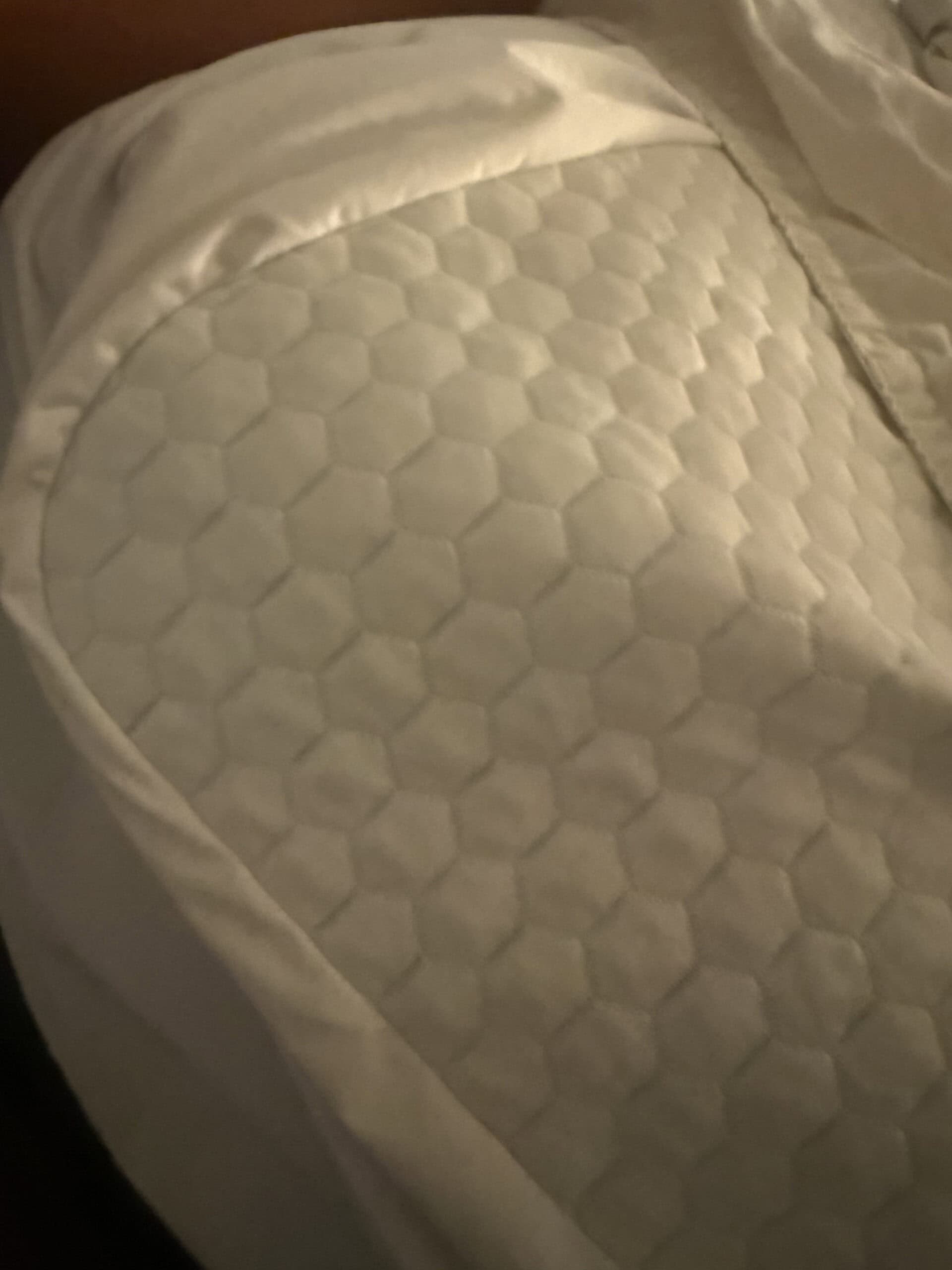
A mattress that sleeps hot but supports you well is an awkward problem, because the obvious fix is replacing something that is doing most of its job correctly. A topper addresses the surface where heat builds without touching the support underneath, which makes it the cheaper and more targeted answer. The catch is that a topper changes feel as well as temperature, and that trade is worth understanding before you buy one. Our roundup of mattress toppers for hot sleepers covers the case where the person runs hot rather than the bed.
Quick Verdict
A gel-infused or open-cell foam topper handles a hot mattress while preserving the support you kept it for. Expect the surface to feel slightly softer, and treat any topper as a way to slow heat buildup rather than to make a bed feel cold.
Key Takeaways
- A hot mattress and a hot sleeper are different problems.
- Toppers change the sleeping surface without altering support.
- Dense memory foam traps heat; open-cell and gel versions less so.
- Any topper makes a bed feel somewhat softer.
- Cooling materials slow heat buildup rather than actively chilling.
How We Picked
Toppers are grouped by how they handle heat, since that is the specific failure being addressed. Effect on firmness is weighted alongside it, because a topper that solves temperature and ruins support has traded one problem for another.
Selections reflect materials and construction. Descriptions come from product research except where personal use is stated directly.
1. A Gel-Infused Memory Foam Topper, Best Overall
Why It Stands Out
Gel infusion gives memory foam somewhere to move heat, which addresses the material’s main weakness while keeping the contouring people buy foam for.
It also sits on top of the existing support system rather than replacing it, so a mattress kept for its firmness stays firm underneath.
Worth Knowing
Gel slows heat buildup rather than removing it. On a genuinely hot mattress the improvement is real and it is not the same as sleeping on something cool.
Memory foam also softens the surface, so a bed chosen for firm support will feel a little less firm. Our note on whether a cooling topper changes firmness covers that.
This suits most hot mattresses. Skip it if you need the surface to stay exactly as firm.
2. An Open-Cell Foam Topper, Best Airflow
Why It Stands Out
Open-cell structures let air move through the foam rather than trapping it, which is a structural fix for heat rather than an additive one.
Airflow also helps with the humidity that makes a hot bed uncomfortable beyond the temperature itself.
Worth Knowing
Open-cell foam is generally less dense, so it contours less and may wear faster than a solid block of the same thickness.
Ventilation only works if air can reach it, so a heavy mattress protector over the top undoes some of the benefit. Our roundup of mattress protectors covers breathable options.
This suits humid rooms and hot mattresses. Skip it if you want deep contouring.
3. A Latex Topper, Best Natural Option
Why It Stands Out
Latex sleeps cooler than memory foam by nature, since its open structure moves air without needing gel or perforation added.
It is also more responsive, so it does not produce the sinking feeling that makes some people feel hotter than they are.
Worth Knowing
Latex costs considerably more than foam and is noticeably heavier, which matters when rotating or moving it.
It also firms the surface rather than softening it, which is the opposite trade from memory foam and may not suit a mattress already firm. Our comparison of toppers and mattress pads covers the categories.
This suits budgets that stretch and beds needing responsiveness. Skip it if the mattress is already firm.
4. A Wool Topper, Best Moisture Handling
Why It Stands Out
Wool moves moisture away from the surface, which addresses the clammy side of a hot bed rather than only the temperature.
It also moderates in both directions, so it does not become a cold surface in winter the way some cooling materials can feel.
Worth Knowing
Wool compresses over time and needs occasional fluffing to maintain loft, which is more maintenance than foam requires.
It adds cushioning rather than structural support, so a sagging mattress is not fixed by one. Our note on whether toppers help a sagging mattress covers that limit.
This suits humid sleepers and year-round use. Skip it if you want minimal upkeep.
5. A Cooling Fabric Topper, Best Thin Option
Why It Stands Out
Thin toppers using phase-change or high-conductivity fabrics address the surface temperature with minimal thickness, which keeps the mattress feel almost unchanged.
For a bed kept specifically for its support, that is the least disruptive way to address heat.
Worth Knowing
Cooling fabrics feel cool to the touch and equalize with body temperature over time, so the effect is strongest when you first lie down.
Thin toppers also add no cushioning, so they solve temperature and nothing else. Our note on how thick a topper should be covers the trade.
This suits mattresses you do not want to change the feel of. Skip it if you also want cushioning.
6. A Thick Foam Topper, Best for Firm Beds
Why It Stands Out
A thicker topper changes the sleeping surface substantially, which suits a mattress that is both hot and firmer than you want.
More material also means more room for gel or ventilation to work with.
Worth Knowing
Thickness works against cooling, since more foam means more insulation between you and the room. A thick topper needs good ventilation to avoid trading one problem for another.
Deeper toppers also need fitted sheets with enough depth, which is an easily overlooked cost. Our roundup of toppers for too-firm mattresses covers the firmness side.
This suits hot and overly firm beds. Skip it if the firmness is what you want to keep.
Topper Materials at a Glance
| Material | Heat handling | Effect on firmness | Upkeep |
|---|---|---|---|
| Gel memory foam | Good | Softer | Low |
| Open-cell foam | Very good | Slightly softer | Low |
| Latex | Very good | Firmer | Low, heavy |
| Wool | Good, moisture | Softer | Needs fluffing |
| Cooling fabric | Surface only | Almost none | Wash as bedding |
| Thick foam | Depends on venting | Much softer | Low |
Why I Kept the Mattress
My mattress runs hot. It also supports me the way I want, which is why I use a cooling topper on it rather than replacing the whole thing. That decision has held for three or four years now.
The topper stays on year-round. I have never taken it off for winter, and it has not made the bed feel cold in the colder months, which was the thing I would have worried about if I had thought about it in advance.
One honest observation: adding it made the bed feel a bit softer. Not dramatically, and enough to notice. If the reason you are keeping a mattress is that it is exactly as firm as you want, that is the trade to weigh, because a topper sits between you and the support you are trying to preserve.
Worth being clear about what a topper does and does not achieve. It changes the surface where heat builds against your body. It does not make a hot bedroom cool, and the mattress underneath is still the mattress. For me the combination has worked well enough that replacing the bed has never moved up the list.
What I cannot compare is latex, wool, or thin cooling fabric versions, since I have used one topper. Those sections come from research rather than from beds I have slept on.
What to Look For
Is the mattress hot or are you?
A bed that feels hot even when you are not is a mattress problem. A cool bed that heats up under you is a sleeper problem, and the fixes differ.
How much firmness can you lose?
Every topper changes the surface. If you kept the mattress for its support, thinner is safer and latex firms rather than softens.
Is the foam ventilated?
Dense unbroken memory foam is the worst case for heat. Gel infusion, perforation, or open-cell structure all address it, and plain foam does not.
Will your sheets fit?
A three-inch topper needs deep-pocket fitted sheets. That is a real cost people discover after ordering.
Topper or New Mattress?
The case for a topper
A fraction of the price, addresses the surface where heat actually builds, and keeps support that is already working. If the only complaint is temperature, replacing the whole bed is solving a narrow problem expensively.
When replacement makes sense
Sagging, worn support, or a bed that is wrong on firmness as well as temperature. A topper cannot fix structure, and no surface layer compensates for a mattress that has lost its shape. Our comparison of a topper and a new mattress covers the decision.
Common Mistakes to Avoid
Buying plain memory foam for a hot bed
Dense foam traps heat, which is the opposite of what you need. Gel, perforation, or open-cell construction is the requirement rather than a premium feature.
Going thicker than necessary
More foam means more insulation between you and the room. Thickness helps with firmness and works against cooling.
Covering it with a non-breathable protector
A waterproof layer over a ventilated topper undoes much of the airflow. Breathable protectors exist and are worth choosing.
Expecting it to cool the room
A topper changes the surface against your body. Room temperature is a separate problem with separate solutions. Our note on whether cooling toppers actually work covers realistic expectations.
Recommended Reading
See our note on how long a mattress topper lasts, our guide to keeping a topper from sliding, our cooling mattress pad picks, and a note on whether toppers are worth it, and choosing a mattress.
Hot Mattress FAQ
Can a topper fix a mattress that sleeps hot?
It addresses the surface where heat builds against your body, which is where the problem is felt, so the improvement is real. It does not change the mattress underneath or cool the room, so treat it as a targeted fix rather than a transformation.
Why does my mattress sleep hot?
Dense memory foam is the usual cause, since it conforms closely and traps heat with little airflow. Mattress covers and non-breathable protectors add to it. Innerspring beds generally sleep cooler because air moves through the coil layer.
Will a topper make my bed feel softer?
Almost always somewhat, since you are adding a layer between yourself and the support. Memory foam softens most, latex can firm the surface instead, and thin cooling fabrics change the feel least.
Should I take the topper off in winter?
Most people do not, and cooling toppers generally do not make a bed feel cold. They slow heat buildup rather than actively chilling, so the effect is far less noticeable when the room is cool.
How thick should a cooling topper be?
Two inches suits most cases. Thicker changes firmness more and insulates more, which works against the cooling you wanted. Thinner preserves the mattress feel and adds no cushioning.
Do cooling toppers actually cool?
They move heat away or slow its buildup rather than lowering temperature. Gel and phase-change materials feel cool on contact and equalize as you lie there. The realistic outcome is a less hot bed rather than a cold one.
Will it fix a sagging mattress?
No. Toppers change the surface and cannot restore support that has failed underneath. A sagging bed needs replacing, and a topper on top of one usually just conforms to the dip.
Do I need new sheets?
Possibly. A two-inch topper often works with standard fitted sheets; three inches or more generally needs deep-pocket ones. Worth checking before ordering, since it adds to the total cost.
