
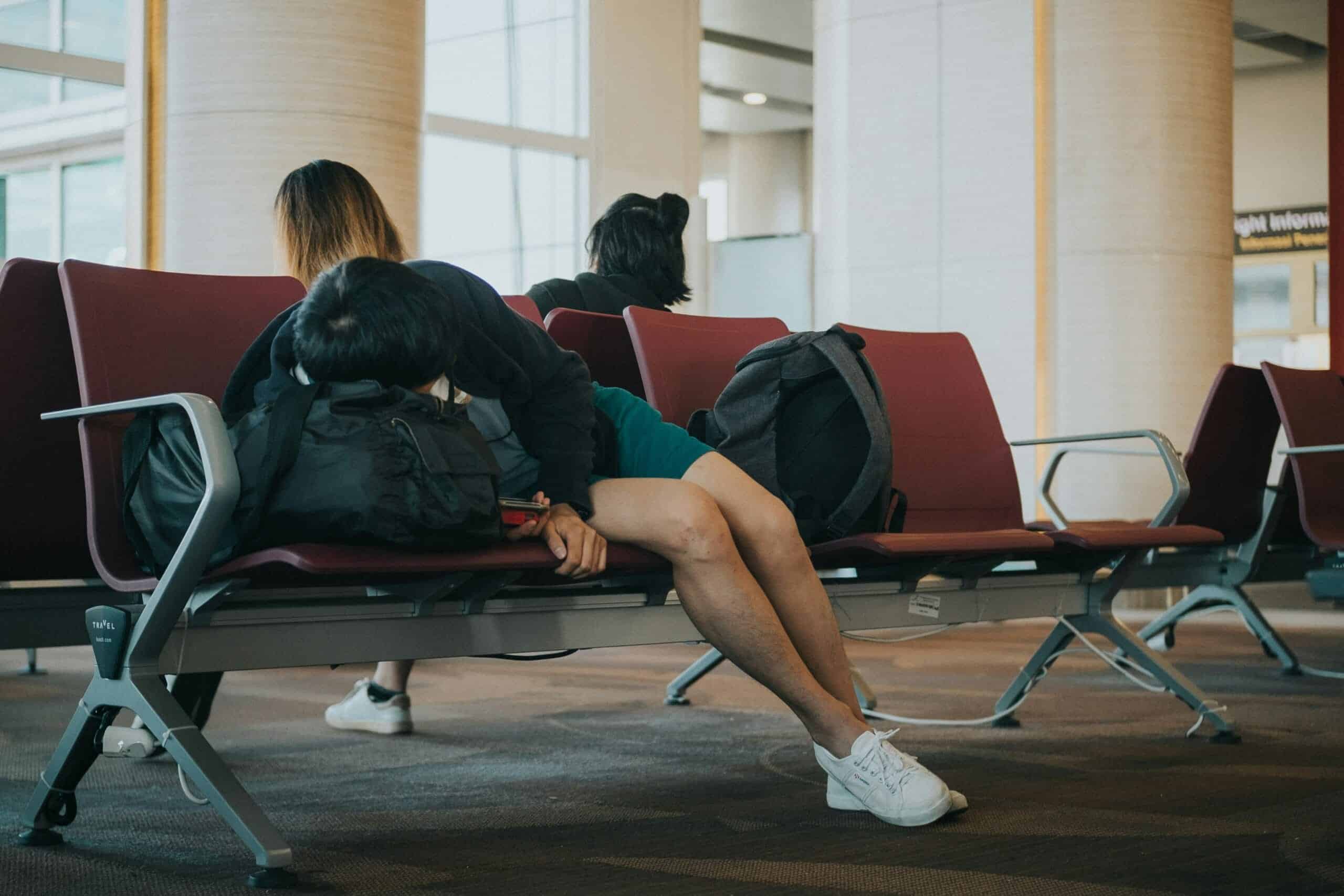
Jet lag is the result of your internal biological clock being out of sync with the local time at your destination. You arrive somewhere on the other side of the world, and your body still thinks it’s the time zone you left. Sleep wants to come at the wrong times. Hunger arrives at unhelpful moments. Mental sharpness is somewhere between unreliable and absent.
Recovery happens regardless of what you do. The question is whether you can speed it up versus just suffering through. The honest answer is: yes, somewhat. Specific interventions accelerate adaptation; others mostly don’t work despite being widely recommended. This guide walks through what actually helps and what doesn’t.
Key Takeaways
- The circadian clock typically adjusts about one hour per day; full adaptation to a major time zone change takes roughly a week.
- Light exposure is the strongest tool for shifting circadian timing; melatonin and meal timing are secondary.
- Eastward travel (advancing your clock) is generally harder than westward travel (delaying your clock)
- Many of the most common jet lag remedies (extra sleep, sleeping pills, caffeine) often make recovery worse rather than better.
This article is general information, not medical advice, and is not a substitute for diagnosis or treatment by a qualified healthcare professional. See a doctor if sleep problems are persistent or affecting your health.
What Jet Lag Actually Is
Your circadian system is a network of clocks throughout the body coordinated by a master clock in the brain (the suprachiasmatic nucleus). This system sets timing for sleep, hormone release, body temperature, hunger, alertness, and dozens of other physiological processes.
The master clock takes its primary timing signal from light exposure. Bright light in the morning signals “this is the start of the active phase.” Darkness in the evening signals “this is rest time.” The clock uses these signals to coordinate everything else.
Travel rapidly across multiple time zones, and the light signals you experience suddenly don’t match your internal clock. Your body wants to sleep when local people are eating dinner. Your hunger arrives at 3 AM local time. Your alertness drops when meetings start.
Recovery requires the master clock to gradually shift to align with local time. This happens automatically over a period of days because the daily light exposure at the destination keeps pushing the clock toward alignment. But the natural rate is slow: roughly one hour per day of shift.
For a six-hour time difference, full adaptation takes around six days. Larger differences take proportionally longer.
Direction of Travel Matters
Eastward and westward travel produce different patterns of jet lag because they require the clock to shift in different directions.
Westward travel (US to Asia via Pacific, or Europe to North America). Your day gets longer. You’re staying up later than your body wants, but eventually that aligns with local time. The clock has to be delayed (shift later), which is easier for most people because the natural human tendency is toward later sleep timing rather than earlier.
Eastward travel (US to Europe, Europe to Asia). Your day gets shorter. You’re being asked to sleep earlier than your body wants to. The clock has to advance (shift earlier), which is harder because it goes against the natural tendency.
The eastward direction is generally worse for most people. Recovery from a six-hour eastward shift often takes a couple of days longer than recovery from a six-hour westward shift. The asymmetry matters when planning trips.
Light Is the Primary Tool
Strategic light exposure is the strongest intervention for shifting circadian timing. The master clock responds to light, so providing or avoiding light at specific times produces clock shifts. For a day by day shift schedule before departure, a jet lag adjustment planner works from zones crossed and direction.
Rough principles:
For westward travel (delaying your clock): Get bright light in the evening at your destination. Avoid bright light in the morning during the first few days. The evening light tells your clock, “This is still daytime, stay later.” Your sleep timing gradually drifts later to match local time.
For eastward travel (advancing your clock): Get bright light in the morning at your destination. Avoid bright light in the late evening. The morning light tells your clock, “The day is starting earlier now.” Your sleep timing gradually drifts earlier.
The light effect is dose-dependent: brighter is stronger, and natural sunlight is brighter than indoor lighting. Stepping outside for 20-30 minutes in the relevant window is more effective than sitting under indoor lighting for the same duration.
For more on circadian timing and sleep schedule adjustments generally, see our article on how to fix your sleep schedule.
Melatonin: When and How
Melatonin is the hormone your body releases as part of preparing for sleep. Supplemental melatonin can help shift circadian timing, but the dose and timing matter much more than most people realize.
For shifting earlier (eastward travel): A small dose of melatonin (0.3 to 1 mg) several hours before your target bedtime at the destination. Not large doses; not at bedtime itself. The small earlier dose signals “the day is winding down” and helps shift the clock earlier. Direction of travel changes when to take it, as our timing guide covers.
For shifting later (westward travel): Melatonin is generally less useful for westward travel. The body’s natural melatonin is already released later than the new local time, which is the desired direction. Adding more melatonin doesn’t help much.
Common mistakes with melatonin:
Taking high doses (5-10 mg). These often produce next-day grogginess without a better circadian effect. Lower doses work better.
Taking it at bedtime as a sleep aid rather than as a circadian shifter. The circadian effect requires earlier timing.
Taking it for several days without an actual sleep plan. Without the rest of the protocol (light exposure, meal timing, behavioral consistency), melatonin alone produces modest results.
Taking it for short trips (1-2 days). The clock barely shifts for short trips; the disruption of taking melatonin may exceed the benefit. Many travelers do better just suffering through brief trips.
Meal Timing
The digestive system has its own clock that responds to meal timing. Eating sends a “this is daytime” signal independent of light. Strategic meal timing can support the clock shift.
Eat meals at the destination’s typical times immediately upon arrival, even if you’re not hungry at those times. Eating creates schedule signals that support the clock shift. Skipping meals because hunger doesn’t align with local time slows adaptation.
For longer trips, consider fasting briefly during travel and then breaking the fast at the destination’s appropriate meal time. The hunger signal of resuming eating can produce a meaningful clock shift. Several “fasting for jet lag” protocols exist, though evidence quality varies.
Avoid heavy meals close to your target local bedtime. Even if you’re not used to evening meals at that hour, eating right before sleep disrupts both digestion and sleep quality. Aim to finish eating at least 2-3 hours before intended sleep.
The First 24 Hours
The first day at a new destination is when interventions have the most impact. What you do (and don’t do) in the first 24 hours significantly affects how the rest of the adaptation goes.
Don’t crash on arrival. One of the more common mistakes. Arriving exhausted and going to sleep immediately at local 2 PM means you’ll wake at 8 PM wide awake with no chance of sleeping that night. Push through to the local evening, even if it’s hard.
Get outside. Light exposure at destination time is the highest-impact intervention. Spend time outdoors during daylight hours regardless of how you feel.
Eat on the local schedule. Force meals at appropriate times even if you’re not hungry.
Go to bed at a normal local time. Not super early. Not super late. The first night at the destination should target a reasonable local bedtime to start training the clock.
Don’t nap, or nap only briefly. Long naps during the day are jet lag’s biggest accelerant. A 20-minute nap can help; a 3-hour nap usually wrecks the night. For more on this, see our companion article on how naps affect night sleep.
For Westward Travel Specifically
Westward travel is generally easier but still requires an intentional approach.
The challenge: staying awake until local bedtime when your body wants to sleep hours earlier.
Strategy: bright light in the late afternoon and evening to push the clock later. Active engagement (walking, exercise, social interaction) during the local evening hours. Avoid letting yourself sit still in dim light, where sleep will overtake you.
If you can stay up until a reasonable local bedtime the first night and then sleep through, you’ve already done most of the work. The second night will be easier. By the third or fourth night, you’re typically well-adapted.
For Eastward Travel Specifically
Eastward travel is harder. Several specific challenges:
You’re being asked to sleep earlier than your body wants to, which is biologically more difficult than staying up later.
The natural circadian tendency is to drift later, not earlier. You’re fighting biology.
Sleep onset insomnia is common; even when local bedtime arrives, falling asleep can be hard.
Strategy: get bright morning light at the destination immediately. Skip evening light exposure that would tell your clock to stay up. Possible small-dose melatonin in the early evening as a circadian shifter. Accept that the first night may involve poor sleep and plan for a low-intensity next day. Several days of a consistent approach gradually shift the clock.
Some travelers benefit from starting the shift before departure: gradually moving bedtime earlier in the days leading up to an eastward trip. Even a one-hour pre-shift can reduce the work needed at the destination.
📑 Recommended Read: Travel sleep masks help in two situations critical for jet lag: blocking light during sleep when local timing puts you in unusually bright conditions, and allowing daytime naps in transit when needed. Quality varies a lot. Check out our tested breakdown of the smart sleep masks for travel for options designed specifically for the demands of travel sleep.
The Plane Flight Itself
What you do on the plane affects jet lag recovery at the other end. Several patterns help.
Sleep on the plane when it’s nighttime at your destination. Not when it’s nighttime at your origin. Adjust your watch immediately upon boarding to the destination time and try to align your sleep accordingly. This jump-starts the adaptation.
Stay awake when it’s daytime at your destination. Even if you’re tired. The sleeping-and-waking pattern on the plane sets up the rest of the trip.
Hydrate aggressively. Dehydration makes everything about jet lag worse. Cabin air is dry. Drink more water than feels necessary.
Limit alcohol. Tempting on long flights but worsens both the in-flight rest and the recovery. Alcohol-affected sleep is of poor quality. For more on this, see our article on how alcohol affects sleep.
Limit caffeine in the second half of the flight if heading to a destination where it’s evening on arrival. The caffeine will still be in your system when you’re trying to sleep.
Move occasionally. Reduces stiffness and circulation issues that compound the fatigue feeling.
For more on managing in-flight sleep specifically, see our article on how to sleep on a plane.
What Doesn’t Work As Well As Claimed
Several popular jet lag remedies have weaker evidence than their marketing suggests:
Sleeping pills for jet lag. Can help you sleep on the plane or the first night, but don’t accelerate clock adaptation. The sleep produced isn’t quite the same as natural sleep and may have residual effects the next day. Often, the trade-off isn’t worth it.
“Special diets” the day before travel. Various diets have been promoted, but evidence for accelerated recovery is weak. The meal-timing principles at the destination matter more than what you ate the day before leaving.
Catching up on sleep before the trip. Can’t really “store” sleep for future use. Going into a trip well-rested helps tolerate the disruption, but doesn’t preempt the clock shift problem.
Massive caffeine consumption. Can help temporarily, but disrupts your ability to sleep at the new local nighttime, prolonging the adaptation. Moderate caffeine use is fine; heavy caffeine often backfires.
Most over-the-counter jet lag remedies. Including various herbal supplements and specialty products. The evidence is mostly poor. The few well-studied interventions are the ones described above (light, melatonin, meal timing, behavior).
Common Mistakes and How to Avoid Them
Crashing on arrival. Going straight to sleep on arriving at the destination when it’s still daytime locally. Almost always extends jet lag rather than helps.
Long daytime naps. Tempting and counterproductive. Limit to 20-30 minutes if napping at all.
Bright phone/laptop in the destination evening when trying to advance the clock. The blue light delays your clock when you’re trying to advance it. Use dim settings or break the screen habit during this phase.
Ignoring local meal times. Eating on origin time prolongs adaptation. Force meals on the local schedule.
Skipping the light exposure. Staying in a dim hotel room slows recovery. Get outside.
Aggressive coffee/alcohol on arrival. Both interfere with adaptation in different ways. Limit both for at least the first few days.
Treating short trips like long ones. If you’re somewhere for 2-3 days and going home, fully adapting often isn’t worth it. Some travelers stay at home for short trips and only adapt for longer stays.
Expecting full function from day one. Adaptation takes days. Schedule lighter days at the start of trips when possible.
Frequently Asked Questions
How long does jet lag last? Rule of thumb: roughly one day per hour of time difference. A six-hour shift takes about a week to fully resolve. Major partial improvement happens in the first few days.
Is jet lag worse going east or west? Generally worse going east for most people. Shifting the clock earlier is harder than shifting later.
Does melatonin really help? Yes, for eastward travel when used correctly (small dose, several hours before target bedtime, not as a sleep pill at actual bedtime). Less useful for westward travel.
Should I take sleeping pills on the plane? Generally not recommended. The sleep isn’t quite right, residual effects continue into the next day, and the practice doesn’t help long-term adaptation. Some travelers benefit; many don’t.
What if I have to function the day I arrive? Manage expectations and use bright light strategically. Plan lighter cognitive demands. Coffee in the morning of arrival (not evening) can help with alertness. Accept that performance will be sub-optimal and plan accordingly.
Why do some people not get jet lag? Individual variation in circadian flexibility is real. Some people adapt much faster than average. Often correlated with regularly waking and sleeping at consistent times generally (well-anchored circadian systems often shift more easily, paradoxically).
How can I prepare for a trip to reduce jet lag? Start shifting your sleep schedule a few days before travel, in the direction you’ll need (later if going west, earlier if going east). Even a 1-2 hour pre-shift reduces the work needed at the destination.
Does jet lag get worse with age? Often yes. Circadian systems become less flexible with age. Older travelers typically take longer to adapt and may experience more pronounced symptoms.
Recommended Reading
See also our guides to how to keep sheets from pilling.
Related Reading
Explore more: how to keep sheets from pilling.
