
Capacity is rated in pints removed per day, and the tables that match pints to square footage assume conditions the manufacturer chose. How damp the space actually is matters as much as how large it is.
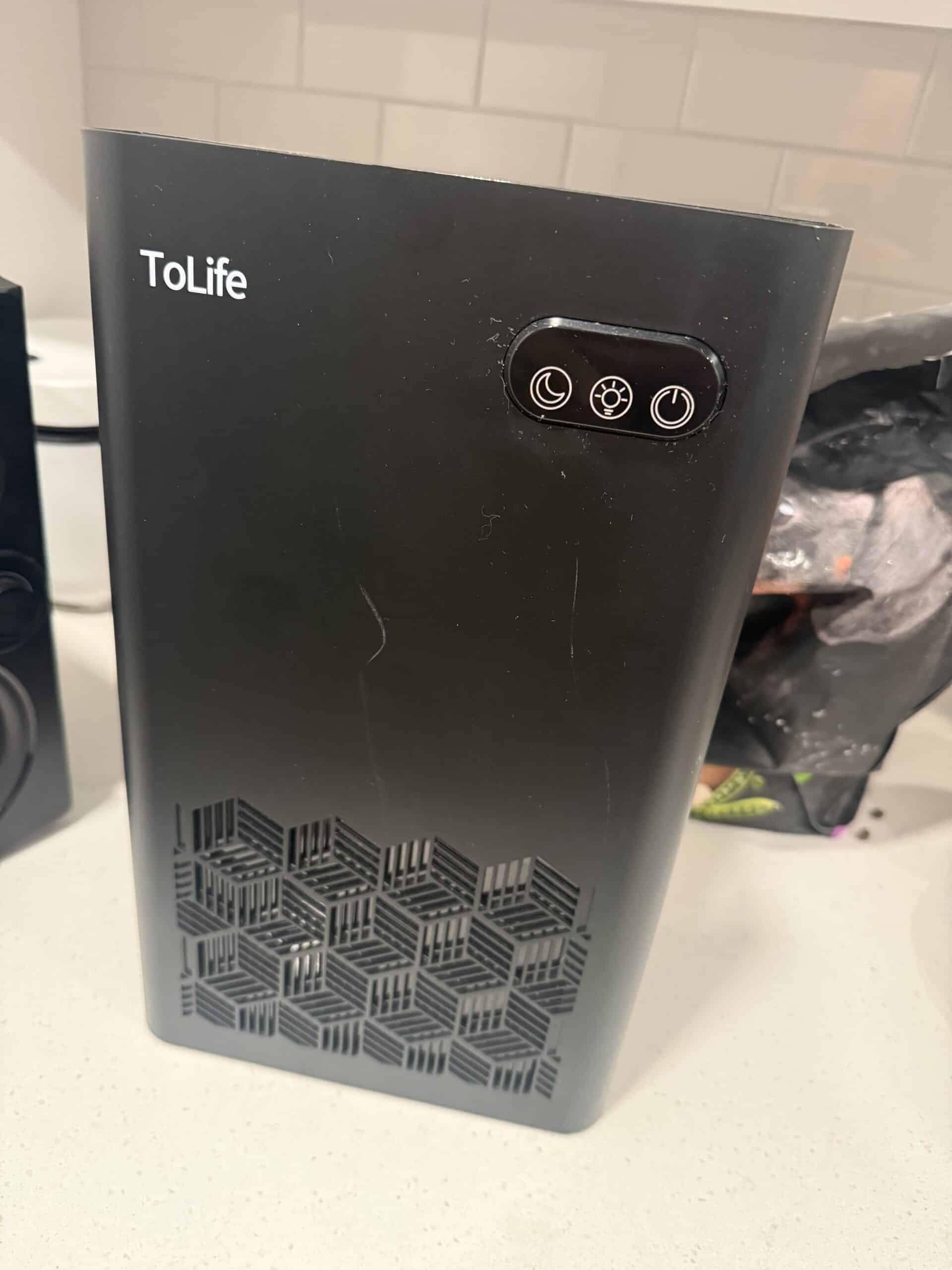
Mine is a standard small portable unit rated for smaller rooms, including the one I sleep in, and it has been entirely adequate across about a year and a half of seasonal use. That is a data point rather than a recommendation, since a genuinely damp basement is a different problem. Our roundup of bedroom dehumidifiers covers the options.
Quick Answer
Match capacity to room size and to how damp the space is. A bedroom in a dry climate during a humid season needs far less than a basement that is damp year-round.
What the Rating Means
| Factor | Effect on required capacity |
|---|---|
| Room size | Larger rooms need more |
| How damp it is | The bigger variable of the two |
| Ambient temperature | Ratings assume a set temperature |
| Air changes | Leaky rooms bring in outside moisture |
| Seasonal or year-round | Occasional use tolerates less capacity |
| Whether doors stay open | Open doors mean a larger effective space |
Room Size Is the Starting Point
Capacity charts pair pints per day with square footage, and they are a reasonable place to begin.
What they cannot know is your ceiling height, since a room with a high ceiling holds considerably more air than the floor area suggests.
They also assume the room is closed. A bedroom with the door open onto a hallway is effectively a larger space, and the unit is dehumidifying more than you sized it for.
Treating the chart as a floor rather than an answer is the sensible approach, and adjusting upward for anything unusual about the space. Our note on where to put a dehumidifier covers placement.
Tank Capacity Is a Separate Number
Two numbers get confused constantly, and they measure different things.
Extraction capacity is how many pints the unit removes per day, which is the sizing figure and what the charts refer to.
Tank capacity is how much water it holds before needing emptying, which decides how often you interact with it rather than whether it can do the job.
A unit with high extraction and a small tank works perfectly well and fills up frequently, which is an inconvenience rather than a capability problem.
Since I empty mine rather than running a drain hose, tank size affects daily life more than the specification suggests. In a genuinely damp room a small tank means emptying several times a day. Our note on cleaning a dehumidifier covers the tank.
How Damp Matters More
Slightly damp
A room that feels humid occasionally, in a climate that is dry most of the year. Modest capacity handles it.
Consistently humid
Coastal climates, or anywhere humidity stays high for months. Considerably more capacity for the same floor area.
Visibly wet
Condensation on windows, damp walls, or standing moisture. This is a building problem as much as an appliance one.
Seasonal spike
Dry most of the year with a wet season, which is where a smaller unit run only during that period is adequate. Our note on whether a dehumidifier is worth it in a dry climate covers this case.
Why Mine Is Enough
A standard small portable unit sized for smaller rooms, used for a year and a half.
It only runs during monsoon season, which is the whole reason a small unit works. The rest of the year the humidity does not need managing at all.
Sizing for a seasonal spike in an otherwise dry climate is a different exercise from sizing for a coastal home where humidity is constant, and buying for the latter when you have the former means paying for capacity that sits idle.
The room it handles is a single closed space rather than a whole floor, which is the other reason the small unit is sufficient. Our note on how often to run one covers duty cycle.
One Unit or Several
A single larger unit and several smaller ones are different approaches to the same square footage.
One large unit is more efficient per pint removed and only dehumidifies the space air actually reaches, which in a house with closed doors is one room.
Several small units cover separate closed rooms, cost more in total, and mean emptying several tanks.
Air movement decides which makes sense. Open-plan space suits one unit; a house of closed rooms means the unit only serves the room it sits in.
Mine handles one room, which is the whole requirement. Sizing for a whole home when you only need one space is how people end up with a unit too heavy to move and too large for the job. Our roundup of closet dehumidifiers covers the smallest end.
Signs You Have Undersized
The unit runs continuously without reaching the target humidity, which is the clearest indicator.
The tank fills constantly and emptying becomes a chore several times a day rather than a periodic task.
Humidity readings stay high despite the unit running, which is worth measuring rather than judging by feel.
A hygrometer costs very little and turns this from an impression into a number, which is the only way to know whether the unit is keeping up. Our roundup of humidity control products covers measuring.
A hygrometer is the cheapest way to settle any of this, since it turns an argument about whether a unit is keeping up into a number you can check twice a day.
Signs You Have Oversized
The unit reaches target humidity quickly and then cycles on and off frequently, which is less efficient than steady running.
Very dry air is its own problem, causing dry skin, irritated airways, and static, and there is no benefit to taking a room below a comfortable range.
Larger units cost more to buy, cost more to run, take more space, and are heavier to move and empty.
Oversizing is a less serious mistake than undersizing, since a large unit with a humidistat simply runs less. It is money spent for nothing rather than a unit that cannot do the job.
Neither mistake is fatal, and undersizing is the one that leaves you with an appliance that cannot do the job you bought it for.
Temperature Affects Performance
Capacity ratings are measured at a specified temperature, and performance drops as a room gets colder.
Standard compressor dehumidifiers become considerably less effective in cold spaces, since less moisture condenses on colder coils and frost can form.
Desiccant models work differently and hold up better in cold conditions, at the cost of higher running costs in warm ones.
For a heated bedroom this rarely matters. For a garage or an unheated basement in winter it decides which type to buy rather than what capacity. Our roundup of are dehumidifiers loud enough to disturb sleep covers small-space options.
Dehumidifier Size FAQ
How do I know what size I need?
Start with a capacity chart matching pints per day to room size, then adjust upward for how damp the space actually is. Dampness matters more than floor area.
Is bigger always safer?
It is the less serious mistake, since a unit with a humidistat just runs less. It costs more to buy and run, takes more space, and is heavier to empty.
How do I know if mine is too small?
It runs continuously without reaching the target, the tank fills several times a day, and a hygrometer shows humidity staying high despite the unit running.
Does ceiling height matter?
Yes, and charts ignore it. A high-ceilinged room holds considerably more air than its floor area suggests, so size up for one.
Does leaving the door open change things?
Considerably. An open door makes the effective space much larger than the room you sized for, and the unit will struggle to keep up.
Is a small unit enough for a bedroom?
In my case yes, for a single closed room in a dry climate used only during a humid season. A consistently humid climate is a different requirement entirely.
Does temperature affect capacity?
Yes. Ratings are measured at a set temperature and compressor units become considerably less effective in cold spaces. Desiccant models handle cold better.
How dry should a room be?
Comfortable rather than as dry as possible. Very dry air causes dry skin, irritated airways, and static, and there is no benefit to overshooting.
For the wider picture, see our guide to do you need a dehumidifier during monsoon season.
