
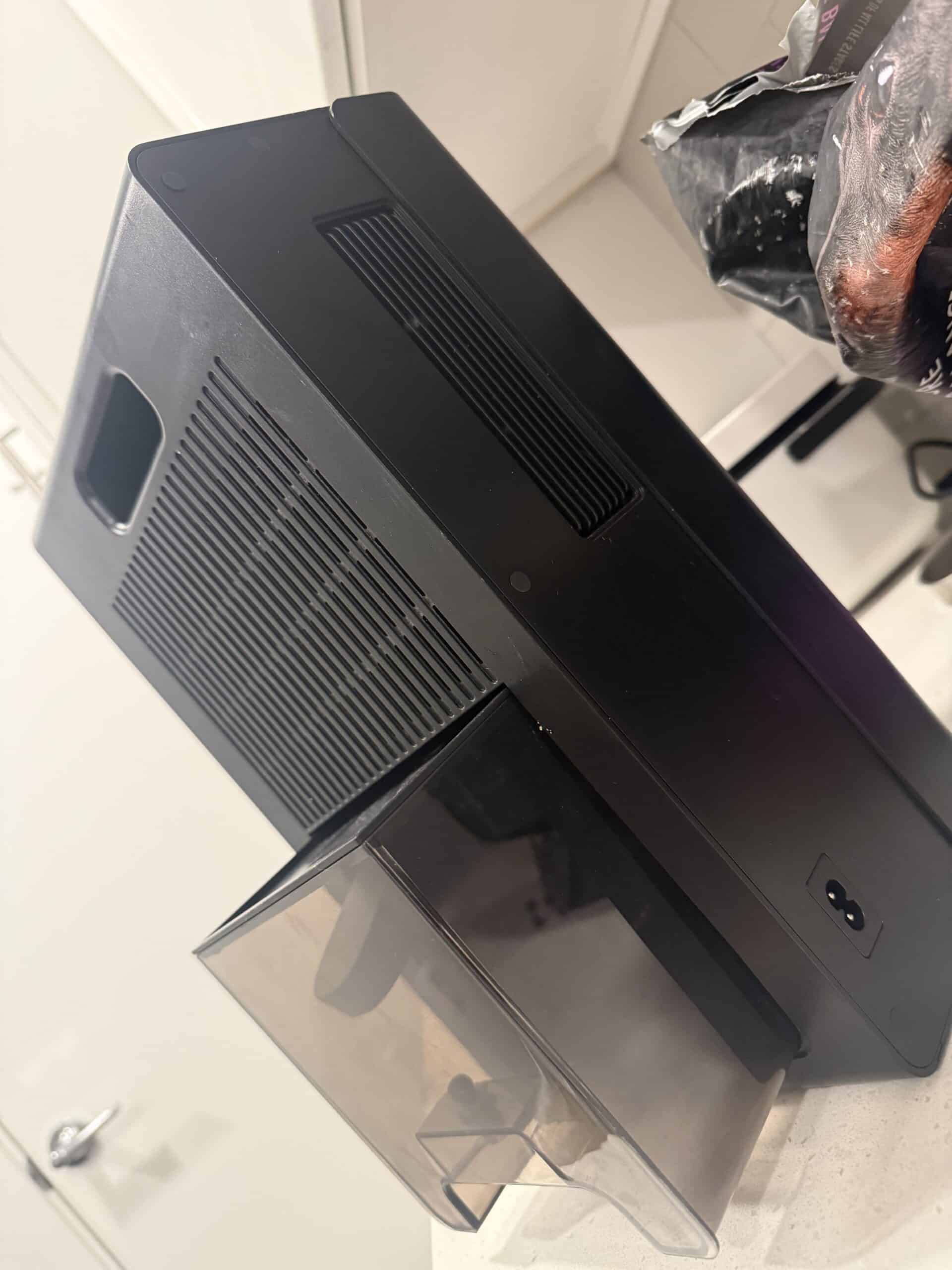
Two parts need attention and everything else is a wipe. The tank grows things because it holds standing water, and the filter clogs with dust because every cubic foot of room air passes through it.
Mine has needed nothing beyond that in about a year and a half of ownership. Wiping the machine down and cleaning the filter is the entire routine, and I have not found anything more involved to be necessary on a small portable unit. Our roundup of bedroom dehumidifiers covers the category. Our note on sizing a dehumidifier covers that in more detail.
A Safety Note
Unplug the unit before cleaning anything. Water and mains electricity are the obvious hazard, and dehumidifiers combine both by design. Do not put internal components in a dishwasher, and let everything dry fully before reassembly.
Quick Answer
Empty and wash the tank regularly, rinse or vacuum the filter every few weeks of use, and wipe the exterior and grilles. That covers it for a portable unit in normal use.
What Actually Needs Cleaning
| Part | How often | Why |
|---|---|---|
| Water tank | Every empty, wash weekly | Standing water grows biofilm |
| Filter | Every few weeks in use | Dust restricts airflow |
| Intake and exhaust grilles | Occasionally | Dust blocks airflow |
| Exterior | Whenever it looks dusty | Cosmetic mostly |
| Coils | Rarely, carefully | Reduced efficiency if clogged |
| Drain port | If used | Blockage causes overflow |
The Tank
This is the part that genuinely matters, because it holds water at room temperature and that is an environment things grow in.
Biofilm is the slippery film that forms on the inside surfaces, and it appears whether or not the water looks clean. In warm conditions it forms faster.
Emptying alone does not clean it, since a wet surface with biofilm on it simply refills. Washing with warm soapy water and rinsing properly is what removes it.
I empty mine rather than running any kind of drain hose, which means the tank comes out regularly anyway and washing it is a matter of doing it while it is already in hand. Our note on how often to run a dehumidifier covers usage.
What Happens If You Skip It
Neglect shows up in three ways, and none of them announce themselves as a cleaning problem.
A musty smell from the room is the first, and people frequently blame the room rather than the appliance producing the air in it.
Reduced performance is the second. A clogged filter means less air reaching the coils, so the unit removes less moisture while running the same hours and costing the same to run.
Shortened life is the third. A unit working harder against restricted airflow runs hotter, and heat is what wears components.
None of that is dramatic and it accumulates quietly, which is exactly why a schedule beats cleaning when you notice a problem.
The Filter
What it does
Catches dust before air reaches the coils. A clogged filter restricts airflow, which reduces how much moisture the unit removes and makes it work harder.
How to clean it
Most are washable. Rinse under running water, let it dry completely, and put it back. Vacuuming first removes the bulk if it is heavily loaded.
How often
Every few weeks during a period of regular use is a reasonable default, and a dusty room needs it more often.
Never run it wet
A damp filter back in the unit is how you get mildew inside the machine rather than on the filter. Our roundup of quiet dehumidifiers covers models.
What Mine Has Actually Needed
A standard small portable unit, about a year and a half old, sized for smaller rooms rather than a whole house.
I have wiped the machine down and cleaned the filter. That is the extent of it, and nothing has developed that needed more.
The filter is the part that comes out and gets attention rather than the one people forget, mostly because it is visible and obviously dusty when it needs doing.
Seasonal use helps here. A unit running only during monsoon season rather than year-round accumulates less and spends most of the year switched off and dry.
What to Use and What to Avoid
Warm water and mild dish soap handles everything on a domestic unit.
Vinegar diluted in water works on mineral scale in the tank, which appears as a chalky film in hard water areas that soap alone will not shift.
Bleach is where people overreach. It is harsh on plastics, the residue is difficult to rinse fully, and a tank that smells of bleach afterward is a tank that has not been rinsed enough.
Abrasive scourers scratch tank plastic, and scratched surfaces hold biofilm more readily than smooth ones, so scrubbing hard makes the next clean harder.
Nothing goes in a dishwasher. Heat warps tank plastic and the seals that make it watertight. Our roundup of humidity control products covers the wider setup.
The Coils
The evaporator coils are where moisture condenses out of the air, and dust that gets past the filter settles on them.
Clogged coils reduce efficiency noticeably, and the unit removes less water while running the same amount of time.
Cleaning them means accessing the interior, which is worth checking the manual for rather than improvising, since fins bend easily and a bent fin restricts airflow permanently.
For most portable units in normal domestic use this is a rare job rather than a routine one, and keeping the filter clean is what prevents needing it.
None of it takes long once it is a habit, and the alternative is a unit that quietly performs worse each season.
Smells and What They Mean
A musty smell usually points at the tank, and it means biofilm rather than anything mechanical.
A smell that persists after washing the tank suggests moisture sitting somewhere internal, frequently a filter put back damp or condensate not draining properly.
A burning or electrical smell is different and means stopping immediately rather than cleaning anything.
Where a smell will not clear, the unit has usually been stored damp at some point, which is why end-of-season storage matters more than it sounds. Our note on whether a dehumidifier helps you sleep covers the wider benefit.
End-of-Season Storage
A unit used seasonally spends most of the year switched off, and how it goes into storage decides what state it comes out in.
Empty the tank completely and dry it rather than leaving residual water, which is the single thing that causes a smell on first use next season.
Clean the filter before storing rather than after, so it is not sitting dusty for months.
Run the unit with the tank out for a short period beforehand if you can, which helps dry the interior, and store it upright rather than on its side. Our note on dehumidifiers during monsoon season covers seasonal use.
Cleaning a Dehumidifier FAQ
What needs cleaning most often?
The tank, because it holds standing water and biofilm forms on the inside surfaces whether or not the water looks clean. Emptying does not clean it.
How often should I wash the tank?
Weekly during regular use, with warm soapy water and a proper rinse. Emptying happens more often than washing and is not a substitute for it.
How do I clean the filter?
Most are washable. Vacuum off the bulk, rinse under running water, and let it dry completely before it goes back in. A damp filter causes mildew inside the unit.
How often does the filter need doing?
Every few weeks during a period of regular use, more often in a dusty room. It is usually visibly dusty when it needs attention.
Do the coils need cleaning?
Rarely in normal domestic use, and keeping the filter clean is what prevents it. Accessing them means checking the manual, since the fins bend easily and stay bent.
Why does mine smell musty?
Almost always the tank. If it persists after washing, moisture is sitting somewhere internal, frequently from a filter put back damp.
What have you actually had to do?
Wiping the machine and cleaning the filter, over about a year and a half. Nothing more involved has been necessary on a small portable unit used seasonally.
How should I store it out of season?
Tank emptied and dried, filter cleaned before storage rather than after, unit upright. Residual water is what produces the smell on first use next season.
