
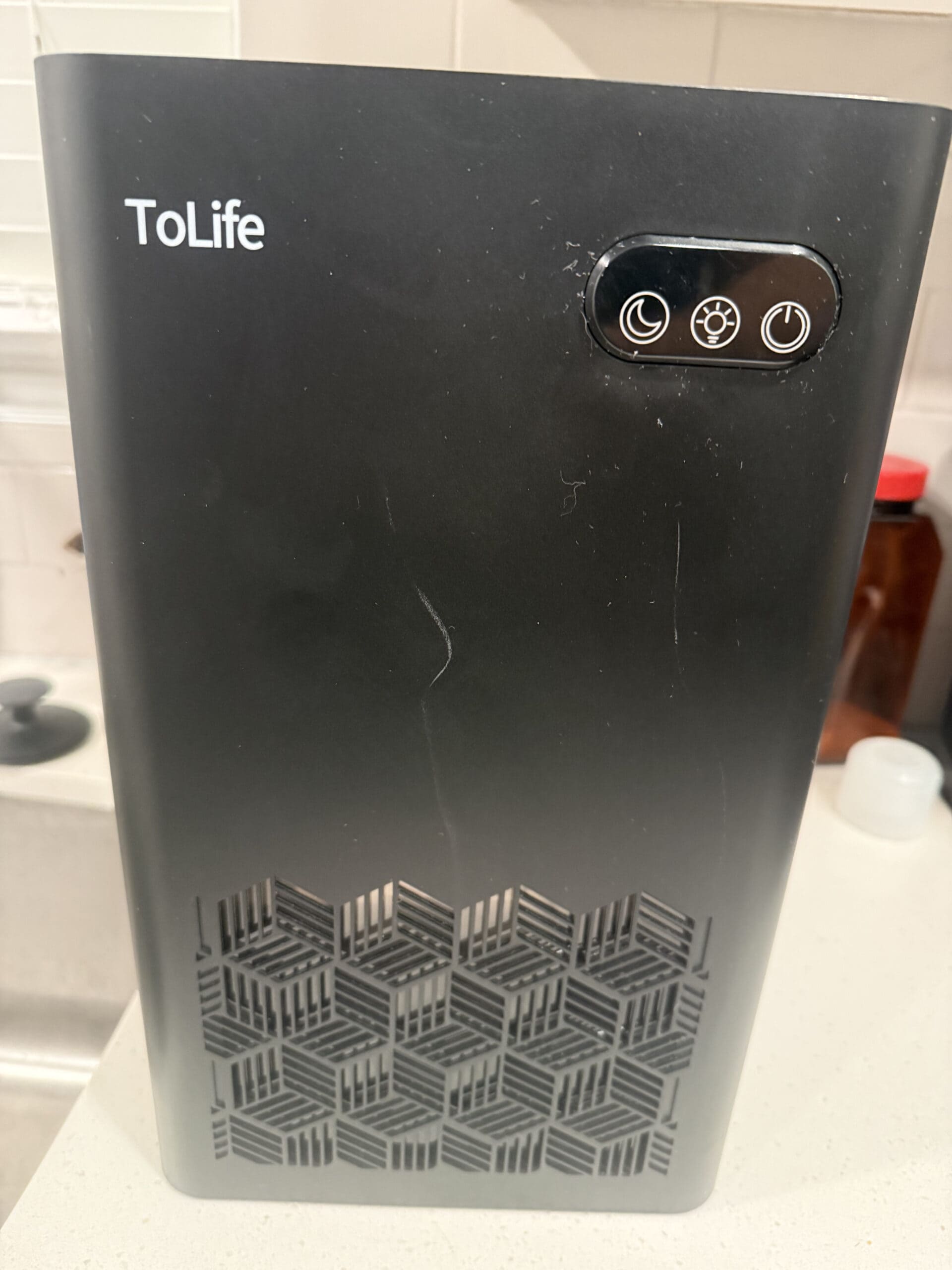
If your home gets uncomfortable during the wet weeks, yes. Monsoon humidity is the case where a dehumidifier stops being optional in a climate that spends most of the year too dry to need one.
Mine sits unused for most of the year. During monsoon my place genuinely gets very humid and it bothers me, so I run it overnight in the bedroom when the air feels heavy rather than on any schedule.
Quick Answer
Monsoon season pushes indoor humidity well above the comfortable range for weeks at a time. A dehumidifier run in the bedroom overnight during those weeks addresses the sleep problem directly, and the rest of the year it does nothing.
A Quick Note
This covers comfort and sleep rather than medical advice. Suspected mold, worsening allergy or asthma symptoms, or persistent breathing difficulty need professional attention rather than an appliance.
What Monsoon Does to Indoor Air
| Season | Typical indoor humidity | Effect on sleep |
|---|---|---|
| Dry months | 15 to 30% | None, sometimes too dry |
| Early monsoon | 40 to 55% | Noticeable |
| Peak monsoon | 55 to 70% | Sleep affected |
| After a storm | Spikes higher | Worst nights |
The North American monsoon runs roughly mid-June through September across the Southwest, with the heaviest activity in July and August.
Indoor readings lag outdoor ones and stay elevated longer, since a building absorbs moisture and releases it slowly. That is why the night after a storm is often worse than the storm itself, and why whether a dehumidifier is worth it in a dry climate depends entirely on whether you have a season like this.
Why Humidity Ruins Sleep Specifically
Your body lowers its core temperature to fall asleep, and it does that partly by evaporating moisture from your skin. Damp air slows evaporation, so the mechanism works less well.
That is why a humid room at 74 degrees feels worse than a dry room at 78, and why cooling bedding underperforms in wet weather.
It also means the usual fixes stop working. A fan moves damp air across damp skin, which does less than it does in dry conditions, and cooling bedding layers depend on evaporation that is not happening.
Removing moisture is the step that makes the rest of your cooling setup work again, which is covered further in does a dehumidifier help you sleep.
How I Actually Use Mine
It runs overnight in the bedroom, and only when the room feels humid. That is a judgment call rather than a schedule, and it means some monsoon nights it does not go on at all.
The rest of the year it is off entirely. There is nothing for it to remove on a dry Arizona day, so running it would be using electricity to collect nothing.
Bedroom rather than whole home is deliberate. It is the room where humidity affects something I care about, and overnight is the stretch of hours I am stationary in it.
What I would not claim is that this is optimal. It is reactive rather than measured, and someone with a hygrometer would run it more precisely than I do. The wider setup sits in bedroom humidity control products.
Sizing for a Seasonal Load
Capacity is rated in pints removed per day, and a bedroom-sized unit in the 20 to 30 pint range handles a single room in most conditions.
Undersizing shows up as a unit that runs constantly without the room ever improving. Oversizing wastes money and cycles more, which is the pattern that wakes people, covered in whether dehumidifiers disturb sleep.
For seasonal use specifically, a portable unit you can move and store beats a larger fixed one, since it is idle nine months of the year.
Apartment dwellers have the additional constraint of where it lives out of season, covered in dehumidifiers for apartments.
Why the First Storms Feel Worst
The early part of monsoon is often more uncomfortable than the peak, and the reason is that nothing in the building has adjusted yet.
After months of very dry air, the structure itself is dry. Drywall, timber, textiles, and furniture all absorb moisture readily when it arrives, and while they are absorbing it, the room feels heavy in a way the humidity reading only partly explains.
Your own adjustment matters too. Coming off a season where sweat evaporates instantly, the first genuinely humid night feels dramatic because your body has not recalibrated.
By August, both have settled. The building holds moisture more steadily and you have adapted, so the same reading feels less severe than it did in early July.
Practically that means the first two weeks are when people go looking for a dehumidifier, and it is also when they overestimate what size they need. Buying in the middle of that spike often produces a unit larger than the rest of the season requires.
Waiting a week before deciding gives you a fairer sense of what your home actually does.
The Tank Is the Daily Reality
During peak monsoon a bedroom unit can fill its tank overnight, which means emptying it every morning or plumbing a continuous drain.
Tank design varies more than the specifications suggest. Cheap plastic tanks with awkward lids are common, and a tank you can only pour from one side is genuinely annoying when you are doing it daily.
Building matters here as much as climate. The same unit in a worse-ventilated place fills far faster, which is a useful signal about the room rather than about the appliance.
A continuous drain hose into a bathroom or floor drain removes the chore entirely, and it only works if gravity is on your side. On an upper floor with no nearby drain, emptying by hand is the only option.
What Else Helps During Monsoon
Run the extraction fans
Showers and cooking add moisture to a house that is already struggling to shed it. Fifteen minutes of extraction after each removes more than people expect.
Do not dry laundry indoors
A load of wet washing releases a substantial amount of water into the air. During monsoon that undoes what the dehumidifier is doing.
Keep windows shut on humid days
The instinct is to open up after rain, and that brings the wet air in. Ventilate when the outdoor air is drier than the indoor air rather than by feel.
Store it dry between seasons
Empty the tank completely and let the unit dry before putting it away for nine months. Water standing in a tank grows exactly what the appliance exists to prevent.
Use air conditioning where you have it
Air conditioning removes moisture as a side effect, so running it does part of the job, covered in bedroom cooling setups for hot climates.
Related Reading
- worth it in a dry climate
- does it help you sleep
- bedroom dehumidifiers
- quiet dehumidifiers
- bedding for desert climates
- sleeping with allergies
- air quality monitors
Frequently Asked Questions
Do you need a dehumidifier during monsoon season?
If your home gets uncomfortable during the wet weeks, yes. Indoor humidity climbs well above the comfortable range and stays there for weeks rather than hours.
When does monsoon season run?
Roughly mid-June through September across the Southwest, with July and August typically the most active months.
Should I run it all night or on a timer?
Overnight in the bedroom is the useful window, since that is when humidity affects your sleep. Reactive use on humid nights beats running it every night through the season.
What size do I need for a bedroom?
Something in the 20 to 30 pint range handles a single room in most conditions. A unit running constantly without improving the room is undersized.
Why does my tank fill so fast?
Peak monsoon plus a poorly ventilated room. A continuous drain hose removes the daily emptying if gravity allows it.
Does opening windows help after rain?
Usually not. The outdoor air after a storm is often wetter than indoors, so ventilating brings moisture in rather than out.
Should I buy one in the first week of monsoon?
Waiting a week gives a fairer sense of what your home does. The first storms feel worst because the building and your own adjustment have not caught up, which leads people to oversize.
Does air conditioning do the same job?
Partly, since it removes moisture as a side effect of cooling. In peak monsoon a dedicated dehumidifier still does considerably more.
Sources
- National Weather Service. North American Monsoon. https://www.weather.gov/psr/Monsoon
- United States Environmental Protection Agency. Mold and Moisture. https://www.epa.gov/mold/mold-course-chapter-2
- Sleep Foundation. Humidity and Sleep. https://www.sleepfoundation.org/bedroom-environment/humidity-and-sleep
