
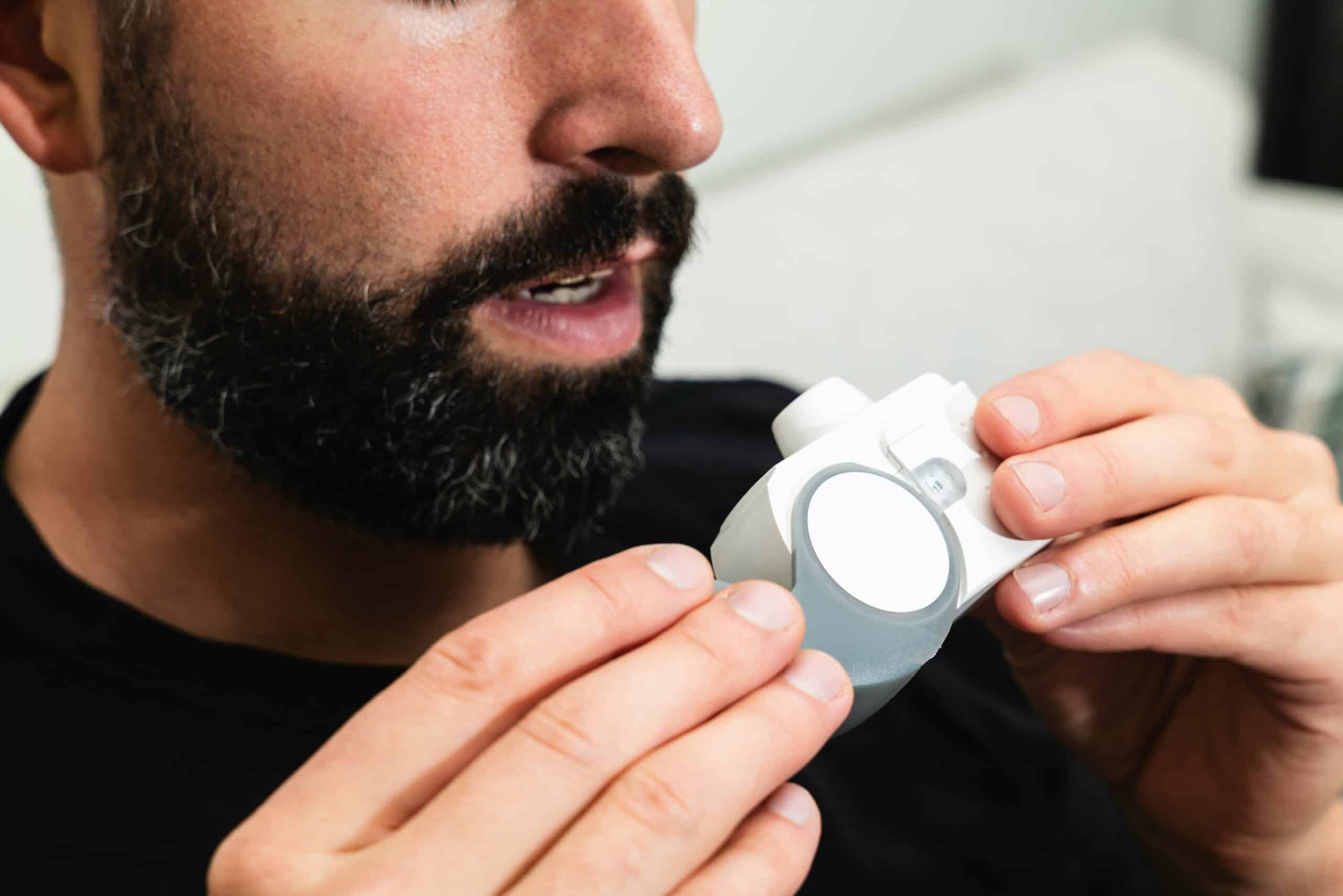
Anti-snore devices are a broad category, and most of them don’t work very well. The market is full of products with strong marketing claims and weak evidence. The few that work consistently address one of three mechanisms: keeping the jaw forward to maintain airway openness, opening nasal passages to reduce mouth breathing, or training the side-sleeping position to prevent the tongue from falling backward. Other approaches (chin straps, snore-detection apps, wristbands that shock you) range from marginal to useless.
This guide covers five devices that fall into the working category: a mandibular advancement device for the most common type of snoring, a tongue-stabilizing device for people who can’t tolerate mouthpieces, premium nasal strips for nasal-blockage snorers, a positional sleep trainer for back-sleeper snorers, and a smart anti-snore pillow that combines positional and head-tilt approaches. Each pick is matched to a specific snoring type with notes on when professional evaluation is more appropriate. No device treats a breathing disorder, so knowing which problem you have comes first.
Snoring that’s loud, disrupts a partner, or comes with daytime sleepiness can be a sign of sleep apnea, which is a medical condition requiring evaluation. The devices below address simple snoring; they don’t replace a sleep study.
Quick Verdict
- Best for: people with simple positional or mild airway-related snoring looking for consumer-grade interventions before considering medical sleep evaluation.
- Skip if you experience pauses in breathing, gasping, severe daytime fatigue, or if your partner reports loud, erratic snoring; these warrant a sleep study, not consumer devices.
Disclosure: RestRight is reader-supported. As an Amazon Associate, we earn from qualifying purchases made through links on this page, at no extra cost to you.
Medical Disclaimer
This is general information about consumer products, not medical advice. Snoring can be a symptom of obstructive sleep apnea, a condition associated with serious cardiovascular and metabolic risks that no anti-snore device treats. Loud habitual snoring, witnessed pauses in breathing, gasping or choking during sleep, or daytime sleepiness all warrant assessment by a doctor. Mandibular advancement devices in particular are fitted by a dentist or sleep physician in clinical practice, and an over-the-counter version is not equivalent to a fitted appliance.
How We Chose These Anti-Snore Devices
Four selection criteria:
Mechanism-based effectiveness. Each pick targets a specific anatomical cause of snoring. Generic “anti-snore” devices that don’t address a clear mechanism rarely work.
Tolerability for nightly use. A device that works perfectly but is so uncomfortable that the user quits after three nights is useless. Devices selected for sustained-use comfort, not just initial effectiveness.
Safety and FDA clearance, where applicable. Mouthpieces and devices that change anatomy during sleep should have appropriate regulatory clearance and be used as labeled.
Evidence of independent verification. Devices with consumer or clinical evidence beyond manufacturer claims. The anti-snore market is loud with marketing; selection bias toward products with third-party support.
For a broader context on the underlying issue, our complete guide on how to stop snoring naturally covers the non-device approaches (weight, alcohol, sleep position, allergies) that often produce as much benefit as any device.
Decision Matrix: Which Anti-Snore Device for Which Snorer
| Snoring Profile | SnoreRx Plus | Good Morning Snore Solution | Breathe Right Extra | Smart Nora | Anti-Snore Wedge Pillow |
|---|---|---|---|---|---|
| Jaw-related airway snoring | Best fit | Workable | Skip | Workable | Workable |
| Can’t tolerate dental devices | Skip | Best fit | Best fit | Best fit | Best fit |
| Nasal congestion or blockage snoring | Skip | Skip | Best fit | Skip | Workable |
| Position-dependent (back-sleep) snoring | Workable | Skip | Skip | Best fit | Best fit |
| Active flare during cold/allergy season | Skip | Workable | Best fit (immediate) | Workable | Workable |
1. SnoreRx Plus: Best Mandibular Advancement Device
Mandibular advancement devices (MADs) work by holding the lower jaw slightly forward during sleep, which keeps the tongue and soft tissue from falling back and obstructing the airway. The SnoreRx Plus is the strongest consumer-grade MAD currently available, with adjustable advancement in one-millimeter increments and FDA clearance for snoring (not sleep apnea).
The device is boil-and-bite custom-formed to each user’s bite, then adjusted gradually over the first weeks to find the position that controls snoring without causing jaw discomfort. The adjustability matters; fixed-position MADs work for some users and not others, while adjustable lets each user find their personal threshold.
Best for
Adults with jaw-related airway snoring, partners reporting positional snoring (especially back-sleeping), people willing to wear a dental device nightly, and snorers who’ve ruled out sleep apnea or have been cleared for MAD use by a sleep physician.
Skip if
You have full dentures, significant TMJ pain, or active dental work in progress. Skip also if you have untreated sleep apnea; MADs treat snoring but inadequately address moderate-to-severe apnea, where CPAP or surgical evaluation is more appropriate. For anyone already on a machine, our CPAP accessories guide covers the supporting parts.
For sleep-apnea-specific support, our roundup of best CPAP pillows covers the device category for diagnosed sleep apnea patients.
2. Good Morning Snore Solution: Best for Mouthpiece-Intolerant Users
The Good Morning Snore Solution (GMSS) is a tongue-stabilizing device rather than a jaw-advancement device. A small bulb fits at the front of the mouth and gently holds the tongue forward by suction, preventing it from falling backward during sleep. The mechanism works for many of the same snorers who benefit from MADs, but doesn’t require jaw repositioning.
Comfort is the primary advantage. Users who can’t tolerate having their jaw held forward all night often tolerate the GMSS without issue. FDA-cleared for snoring. Reusable and dishwasher-safe.
Best for
People who’ve tried MADs and couldn’t tolerate them, sleepers with TMJ issues, denture wearers (the GMSS doesn’t require teeth), and partners trying anti-snore options before more invasive interventions.
Skip if
You have severe respiratory issues that may worsen with anything in the mouth during sleep. Skip also if jaw-related snoring is documented and you’ve tolerated dental devices in the past; MADs are typically more effective for this specific cause.
3. Breathe Right Extra: Best for Nasal-Blockage Snoring
Breathe Right strips work entirely on the nose, mechanically opening the nasal passages by pulling outward on the nostrils. For snorers whose airway obstruction is in the nose rather than the throat (allergy season, deviated septum, chronic congestion), Breathe Right strips can substantially reduce snoring without any in-mouth device.
The Extra version uses a stronger adhesive than the original and is suited to people whose strips were falling off mid-night with the standard formulation. Disposable single-use. Inexpensive per night. Available in clear and tan variants for visual preference.
Best for
Cold and allergy season, snoring, snorers with chronic nasal congestion, mouth-breathers whose underlying issue is nasal blockage, occasional-use scenarios where MADs are too much commitment.
Skip if
Your snoring is throat-airway related (won’t help), or you have sensitive skin that reacts to adhesives. Daily cost adds up over months; for chronic use, MADs may be more economical despite a higher upfront cost.
📑 Recommended Read: Anti-snore devices help the snorer; the partner’s sleep is the other half of the equation. Check out our complete guide on how to sleep with a snoring partner for the partner-side strategies that pair with any of these devices during the adjustment period.
4. Smart Nora: Best Positional Sleep Trainer
The Smart Nora is a different category entirely. A small device placed under the pillow detects the onset of snoring sounds and gently inflates a bladder inside the pillow, slightly shifting the head position to interrupt the snore cycle. The user doesn’t typically wake; the shift is enough to reposition the head and restore normal breathing.
This works particularly well for back-sleeper snorers who don’t tolerate side-sleep training. Rather than forcing a position change, the Smart Nora reactively adjusts head angle when snoring starts. Setup includes a sound-detection unit, the pillow insert, and a smartphone app for monitoring.
Best for
Back-sleeper snorers who resist position change, snorers who can’t tolerate any mouth-based device, partners willing to invest in a non-intrusive technology approach, and sleepers who want data on their snoring patterns.
Skip if
You sleep through significant disturbances; some users find even the gentle inflation disrupts their sleep. Higher price than mouth-based alternatives. Skip if budget is the main constraint and other options work.
For sleep tracking that complements anti-snore monitoring, our roundup of best sleep trackers for better rest covers the broader category of sleep monitoring devices.
5. Wedge Pillow Setup: Best Non-Device Positional Approach
A bed wedge pillow that elevates the upper body during sleep reduces snoring for many positional snorers. The mechanism is gravity: with the head and chest elevated, the tongue and soft palate are less likely to fall backward and obstruct the airway. Cheaper, simpler, and longer-lasting than any of the dedicated devices above.
Most snore-effective wedges elevate the upper body by twenty-five to thirty degrees. Standard back-sleeping wedges from the acid-reflux category often work; targeted “anti-snore” wedges typically use the same mechanism. The Brentwood Home wedge pillow is a representative pick at a reasonable price.
Best for
Position-dependent snorers, sleepers wanting a non-device approach, snorers also dealing with acid reflux (the elevation helps both), and partners wanting an inexpensive first attempt before more elaborate devices.
Skip if
You sleep primarily on your side; wedge pillows work for back-sleep positions. Some sleepers find the inclined position uncomfortable; preview before committing.
For broader bed wedge applications, our roundup of best bed wedge pillows covers the category in more depth.
When to See a Sleep Doctor Instead of Buying a Device
Consumer anti-snore devices address simple snoring. They don’t address sleep apnea, and using them in place of a medical evaluation for apnea can cause real harm.
Indicators that warrant medical evaluation rather than consumer devices:
- Witnessed pauses in breathing during sleep, often reported by a partner
- Gasping or choking sensations on waking
- Severe daytime sleepiness, falling asleep at work or while driving
- Loud, erratic, or intermittent snoring rather than steady, consistent snoring
- Morning headaches
- Difficulty staying asleep despite seeming to sleep through the night
- High blood pressure or other cardiovascular issues, alongside snoring
A home sleep study or in-lab polysomnography evaluates these patterns and determines whether CPAP, oral appliance therapy, or other interventions are appropriate. The cost of evaluation is real but smaller than the long-term cost of untreated sleep apnea on cardiovascular health and quality of life.
Common Mistakes and How to Avoid Them
Using anti-snore devices for sleep apnea. The devices in this guide are for simple snoring. They’re inadequate for moderate-to-severe sleep apnea, and using them in place of CPAP can cause real cardiovascular harm.
Buying without identifying the mechanism. Nasal strips don’t help throat-airway snoring; MADs don’t help nasal-blockage snoring. Match the device to the cause.
Skipping the adjustment period. Most devices need a week or more of nightly use for the user to adapt. Quitting after two uncomfortable nights misses the adaptation window when effectiveness usually improves.
Combining devices without medical guidance. Stacking nasal strips with mouthpieces may produce additive effects, but it may also indicate that the underlying issue is more complex than consumer devices can address. Consult a sleep doctor before stacking.
Ignoring lifestyle contributors. Alcohol, weight, sleeping position, and bedroom air quality all affect snoring severity. Devices address symptoms; lifestyle addresses causes.
Sharing devices between users. Mouthpieces are personal items. Sharing creates hygiene issues and a fit that wasn’t custom-formed to the second user’s bite.
Not cleaning devices properly. Mouthpieces, in particular, need cleaning per the manufacturer’s instructions. Bacteria buildup can cause oral health issues over time.
Treating snoring as cosmetic rather than potentially medical. Loud or disruptive snoring is a sign worth taking seriously, not just a relationship nuisance to be solved with a device.
Frequently Asked Questions
Do anti-snore devices actually work?
Some do, when matched to the right type of snoring. MADs and tongue-stabilizing devices have the strongest evidence base. Nasal strips work for nasal-blockage snoring. Devices marketed without a clear mechanism (chin straps, wristbands) rarely deliver meaningful benefit.
How long does it take to see results?
Most devices show an immediate effect on the first night when they work. The adjustment period is about user comfort, not about effectiveness building. If a device doesn’t work on the first night, it’s unlikely to start working later.
Are mouthpieces safe for long-term use?
Generally, yes when used as directed. Some users develop jaw discomfort or dental changes over the years of use; periodic dental checkups address this. Discontinue if pain or a significant change develops.
Can I use anti-snore devices if I have sleep apnea?
Only with sleep physician guidance. MADs are sometimes used for mild apnea or for patients who can’t tolerate CPAP, but this requires medical management. Don’t substitute consumer devices for prescribed apnea treatment.
How do I know what type of snoring I have?
Some clues: snoring that’s worse on the back suggests positional; snoring that’s worse with congestion suggests nasal-related; snoring that improves when you lose weight or reduce alcohol suggests jaw and tongue tone-related. A sleep study definitively characterizes the type.
Will weight loss reduce snoring?
Often substantially. Excess weight in the neck area increases airway obstruction during sleep. Weight loss is one of the most effective non-device interventions for many snorers.
Are there prescription anti-snore options?
Yes. Custom-fitted oral appliances from sleep dentists, surgical options for specific anatomical issues, and CPAP when apnea is involved. These are more effective than consumer devices for moderate-to-severe cases.
What if I sleep alone and don’t know if I snore?
Sleep tracking apps record audio overnight and can identify snoring patterns. The Smart Nora and similar devices include sound detection. Visiting friends or family who can comment on overnight breathing is another option.
Recommended Reading
See also our guides to chin strap vs mouthpiece.
Related Reading
Explore more: neck traction devices, and snore mouthguards. Also explore: chin strap vs mouthpiece.
One category needs no teeth to anchor to, which matters with dentures or extensive dental work. Tongue-based devices are covered separately.
When should I see a doctor about snoring?
If snoring is loud and habitual, if anyone has witnessed you gasping, choking, or pausing in breathing, or if you are sleepy during the day despite adequate time in bed. Those point toward obstructive sleep apnea, which is diagnosed by sleep testing and treated clinically. A device that quiets the noise does not mean the underlying breathing has changed.
Sources
- American Academy of Sleep Medicine. Clinical practice guidelines on sleep-disordered breathing. https://aasm.org/clinical-resources/practice-standards/practice-guidelines/
- National Heart, Lung, and Blood Institute. Sleep Apnea. National Institutes of Health. https://www.nhlbi.nih.gov/health/sleep-apnea
