
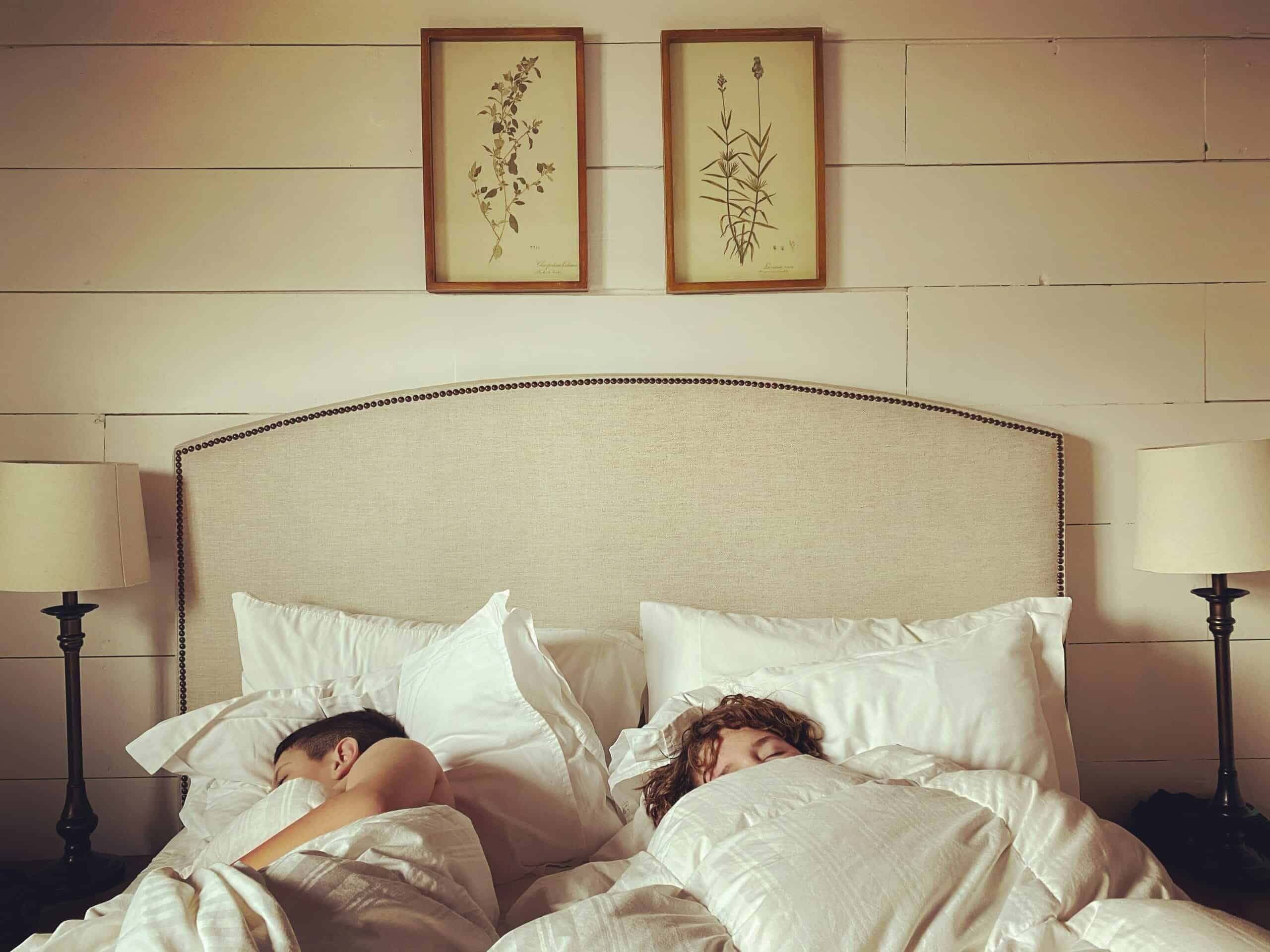
How to sleep with a snoring partner is the question millions of people are quietly Googling at 2 a.m. while staring at the ceiling. The dynamic is familiar to anyone who has lived through it: you doze off easily enough, then the noise starts. You poke them, they shift, the noise stops. You drift back. Forty minutes later it starts again. By morning you’re exhausted, your partner slept fine, and the cycle repeats the next night. For our current top picks, see the best pillows for snoring guide.
The path through this isn’t about hoping the snoring stops. Most snoring doesn’t stop on its own, and meaningful intervention for the snorer often takes months. The shorter path is making your own sleep environment more resilient to the noise that exists right now. This guide focuses on what the non-snoring partner can do, not on what the snorer should be doing (though that conversation matters too). Our look at separate beds covers when splitting up is the better answer.
It also flags one important boundary: not all snoring is benign. Loud, persistent snoring with gasping, choking sounds, or pauses in breathing may indicate sleep apnea, which is a medical issue worth raising with a doctor.
Key Takeaways
- Sound masking with white noise or sleep headphones works better than trying to block sound entirely; consistent background noise reduces the contrast that wakes you up
- Earplugs alone often fail because they don’t block bass frequencies that snoring carries; pair earplugs with masking for best results
- Sleeping in separate rooms (sometimes called a sleep divorce) is not a relationship failure when both partners are getting destroyed by shared sleep
- Loud snoring with gasping or breathing pauses can indicate sleep apnea, which is a medical condition worth raising with a doctor
Medical Disclaimer
This is general information about consumer products, not medical advice. No product here diagnoses or treats any condition, and persistent or worsening symptoms should be assessed by a doctor rather than managed with a purchase.
Why Snoring Wakes You and Not Them
The mechanics are unfair. The snorer is producing the noise but is asleep, so the brain’s threat-detection systems don’t trigger. You, the partner, are also asleep, but your auditory cortex processes the irregular nearby noise as a potential threat. The brain partially wakes you to assess.
The wake-ups don’t always reach full consciousness. Brief micro-arousals across the night fragment sleep architecture even when you don’t remember waking up. The next morning you feel tired without being able to point to a specific bad night.
The noise pattern matters too. Steady noise (a fan, traffic, white noise) becomes background quickly. Irregular noise (snoring with pauses and volume changes) doesn’t, because each new pulse triggers the orienting response. The brain can’t tune out something it can’t predict.
This means the fix has two parts: reduce the intensity of the snoring at your ears, and reduce the contrast between snoring and silence so the noise stops triggering wake-ups. Both fall under the broader sleep environment work our guide on improving sleep quality naturally walks through across other variables too.
Strategy 1: Sound Masking
Continuous background sound is the single most effective intervention. A steady, predictable noise floor flattens the spikes of snoring and prevents the auditory cortex from registering each pulse as a new event.
White noise machines work well because the sound is engineered for sleep. They produce sustained, broadband noise at consistent volume. See our roundup of white noise machines for the picks worth starting with, or the broader sound machines for sleep selection if you want non-white-noise options like rain or fan sounds.
Pink noise (slightly weighted toward lower frequencies) and brown noise (heavily weighted to bass) work better for masking snoring than true white noise because they cover the frequency range snoring lives in. Many machines offer multiple sound profiles; experiment to find what masks your specific partner’s pattern.
Fan-based masking works too and adds airflow benefits. The disadvantage is fixed-volume operation; dedicated machines offer fine volume control.
Strategy 2: Sleep Headphones
For severe snoring or for sleepers who need direct ear coverage, sleep headphones are the strongest intervention. They combine sound masking with physical sound blocking.
The options are flat-profile headphones built into headbands (comfortable for side sleepers), bone-conduction designs (no ear canal pressure), and standard wireless earbuds designed for sleep (low-profile, side-sleep tolerant). See our roundup of sleep headphones for the picks that hold up overnight.
The trick is finding a model comfortable enough for all-night wear without falling off, tangling, or causing ear pain. Side sleepers face the strongest constraint here. Brands that prioritize flat profile design tend to outperform standard headphones for this use case.
Pair the headphones with content that loops or streams without interruption: brown noise, rain sounds, ocean sounds, or sleep-specific playlists. Avoid podcasts or audiobooks at sleep onset; the content engages the brain in ways that delay sleep rather than supporting it.
Strategy 3: Earplugs (Used Correctly)
Earplugs are the obvious answer that often disappoints. The reason: standard foam earplugs block high frequencies well but pass low frequencies poorly. Snoring lives in the low-frequency range, so the rumble still reaches your auditory cortex even with plugs in.
To make earplugs work, two upgrades help. First, choose higher-rated plugs (NRR 32 or above) specifically rated for sleep. Second, insert them correctly, which means rolling them down, pulling the ear up and back, and inserting deep enough that they expand against the canal walls.
Custom-molded earplugs outperform foam dramatically but cost more. Silicone reusable plugs sit in the middle on both performance and price.
The best result for most people: earplugs as the foundation, layered with sound masking. The plugs cut the high frequencies, the masking covers the lows, and the combined effect catches what either alone would miss.
Strategy 4: Bedroom Environment Reset
Sound is only one variable. The room itself can amplify or absorb noise in ways that significantly affect what reaches your ears.
Soft surfaces absorb sound. Carpet, curtains, upholstered furniture, and a thick comforter reduce reflection and reverberation. Hard-surface bedrooms (laminate floors, bare walls, minimal furniture) amplify snoring like a stage.
The mattress matters too. A heavier, dense mattress isolates vibration better than a light one. The snorer’s movement and snoring vibrations transmit less through dense materials.
Position changes help too. If the snoring partner consistently snores more when sleeping on their back, encourage side sleeping. Some find that a body pillow (see body pillows) keeps the snorer on their side and reduces volume significantly. Specialized anti-snoring pillows are designed to keep the airway open through positioning; see our roundup of anti-snoring pillows for the picks worth trying.
Strategy 5: Sleep Mask + Sound Combo
Light and sound both contribute to sleep fragmentation, and the brain’s wake systems respond to combined inputs. Reducing both light exposure and sound exposure together produces better sleep than addressing either alone.
A quality sleep mask blocks ambient light from the room (clock readouts, streetlight, devices). When the eyes are in darkness and the ears are in steady sound, the brain has fewer cues that anything is happening in the environment worth waking for.
A quality sleep mask (see sleep masks for better sleep) blocks ambient light from the room (clock readouts, streetlight, devices). When the eyes are in darkness and the ears are in steady sound, the brain has fewer cues that anything is happening in the environment worth waking for. For sleepers who want full visual darkness without a mask, blackout curtains handle the room-level approach.
Strategy 6: Go to Sleep First
This sounds obvious but few couples do it deliberately. Falling asleep before the snoring starts means you reach deeper sleep stages before the noise begins. Deeper sleep is more resistant to interruption, so the same snoring that would wake you at sleep onset may not wake you forty minutes in.
The mechanics: most snorers don’t start snoring immediately on falling asleep. There’s usually a window of fifteen to thirty minutes before snoring begins. Use that window. Get into bed first, settle, and start the sleep process before your partner joins.
This requires some scheduling coordination. Partners who go to bed together by default may need to negotiate. The trade is usually worthwhile: fifteen extra minutes of solo wind-down time produces better sleep across the night than waiting for your partner.
Pair this with a consistent pre-sleep routine that drops your arousal level efficiently. Our bedtime routine guide covers the structure that makes the head-start strategy actually stick.
Strategy 7: The Sleep Divorce Option
Separate beds or separate rooms is not a relationship failure. The data on chronically-sleep-deprived couples is sobering: relationship quality, intimacy, and household function all suffer more from cumulative sleep loss than from sleeping in different rooms.
The framing matters. Two adults choosing the sleep arrangement that lets both function isn’t romantic failure; it’s resource management. Intimacy isn’t tied to where each person sleeps; it’s tied to whether both partners are rested enough to be present for each other.
The intermediate options include separate beds in the same room (twin beds, individual mattresses pushed together with separate blankets) and switched-shift sleeping. Couples who try separate sleep for a month often report that they’re surprised by how much better they feel and how it improves rather than damages the relationship.
If full separation feels like a big jump, start with weekday-only separate sleep. Sleep together on weekends. Many couples find this combination workable indefinitely.
📑 Recommended Read: A snoring partner is one of many sleep environment variables that affect rest quality. Temperature, light, mattress, and pre-sleep routine all interact. Check out our complete guide on how to improve sleep quality naturally for the broader framework.
Strategy 8: Get Your Partner Evaluated If Symptoms Warrant
This is the partner-action item that sometimes resolves the problem at the source. Not all snoring is benign. The American Academy of Sleep Medicine recognizes obstructive sleep apnea as a common, often underdiagnosed condition that frequently presents with loud snoring as the most visible symptom.
The signs that warrant a medical evaluation for the snorer:
Loud snoring that other people in the house can hear from a different room. Pauses in breathing during sleep, sometimes followed by gasping or choking sounds. Excessive daytime sleepiness despite adequate time in bed. Morning headaches. High blood pressure. Witnessed apneas (the partner stops breathing and starts again).
The conversation is gentle but direct: “You’ve been snoring a lot, and you sometimes stop breathing. I’d feel better if you talked to a doctor about whether this might be sleep apnea.” Most sleep studies are now home-based, which removes a major barrier. Treatment options have expanded significantly beyond the older CPAP-only model.
Resolved sleep apnea often resolves the snoring as a side effect. Your partner sleeps better. You sleep better. Many couples find that a sleep apnea diagnosis ends up being the most useful step they took for both partners.
Common Mistakes
Counting on the snorer to fix it. They will eventually, but eventually is a long time. Build your sleep infrastructure now, not after they get around to seeing a doctor.
Relying on earplugs alone. Low frequencies pass through most plugs. Pair plugs with sound masking.
Treating sleeping separately as defeat. Sleep quality affects relationship quality. The arrangement that produces rested partners produces better partners.
Using anti-snoring products that don’t have evidence. Strips, sprays, and chin straps have mixed evidence. Some help certain people; many do nothing. Don’t replace medical evaluation with consumer products.
Drinking alcohol close to bed. Alcohol relaxes throat muscles and worsens snoring. Both partners benefit from earlier last drinks.
Sleeping with the TV on. The variable volume disrupts more than it masks. Steady sound (white noise, fan, sound machine) outperforms TV.
Going to bed angry about the noise. Resentment increases arousal and makes sleep harder. Address the partnership question separately from the sleep question.
Skipping a sleep apnea evaluation when warning signs are present. Apnea has cardiovascular consequences. The conversation with a doctor is more important than the inconvenience.
When to Suggest Your Partner See a Doctor
The signs that warrant a medical conversation about your partner’s snoring:
- Loud snoring audible from another room
- Witnessed pauses in breathing during sleep
- Gasping, choking, or snorting sounds during sleep
- Excessive daytime sleepiness despite normal sleep duration
- Falling asleep during quiet activities (reading, watching TV, driving)
- Morning headaches
- Difficulty concentrating during the day
- Mood changes including irritability or low mood
- High blood pressure or known cardiovascular risk
- Weight gain accompanied by worsening snoring
Modern sleep medicine offers more options than the older CPAP-and-nothing-else model. Home sleep studies, oral appliances, positional therapy, and newer surgical options all expand the path. The evaluation conversation is worth having.
Frequently Asked Questions
Are there any noise-canceling earbuds that work for sleep? Some, but most are uncomfortable for all-night side sleeping. Dedicated sleep headphones outperform repurposed consumer earbuds.
Will my brain eventually tune out the snoring? Some people partially habituate to consistent patterns. Most don’t fully adapt to irregular snoring. Don’t count on habituation.
What about anti-snoring nasal strips and sprays? Mixed evidence. They help some people with mild snoring; many find no effect. Worth a trial but not a substitute for medical evaluation if apnea is a possibility.
Can a mouthguard help my partner snore less? Oral appliances (mandibular advancement devices) can reduce snoring in some people, particularly those with mild sleep apnea. These are dentist-fitted, not generic.
Does weight loss help snoring? For people whose snoring is related to excess weight around the neck and airway, often yes. The effect varies by individual.
Is sleeping in separate beds bad for the relationship? Sleep quality affects relationship satisfaction. Rested partners often report better relationships than chronically sleep-deprived couples sharing a bed.
What’s the best sound for masking snoring specifically? Lower-frequency noise (pink or brown noise) covers the bass frequencies snoring lives in better than higher-frequency white noise.
Should I record my partner’s snoring? A short audio or video clip can be useful for a doctor’s appointment, especially if breathing pauses are happening. Many phones have apps for this.
What about CBD or supplements for the partner who can’t sleep? Supplement evidence is mixed and product quality varies. Address sleep environment first; supplements come later if needed.
How long should I try environmental changes before considering separate sleep? Two to four weeks of consistent application is reasonable. If sleep quality hasn’t meaningfully improved after that, the separate-sleep option deserves serious consideration.
Recommended Reading
See also our guides to how to sleep with tinnitus, and late exercise and sleep.
Related Reading
Explore more: chin straps snoring, Do Nasal Strips Work for Snoring? What Actually Helps, Do Chin Straps Work for Snoring? What Actually Helps, how to sleep on a plane, how screens affect sleep, how alcohol affects sleep, how to sleep with restless leg syndrome, and silk pillowcases for better sleep. Also explore: chin strap vs mouthpiece.
Related: sleep gear for a partner who snores.
Noise is one disturbance and movement is another. Handling a restless partner covers the second.
Sources
- National Institutes of Health. MedlinePlus health topics. https://medlineplus.gov/
- American Academy of Sleep Medicine. Clinical resources and practice guidelines. https://aasm.org/clinical-resources/practice-standards/practice-guidelines/
