
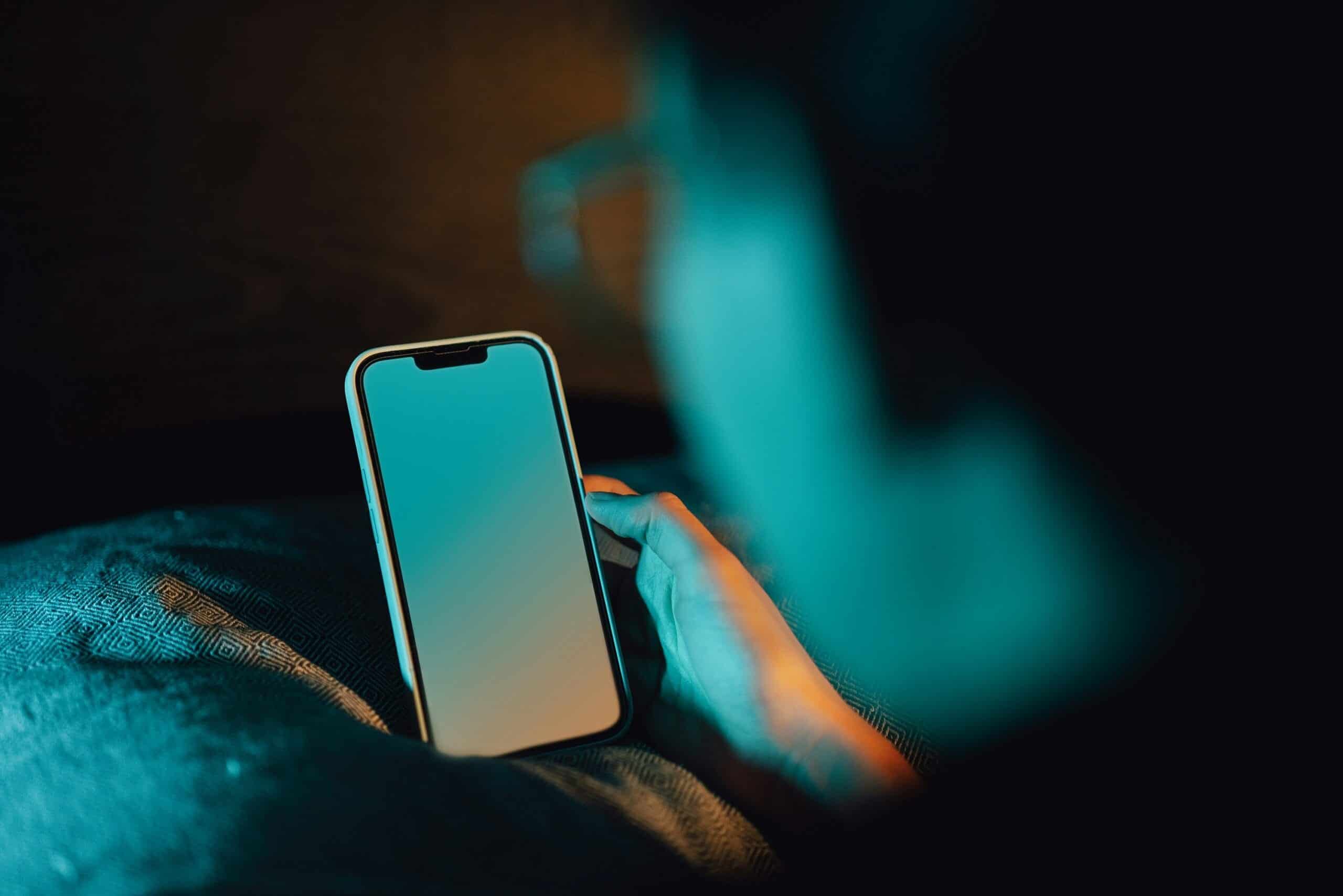
Phones, laptops, tablets, and TVs occupy a significant share of evening hours for most adults, and most of us have heard that screens before bed disrupt sleep. The standard advice is to put devices away an hour before bedtime. What’s often missing from the conversation is what specifically screens do, why they matter, and which interventions actually help versus which are mostly marketing.
The honest version: screens affect sleep through several distinct mechanisms, some better-supported than others. Blue light gets most of the attention, but the bigger issue for most people is what the content does to mental arousal in the hour before bed. The fix isn’t necessarily total abstention from screens. It’s understanding what to change about how and when you use them.
Key Takeaways
- Screens affect sleep through three mechanisms: blue light suppressing melatonin, content arousing the mind, and screen use replacing the natural pre-sleep wind-down
- For most adults, the content effect (mentally activating videos, scrolling, work email) outweighs the blue light effect
- Night mode and blue light filters help modestly but don’t address the content issue
- The window that matters most is the last hour before bed; daytime screen use generally doesn’t disrupt night sleep meaningfully
The Three Ways Screens Affect Sleep
Lumping all “screen effects” together obscures what’s actually happening. Three distinct mechanisms are involved, and they don’t all matter equally for every person.
Blue-spectrum light suppressing melatonin. The biological clock uses light exposure to determine when to release melatonin, the hormone that signals sleep readiness. Blue-spectrum light (which screens emit in significant amounts) suppresses melatonin more than warm-spectrum light. Evening exposure delays the melatonin rise that normally precedes sleep, which can push back sleep onset and shift the circadian system later. Screens are only part of the picture for adolescents, whose body clock shifts later on its own during puberty.
Content arousing the mind and body. What you’re watching or doing matters as much as the light. Engaging videos, intense games, social media scrolling, work emails, and news consumption all activate the brain’s attention and emotion systems. The arousal that helps you focus during the day works against you when you’re trying to wind down. Heart rate, cortisol, and mental activity all stay elevated.
Replacement of the natural wind-down. Evenings used to involve dimmer light, less stimulation, and a gradual decrease in activity that prepared the body for sleep. Screens fill that window with bright stimulating content. Even if blue light and content effects were neutral, the displacement of a natural wind-down period has its own cost.
Different people are affected differently by each mechanism. Some are sensitive to blue light specifically; others are mostly unaffected by light but strongly disrupted by content arousal. The right intervention depends on which mechanism is the bigger issue for you.
The Blue Light Story
Melatonin secretion is controlled by specific cells in the retina that respond strongly to short-wavelength (blue-spectrum) light. Bright blue light in the evening tells these cells “it’s still daytime,” which delays melatonin release.
Several practical implications:
Devices held close to the face (phones, laptops at typical viewing distance) deliver more light to the retina than TVs viewed across a room. The closer the screen and the brighter it is, the stronger the effect.
The effect is dose-dependent. Brief screen use has less impact than extended evening sessions. A quick check of a text message at bedtime probably doesn’t meaningfully affect anyone. Two hours of scrolling at high brightness directly before sleep affects most people.
Individual sensitivity varies substantially. Some people are highly light-sensitive and show measurable circadian effects from modest evening light exposure. Others can use bright screens late and still sleep well. Genetics, age, and natural chronotype all play roles.
The fix that targets blue light specifically: dim the screens, switch to warm-color filters (night mode, night shift, etc.), and reduce overall evening light exposure including overhead lighting. These don’t address content effects but they do reduce the melatonin disruption. Anyone trying lenses instead of screen limits should read how quickly the glasses help, since the effect is not immediate.
The Content Effect (Bigger Than People Realize)
For most adults with normal sleep schedules, content arousal is probably the bigger sleep disruptor than blue light per se.
Consider the difference between watching a calm nature documentary on a tablet at moderate brightness versus the same brightness and screen but watching an intense thriller or scrolling social media. The light exposure is identical. The sleep effects are not.
Engaging content activates the prefrontal cortex (paying attention, processing information), the limbic system (emotional response to content), and often the sympathetic nervous system (mild stress response from social comparison, news content, or intense scenes). These systems don’t shut off the moment you put the screen down. They wind down over time, and the wind-down can take longer than the time you have before bed.
Social media is a particularly potent activator. The variable reward structure (some content interesting, some boring), the social comparison dimension, the news component, and the algorithmic optimization for engagement all combine to produce more arousal than passive content. People who report most disrupted sleep from evening screen use are usually heavy social media users in the evening.
Work content has a similar effect. Checking emails at 10 PM activates the same brain regions as work during the day, plus the often-unwelcome content (urgent requests, ambiguous situations to resolve, conflicts) keeps the mind running long after the screen goes dark.
News content, especially current affairs heavy with conflict or anxiety-inducing material, produces sustained mental engagement that doesn’t dissipate by bedtime.
For all of these, the fix isn’t dimming the screen. It’s choosing different content during the wind-down window or simply not engaging with the most arousing categories late.
The Window That Matters
Daytime screen use is essentially irrelevant for sleep. The relevant window is roughly the last hour or two before intended sleep time. Screens used earlier in the day don’t affect the melatonin rise or the body’s preparation for sleep.
The closer to bedtime, the more screens matter. Use that’s interrupting active sleep onset (scrolling in bed while trying to fall asleep) is worse than use ending an hour before bed. The conditioning effect of using your bed as an alert engagement zone has its own consequences beyond the immediate light and content exposure. For more on this conditioning pattern, see our article on falling asleep on the couch but not in bed.
For practical purposes, “screen time” as a sleep concern starts in the wind-down hours, not in absolute daily totals. Someone who uses screens twelve hours a day for work but stops by 8 PM and reads a book in dim light before a 10 PM bedtime will probably sleep fine. Someone who uses screens four hours total but the four hours include bedtime probably won’t.
What Helps
The interventions that have decent evidence and produce noticeable effects for most people:
Set a screen cutoff before bed. An hour is the common recommendation, though some people need more and some less. The goal is allowing the body’s natural wind-down to occur. The cutoff is more important than what you do instead. Reading a paper book, talking with a partner, light household tasks, gentle stretching all work.
Dim the screens if you can’t avoid them entirely. Lower brightness, enable warm-color modes, increase distance between screen and face. These reduce the light exposure without requiring full avoidance.
Choose calmer content in the wind-down window. If you watch something before bed, pick calm content (familiar shows you’ve seen before, nature content, light comedy) over intense content. Avoid news, work content, and social media specifically in the late hours.
Move the activity out of the bedroom. Watching TV in the living room with appropriate lights is different from watching the same TV in bed. The latter creates the bed-equals-engagement conditioning that undermines sleep onset.
Reduce overall evening light. Dim the overhead lights. Use lamps. Lower the screen brightness on any devices you do use. The body responds to total light exposure, not just screens.
For the pillar framework on getting more out of the pre-sleep window in general, see our deep dive on how to create a bedtime routine for better sleep.
📑 Recommended Read: Blue light blocking glasses can reduce the spectrum exposure from screens in the evening without requiring you to give up devices entirely. Quality varies significantly. Check out our tested breakdown of the blue light blocking glasses for better sleep to find options that filter effectively.
What Doesn’t Help Much
Blue light filters alone (without other changes). They reduce light exposure but don’t address content arousal. People who switch on night mode and keep scrolling intensely often don’t notice better sleep. The filter helps the light pathway; the content pathway is untouched.
Blue light blocking glasses while continuing intense evening use. Same issue. The glasses help with the light side. They don’t help with the content side. Net effect is modest for people whose main issue is what they’re watching, not what spectrum it’s emitted in.
Screen-time totals as a sleep diagnostic. Total daily screen time barely correlates with sleep. What matters is the last hour or two. Reducing twelve hours to ten without changing the bedtime hour does little. Reducing the last hour to zero usually does a lot.
Quitting screens entirely. Often unrealistic. Modest changes targeted at the wind-down window deliver most of the benefit without requiring total abstention.
Special Cases
E-readers (Kindle, etc.). Dedicated e-ink readers without backlights produce minimal blue light and represent a much better evening option than phones or tablets. E-readers with backlights vary; the warm-light versions are reasonably sleep-friendly, while bright cool-white settings are not.
TV vs phone. TVs viewed at typical distances deliver less light to the eye than phones held at arm’s length. Phones are generally the bigger issue. TV content can still be arousing, but the light exposure is less of a problem if the TV is across the room.
Reading on a phone vs paper book. The same content has different effects depending on the medium. A paper book in dim light has minimal sleep impact. The same content on a phone has more impact through both the light and the conditioning of “phone-in-hand equals scrolling potential.”
Older adults. Tend to be more sensitive to evening light because pupil response and circadian sensitivity change with age. Often benefit more from screen-time reductions and from dimmer evening lighting in general.
Adolescents. The biological tendency toward later sleep timing in adolescence combines with high evening screen use to produce significant sleep problems in many teens. The combination is particularly hard on this group.
Shift workers. Different circadian considerations entirely. Sleep timing recommendations don’t translate directly. Working with a sleep specialist or following shift-work-specific protocols is more useful than standard advice.
Common Mistakes and How to Avoid Them
Focusing on blue light filters as a solution to everything. The filter helps with one part of the problem. If the issue is content arousal, the filter alone won’t fix it.
Scrolling in bed as a “wind-down” strategy. Almost always counterproductive. The combination of phone-in-bed conditioning, light exposure, and engaging content is the worst of all three mechanisms together.
Checking email or work content “one last time” before sleep. If the content might trigger thoughts you’ll keep processing, it’s worse than the same content earlier in the day. The very late check often produces hours of mental rumination.
Treating reading on a phone as equivalent to reading a book. The screen, the light, and the constant availability of distraction (notifications, the urge to switch apps) make phone reading meaningfully different from paper reading at bedtime.
Letting kids and teens have screens in their bedrooms. Particularly hard on this group’s already-shifted circadian timing. Pediatric sleep experts generally recommend keeping screens out of children’s bedrooms.
Watching news right before bed. High-arousal content with often-distressing material produces sustained mental engagement that takes hours to dissipate.
Assuming “I’m fine with screens before bed” without actually testing. Some people genuinely aren’t affected much. Many people who say they aren’t affected actually are, in ways they don’t notice until they try a different pattern for a week or two. Self-experimentation reveals more than self-reporting.
Frequently Asked Questions
Do I really need to put my phone away an hour before bed? An hour is a reasonable target for most people, but the right number is individual. Some people benefit from a longer cutoff. Some find thirty minutes works fine. The exact number matters less than having some cutoff and being consistent with it.
Does night mode on my phone solve the problem? Helps with the blue-light part of the problem. Doesn’t help with content arousal or the bed-conditioning issue. Worth using, but it’s one piece of the picture rather than a full solution.
What about watching TV in bed? Combines the bed-as-engagement conditioning with screen exposure. Generally worse than the same TV watched in the living room before bed. If you really want to watch something before sleep, consider doing it in another room.
Is the news worse for sleep than other content? Often yes, because of the emotional and conflict-laden content. News tends to produce more sustained mental engagement than calmer content.
Does daytime screen use affect sleep? Generally not much. The window that matters is roughly the last hour or two before bed. Daytime use barely registers in sleep research.
Will reading on a Kindle disrupt my sleep? Dedicated e-ink readers without backlights are nearly equivalent to paper books for sleep purposes. Backlit Kindles are intermediate; warm-light settings are better than cool-light settings.
I scroll my phone in bed to relax. Why is that bad? The relaxation feeling is real, but the underlying effect on sleep is usually negative. The phone activates attention systems even when the content feels mindless, and the bed-as-scrolling-zone conditioning undermines sleep onset over time. Most people who switch to a different wind-down activity find their sleep improves even though the change feels like a sacrifice initially.
How long does it take to see results from cutting screens before bed? Some people notice improvement within a few nights. Most see clear differences within a week or two. If you haven’t noticed improvement after a few weeks of consistent change, the issue may not be primarily screen-related and other interventions may be more useful.
Related Reading
Explore more: how naps affect night sleep.
More Sleep Guides
Recommended Reading
See also our guides to pillow sprays for sleep, and what time should you go sleep.
