
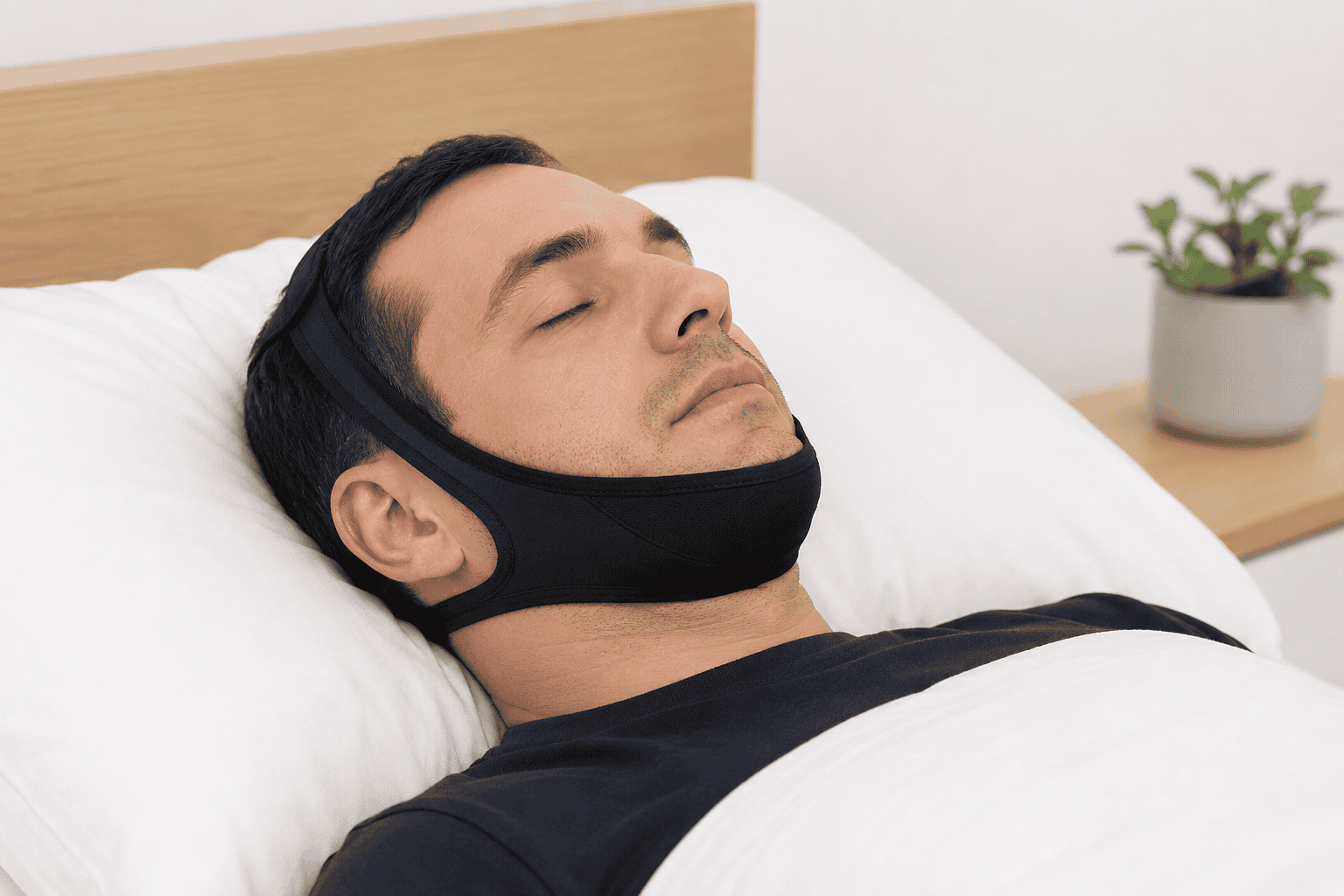
You have tried nose strips and pillows, and now you are eyeing a strap that holds your mouth shut at night. Whether chin straps work for snoring depends on why you snore: they help when an open, mouth-breathing jaw is the cause, by keeping it closed. They do nothing for nasal congestion or for sleep apnea, which is why some people swear by them and others see no change. If you’re shopping, start with our guide to the best chin straps snoring.
Key takeaways:
- Chin straps hold the jaw closed to encourage nasal breathing.
- They help most when snoring comes from sleeping with an open mouth.
- They do little for snoring caused by the nose or throat tissue.
- Chin straps do not treat sleep apnea and are not a medical device for it.
- Fit and comfort decide whether you actually keep one on all night.
- Loud snoring with gasping or breathing pauses warrants a doctor’s evaluation.
Do Chin Straps Work for Snoring?
A chin strap works for some snorers and not others, and the reason is the cause of the snoring. It addresses one specific situation: snoring that happens because the mouth falls open during sleep. For that case, it can genuinely help.
When the cause is elsewhere, the strap has little to offer. Nasal congestion, throat tissue, and sleep apnea all sit outside what a chin strap can change. Matching the tool to your cause is the whole point.
So the honest answer is a qualified yes. If you are a mouth-breathing snorer, a chin strap is a low-cost thing to try. If your nose is the issue or your snoring is severe, look elsewhere first.
How a Chin Strap Works
A chin strap is a band that wraps under the chin and around the head. It gently holds the lower jaw up and closed during sleep. The idea is to stop the mouth from falling open.
By keeping the mouth shut, the strap encourages breathing through the nose instead. Nasal breathing tends to be quieter and can reduce the vibration that open-mouth sleeping causes. That shift is the entire mechanism.
The strap does not touch the throat or the nasal passages themselves. It only changes the position of the jaw. Everything it does flows from that one simple action.
Why People Snore Through the Mouth
Mouth-breathing snoring has its own pattern worth understanding. When the jaw drops open in sleep, the tongue and soft tissues shift backward. Air rushing past them vibrates, and that vibration is the snore.
Several things encourage an open mouth at night. Nasal blockage can push you to breathe through the mouth, and so can certain sleep positions and habits. The strap addresses the open jaw but not always the reason behind it.
This is why a strap sometimes needs a partner. If congestion is forcing your mouth open, clearing the nose matters too. Treating the jaw alone may not be enough on its own.
When a Chin Strap Helps
Chin straps fit a fairly specific profile of snorer. If you recognize yourself here, one is worth trying. The common thread is an open mouth.
People who wake with a dry mouth often sleep with it open, and a strap can address that directly. Bed partners who notice your mouth falling open are another sign. For these snorers, holding the jaw closed can quiet the night.
Chin straps are also used by some people alongside other therapies to encourage nasal breathing. They are drug-free and reusable, which makes them an easy experiment. When mouth breathing is the cause, the payoff can be real.
When a Chin Strap Will Not Help
Knowing the limits saves money and frustration. A strap for the wrong cause simply will not work. These are the cases to rule out.
Nasal-origin snoring needs the airway at the nose opened, which a chin strap does not do. If a stuffy nose drives your snoring, a nasal strip targets that better. The chin strap leaves the nasal passage untouched.
Throat and tongue-based snoring also sits beyond its reach. Relaxed throat tissue vibrates regardless of whether the mouth is open or closed. A mandibular mouthguard or positional approach fits those causes better.
Sleep apnea is the most important exception. Snoring tied to apnea involves repeated pauses in breathing and needs medical treatment, which the section below covers. A chin strap is not a treatment for it.
Recommended read: Comparing your options? See our guides to the best snore mouthguards, the best anti-snore devices, and how to stop snoring naturally.
Chin Straps vs Other Anti-Snore Tools
A chin strap is one of several tools, each aimed at a different cause. The best choice follows from why you snore. Many people end up combining two.
Mouth tape shares the chin strap’s goal of keeping the mouth closed, using adhesive instead of a band. Mandibular mouthguards hold the jaw forward to open the throat airway, a different mechanism. Our chin strap vs mouthpiece guide compares the two head to head.
Nasal strips and positional aids tackle yet other causes. A strip opens the nostrils, while a positional pillow discourages back sleeping. The right pick depends on where your snoring starts, and some people layer a strap with one of these.
How to Use a Chin Strap Correctly
A strap that fits poorly will not stay on or will feel miserable. A little care up front improves the odds. The setup is quick.
Get the Fit Right
Choose an adjustable strap and size it so it holds the jaw closed without digging in. It should feel snug but not tight enough to cause pain or pressure marks. A strap that hurts will end up on the floor by morning.
Position It Properly
Place the cup under the chin and run the bands around the back of the head, away from the ears. Adjust until the mouth stays gently closed. Take a few nights to dial in the position.
Give It Time to Adjust
Wearing something on your face takes getting used to, so expect an adjustment period. Start with shorter stretches if needed and build up. Most people who stick with it adapt within a week or so.
Chin Straps and Sleep Apnea
This distinction matters more than any comfort tip. Obstructive sleep apnea causes the airway to collapse repeatedly during sleep, briefly stopping breathing. It is a medical condition, not just loud noise.1
A chin strap does not treat apnea, and relying on one can delay real care. Holding the jaw closed does nothing for an airway that collapses at the throat. Treating apnea like ordinary snoring is the risk to avoid.
Some people use a chin strap together with a prescribed CPAP machine to reduce air leaking from the mouth, but that is a use directed by a clinician. On its own, a strap is not apnea therapy. The safety note below explains when to seek evaluation.
When to see a doctor: A chin strap addresses open-mouth snoring only. If you snore loudly and also gasp, choke, or stop breathing during sleep, or you feel very sleepy during the day, talk with a doctor. These can be signs of obstructive sleep apnea, which needs medical evaluation and treatment rather than an over-the-counter strap.
Comfort, Fit, and Common Problems
Comfort decides whether a chin strap ever helps, because an unworn strap does nothing. A few common complaints have simple fixes. Knowing them ahead of time helps.
Some people feel claustrophobic with a band around the head at first, which usually eases with time. Others find the jaw pressure uncomfortable until they loosen the fit slightly. A breathable, adjustable material makes a real difference.
A strap that pushes the jaw too far or sits on the throat can cause soreness. Reposition it under the chin rather than the neck, and loosen it a notch. If discomfort persists, the strap may not suit your face shape.
Setting Realistic Expectations
A chin strap is a narrow tool with a specific job, and that is fine. For an open-mouth snorer, it can meaningfully quiet the night. For other causes, it will disappoint.
The best results usually come from pairing it with the right habits. Clearing nasal congestion, sleeping on your side, and avoiding late alcohol all help, as our guide to stopping snoring naturally explains. The strap handles the jaw while these handle the rest.
Give it a fair, consistent trial before deciding. If your mouth stays closed but the snoring continues, the cause is likely elsewhere. In the meantime, our guide for partners of snorers can ease the nights.
Types of Chin Straps
Chin straps come in a few designs, and the style affects comfort and security. Knowing the differences helps you pick one you will actually wear. The choice often comes down to fit preference.
Single-Band Straps
The simplest design is a single band that runs under the chin and around the head. It is light and easy to put on, which suits people new to straps. The trade is that it can slip more during an active night.
Full-Coverage Straps
Full-coverage straps wrap more of the head for a more secure hold. They stay put better for restless sleepers who toss and turn. Some people find the extra coverage warm, so breathable fabric matters here.
Material and Adjustability
Look for a soft, breathable fabric with sturdy adjustable fasteners. Cheap elastic loses its hold and stretches out quickly. A washable strap stays fresher with nightly use.
How to Tell Whether It Is Working
Snoring is hard to judge when you are the one asleep, so you need a way to measure. A little tracking turns guesswork into a clear answer. Set this up before you start.
Ask a bed partner whether the snoring and the open mouth have changed since you started wearing the strap. Their feedback is often the fastest signal. A simple yes or no after a few nights tells you a lot.
If you sleep alone, a phone app that records sound through the night can track snoring for you. Compare a few nights with the strap against a few without it. Waking with a less dry mouth is another encouraging sign.
Who Should Talk to a Doctor First
Most people can try a chin strap on their own, but some should check with a professional before relying on one. Snoring is occasionally a sign of something that needs care. Knowing when to ask keeps a minor fix from masking a bigger issue.
If you have loud snoring with gasping, choking, or pauses in breathing, see a doctor before trying gadgets. The same goes for heavy daytime sleepiness that affects your driving or focus. These point toward a possible sleep disorder that a strap will not solve.
People with existing breathing conditions or recent jaw issues should also get guidance first. A clinician can confirm whether a chin strap is appropriate for you. When the cause is uncertain, professional input comes before any device.
Common Chin Strap Mistakes
A handful of missteps explain most of the disappointment. Each is easy to correct.
Using a chin strap for nasal or throat snoring is the top mismatch, since it only addresses the jaw. If your nose is blocked or your throat is the source, the strap will not help. Match the tool to your actual cause.
Wearing it too tight causes jaw soreness and pressure marks that drive people to quit. Snug is enough; painful is too far. Loosen it until it holds without hurting.
Positioning the band on the neck instead of under the chin makes it both uncomfortable and useless. The cup belongs under the chin to lift the jaw. A quick repositioning fixes most complaints.
Giving up after one night ignores the normal adjustment period. New face-worn devices feel strange at first for almost everyone. A week of consistent use gives a fairer read.
Treating a chin strap as a fix for severe snoring or apnea is the most serious mistake. Loud snoring with gasping or pauses is a reason to see a doctor, not to buy a strap. Professional evaluation comes first when those signs appear.
How Long Before You See Results
If a chin strap is going to help, the effect usually shows up quickly. Open-mouth snoring tends to drop on the very first night the mouth stays closed. There is no slow buildup the way some remedies require.
The longer adjustment is to comfort, not to results. It can take a week or so to get used to wearing the strap and to dial in the fit. Once it stays on comfortably, you will know fairly fast whether it quiets the snoring.
If several comfortable nights bring no change, the cause is likely not your jaw. That is your signal to look at nasal, throat, or medical causes instead. A quick read beats months of hoping.
Frequently Asked Questions
Do chin straps really work for snoring?
They help snoring caused by sleeping with an open mouth, since they hold the jaw closed and encourage nasal breathing. They do little for nasal or throat-based snoring. Results depend on why you snore.
How does a chin strap stop snoring?
A chin strap wraps under the chin and around the head to keep the lower jaw closed during sleep. With the mouth shut, you breathe through the nose, which reduces the vibration of open-mouth snoring. It works only when an open jaw is the cause.
Are chin straps or mouth tape better?
Both aim to keep the mouth closed, using a band versus adhesive, so the better one is whichever you tolerate. Some people find a strap more secure, others prefer tape. Neither treats sleep apnea.
Can a chin strap help with sleep apnea?
No, a chin strap does not treat sleep apnea on its own. Apnea involves the airway collapsing and breathing pausing during sleep, which a strap does not address. It is sometimes used with prescribed CPAP under a clinician’s direction.
Are chin straps safe to use?
For most people, a properly fitted chin strap is low risk since it is external and drug-free. A strap that is too tight can cause jaw soreness or pressure marks. Loosen the fit if you notice discomfort.
Why am I still snoring with a chin strap?
If your mouth stays closed but you still snore, the cause is probably nasal congestion, throat tissue, or apnea rather than an open jaw. A strap only helps open-mouth snoring. Look at tools that target your actual cause.
When should I see a doctor about snoring?
See a doctor if you snore loudly and also gasp, choke, or stop breathing during sleep, or feel very sleepy during the day. These can signal obstructive sleep apnea. A professional can evaluate the cause and recommend treatment.
Where can I learn more about snoring and sleep?
The National Sleep Foundation and Mayo Clinic publish guidance on snoring, sleep apnea, and healthy sleep.12
This article is for general information and is not medical advice. Snoring varies by individual and may require evaluation by a qualified healthcare provider for diagnosis and treatment.
Related Reading
Explore more: chin straps snoring, Do Nasal Strips Work for Snoring? What Actually Helps, why counting sheep doesnt work, mouth tape for snoring, snoring only on back reasons, and pillows for snoring. Also explore: earplugs for sleeping.
Recommended Reading
See also our guides to chin straps snoring, do nasal strips work snoring, and why counting sheep doesnt work.
Sources
- Mayo Clinic, snoring and obstructive sleep apnea. mayoclinic.org
- National Sleep Foundation, snoring causes and remedies. thensf.org
