
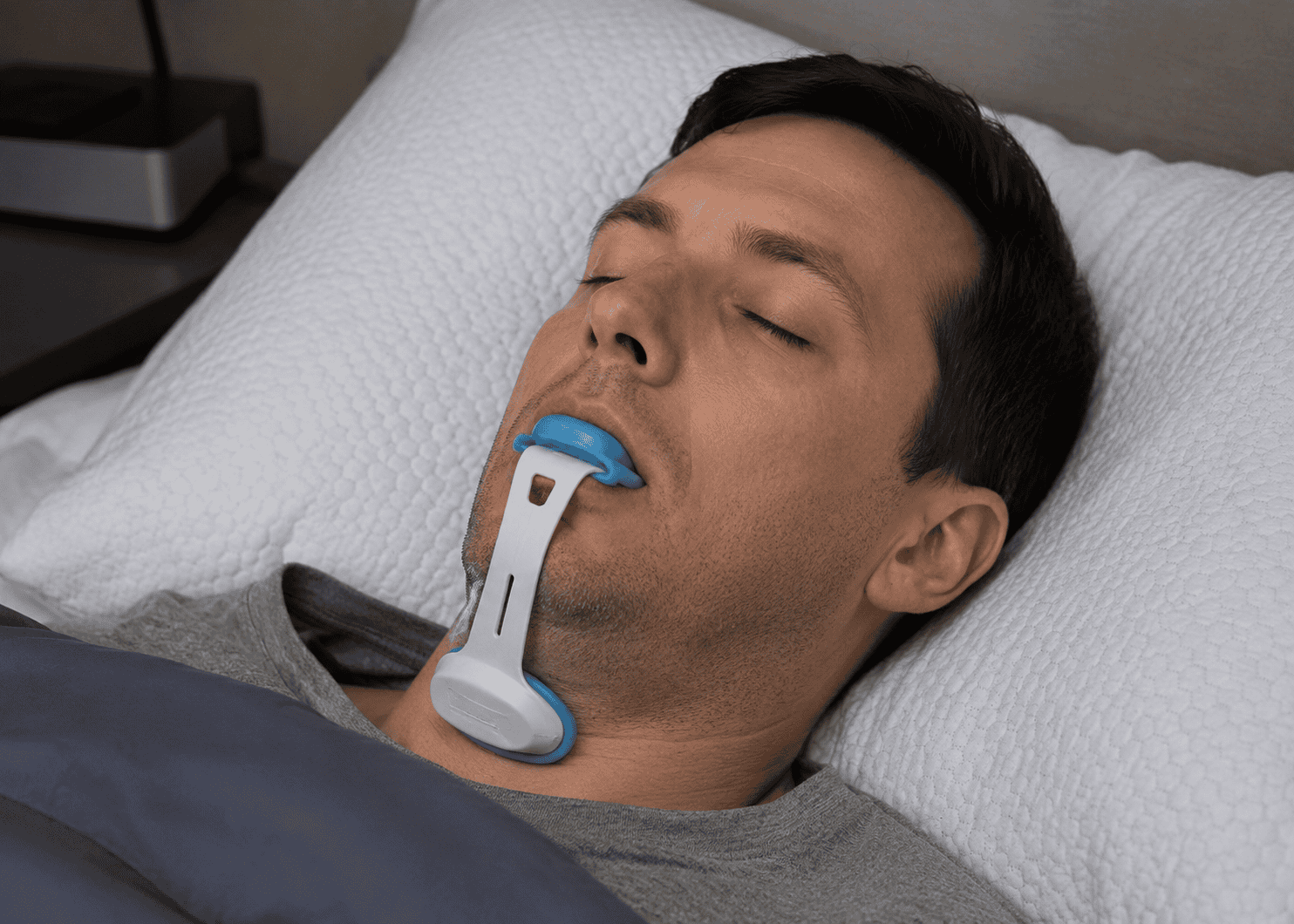
A tongue stabilizing device holds the tongue forward with a soft suction bulb so it cannot fall back and narrow the airway during sleep. Tongue stabilizing devices, also called tongue retaining devices, are one of two main oral appliance types, and the one that does not require teeth to anchor to. That single trait is why they exist, since people with missing teeth, dentures, or dental work that rules out a mandibular device have few alternatives.
Before the product categories, the most important thing on this page. The American Academy of Sleep Medicine states that oral appliances must be custom fitted to work properly, and that over-the-counter devices are not recommended as a treatment for snoring or sleep apnea. Everything sold on a retail site is an over-the-counter device. That does not mean these products have no place, but it does mean they should be understood as comfort items to discuss with a clinician rather than as treatment.
Medical Disclaimer
This article is general information and not medical advice. Snoring can be a symptom of obstructive sleep apnea, a condition associated with serious cardiovascular risk that requires diagnosis through a sleep study. Do not use any oral device as a substitute for evaluation. Talk to a doctor or a dentist trained in sleep medicine before using any appliance, particularly if you have dental work, jaw problems, or breathing difficulty.
Quick Verdict
If you are going to try one, a basic single-bulb silicone device is the sensible starting point, because it costs little and tells you quickly whether you can tolerate the sensation at all. Most people who abandon these do so in the first week over drooling or tongue soreness. Nothing here substitutes for a sleep study if snoring is loud or witnessed with pauses in breathing.
Key Points
- AASM states over-the-counter oral appliances are not recommended as treatment for snoring or apnea
- Tongue devices anchor to the tongue rather than the teeth, so they suit denture wearers
- Excess salivation and tongue soreness are the two most common reasons people stop
- Tongue retaining devices are less studied than mandibular advancement devices
- Snoring with witnessed breathing pauses is a reason for a sleep study, not a retail purchase
- Custom fitted appliances come through a dentist working with a sleep team
How We Picked
Material quality came first, since anything held in the mouth for eight hours should be medical grade silicone or BPA-free thermoplastic with clear documentation of what it is made from. Products without a stated material were set aside.
Sizing options were the second criterion. A device that comes in one size fits a narrow range of mouths, and the fit determines both whether it stays on and whether it hurts. Multi-size sets and adjustable bulb designs ranked higher.
Claim honesty was the third and it eliminated a lot. Products advertising themselves as a cure for sleep apnea are making a claim that conflicts with clinical guidance, and the AASM position on over-the-counter appliances is unambiguous. Products presenting themselves as snoring comfort aids were treated more favorably than those implying they treat a diagnosed condition. The broader category comparison sits in the overview of anti-snoring approaches.
1. The Basic Silicone Tongue Retainer
Why It Stands Out
The simplest version of the design and the right place to find out whether you can tolerate it. A soft silicone bulb creates gentle suction on the tip of the tongue and holds it forward. There is nothing to adjust and nothing to fit to your teeth, so the only question is whether the sensation is bearable.
Worth Knowing
Drooling is close to universal in the first nights, because the tongue sits forward and the lips cannot fully seal. Most people report it easing within a week or two. Tongue soreness is the other common complaint and is usually a sign the suction is too strong or the bulb too small.
Right for a first trial and for anyone whose teeth rule out other appliances. Skip it if you cannot breathe comfortably through your nose, since the mouth is partly occupied.
2. The Multi-Size Starter Set
Why It Stands Out
Bulb size determines whether the device holds without hurting, and there is no way to know your size in advance. Sets including two or three sizes let you find the fit without buying three separate products, which is the main practical obstacle in this category.
Worth Knowing
Multi-size sets are frequently cheaper per unit because the material quality is lower. Check what the silicone is specified as before choosing a set over a single better-made device.
Right for anyone who does not know their fit, which is nearly everyone starting out. Skip it if a size has already worked for you.
3. The Vented Design
Why It Stands Out
Vented versions add an air channel through the body of the device so some mouth breathing remains possible. For people with intermittent nasal congestion, that channel is the difference between a usable device and one abandoned on the first congested night.
Worth Knowing
Airflow through a small channel is limited and no substitute for clear nasal breathing. Chronic congestion is worth addressing directly, and nasal strips approach the same problem from the other end.
Right for people with occasional congestion. Skip it if nasal obstruction is constant, which needs evaluation rather than accommodation.
4. The Soft Flexible Model
Why It Stands Out
Softer silicone reduces pressure on the tongue tip, which addresses the soreness complaint that ends most trials. For sensitive users, or for anyone who gave up on a firmer device, softer material is often the difference between tolerating it and not.
Worth Knowing
Softer material grips less well and may release during the night, particularly for side sleepers who shift position. It also degrades faster and needs replacing sooner. Comfort and retention trade against each other directly here.
Right for sensitive tongues and returning users. Skip it if a firmer device stayed on and did not hurt.
5. The Travel Case Bundle
Why It Stands Out
An oral device needs to dry fully between uses or it grows bacteria, and a ventilated case handles both storage and transport. Bundles including a vented case and cleaning tablets cover the hygiene requirement that most buyers do not think about until later.
Worth Knowing
Sealed cases are worse than no case, since trapped moisture is exactly the problem. Confirm the case is ventilated. Cleaning tablets should also be checked against the device material, because some effervescent cleaners degrade softer silicone over time.
Right for anyone traveling with the device or who wants the hygiene routine covered. Skip it if you already have a ventilated case.
6. The Combination Device
Why It Stands Out
Some designs combine a tongue bulb with a light mandibular element, aiming to hold both the tongue and the jaw. In principle this addresses two contributors to airway narrowing at once.
Worth Knowing
This is the category where the gap between retail products and clinical practice is widest. Mandibular advancement is dose-dependent and, done properly, is titrated by a dentist over weeks. A fixed over-the-counter version advances the jaw by whatever amount the mold happens to impose, and jaw joint discomfort and bite changes are documented risks of poorly fitted mandibular devices.
Right only after discussion with a dentist trained in sleep medicine. Skip it entirely with any history of jaw joint problems.
Using One Without Making It Worse
Give it a fair trial, but a bounded one
Most people who abandon a tongue device do so within the first three or four nights, usually over salivation that would have settled. A two week trial is reasonable. Persistent pain is different and is not something to push through, since it signals a fit problem rather than an adjustment period.
Clean it properly every morning
Rinse immediately after use, brush gently with a soft toothbrush and mild soap rather than toothpaste, which is abrasive enough to scratch silicone and create places for bacteria to sit. Let it dry completely in open air before it goes into a case.
Replace it on a schedule, not on failure
Silicone stiffens and loses suction gradually, so the decline is easy to miss. Discoloration, tackiness, tearing at the bulb, or a device that releases overnight all mean replace it. Waiting until it fails completely means weeks of it not doing anything.
Track whether it is actually helping
Snoring is difficult to self-assess, since you are asleep for it. A partner’s observation or a phone recording app gives you something more reliable than how you feel in the morning, which is influenced by many things other than snoring. If nothing measurable changes across two weeks, that is useful information to take to a doctor rather than a reason to buy a different device.
Tongue Stabilizing Devices at a Glance
| Type | Needs teeth | Main drawback | Suits |
|---|---|---|---|
| Basic silicone retainer | No | Drooling early on | First trial |
| Multi-size set | No | Variable material quality | Finding fit |
| Vented design | No | Limited airflow | Occasional congestion |
| Soft flexible | No | May release overnight | Sensitive tongues |
| Case bundle | No | Sealed cases trap moisture | Travel and hygiene |
| Combination | Yes | Jaw joint risk | Clinician-guided only |
What to Look For in a Tongue Device
What is it made from?
Medical grade silicone or documented BPA-free thermoplastic are the two acceptable answers for something spending the night in your mouth. A listing that does not state the material is telling you something by omission.
Does it come in more than one size?
Bulb size governs both retention and comfort, and there is no reliable way to predict yours. Multi-size options or a clear exchange policy save the common outcome of a device that hurts and gets abandoned.
Can you breathe comfortably through your nose?
These devices occupy the front of the mouth and encourage nasal breathing. If your nose is blocked most nights, a tongue device will be uncomfortable and probably ineffective, and the congestion is the thing to address first.
Have you been evaluated for sleep apnea?
This is the question that should come before any purchase. AASM guidance describes diagnosis through a sleep study or home sleep apnea test as the step before oral appliance therapy, with fitting by a dentist afterward. Buying a retail device first can delay a diagnosis that matters.
Tongue Devices vs Mandibular Advancement Devices
How they differ
A mandibular device holds the lower jaw forward using the teeth as anchors. A tongue device holds the tongue directly with suction and needs no teeth. Mandibular devices are the more commonly used type clinically and have been more extensively studied.
When a tongue device is the option that fits
Missing teeth, dentures, extensive dental work, or jaw alignment that rules out a mandibular appliance all point toward the tongue design. That is the main reason it is chosen. A comparison of the mouthpiece styles sits in the chin strap and mouthpiece comparison.
Common Misconceptions
That an anti-snoring device treats sleep apnea
It does not, and AASM does not recommend over-the-counter appliances as treatment for either snoring or apnea. Sleep apnea is diagnosed with a sleep study and treated under clinical supervision. Quieter snoring does not indicate the underlying breathing interruptions have stopped.
That drooling means it is defective
Excess salivation is expected early on, because the tongue sits forward and the lips cannot seal. It usually settles within a week or two. Persistent pain, however, is a fit problem rather than an adjustment period.
That tighter suction works better
Excessive suction causes tongue soreness, swelling, and occasionally minor bruising, and it is the most common reason people quit. Enough to hold gently is the correct amount.
That any snoring is harmless
Snoring accompanied by witnessed pauses in breathing, gasping, morning headaches, or daytime sleepiness is a reason to see a doctor. Those patterns suggest a condition with cardiovascular consequences that no retail device addresses.
Related Reading
- mouthguard style devices and how they differ
- positional approaches using pillow design
- chin straps and what they do and do not address
- coping strategies for the other person in the bed
- habits that support better sleep overall
Frequently Asked Questions
Do tongue stabilizing devices actually work?
Research suggests tongue retaining devices can reduce interrupted breathing and daytime sleepiness, though they are less studied than mandibular devices. AASM is clear that over-the-counter versions are not recommended as treatment, and that appliances need custom fitting to work properly.
Why do I drool with a tongue retainer?
The tongue sits forward, which prevents a full lip seal and interferes with normal swallowing. This is expected and usually eases within one to two weeks as the mouth adjusts. Sleeping with a towel on the pillow through that period is a practical measure.
Can I use one with dentures?
This is the main advantage of the tongue design, since it anchors to the tongue rather than the teeth. Confirm with your dentist first, particularly regarding how the device interacts with denture fit and gum tissue overnight.
How long does one last?
Silicone degrades with daily use and cleaning, and most manufacturers suggest replacement within several months to a year. Discoloration, stiffening, tearing, or loss of suction all mean replace it rather than persist.
Is my tongue supposed to be sore?
Mild adjustment sensation in the first nights is common. Ongoing soreness, swelling, or discoloration indicates the suction is too strong or the size is wrong. Stop using it and reconsider the fit rather than waiting for it to settle.
Will it stop my snoring completely?
Results vary and no device eliminates snoring for everyone. Snoring has multiple contributing causes, including nasal obstruction, weight, alcohol, and sleeping position, and a tongue device addresses only one of them.
When should I see a doctor instead of buying a device?
If your snoring is loud, if anyone has witnessed you stop breathing or gasp during sleep, if you wake with headaches, or if you are sleepy during the day despite enough time in bed, see a doctor before buying anything. Those signs point toward obstructive sleep apnea, which needs diagnosis and proper treatment.
Sources
- American Academy of Sleep Medicine, Sleep Education. Oral Appliance Therapy. sleepeducation.org/patients/oral-appliance-therapy
- Journal of Clinical Sleep Medicine. The Tongue-Retaining Device: Efficacy and Side Effects in Obstructive Sleep Apnea Syndrome. jcsm.aasm.org
