
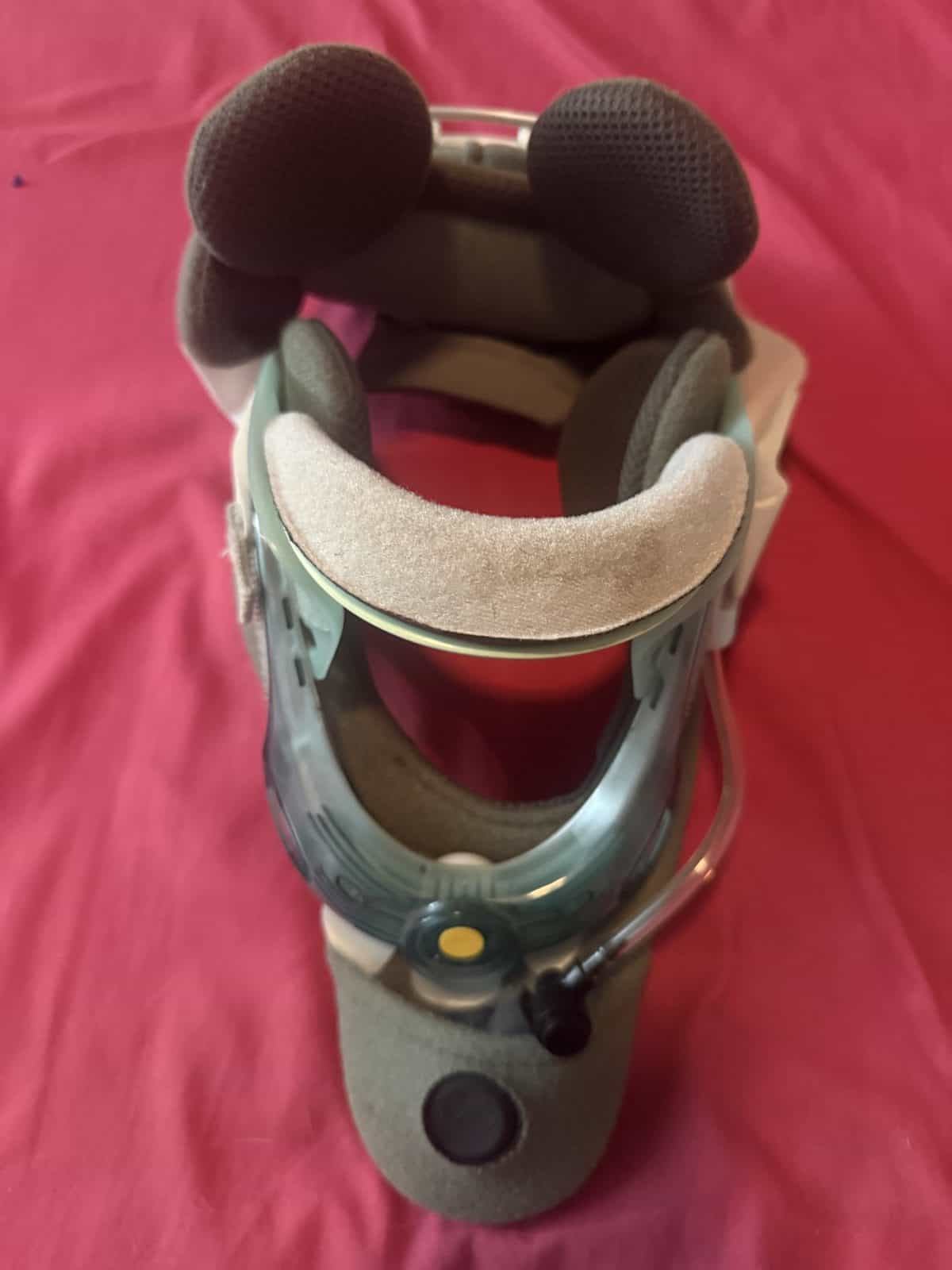
Pick the inflatable neck brace if you want adjustable, hands-free relief you can use sitting up at a desk, and pick the neck hammock if you prefer a fixed, gravity-assisted stretch during a few minutes of lying down. This inflatable neck brace vs neck hammock comparison breaks down how the two most popular at-home cervical traction tools actually differ, so you can match one to how you live. Both aim at the same idea that neck traction devices share: gently easing the pressure and tightness in a stiff neck. Neither is a medical treatment, and both work best alongside movement and posture habits.
Choose the inflatable neck brace for adjustable pressure and hands-free use you can wear while working or relaxing upright. Choose the neck hammock for a simple, low-cost, gravity-assisted stretch during a short lie-down session. The brace wins on control and convenience; the hammock wins on price and a deeper passive stretch.
Reader-supported through affiliate links at no cost to you. I deal with mild neck and back stiffness and use an inflatable neck brace myself, so the first-person notes are genuine. Health claims are kept conservative and grounded in the medical sources cited below, since neck pain is a see-a-professional topic, not a self-diagnosis one.
- Both are forms of at-home cervical traction, which gently creates space in the neck to ease pressure and relax muscles.
- The inflatable brace is worn upright and adjusts with a hand pump; the hammock anchors to a door and stretches you while you lie down.
- Cervical traction tends to give short-term relief and works best combined with exercise and posture work, not on its own.
- Talk to a healthcare provider before starting home traction, especially with any existing neck or spine condition.
How We Compared
We judged both tools on the factors that decide day-to-day use: how the stretch is applied, setup and convenience, control over the amount of force, portability, and comfort. We grounded the health context in medical sources rather than marketing. Cleveland Clinic describes cervical traction as lightly pulling on the head to create space between the neck’s vertebrae, easing pressure on nerves and helping muscles relax, and advises talking to a healthcare provider before using an at-home device. We treated both as comfort and stiffness-relief tools, not treatments, and weighted real usability over spec-sheet claims.
Inflatable Neck Brace vs Neck Hammock at a Glance
| Factor | Inflatable Neck Brace | Neck Hammock |
|---|---|---|
| How it works | Inflates around the neck to lift and support | Cradles the head and stretches with body weight |
| Position | Upright, hands-free | Lying down |
| Force control | Adjustable via hand pump | Fixed by your body weight and setup |
| Setup | Wrap and pump, no anchor needed | Anchor to a door or post |
| Portability | Deflates flat, very packable | Rolls up small |
| Typical session | Wear while sitting or resting | About 10 to 15 minutes |
| Price | Low to moderate | Usually low |
Inflatable Neck Brace, Pros and Cons
Pros
- Adjustable support: the hand pump lets you add or release pressure to taste.
- Hands-free and upright, so you can wear it while working, reading, or watching TV.
- No door or anchor needed, and it deflates flat for travel.
- Easy to use in short bursts through the day rather than one long session.
Cons
- The stretch is gentler and more about support than a deep pull.
- Over-inflating can feel uncomfortable, so it takes a little trial and error.
- Bulkier around the neck than a slim collar.
It fits people who want gentle, adjustable relief they can use upright during the day. It is a weaker fit for anyone chasing a deep, dedicated stretch.
Check Price on AmazonNeck Hammock, Pros and Cons
Pros
- Gravity-assisted stretch that many find deeper and more relaxing than a collar.
- Very low cost and about as simple as home traction gets.
- Rolls up small and travels easily.
- Encourages a set, screen-free rest period of about 10 to 15 minutes.
Cons
- You have to lie down and anchor it, so it is not something you use mid-task.
- Force is set by your body weight and the anchor point, with little fine control.
- Needs a sturdy door or post, which is not always available.
It fits people who want a cheap, deeper passive stretch and do not mind lying down for it. It is a weaker fit for anyone who needs relief while staying upright and busy.
Check Price on AmazonHead-to-Head: How the Stretch Works
The two tools apply traction in different directions. The neck hammock cradles the base of your skull and uses the weight of your head, pulling along the length of the spine while you lie down, which produces the longer, gravity-assisted stretch people describe as deeply relaxing. The inflatable brace instead sits around the neck and expands as you pump air in, lifting the head and creating space more by support than by a long pull. Both fit the general idea of cervical traction, which WebMD describes as easing pressure on nerves and helping neck muscles relax, with relief that tends to be short-term. For a deeper, dedicated stretch, the hammock wins. For gentle, supportive lift you can hold for longer, the brace wins.
Head-to-Head: Setup and Convenience
This is where the brace pulls ahead for everyday use. You wrap it on and pump, with nothing to anchor and no need to find a clear stretch of floor, so you can use it at a desk, on the couch, or in a chair without interrupting what you are doing. I keep mine within reach and add a little pressure whenever my neck starts to feel tight, which fits the way stiffness tends to creep in over a workday. The hammock asks more of you: find a solid door or post, set the anchor, lie down, and give it ten to fifteen minutes of your full attention. That ritual is part of its appeal for some people, but it is not something you do between emails. For fitting relief into a normal day, the inflatable brace wins.
Head-to-Head: Control and Adjustability
Control is the brace’s signature advantage. The hand pump lets you dial the pressure up when your neck can take more and bleed it off the moment it feels like too much, which makes it easy to stay in a comfortable range. That matters, because the point is gentle relief, not force. The neck hammock, by contrast, sets its pull through your body weight and the height of the anchor, so your main adjustments are how you position yourself and how far you scoot away from the door. It is effective but blunt, with little fine-tuning once you are set up. Anyone who wants to find and hold a precise, comfortable amount of stretch will prefer the adjustability of the inflatable brace, which wins this round clearly.
Which Fits Your Situation
| If this is you | Better choice |
|---|---|
| You want relief while working upright at a desk | Inflatable neck brace |
| You want a deep, relaxing stretch and will lie down for it | Neck hammock |
| You want to fine-tune the amount of pressure | Inflatable neck brace |
| You want the lowest-cost option | Neck hammock |
| You travel and cannot count on a sturdy door | Inflatable neck brace |
| You like a set, screen-free rest ritual | Neck hammock |
How to Choose Between Them
Start with when and where you want relief. If your neck tightens over a workday and you want to ease it without stopping, the hands-free, adjustable brace fits that rhythm. If your relief comes from carving out a few quiet minutes to lie down and let gravity do the work, the hammock suits you better. Budget can tip a close call toward the hammock, while a need for precise, gentle control tips it toward the brace. Whichever you choose, treat it as one part of a bigger picture with movement, posture, and professional guidance where needed, since traction alone rarely fixes the cause.
The Verdict
For most people who want flexible, everyday relief, the inflatable neck brace is the more practical pick, thanks to hands-free use and adjustable pressure you can apply upright and on the go. The neck hammock wins for anyone who wants the deepest, most relaxing passive stretch at the lowest price and does not mind lying down to get it. Neither is a cure, and cervical traction generally offers short-term relief that lasts longest when paired with exercise and posture work, so set expectations accordingly. If neck pain is severe, ongoing, or comes with numbness, weakness, or tingling into the arms, skip the self-treatment and see a doctor first.
Common Mistakes and Misconceptions
Treating It as a Cure
Both tools ease stiffness and tension, but the relief tends to be short-term. Lasting improvement comes from posture, strength, and movement, so use either device as a helper, not a fix. Our guide to posture correctors covers the daytime habit side.
Cranking Up the Force
More pull is not better. Gentle is the goal, and pushing the pressure or hanging longer to force results can leave you sorer. With the brace, add air slowly; with the hammock, ease into position rather than dropping your full weight at once.
Skipping the Professional Check
Cervical traction is not right for everyone, and certain neck and spine conditions call for caution. Talk to a healthcare provider before starting home traction, and stop if a session increases pain, numbness, or tingling rather than easing it.
Inflatable Neck Brace vs Neck Hammock FAQ
Which is better for neck pain, an inflatable brace or a neck hammock?
Neither is universally better. The inflatable brace suits adjustable, hands-free relief while upright, and the neck hammock suits a deeper, gravity-assisted stretch while lying down. Match the tool to when and how you want to use it, and treat both as short-term relief rather than a fix.
Does an inflatable neck brace actually work?
Many people find it eases stiffness and tension by lifting and supporting the neck. Cervical traction generally provides short-term relief, and results vary from person to person, so it works best combined with posture and movement rather than used alone.
How long should I use a neck hammock?
A typical cervical traction session runs about 10 to 15 minutes. Start with less time, see how your neck responds, and never push through pain. If a session makes symptoms worse, stop and check with a professional.
Is cervical traction safe to do at home?
It can be for many people, but it is not right for everyone. Cleveland Clinic advises talking to a healthcare provider before using an at-home cervical traction device, since certain conditions call for caution. A supervised trial first is common.
Can I use both a brace and a hammock?
Yes, many people do. A common pattern is the inflatable brace for adjustable daytime support and the neck hammock for a longer, relaxing stretch in the evening. Just keep total time reasonable and stop if either one increases discomfort.
When should I see a doctor instead?
See a doctor if neck pain is severe, does not improve, follows an injury, or comes with numbness, weakness, or tingling into the arms or hands. Those signs need a professional assessment before any home device.
