
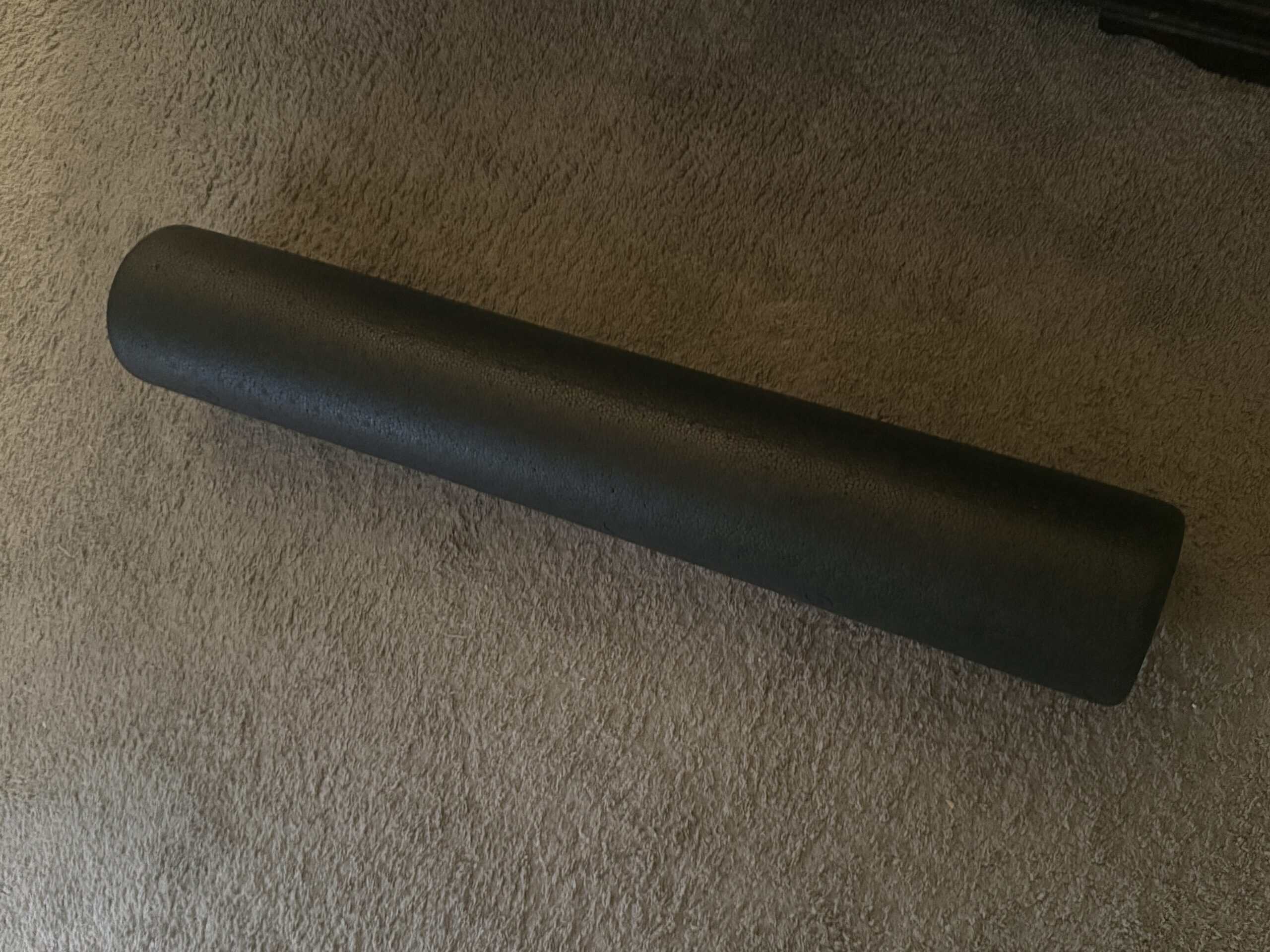
Longer than most people expect. A quality EVA or molded foam roller holds its shape for years of regular use, and the common failure is surface degradation rather than the roller collapsing.
Cheap open-cell foam is the exception. Those compress permanently within months and develop flat spots where they get used most, which is why the price difference between roller types matters more than it appears.
Quick Answer
Three to five years is realistic for a solid EVA roller with regular use, and longer with light use. Replace when it develops flat spots that do not recover, when the surface cracks enough to catch skin, or when it compresses noticeably under your weight compared with new.
Key Points
- Density determines lifespan more than anything else
- Cheap open-cell foam compresses permanently within months
- EVA and molded foam hold shape for years
- Surface cracking is cosmetic until it catches skin
- Flat spots that do not recover mean the foam is done
- Hollow-core rollers can fail structurally rather than gradually
Lifespan by Type
| Type | Typical lifespan | How it fails |
|---|---|---|
| Open-cell polyethylene | 6 months to 2 years | Permanent compression, flat spots |
| EVA foam | 3 to 5 years | Surface cracking, gradual softening |
| Molded high-density | 5 years or more | Very slow softening |
| Hollow core with foam shell | 3 to 5 years | Core cracking, shell separation |
| Textured or grid rollers | 3 to 5 years | Ridges flattening |
| Vibrating rollers | Battery limits it | Electronics before foam |
Why Density Matters Most
A roller’s job is resisting your bodyweight repeatedly. Foam that compresses easily under load also fails to recover from that load over time.
Cheap white or blue open-cell foam is soft enough that beginners find it comfortable, and that same softness is why it develops permanent dents where your legs and back go most often.
EVA and molded foams are denser, which makes them firmer to use and far more durable. The tradeoff is that they are less forgiving on sore muscles, covered in why foam rolling hurts.
That means the comfortable roller is usually the one that wears out, and the durable one is the one people find harsh at first.
Where Mine Is After Three Years
Mine is around three years old and it holds shape really well. No flat spots and no noticeable softening compared with when I got it.
There is a little cracking on the surface, and not much. It has not affected using it and I have not thought about replacing it because of it.
It is fine for me as it is. If it were flattening or catching on skin I would think differently, and neither is happening. It does not have a fixed home. It ends up in different spots depending on where I last used it, which has not caused any problem, though it does mean checking nothing heavy is sitting on it.
Worth noting that I use it inconsistently rather than daily, which is part of why three years has not produced much wear. Someone rolling every day would be further along than this.
My experience covers one smooth roller used irregularly over about three years, stored indoors without a fixed spot. It does not cover textured rollers, vibrating models, or daily heavy use.
What Wears It Out
Bodyweight and frequency
The obvious one. Heavier users and daily rollers compress foam faster than light irregular use.
Sun and heat
UV degrades foam and makes it brittle. A roller stored near a window or left in a car ages considerably faster than one in a closet.
Sweat and cleaning products
Sweat left on the surface breaks down foam over time, and harsh cleaners accelerate it. Wiping with mild soap and water is the appropriate maintenance.
Storage under weight
A roller stored with something heavy on it develops a flat spot without ever being used. Standing it upright or on a shelf avoids that entirely.
Checking Density Without a New One to Compare
Gradual softening is difficult to notice because you adapt as it happens, and there are a couple of checks that do not require a shop visit.
Press hard with both thumbs in the middle of the roller. A firm roller barely gives, and one you can noticeably dent has lost density.
Roll a quad and count how long the pressure takes to feel like anything. A soft roller needs far longer on a spot to produce the same sensation, which is a practical sign it is doing less.
Compare the ends against the middle. The ends see less contact, so if the middle feels noticeably softer than the ends, the difference is wear rather than how it was made.
Signs It Needs Replacing
Flat spots that do not recover after a day are the clearest signal. Press the area and see whether it springs back, since temporary compression is normal and permanent is not.
Noticeable softening compared with new means the density has dropped, which reduces the pressure it applies and makes it less effective for the same effort.
Surface cracking is cosmetic until the edges catch skin or hair, at which point it becomes an actual problem rather than an appearance one.
On hollow-core rollers, any cracking or flexing of the inner tube means replacing it immediately, since those can fail suddenly under load rather than gradually. Options sit in foam rollers compared.
Extending the Life
Store it out of sunlight and away from heat. That single habit does more than anything else, since UV is what makes foam brittle.
Wipe it after use if you sweat on it, using mild soap and water rather than alcohol or bleach, which degrade foam.
Rotate which section you use rather than always rolling the same part of the cylinder. Wear concentrates where contact happens most.
Store it standing or on a shelf rather than under other equipment, so nothing compresses it while it sits. General care sits in using a foam roller.
When Softening Is Actually Fine
A roller that has softened slightly is not automatically finished. Beginners often find a broken-in roller more comfortable than a new firm one.
What matters is whether it still applies enough pressure to do anything. A roller you can compress flat with your hands is not going to work a quad.
Some people deliberately keep a softer old roller for sore days and a firmer one for normal use, which extends the useful life of both.
Comparing against a new roller in a shop is the only reliable check, since gradual softening is easy to adapt to without noticing, and alternatives sit in foam roller against massage gun.
Still Good Against Done
Still good looks like a roller that springs back after use, applies pressure that feels the same as it used to, and has surface cracking that does not catch on skin. Three to five years of this is normal.
Done looks like permanent flat spots, foam you can compress flat by hand, cracking that catches, or any structural flex in a hollow core. The last one is a safety matter rather than a performance one, and replacement options sit in choosing a foam roller.
Related Reading
- rollers compared
- density and texture
- the comfort tradeoff
- frequency and wear
- the alternative
- smaller tools
Frequently Asked Questions
How long should a foam roller last?
Three to five years for a quality EVA or molded roller with regular use. Cheap open-cell foam compresses permanently within months to a couple of years.
How do I know when to replace it?
Flat spots that do not recover after a day, noticeable softening compared with new, or surface cracking that catches skin. Any structural flex in a hollow core means replacing it immediately.
Is surface cracking a problem?
Cosmetic until it catches skin or hair. Light cracking on an otherwise firm roller is normal wear and does not affect how it works.
Why did my cheap roller flatten so fast?
Open-cell foam is soft enough to be comfortable and soft enough to compress permanently under repeated bodyweight. Denser EVA or molded foam lasts far longer at the cost of being firmer.
Does storage affect lifespan?
Considerably. UV makes foam brittle, so a roller near a window or in a car ages faster. Storing something heavy on top creates flat spots without any use at all.
How should I clean it?
Mild soap and water, wiped after use if you sweat on it. Alcohol and bleach degrade foam, so they cause more damage than the sweat would.
Is a softer old roller still useful?
Often, since beginners frequently prefer a broken-in roller to a new firm one. It stops being useful when you can compress it flat by hand, at which point it applies too little pressure to do anything.
Recovery tools support sleep indirectly. pain relief and sleep quality covers the connection.
