
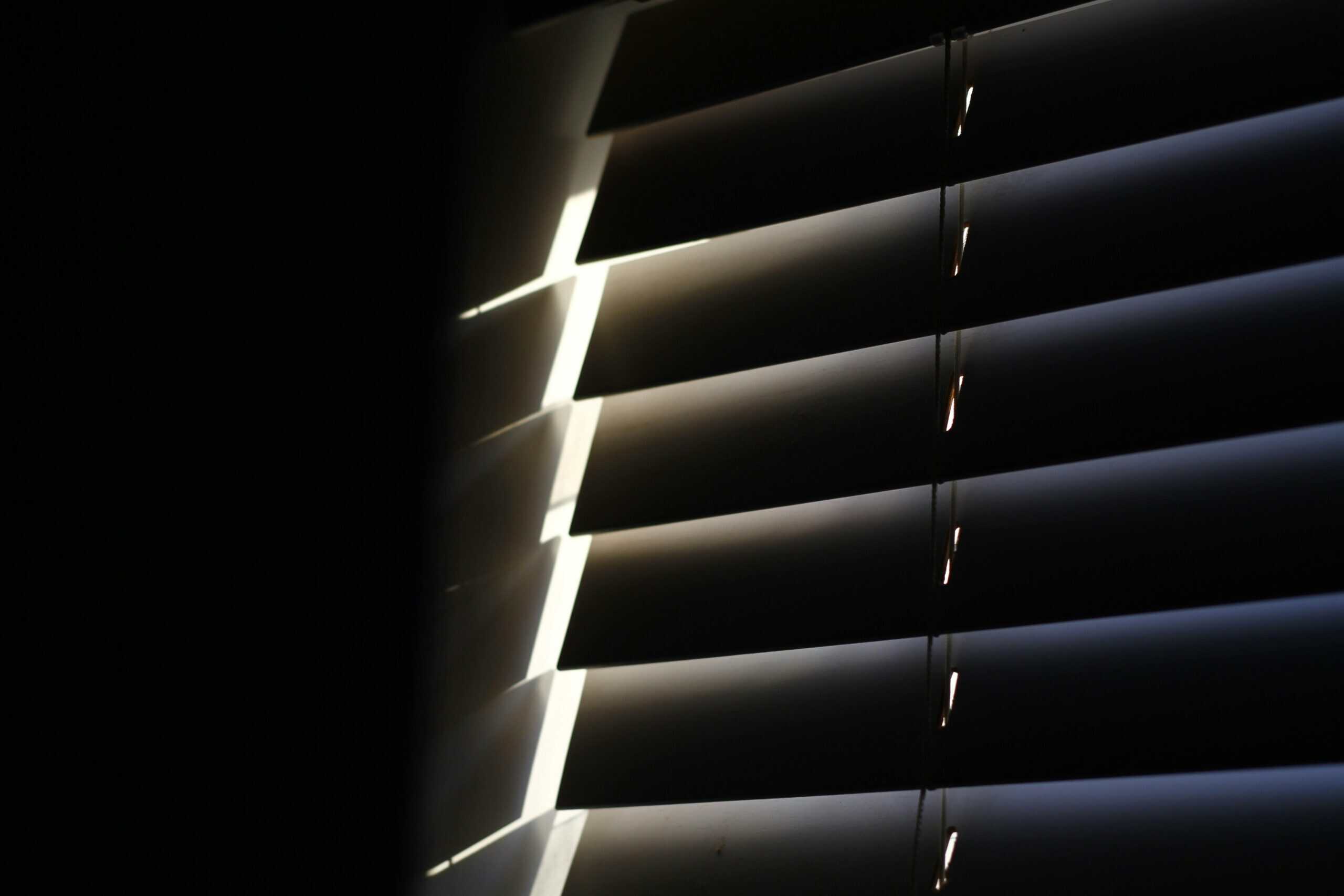
Sleeping in daylight is a different problem from sleeping at night, and it is the one blackout blinds are genuinely for. A blind that dims a room in the evening frequently fails completely against midday sun.
The deciding factor is almost never the fabric. It is whether light gets around the edges. Our note on blackout curtains versus blinds covers the wider choice.
Types at a Glance
| Type | Light control | Limitation |
|---|---|---|
| Side-channel roller | Best available | Costs more, permanent fitting |
| Standard roller | Good fabric, poor edges | Light down both sides |
| Cellular or honeycomb | Good, insulating | Edge gaps remain |
| Portable travel blackout | Suction or static cling | Adhesion fails over time |
| Blind plus curtain | Very good combined | Bulk, cost of both |
| Perfect-fit frame blinds | Excellent on uPVC | Only fits certain windows |
How We Picked
Selections are grouped by how they handle the edges of the window, since fabric opacity is comparable across products and edge sealing is where they differ.
Descriptions come from documented specifications rather than hands-on evaluation of every option.
1. A Side-Channel Blackout Roller, Best Overall
Why It Stands Out
Tracks fitted down both sides of the window capture the edges of the blind, which is where every other design leaks light.
This is the only common consumer option that approaches genuine darkness rather than heavy dimming.
Worth Knowing
Requires drilling into the window recess, which rules it out in many rentals.
Considerably more expensive than a plain roller. Our roundup of blackout curtains covers the non-permanent route.
This suits owned homes and night shift workers. Skip it if you cannot drill.
Check Price on Amazon2. A Cellular Blackout Blind, Best for Insulation
Why It Stands Out
The honeycomb structure traps air, which insulates against heat as well as blocking light, and daytime sleeping frequently means sleeping in a warming room.
Stacks compactly at the top of the window when raised.
Worth Knowing
Edge gaps remain unless fitted with side channels.
The cells collect dust and are awkward to clean. Our note on whether a cooling bedroom helps covers temperature.
This suits rooms that overheat in daylight. Skip it if total darkness is the only priority.
Check Price on Amazon3. A Portable Travel Blackout Blind, Best for Renters
Why It Stands Out
Suction cups or static cling attach without any fixing, which suits rentals, hotels, and anyone who moves frequently.
Packs down small enough to travel with, which matters for shift workers who sleep away from home.
Worth Knowing
Suction adhesion weakens with temperature changes and dust, and failures happen mid-sleep.
Sizing is approximate rather than fitted. Our roundup of travel sleep masks covers the backup.
This suits temporary situations. Skip it as a permanent solution.
Check Price on Amazon4. A Perfect-Fit Frame Blind, Best for uPVC Windows
Why It Stands Out
A frame clips into the rubber gasket around a uPVC window unit, holding the blind flush against the glass with no gap at the sides.
No drilling, which makes it viable in rentals where side channels are not.
Worth Knowing
Only works on uPVC or similarly constructed frames with the right gasket.
The blind sits within the window rather than covering the recess. Our note on short blackout curtains covers awkward windows.
This suits uPVC windows in rentals. Skip it for wooden or metal frames.
Check Price on Amazon5. A Standard Blackout Roller, Best Value
Why It Stands Out
The fabric itself blocks light effectively, and for a modest budget it takes a room from bright to substantially dim.
Simple mechanism with very little to go wrong, and easy to fit.
Worth Knowing
Light comes down both sides regardless of fabric quality, which is the design rather than a defect.
Inadequate on its own for genuine daytime sleeping. Our roundup of wrap-around curtain rods covers edge sealing.
This suits budget improvement. Skip it if you need real darkness.
Check Price on Amazon6. A Blind and Curtain Combination, Best Total Darkness
Why It Stands Out
A blind handles the glass and a curtain on a wrap-around track handles the recess edges, which covers both failure points.
Frequently cheaper than a fitted side-channel system and achievable in stages.
Worth Knowing
Two products to buy, fit, and clean.
Substantial bulk at the window. Our note on bedroom setups for shift workers covers the whole room.
This suits committed daytime sleepers. Skip it if the window is small or the room is tight.
Check Price on AmazonLight Leaks at the Edges, Not Through the Fabric
Blackout fabric is genuinely opaque, and a sample held up to a window blocks essentially everything.
Installed in a window, the same fabric leaves a gap down each side where the blind is narrower than the recess, plus gaps at top and bottom.
Daylight is bright enough that those gaps illuminate a room noticeably, which is why blinds that work fine at night fail in the morning.
That is why side channels are the single feature that separates products for daytime sleeping from products for evening dimming. Our note on sleeping better on night shift covers the same failure.
Where Light Gets In Besides the Window
A blind solves the largest source and rarely the only one, which is why people fit a good blind and still find the room too bright.
Doorways are the most common remaining gap, since a hallway light or daylight from another room comes under the door as a bright strip along the floor.
Standby indicators add up more than people expect. Televisions, chargers, smoke alarms, and routers each contribute a small amount, and a genuinely dark room makes each one obvious.
Skylights and roof windows are their own problem, since they receive direct sun and standard blinds rarely fit them properly.
Working through those after fitting a blind is worth doing before concluding the blind failed, since a good blind in a room with three other light sources still leaves a bright room. Our roundup of use red light in your bedroom covers the whole space.
Why Darkness Matters More for Day Sleep
Light is the primary signal setting the circadian rhythm, and daylight exposure suppresses the melatonin production associated with sleep.
A shift worker is trying to sleep at the exact time their body is receiving the strongest possible wake signal.
That makes darkness less of a comfort preference and more of a requirement, since the environment is working directly against the attempt.
Sleep during the day is generally reported as shorter and more fragmented than night sleep even under good conditions, which is why removing what can be removed matters. Our note on fixing your sleep schedule covers circadian timing.
Fitting Around a Sleep Schedule
One practical point rarely mentioned is that installing any of this happens while someone in the household is asleep at unusual hours.
Drilling for side channels is the noisiest option and it needs to happen on a day off rather than before a shift.
Clip-in and cling systems can go up in minutes, which is part of their appeal beyond the tenancy question.
Fitting the blind before a run of nights rather than partway through means the first day sleep happens in the finished room rather than a half-improved one.
It is a small consideration and it is the kind that gets overlooked until the drill comes out at two in the afternoon. Our note on cooling sheets for hot sleepers covers the routine.
Measuring for a Blackout Blind
Inside or outside the recess
Outside mount overlaps the wall and blocks more light, at the cost of appearance.
Add overlap on every side
An outside-mounted blind should extend well beyond the window on all four sides.
Measure in three places
Recesses are rarely square, and the narrowest measurement is the one that matters.
Account for handles and vents
Window furniture prevents a blind sitting flush, which creates its own gaps.
Noise Is the Other Half
Daytime sleeping faces two problems at once, and solving only the light one leaves the second untouched.
The world is awake while you are trying not to be, which means traffic, deliveries, gardening, construction, and neighbors all operate at full volume.
Blinds do essentially nothing for sound, and heavy curtains absorb a small amount without approaching what a shift worker needs.
Sound masking is generally the more practical route than sound blocking, since a white noise machine or fan raises the background level so individual noises stand out less.
Anyone investing in blackout blinds for shift work is usually better off budgeting for both at once, since a perfectly dark room that is still noisy solves half the problem. Our roundup of white noise machines covers the sound side.
What to Look For
Side channels or a frame fitting
The feature that actually determines darkness rather than dimness.
A fitting method your tenancy allows
Drilling is not always an option, and clip-in and cling systems exist for that reason.
Thermal properties for daytime
Sleeping through the warmest part of the day makes insulation relevant.
A cassette or top cover
Light escapes over the top of a roller without one.
Common Mistakes to Avoid
Judging by fabric alone
Every blackout fabric blocks light, and edge sealing is what differs.
Inside mount for daytime sleeping
It looks neater and leaves gaps on all four sides.
Relying on suction long term
Adhesion weakens with heat and dust, and it fails while you are asleep.
Ignoring the top of the blind
Light over the roller is a common leak and a cassette solves it.
Recommended Reading
See our roundup of blackout curtains for rooms that stay dim, our note on sleeping during the day, our roundup of sleep masks, and a roundup of weighted blankets anxiety.
Blackout Blinds FAQ
Why does my blackout blind still let light in?
The fabric is opaque and the edges are not. Light comes down both sides where the blind is narrower than the recess, and over the top of the roller.
What actually produces darkness?
Side channels that capture the edges of the blind. That single feature separates products for daytime sleeping from evening dimming.
Can I do this in a rental?
Perfect-fit frame blinds clip into uPVC gaskets without drilling. Portable suction blinds work temporarily but adhesion weakens over time.
Inside or outside mount?
Outside for daytime sleeping. It looks less neat and overlaps the wall, which is exactly what blocks the edge light.
Blind or curtain?
Both together works best. A blind covers the glass and a wrap-around curtain covers the recess edges the blind cannot.
Does insulation matter?
For daytime sleeping, yes. You are sleeping through the warmest part of the day, and cellular blinds trap air as well as blocking light.
How do I measure?
In three places, since recesses are rarely square. For outside mount, add generous overlap on all four sides rather than matching the window.
Is a sleep mask enough?
It helps and it does not darken the room. Light on skin and any gap at the nose still reaches you, so masks work best alongside blinds.
