
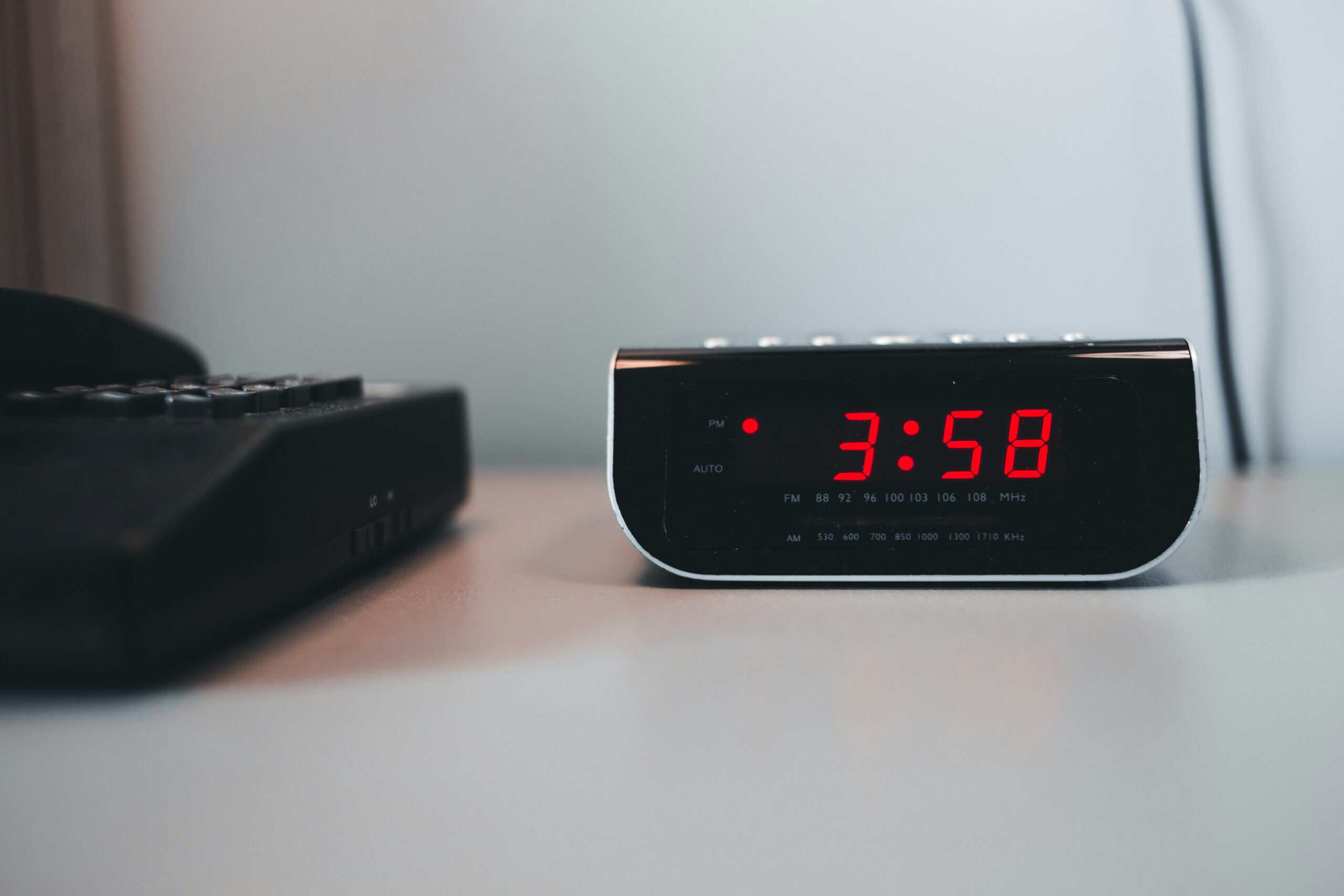
Sleeping through an alarm usually means the alarm arrived during deep sleep. Waking is far harder from the deepest stages, and if your alarm lands in the middle of one, your brain can process the sound and dismiss it without you ever surfacing. People genuinely turn alarms off with no memory of doing it.
The other common causes are sleep debt, alarm habituation, and a sound your brain has learned means nothing. Each is fixable, and together they explain most cases of an alarm that has stopped working.
Quick Answer
Move the alarm out of reach so you have to stand up. Change the sound, since a tone you have used for months stops registering. Then go to bed earlier, because sleep debt is what makes deep sleep hard to escape. If none of that works and you are exhausted despite adequate hours, that is worth investigating medically.
Key Points
- Waking from deep sleep is far harder than from lighter stages
- The brain can dismiss familiar sounds without waking you
- Sleep debt deepens sleep and makes waking harder
- Alarms within reach get silenced with no memory of it
- Changing the sound periodically restores its effect
- Persistent inability to wake despite enough sleep warrants assessment
Your Alarm Lands in Deep Sleep
Sleep cycles through stages roughly every ninety minutes, and the depth varies substantially across the night. Waking from light sleep is easy and often happens on its own. Waking from the deepest stage is hard, disorienting, and sometimes does not happen at all.
Early in the night deep sleep dominates, and it becomes less frequent as morning approaches. Someone who went to bed late is more likely to have their alarm land in a deep stage, since the whole cycle structure has shifted later.
Consistent bed and wake times help by letting the cycles settle into a predictable rhythm. An alarm at the same time every day starts arriving at the same point in the cycle, which makes waking progressively easier.
Your Brain Has Learned to Ignore the Sound
Habituation is the reason an alarm that worked for months stops working. A sound repeated daily with no consequence becomes background, and the sleeping brain filters background out rather than responding to it.
Changing the tone restores the effect, and it works better than raising the volume. Novelty is what gets attention rather than loudness, and a new sound cuts through where a familiar one at higher volume does not.
Rotating between two or three sounds every few weeks prevents habituation building up again. This is one of the more reliable fixes and one of the least used.
You Turn It Off Without Waking
An alarm within arm’s reach can be silenced by a brain that never surfaced. The action is automatic, memory does not form in deep sleep, and you wake later with no recollection of it.
Moving the phone or clock across the room forces you to stand up, and standing up is what actually breaks deep sleep. This is the single most effective change for anyone who reports the alarm “not going off.”
Snooze works against you for the same reason. Each snooze cycle drops you back toward deeper sleep, so the second and third alarms arrive at a worse moment than the first did. Getting up at the first alarm is easier than at the fourth. Short sleep needs a different setup, and our roundup of nap timers and alarms covers waking from twenty minutes rather than eight hours.
Sleep Debt Deepens Everything
Someone chronically short of sleep spends more of the night in deep sleep, because the body prioritizes it when recovering. That makes waking harder, which is the opposite of what most people expect.
The pattern compounds. Missing sleep makes waking harder, which encourages snoozing, which shortens sleep further. Breaking it requires going to bed earlier rather than trying harder in the morning.
Weekend catch-up sleep shifts the rhythm later, which makes Monday worse. Keeping wake times within about an hour across the week does more for waking than any alarm, and the underlying pattern sits in why oversleeping makes you tired. To see how deep the deficit runs, the sleep debt calculator totals the gap across a week of nights.
Alarm Types and What They Do
Wake-up lights
Brighten gradually before the alarm time, bringing you toward lighter sleep before any sound arrives. That makes the waking gentler and more reliable, and options sit in wake-up light alarm clocks.
Vibrating alarms
Under the pillow or worn on the wrist, useful for deaf and hard-of-hearing sleepers and for anyone sharing a bed with someone on a different schedule.
Loud and physical alarms
Clocks that roll away, require a puzzle, or produce a genuinely unpleasant sound. Effective and unpleasant, and options sit in alarm clocks for heavy sleepers.
Phone alarms
Convenient, and they keep the phone within reach, which is the core problem. If you use a phone alarm, put the phone somewhere that requires standing.
Smart alarms
Attempt to wake you during lighter sleep within a window. Accuracy varies considerably between devices, and the principle is sound even where the detection is imperfect.
Light Is a Stronger Signal Than Sound
Light exposure suppresses melatonin and shifts you toward alertness more powerfully than an alarm tone does. A dark bedroom at seven in the morning gives your body no reason to be awake.
Opening curtains immediately on waking helps, and a wake-up light does it before you are conscious enough to act. In winter, when the sun rises after your alarm, this matters considerably more.
The reverse is also worth checking. Blackout curtains that make a room genuinely dark are excellent for sleep and remove the natural waking cue, which is a trade rather than a free benefit.
What Tends to Help
Move the alarm out of reach so waking requires standing. Change the sound every few weeks. Stop using snooze, since each cycle makes the next alarm harder.
Go to bed earlier for a week and see whether waking gets easier, since sleep debt is the underlying cause more often than the alarm is. Keep wake times consistent across weekends. Get light into the room as early as possible.
If waking is hard despite seven or eight consistent hours, the problem is sleep quality rather than alarm strategy.
Heavy Sleeping Versus Something Else
Sleeping through an alarm occasionally, especially after a short night or a disrupted week, is ordinary. So is finding it harder in winter or after a schedule change.
Worth investigating looks like being unable to wake despite adequate hours night after night, feeling unrefreshed regardless of how long you sleep, falling asleep during the day, or a partner reporting loud snoring with pauses in breathing. Those patterns point at sleep quality rather than depth, and several treatable conditions present this way.
Related Reading
- alarms built to be hard to ignore
- light-based waking
- the opposite problem explained
- tiredness that does not match sleep
- consistent timing that makes waking easier
- darkness and the trade it involves
Frequently Asked Questions
Why do I sleep through my alarm?
Most often because the alarm arrives during deep sleep, where waking is hardest and the brain can dismiss familiar sounds without you surfacing. Sleep debt makes deep sleep more prevalent and the problem worse.
Does changing the alarm sound help?
Yes, and it works better than raising the volume. A tone repeated daily becomes background that the sleeping brain filters out, while a new sound gets attention. Rotating between a few every few weeks prevents it recurring.
Should I put my alarm across the room?
It is the single most effective change. Standing up is what breaks deep sleep, and an alarm within reach can be silenced automatically by a brain that never woke, leaving you with no memory of it.
Is snoozing bad?
It works against you. Each snooze drops you back toward deeper sleep, so the second and third alarms arrive at a worse point than the first. Getting up at the first alarm is easier than at the fourth.
Do wake-up lights work?
For many people, yes. Gradually brightening light brings you toward lighter sleep before any sound arrives, which makes the waking gentler. They help most in winter when the sun rises after your alarm.
Why is it harder to wake in winter?
Because light is one of the strongest waking signals, and a dark room at seven in the morning gives your body no cue to be awake. Blackout curtains improve sleep and remove that cue, which is a trade.
When should I see a doctor?
If you cannot wake despite seven or eight consistent hours, feel unrefreshed regardless of how long you sleep, fall asleep during the day, or a partner reports loud snoring with pauses in breathing. Those patterns need assessment rather than a louder alarm.
