
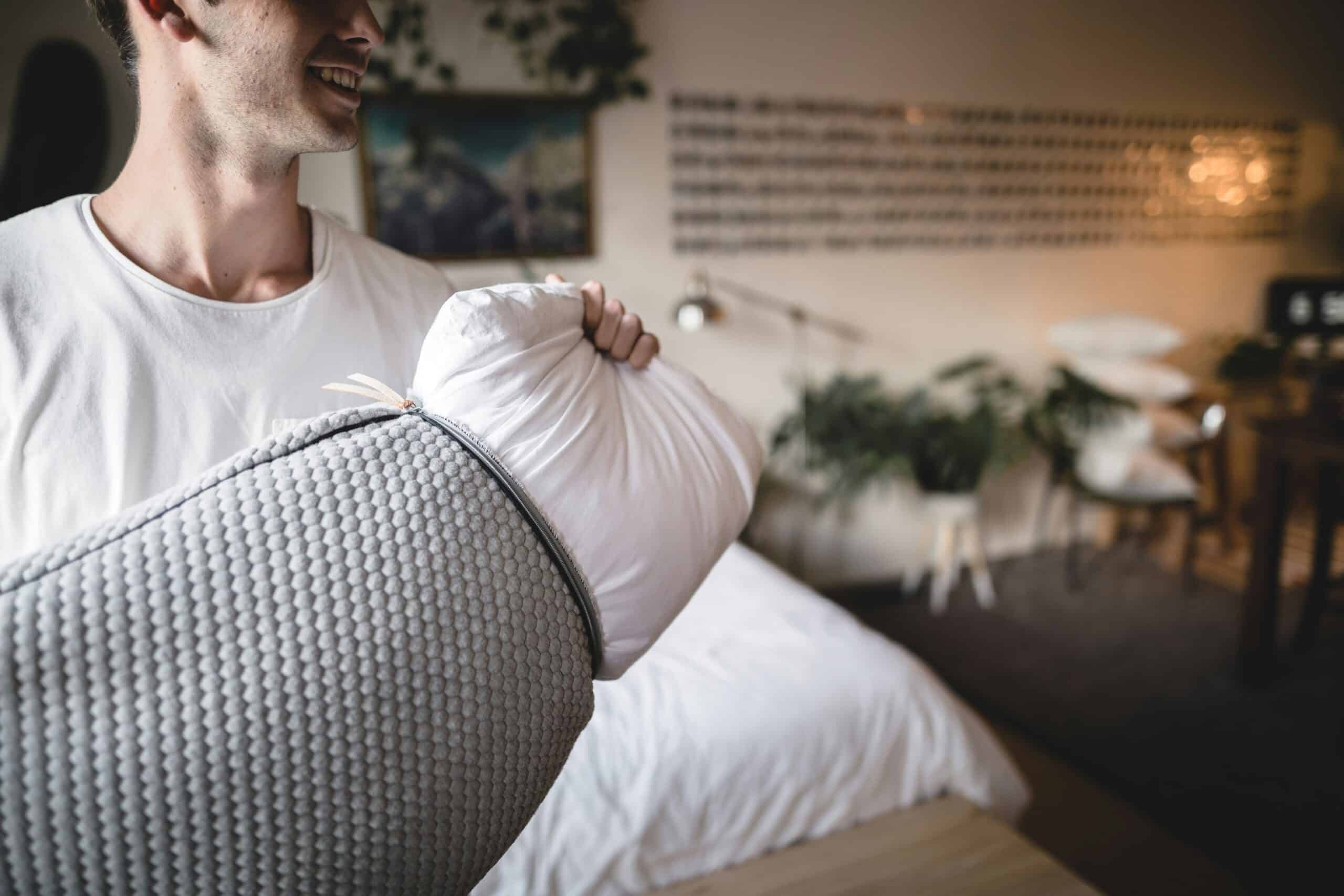
The best orthopedic pillow for recovery is the one that matches your specific situation, since a wedge, a knee pillow, a cervical contour, and a lumbar bolster each solve a different problem. Orthopedic recovery pillows hold a supportive shape that keeps you in a safe, comfortable position after surgery or injury, rather than collapsing the way soft pillows do. This guide sorts the best picks by recovery scenario so you can match the shape to your need.
I use a half-moon lumbar bolster at my own lower back, so I can speak to that one from real experience. For the recovery scenarios I have not lived, like post-surgical use, the picks are research-based and grounded in the sources cited below, and the most important rule throughout is to follow your surgeon’s position instructions.
Quick Verdict
Match the shape to the recovery. A wedge like the Brentwood Home Zuma suits upper-body recovery, the ComfiLife knee pillow suits hip and knee recovery, and a half-moon bolster like the Cushy Form suits lumbar support. Always confirm the position with your surgeon first. Our post-surgery sleep guide covers positioning week by week.
Why Trust This Guide
I use a half-moon lumbar bolster at home for my own lower back, so I know firsthand how that shape feels and holds up. The other picks are research-based, drawn from manufacturer specifications and independent guidance cited in Sources, since recovery scenarios like post-surgery support are not ones I have personally used. This guide is general information, not medical advice; follow your surgeon’s specific position restrictions.
Key Takeaways
- Match the pillow shape to your specific recovery scenario, not to generic orthopedic branding.
- Recovery pillows need dense foam that holds shape under body weight, not soft fill.
- Washable or removable covers matter, since recovery beds get used hard.
- Your surgeon’s position restrictions override any general recovery advice here.
- Replace orthopedic foam once it no longer holds its shape.
Disclosure: RestRight is reader-supported. As an Amazon Associate, we earn from qualifying purchases made through links on this page, at no extra cost to you.
How We Chose These Orthopedic Pillows
Selection focused on shape suitability for specific recovery scenarios, density firm enough to provide structural support rather than soft fill that compresses, washable or removable covers since recovery beds get dirty, durability across months of nightly use, and reasonable cost for a dedicated function. Standard comfort pillows marketed as orthopedic without a specific shape were excluded. For broader pillow context, see the best cervical pillows for ongoing neck support, the best knee pillows for ongoing hip alignment, and the best bed wedge pillows for general elevation.
Decision Matrix: Which Pillow for Which Recovery
| Recovery Scenario | Pillow Shape | Top Pick |
|---|---|---|
| Post-shoulder, chest, or abdominal surgery | Upper-body wedge | Brentwood Home Zuma |
| Hip replacement or knee surgery | Leg separator | ComfiLife Knee Pillow |
| Cervical fusion or neck procedures | Contoured cervical | EPABO Contour Memory Foam |
| Lower back surgery, sciatica recovery | Lumbar half-moon bolster | Cushy Form Half-Moon |
| Shoulder surgery, side-sleep stabilizing | Shoulder support | Cheer Collection Rotator Cuff |
| Leg elevation, swelling, circulation | Leg-elevation wedge | Lounge Doctor Leg Rest |
1. Brentwood Home Zuma Wedge: Best for Upper-Body Recovery
The Brentwood Home Zuma is a memory-foam wedge sized for post-surgical upper-body elevation, with the angle and length to support the chest, shoulders, and head without forcing the lower back into an uncomfortable bend. It holds its shape under weight, which a stack of soft pillows cannot do.
Best for
Recovery from shoulder, chest, or abdominal surgery, and anyone who may benefit from sleeping elevated, which can help with breathing comfort and reflux. The firm foam keeps the elevation consistent through the night.
Skip if
You need leg or lumbar support rather than upper-body elevation, or your surgeon has restricted an inclined position. A wedge is also bulky to travel with.
2. ComfiLife Orthopedic Knee Pillow: Best for Hip and Knee Recovery
The ComfiLife Orthopedic Knee Pillow uses a contoured shape with a strap that holds it between the knees through the night. That matters for hip replacement recovery, where keeping the legs apart helps protect the joint, and for knee surgery recovery, where alignment reduces strain. It is made of high-density memory foam that holds shape.
Best for
Hip replacement, knee surgery, and sciatica recovery for side sleepers, where keeping the legs separated supports hip and spine alignment. The strap keeps it in place as you move. See our guide to sleeping after knee replacement.
Skip if
You sleep on your back and need under-knee elevation instead, where a half-moon bolster fits better. Some find the contoured shape takes a few nights to adjust to.
3. EPABO Contour Memory Foam Pillow: Best for Cervical Recovery
The EPABO Contour is a dedicated cervical pillow with a cradle for the head and a raised contour that supports the natural neck curve. The shape suits post-cervical-procedure recovery, whiplash recovery, and chronic neck pain, holding the head and neck in alignment rather than letting them drop.
Best for
Neck procedure recovery, whiplash, and chronic neck pain where consistent cervical support helps. The contour keeps alignment for back and side sleepers. For ongoing neck issues, see our pillows for neck pain guide.
Skip if
Your recovery is below the neck, where this shape does nothing useful, or your surgeon specified a flat sleeping surface. The fixed contour is not adjustable.
4. Cushy Form Half-Moon Bolster: Best for Lumbar Recovery
The Cushy Form Half-Moon is a memory-foam bolster sized for lumbar support and leg elevation, useful for lower back conditions, sciatica flare recovery, and post-lumbar care. Placed at the lower back it supports the lumbar curve, and under the knees while back sleeping it flattens the lumbar curve to reduce pressure. It is multipurpose by design.
This is the shape I actually use. I keep a light half-moon bolster at my lower back, and I have had it for years. It has held up well, though the memory foam has gone a little softer than it used to be, which is normal for foam over time. When I get some lower-back tension, it genuinely helps to have that support there. I use mine for lumbar support specifically, not for knees or post-surgery, so treat those uses as research-based rather than something I have tested.
Best for
Lumbar support, sciatica flare recovery, and under-knee leg elevation for back sleepers, where the half-moon shape supports or relieves the lower back. It also pairs well with a heating pad for tension. See our lumbar support pillows guide for more.
Skip if
You need upper-body elevation or dedicated cervical support, which other shapes handle better. The softer foam suits comfort and mild support more than heavy structural needs.
5. Cheer Collection Rotator Cuff Pillow: Best for Shoulder Recovery
The Cheer Collection Rotator Cuff Pillow is a side-sleeper support cushion shaped to take pressure off the shoulder, designed for rotator cuff injury and post-shoulder-surgery comfort. It supports the arm and body so the recovering shoulder is not bearing weight, which is the main challenge for side sleepers in recovery.
Best for
Rotator cuff injury, shoulder surgery recovery, and side sleepers who need to keep weight off a healing shoulder. The shape stabilizes the upper body through the night. Pair with our shoulder pain pillows guide.
Skip if
Your recovery does not involve the shoulder or upper body, or your surgeon specified a particular arm position this does not accommodate. It is a specialized shape.
6. Lounge Doctor Elevating Leg Rest: Best for Leg Elevation
The Lounge Doctor Elevating Leg Rest is a foam leg-elevation wedge shaped to raise the legs at a supportive angle, useful for circulation, swelling, and recovery after leg, ankle, or foot procedures. Unlike a flat pillow stack, it holds the legs at a consistent height with the knees gently bent.
Best for
Post-surgical leg elevation, swelling, and circulation support, where keeping the legs raised at a steady angle helps. The firm wedge will not flatten overnight. See our leg-elevation wedge guide for alternatives.
Skip if
You need upper-body or lumbar support rather than leg elevation, or your surgeon advised against raising the legs. It is bulky to store and travel with.
Working With Your Surgeon’s Position Restrictions
Every recovery scenario has different position rules. Hip replacement patients are often told to avoid crossing the legs at the midline, which makes a knee pillow useful. Cardiac and chest surgery patients often need upper-body elevation for a period. Spine surgery restrictions vary by procedure and surgeon. Ask your surgeon for written position restrictions before discharge, and match the pillow to those specific instructions rather than to general recovery advice.
Post-surgical position compliance can meaningfully affect healing for many procedures, particularly orthopedic and cardiac surgeries, so the medical guidance comes first and the pillow simply makes the prescribed position easier to hold. For ongoing management as you transition out of recovery, see our guide on sleeping better with chronic pain.
Common Orthopedic Pillow Mistakes
Buying on Branding, Not Shape
A pillow labeled orthopedic does nothing if its shape does not match your need, since a cervical pillow will not help a hip recovery. Match the shape to the scenario first. The label is not the feature.
Choosing Foam That Collapses
Cheap foam that compresses under weight cannot provide structural support. Spending on dense foam now beats replacing a collapsed pillow mid-recovery. Firmness that holds is the point.
Stacking Soft Pillows Instead
Stacked standard pillows shift overnight and give inconsistent support, while a dedicated shape stays put. For recovery positions, consistency matters. Use the proper shape rather than improvising.
Overriding Surgeon Instructions
Orthopedic pillows enable certain positions; they do not override medical advice about which positions are safe for you. Follow the surgeon’s restrictions, and use the pillow within them. Never the other way around.
When should I see a doctor about this?
If pain wakes you regularly, persists for more than a few weeks, radiates into an arm or leg, or comes with numbness, tingling, or weakness. Those point toward causes that bedding cannot address and that benefit from being assessed early.
Recommended Reading
- lumbar support pillows
- pillows for sciatica
- pillows for hip pain
- back stretchers lumbar decompression
- mattresses for athletes and recovery
- cervical vs reading pillows
Frequently Asked Questions
How do I know if I need an orthopedic pillow?
If your sleep position is restricted by recent surgery, injury, or a chronic condition, an orthopedic pillow shaped for that scenario helps. General discomfort does not always require orthopedic shaping, and a standard quality pillow may suffice. When recovery is involved, follow your surgeon’s guidance first.
How long should I use the pillow during recovery?
Typically until your surgeon clears you to return to normal sleep positions, which can range from a few weeks to several months depending on the procedure. Some people keep using the pillow afterward if they find the support useful. Let your medical team set the timeline.
Are memory foam orthopedic pillows safe?
For most people yes, though new foam off-gasses for a few days, so unwrap and air out a new pillow before use. Those sensitive to foam may prefer latex or buckwheat alternatives. If you have specific health concerns, check with your doctor.
Which orthopedic pillow is best for lower back recovery?
A half-moon bolster like the Cushy Form is the common pick, used at the lower back for lumbar support or under the knees to flatten the lumbar curve. I use a half-moon bolster at my lower back and find it helps with tension. Match the placement to where your discomfort is.
Can I travel with orthopedic pillows?
Wedge and leg-elevation pillows are bulky and awkward to travel with, while knee pillows and cervical pillows pack more easily. Plan recovery travel around the shape you need. A compact bolster is the most portable of the supportive shapes.
How do I clean orthopedic pillows?
Most have removable, machine-washable covers, while the foam core should not be submerged; spot-clean it and let it air dry. Wash the cover regularly, since recovery bedding gets used hard. Check the care label for specifics.
Will an orthopedic pillow fix my pain?
An orthopedic pillow supports a better position, which can ease discomfort, but it is a support aid, not a treatment. Persistent or worsening pain should be evaluated by a doctor. Use the pillow as part of a plan, not a cure.
Can I use these pillows after recovery?
Yes, many people keep using a recovery pillow for ongoing comfort once they are cleared, especially knee, cervical, and lumbar shapes. Replace the foam once it stops holding its shape. Ongoing support is a fine reason to keep one in rotation.
Recommended Reading
See also our guides to buckwheat pillows.
This article is for general information and is not medical advice. Always follow your surgeon’s or doctor’s specific position restrictions and recovery instructions.
Related guides: how to store pillows.
Sources
- American Academy of Orthopaedic Surgeons. OrthoInfo patient resources. https://orthoinfo.aaos.org/
- National Institutes of Health. MedlinePlus health topics. https://medlineplus.gov/
