
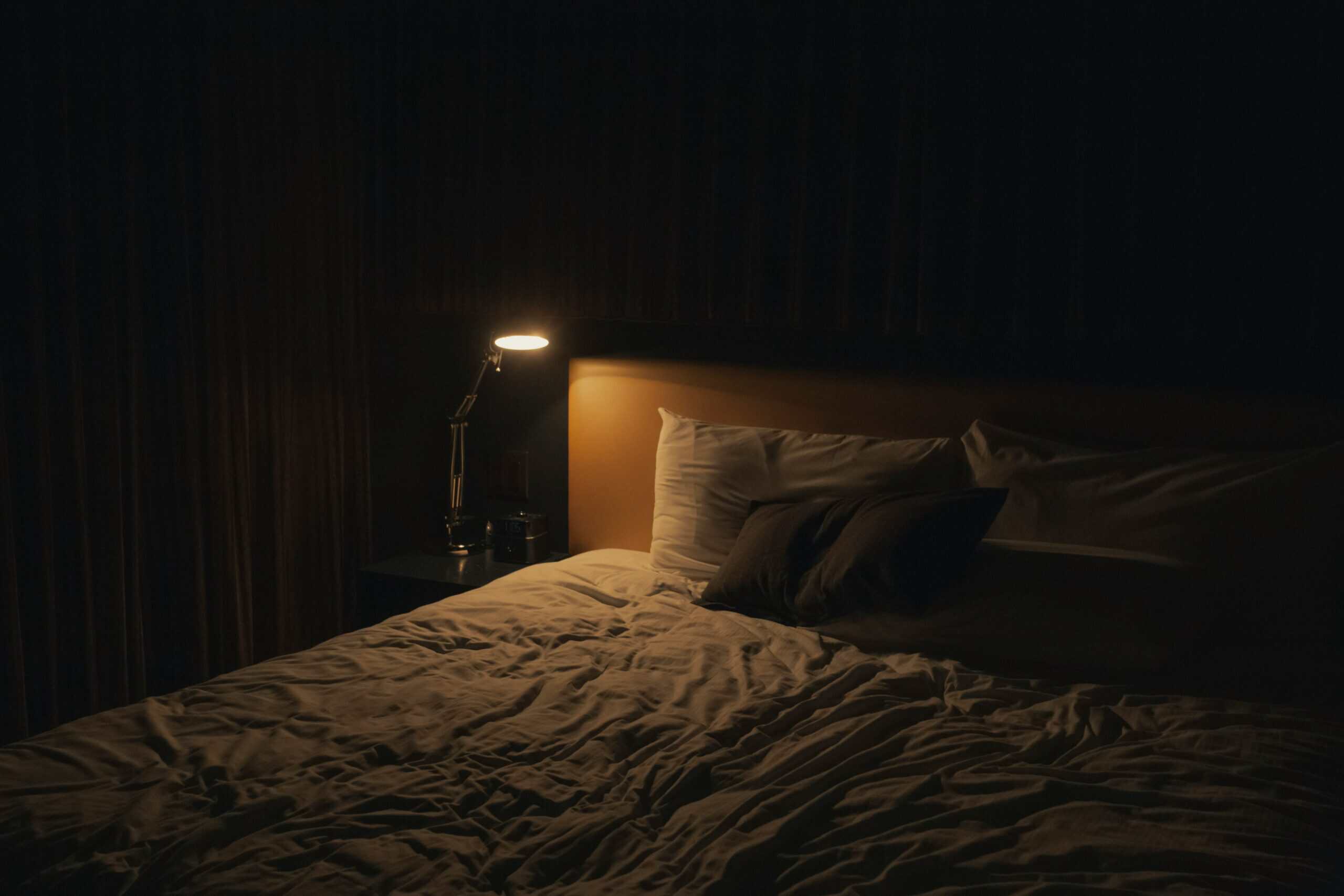
Most nightlights ruin the very thing they were supposed to support. Bright white or blue LED nightlights suppress melatonin in the same way smartphone screens do, which means a bathroom trip at 3 am turns into thirty minutes of staring at the ceiling. Red-light nightlights solve this: the longer-wavelength light has minimal effect on the circadian system, letting you see the path to the bathroom without wrecking the second half of your night.
This guide compares five nightlights selected specifically for sleep-friendly use. All five emit red, amber, or warm-low-Kelvin light rather than the blue-white standard of generic plug-in nightlights. Motion sensors and adjustable brightness appear where they help; both reduce light exposure to only the moments you actually need it.
As someone who deals with sleep issues, I want a nightlight that turns on when I need it and stays off when I do not. The picks below were selected with that minimal-disruption standard in mind.
Quick Verdict:
- Best for: middle-of-the-night bathroom trips, hallway and bathroom safety lighting, young children needing comfort lighting, parents checking on infants without waking them.
- Skip if: you sleep with full blackout already and have no need for any nighttime light; adding any light source disrupts the better default of total darkness.
Disclosure: RestRight is reader-supported. As an Amazon Associate, we earn from qualifying purchases made through links on this page, at no extra cost to you.
How We Chose These Sleep Nightlights
Selection focused on light color (red, amber, or warm low-Kelvin only; no bright white or blue), brightness control or motion activation (light exposure minimized to actual need), placement flexibility (plug-in, freestanding, or stick-on options), low energy draw (most run continuously), and reasonable cost for the dedicated function. Standard cool-white plug-in nightlights were excluded entirely; they undo the sleep benefit you are buying a nightlight to protect.
For broader bedroom environment context, see the best blackout curtains for sleep and best room-darkening shades. Nightlights work alongside total darkness during sleep; the goal is light when needed, darkness when not.
Decision Matrix: Which Nightlight for Which Use Case
| Use Case | Light Type | Top Pick |
|---|---|---|
| Hallway/bathroom motion lighting | Motion-activated red | VAVA Motion Sensor Light |
| Bedside lamp replacement | Adjustable red/amber | Mosaic Sleep Light |
| Child’s room comfort lighting | Adjustable warm dim | Hatch Rest Sound Machine |
| Plug-in basics, hallway/bathroom | Always-on amber LED | Maxxima Plug-In Amber |
| Battery, stick-anywhere placement | Motion-sensor warm | Brilliant Evolution Wireless |
1. VAVA Motion Sensor Night Light: Best Overall Pick
The VAVA combines red light (sleep-friendly), motion activation (light only when needed), and rechargeable battery (placement anywhere). The motion sensor triggers the light when you approach within several feet, and the light shuts off automatically after a brief period of no motion. The red wavelength means even if it activates during a bathroom trip, you fall back asleep faster than with white-light alternatives.
Magnetic backing lets it stick to metal surfaces or sit on a small base. USB-C charging eliminates battery replacement. The dimmer brightness suits bathroom and hallway use; for full-room lighting it is undersized but for the intended purpose (path-of-travel safety) it works well.
Best for
Bathroom trips, hallway lighting, anywhere you need motion-activated path lighting without wired installation. Versatile placement.
Skip if
You need bright room lighting; this is path-of-travel brightness, not room illumination.
Check Price on Amazon2. Mosaic Sleep Light: Best Bedside Replacement
The Mosaic functions as a low-disruption bedside lamp alternative. Adjustable across the red-amber spectrum with brightness controls; can be set to comfortable reading-before-bed levels then switched down to a faint glow for overnight use. The wide range of color temperature and brightness makes it adaptable across different sleep schedules and rooms.
Touch controls work without finding a switch in low light. The lamp doubles as a sleep-prep aid; reading before bed with a red-amber lamp keeps the eyes adapted to low light and supports the melatonin curve. See best bedside lamps for reading before bed for fuller reading-light context.
Best for
Bedroom bedside placement, sleepers who want adjustable brightness from reading-light down to overnight glow, partners who want different brightness needs from the same lamp.
Skip if
You only want hallway or bathroom safety light; this is sized for bedside use.
Check Price on Amazon3. Hatch Rest Sound Machine and Light: Best for Children
The Hatch Rest combines a sound machine, color-adjustable nightlight, and time-to-rise indicator. For children’s rooms, the adjustable warm-amber settings provide comfort lighting without the melatonin-disrupting blue spectrum of basic kids’ nightlights. The sound machine functions cover gradually building white noise that masks household disturbance during sleep.
App control lets parents adjust settings from outside the room. The time-to-rise color change (light turns green at a programmed wake time) helps children stay in bed until a set hour without parents getting up. Pairs with sound machines for sleep as a combined approach for children’s rooms.
Best for
Children’s rooms, infant rooms, parents wanting all-in-one sound and light control. App control simplifies parental adjustments.
Skip if
You only need light without sound or app features; cheaper dedicated nightlights cover the lighting function alone.
Check Price on Amazon📑 Recommended Read: Light exposure at night affects melatonin even at moderate brightness. Pairing red-light nightlights with morning bright-light exposure produces a stronger circadian rhythm than either alone. See the best wake-up light alarm clocks for the morning side of the circadian equation.
4. Maxxima Plug-In Amber Night Light: Best Budget Plug-In
The Maxxima is the budget-friendly always-on plug-in option. Amber LED (closer to red than the cool white of generic nightlights), automatic dusk-to-dawn sensor, and minimal energy draw. The fixed brightness is dim enough to not disrupt sleep but bright enough to navigate by. Sold in multi-packs for outfitting multiple hallways and bathrooms cheaply.
Build is basic. Not adjustable beyond on-off. For users who just want path-of-travel safety lighting without features, this is the no-fuss option that works.
Best for
Hallway plug-in placement, bathroom plug-in placement, budget multi-pack purchasing for a whole house, simple no-features use cases.
Skip if
You want brightness adjustment, motion control, or any features beyond on-off.
Check Price on Amazon5. Brilliant Evolution Wireless LED: Best Battery-Powered Anywhere Option
Brilliant Evolution wireless lights stick anywhere (adhesive backing or magnetic mount), run on batteries, and have motion sensors with auto-off. The warm color temperature is more sleep-friendly than typical white-LED wireless lights, though not as red as the VAVA. Useful for closets, dark corners, and rooms without convenient outlet placement.
Battery life is the trade-off; expect to replace AAs every few months under regular motion activation. Multi-packs cover a whole house cheaply. The lack of true red wavelength means more melatonin disruption than the VAVA if activated frequently overnight.
Best for
Closets, garages, basements, rooms without outlets, multi-pack whole-house deployment. Wireless placement flexibility is the value.
Skip if
The placement has an outlet; corded options give better light quality at lower running cost.
Check Price on AmazonWhy Red Light Matters for Sleep
Light affects sleep through the suprachiasmatic nucleus in the brain, which uses incoming light to set circadian timing. The eye’s ipRGC cells (intrinsically photosensitive retinal ganglion cells) are most sensitive to blue wavelengths around 460-480 nm. Red light at longer wavelengths (around 620 nm and above) activates these cells far less, which is why red light has minimal effect on melatonin.
The American Academy of Sleep Medicine has noted that evening light exposure (any visible light) can suppress melatonin to some degree, with blue-spectrum light producing the strongest suppression. For nighttime use scenarios where some light is needed, choosing red or amber wavelengths preserves more melatonin than white or blue.
For users with full blackout already in place, see best blackout curtains for sleep and pair the two interventions for a comprehensive light-management strategy.
Common Nightlight Mistakes
Using cool-white or daylight nightlights: defeats the entire sleep purpose. Cool-white LED nightlights are bright in the worst spectrum for sleep. Switch to red or amber. Setting nightlights too bright: even red light at high brightness affects sleep more than dim red light. Adjust to the minimum brightness that provides safe navigation. Placing nightlights where they shine directly into the bed: indirect lighting in hallways and bathrooms works; nightlights aimed at the bed disrupt sleep regardless of color. Using nightlights instead of treating underlying issues: if you wake frequently overnight needing to navigate, the wakings themselves may be the bigger issue. See how to fall asleep faster and consider whether sleep fragmentation has underlying causes.
Related: bedroom floor lamps.
Frequently Asked Questions
Are red lights really better than warm white for sleep?
Yes. Even warm white LEDs contain significant blue wavelengths that suppress melatonin. True red-spectrum light has the least effect on the circadian system. Amber is acceptable; true red is best for sleep preservation.
How bright should a sleep nightlight be?
The dimmest brightness that allows safe navigation. Generally well under 10 lumens for path-of-travel use. Many sleep-focused nightlights run a few lumens or less.
Can I use a regular nightlight with a red bulb?
Yes, replacing the bulb in a standard nightlight with a red LED bulb works. Just verify the bulb is true red wavelength (around 620 nm or longer) rather than red-tinted white.
Do nightlights affect children’s sleep differently?
Children are equally affected by blue light, sometimes more sensitive than adults. Use red, amber, or very warm dim white for children’s rooms. The Hatch Rest and similar adjustable lights work well here.
Will nightlights help with sleep schedule problems?
Indirectly. Reducing light disruption during sleep helps maintain sleep continuity. For broader schedule issues, see how to fix your sleep schedule.
What about candles?
Candlelight is in the warm spectrum, low brightness, and produces minimal melatonin suppression. Fire safety obviously matters; battery-powered LED candles approximate the warm spectrum without the fire risk.
When should I see a doctor?
If you wake frequently overnight, have difficulty falling back asleep, or have other persistent sleep issues, see a doctor or sleep specialist. Nightlights address the lighting piece of sleep; underlying sleep disorders need professional evaluation.
Recommended Reading
See also our guides to how to help seniors sleep better.
Related Reading
Explore more: smart bulbs.
