
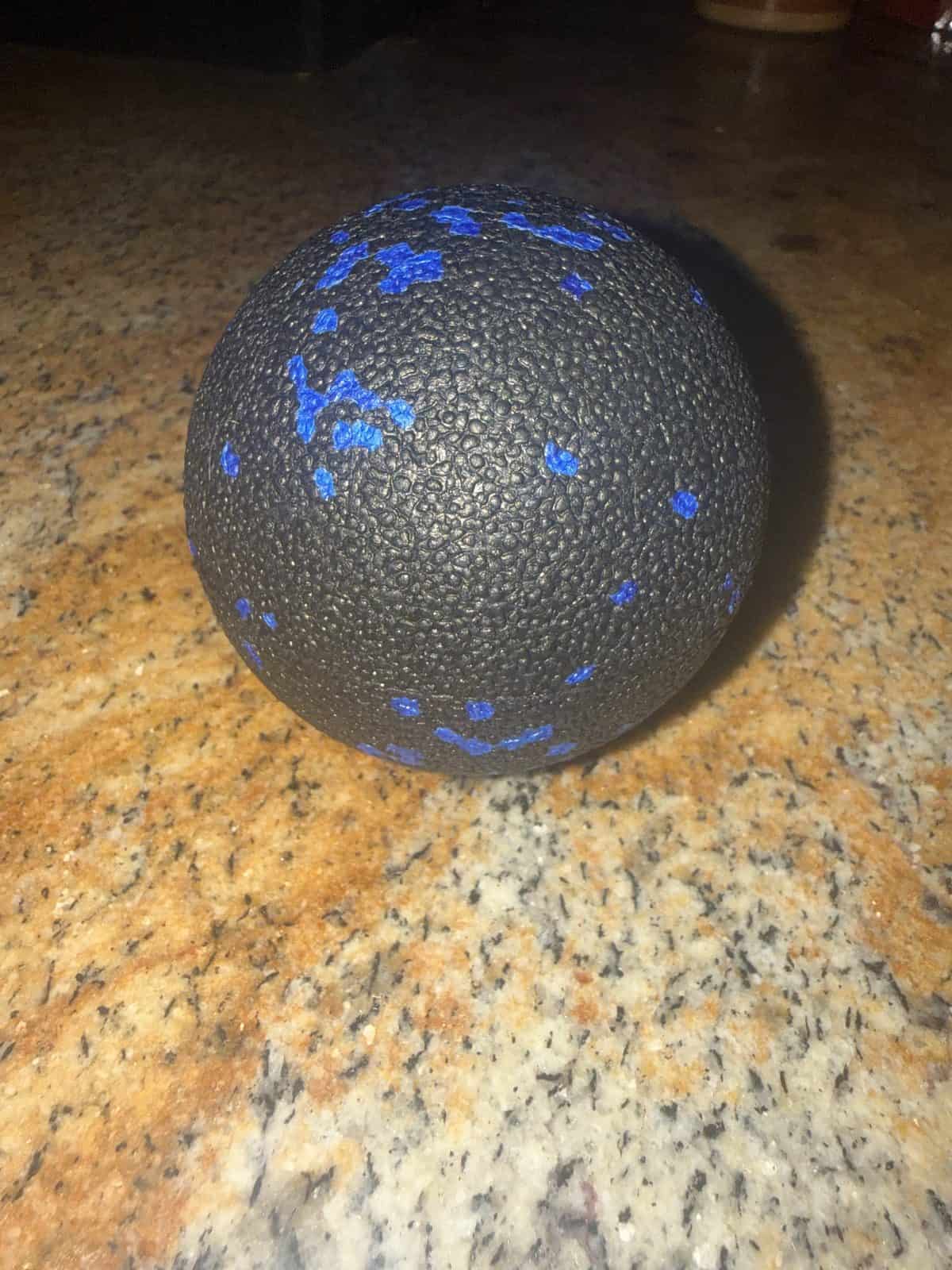
There is a specific knot, deep in a glute or under a tight shoulder blade, that a foam roller just glides over. That is the gap a massage ball fills: it concentrates pressure on one small spot and gets into places nothing broad can reach. The best massage balls for trigger point relief come down to firmness, shape, and grip, matched to the muscle you are chasing and how much pressure you can take. Five of the picks below are research-based, and the first is the firm ball I have leaned on for years.
Quick Verdict
A firm single ball, like the one I use, is the cheap and effective default for deep, full-body work and underfoot pressure. For gentler, textured easing, the TriggerPoint MobiPoint is the kinder entry point, and a peanut ball is the safe choice for the muscles along the spine.
Why Trust This Guide
I have used a firm massage ball for years to work tight spots all over, including underfoot, so I know what a quality ball feels like in regular use and what holds up. I can speak firsthand to the one I use; the other five are research-based, chosen for firmness, texture, shape, and grip, with sources cited. I keep my own experience and the researched picks clearly separate, and I treat self-massage as a comfort tool rather than a medical treatment. The overnight counterpart to rolling the arch is covered in our night splint guide.
Use With Care
Roll on muscle, not directly on the spine, joints, bones, or any injured or inflamed area. Keep pressure firm but tolerable, never sharp. Self-massage can ease tight muscles and feel good, but it is a comfort tool, not a treatment. If pain is severe, persistent, or comes with numbness, see a healthcare professional rather than working it harder.
Disclosure: RestRight is reader-supported. As an Amazon Associate, we earn from qualifying purchases made through links on this page, at no extra cost to you.
How We Picked the Best Massage Balls
We weighed firmness, surface texture, grip, size, and how well each ball reaches common knots. A massage ball is simple, so the right firmness and shape for your target muscles matter most. We favored balls that hold their shape and grip without sliding away mid-session, since a ball that skids is one you fight rather than use. We wrote about these in a practical, research-minded voice rather than promising they fix pain, because self-massage is a comfort tool that suits some people and not others. The right ball is the one you will actually use often. For broad muscle groups, pair it with one of our foam roller picks.
1. Firm Single Massage Ball: What I Use, Best for Deep Full-Body Work
This is the ball I actually reach for, a firm single massage ball, and it has earned its place over years of use. A firm single ball is the classic trigger-point tool: dense and unforgiving, it concentrates real pressure on one spot, which is what gets into a deep glute or a tight shoulder. The rubber lacrosse ball is the cheap classic of this category, and dense-foam versions like mine do the same job.
Why It Is My Pick
It is a quality, sturdy ball that has held up without wearing out or going soft, and it works the pressure points all over for me, from the back down to the feet. Standing and pressing into it underfoot is where I use it most, and it stays firm and planted while I do. That is firsthand experience with the ball I own; the five picks below are research-based rather than ones I have used.
Worth Knowing
Firmness this high can feel intense for sensitive or new users, since there is no texture or give to soften it, so start light against a wall before trying it on the floor. No brand is visible on mine, so I do not name it.
Get a firm single ball for deep, no-nonsense pressure and underfoot work. Skip it if you want gentle, easing pressure instead.
Check Price on Amazon2. TriggerPoint MobiPoint Textured Ball: Best for Easing In
The TriggerPoint MobiPoint adds a textured surface that spreads and varies the pressure, with raised points that feel less harsh than a smooth, dense ball. For easing into trigger-point work, the texture helps a lot.
Why It Stands Out
The raised texture distributes pressure so it feels gentler than a firm single ball, and it suits feet and smaller muscles especially well. For a beginner, it is the kinder starting point. The grip also keeps it planted underfoot.
Worth Knowing
It is less firm than a dense single ball, so deep knots may want more, and it costs more than a plain ball. The texture shines on feet and smaller muscles.
Choose the MobiPoint if a firm ball feels too intense. Skip it if you crave maximum deep pressure.
Check Price on Amazon3. Peanut Double Massage Ball: Best for the Spine
The peanut shape places two balls side by side with a channel between them, and that channel straddles the spine so you work the muscles alongside it safely. For the back and neck, the shape is purpose-built.
Why It Stands Out
The center channel brackets the spine so you press the muscles, not the bones, which makes it the safe pick for back and neck tension. For the muscles along the spine, the shape is hard to beat. It works the calves well too.
Worth Knowing
The fixed shape suits the spine and calves more than broad flat muscles, and firmness varies by brand, so check before buying. It is more specialized than a single ball.
Get the peanut for the muscles along the spine. Skip it if you mainly work flat areas like glutes.
Check Price on Amazon4. Spiky Massage Ball Set: Best for Gentle Foot Relief
Spiky balls use soft nubs for a gentler, more stimulating surface that suits feet, hands, and sensitive areas a hard ball overwhelms. For light, accessible self-massage, the spikes work well.
Why It Stands Out
The soft nubs deliver gentle stimulation rather than deep pressure, which suits feet, sore hands, and anyone new to self-massage. For light underfoot rolling at a desk, it fits. Sets often include a few firmness levels.
Worth Knowing
The give means they deliver shallower pressure and do not dig into deep knots. They are best for gentle, surface-level work.
Choose a spiky set for gentle foot and hand relief. Skip it if you need to reach deep muscle knots.
Check Price on Amazon5. Vibrating Massage Ball: Best Tech-Assisted Option
A vibrating ball adds pulsing motion to the pressure you apply, and the vibration can help tight muscles relax beyond static pressure alone. For a premium, tech-assisted option, it stands out.
Why It Stands Out
The pulsing motion adds a layer of relaxation on top of pressure, which some people find helps stubborn muscles let go. For a gadget-friendly recovery routine, it is the upgrade. It pairs well with post-workout rolling.
Worth Knowing
It needs charging and costs far more than a plain ball, and the added parts mean more that can fail over time. Vibration is a nice-to-have, not a requirement.
Get a vibrating ball if you want extra help relaxing and like gadgets. Skip it if you prefer simple and inexpensive.
Check Price on Amazon6. Cork Massage Ball: Best Grippy Firm Ball
A cork ball offers firm pressure with a grippy, natural surface, and the grip keeps it from sliding on skin or floor. For a firm ball with traction and an eco-friendly material, cork appeals.
Why It Stands Out
Cork delivers firm pressure with far better traction than a smooth ball, which helps on slick floors and against a wall. For firm work without the slide, it is the pick. The natural material is a bonus.
Worth Knowing
Cork is firm but a touch softer than a dense rubber ball, and it can wear over heavy long-term use. Quality varies between makers.
Choose cork for firm pressure with grip. Skip it if you want the absolute firmest option.
Check Price on AmazonMassage Balls at a Glance
| Ball | Feel | Best for |
|---|---|---|
| Firm single ball | Dense, intense | Deep full-body, underfoot (what I use) |
| TriggerPoint MobiPoint | Textured, gentler | Easing in, feet |
| Peanut double | Firm, channeled | Muscles along the spine |
| Spiky set | Soft nubs | Gentle foot and hand relief |
| Vibrating | Firm plus pulse | Tech-assisted recovery |
| Cork | Firm, grippy | Traction on slick floors |
How to Choose a Massage Ball
Firmness
Firmer balls dig deeper, while softer ones ease sensitive areas, so match firmness to your tolerance and target muscle. You can always add pressure by leaning in harder, but you cannot make a too-soft ball firmer. When unsure, a firmer ball used lightly is the more flexible choice.
Size
Smaller balls pinpoint precise knots, while larger ones cover broader muscle, so a small ball reaches the foot or shoulder and a bigger one the glutes. Pick the size for your main targets. A single firm ball, like mine, handles most full-body spots.
Shape
Single balls are the versatile default, while a peanut brackets the spine and spiky balls suit gentle work. Choose the shape around where your tightest spots live. The spine is the one area where shape really matters, since a peanut keeps pressure off the bone.
Grip and Surface
A ball that skids is one you fight, so favor texture or cork grip if you work on slick floors or against a wall. Smooth dense balls give the deepest pressure but slide most. Match the surface to where you will use it.
Massage Balls vs Foam Rollers
Massage Balls
A ball pinpoints a single knot with concentrated pressure and reaches spots a roller cannot, like the foot or deep glute. The trade-off is that it covers small areas at a time. For precise trigger points, it is the right tool.
Foam Rollers
A foam roller covers broad muscle groups quickly and evenly, suiting warm-ups and large areas like the back and legs, but it glides over precise trigger points. Many people warm up broadly with a roller, then switch to a ball for the stubborn spots. The two complement each other.
Common Massage Ball Mistakes to Avoid
Rolling on Bone or Joints
Pressing a hard ball on the spine, joints, or bony areas can bruise or irritate. Stay on muscle, and use a peanut shape to bracket the spine safely. The bones are never the target.
Going Too Hard Too Soon
Crushing a fresh knot with full body weight can leave you more sore, so start light against a wall and increase pressure gradually. Patience beats force here.
Holding One Spot Too Long
Camping on a single point for ages can overwork the tissue, so use short, controlled holds and move on rather than grinding away. Brief and repeated beats long and hard.
Ignoring Persistent Pain
Self-massage will not fix pain that keeps returning, and pushing harder is not the answer. If pain is severe, persistent, or comes with numbness, see a healthcare professional. Respect what your body is telling you.
Related Recovery Guides
- foam rollers
- massage guns
- foot massagers bedtime relaxation
- acupressure mats for sleep and pain relief
- back stretchers lumbar decompression
- mattresses for athletes and recovery
- neck massagers
- massage tables
- orthopedic pillows recovery
Related: muscle roller sticks.
Frequently Asked Questions
What are the best massage balls for trigger point relief?
A firm single ball, like the one I use, is the cheap, effective default for deep pressure and underfoot work, while a textured ball like the TriggerPoint MobiPoint eases beginners in. A peanut ball suits the spine, and spiky balls suit feet. The best one depends on firmness and target muscle.
How do massage balls work?
They concentrate pressure on a small spot, which can help tight muscle fibers and trigger points ease for many people. The focused pressure reaches knots a broad roller skips. Results vary, so treat it as a comfort tool rather than a treatment. Pressure is where most people get it wrong, and our guide on how hard to press a massage ball covers what the right intensity feels like.
Are massage balls safe to use?
For most people, yes, when you stay on muscle and off the spine, joints, and bones, and keep pressure firm but tolerable. Start gently and avoid any injured or inflamed area. Stop and see a professional if you feel sharp pain or numbness.
Can I use a massage ball on my feet?
Yes, feet are one of the best uses, and standing and pressing into a ball underfoot is how I use mine most. A textured or spiky ball feels gentler there, while a firm ball gives deeper pressure. Use a chair for balance and go easy at first.
How firm should a massage ball be?
Match firmness to your tolerance: firmer balls dig deeper into stubborn knots, while softer ones suit sensitive areas and beginners. A firmer ball used lightly is the more flexible choice, since you cannot make a soft ball firmer. Lean in gradually to add pressure.
Massage ball or foam roller?
Use a roller for broad muscle groups and warm-ups, and a ball for precise trigger points a roller glides over. Many people use both, rolling broadly first, then chasing stubborn spots with a ball. They complement each other rather than compete.
How long should I use a massage ball on one spot?
Keep to short, controlled holds and move on, rather than grinding on one point, which can overwork the tissue. A brief, repeated approach is gentler and more effective than camping on a knot. Stop if a spot turns sharply painful.
How do I keep a massage ball from sliding?
Choose a textured or cork surface for grip, work on a non-slip surface or against a wall, and a firm single ball, like mine, tends to stay planted underfoot. Smooth dense balls give the deepest pressure but slide the most. Match the surface to where you use it.
Related Reading
Explore more: grounding mats for sleep and pain relief, wfh back pain relief, and tens units for pain relief. Also explore: posture correctors.
