
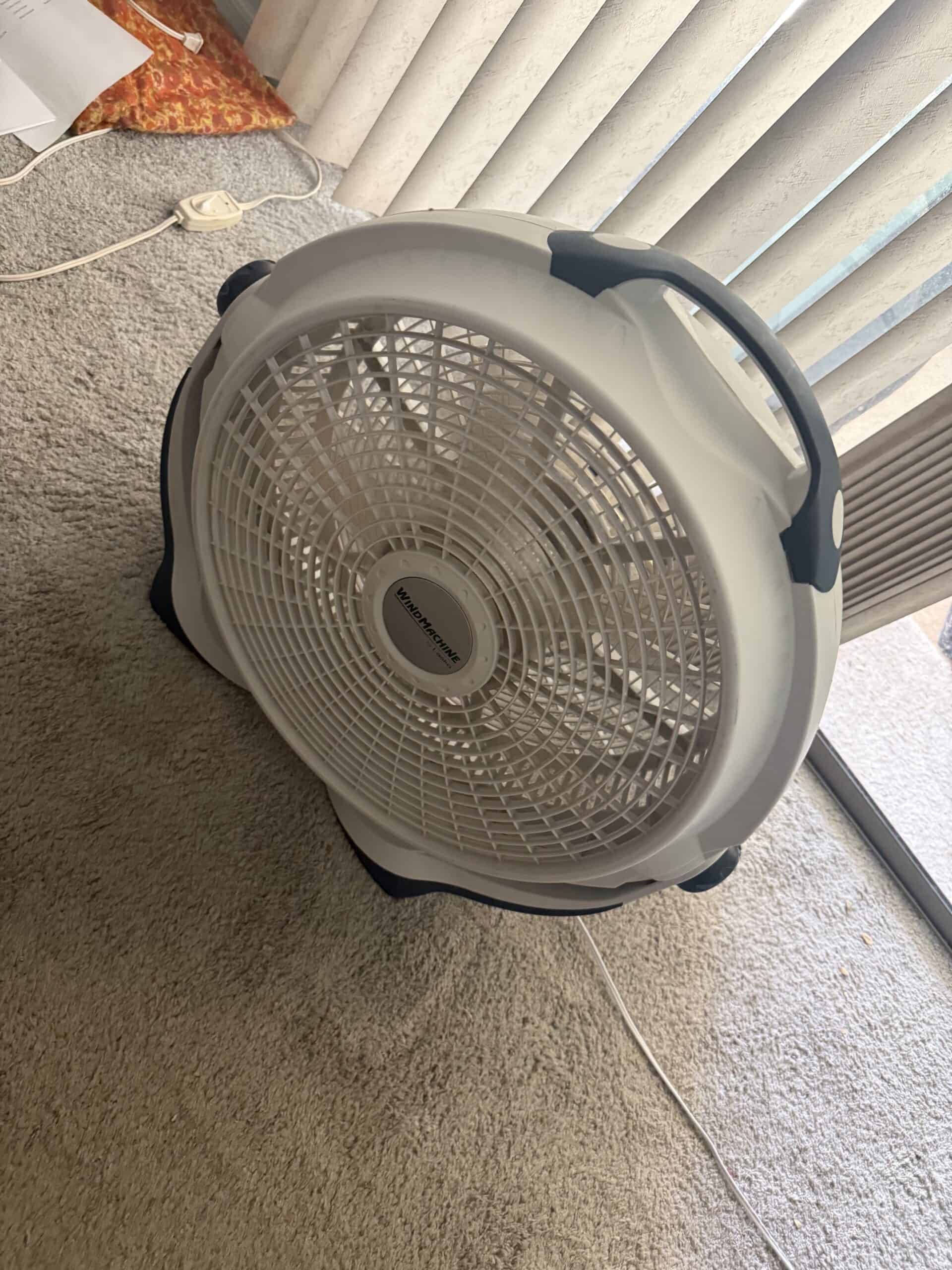
Fan roundups compete on decibels, and the assumption underneath is that less noise is always better. That is wrong for a lot of people. A fan producing steady low-level sound is doing something a silent one cannot.
Mine has been going about a year in the room I sleep in, alongside the ceiling fan. It is pretty quiet and not completely silent, and I like the noise it makes. That combination is what I would actually shop for. Our roundup of ceiling fans for bedrooms covers the other half of the setup.
Types at a Glance
| Type | Best for | Notes |
|---|---|---|
| Tower | Small spaces | Narrow footprint, oscillates |
| Pedestal | Directing air at a bed | Adjustable height |
| Box | Moving air cheaply | Loudest of the group |
| Air circulator | Whole-room mixing | Focused, strong airflow |
| Bladeless | Safety, easy cleaning | Costs considerably more |
| Floor-standing DC | Running all night | Quieter, lower power draw |
How We Picked
Selections are grouped by what each shape does in a bedroom rather than by airflow rating, since a fan that moves a lot of air pointed at the wrong place is not useful.
Descriptions come from documented specifications, alongside about a year with a floor fan running nightly in the room I sleep in.
Why Sound Matters Both Ways
The standard advice treats fan noise as a defect. In practice steady broadband sound masks irregular noise, which is why so many people sleep with a fan running even in winter.
A completely silent fan gives you the airflow and none of that masking, and people who were relying on the sound without realizing it find the quiet upgrade worse.
The distinction that matters is between steady noise and irregular noise. A consistent hum is easy to sleep through; a rattle, a click, or a motor whine that changes pitch is not.
Mine sits in the useful middle: quiet enough not to intrude, audible enough to be doing something. Our comparison of a white noise machine and a fan covers that overlap.
1. A DC Motor Floor Fan, Best Overall
Why It Stands Out
DC motors run quieter than AC ones at comparable airflow and use noticeably less power, which matters for something running eight hours a night.
They also offer finer speed control, so you can find a setting that moves enough air without becoming intrusive.
Worth Knowing
Costs more upfront than an equivalent AC fan.
Some produce a faint electronic whine at certain speeds, which is a different sound from air movement and more irritating. Our roundup of pillows for neck pain covers overnight use.
This suits nightly use. Skip it for occasional summer-only cooling.
2. A Tower Fan, Best for Small Rooms
Why It Stands Out
A narrow footprint matters when floor space is limited, and a tower fits beside furniture where a pedestal will not.
Oscillation across a wide arc distributes air rather than aiming a stream at one spot on the bed.
Worth Knowing
Generally moves less air than a pedestal or circulator at the same noise level.
The internal blades are harder to clean, and dust buildup makes them louder over time. Our roundup of quiet tower fans covers the category.
This suits tight bedrooms. Skip it if you need serious airflow.
3. A Pedestal Fan, Best for Aiming
Why It Stands Out
Adjustable height puts the airflow at bed level rather than at floor level, which is the difference between cooling you and cooling the carpet.
Tilt and oscillation together let you place air precisely, including bouncing it off a wall rather than directly onto the bed.
Worth Knowing
Takes more floor space and is easier to knock over than a tower.
Air directly on the face all night causes dry throat and eyes for some people. Our note on whether air blowing on you matters covers that.
This suits larger rooms. Skip it where floor space is tight.
4. An Air Circulator, Best for Whole-Room Airflow
Why It Stands Out
Designed to move air around a room rather than blow it at you, which suits anyone who wants circulation without a draft on the bed.
Pointed at a wall or ceiling, a circulator mixes the whole room, which is genuinely more effective than a fan aimed at a person.
Worth Knowing
Louder than a comparable tower at similar airflow, since the focused design produces more turbulence.
The sound is a stronger rush rather than a gentle hum. Our roundup of bedroom cooling setups covers combining units.
This suits stuffy rooms. Skip it if you want minimal sound.
5. A Bladeless Fan, Best for Cleaning
Why It Stands Out
No exposed blades means no cage to unscrew and no blades to wipe, which is the single most tedious part of owning a fan.
Safer around children and pets, and the airflow is smoother than a bladed fan produces.
Worth Knowing
Costs considerably more than a conventional fan of similar output.
Not silent despite the marketing, and the sound is a higher-pitched rush rather than a low hum. Our roundup of quiet fans covers the low-noise end.
This suits households with small children. Skip it on a budget.
6. A Box Fan, Best Value
Why It Stands Out
Cheap, moves a lot of air, and can sit in a window to exhaust warm air rather than just circulate it.
The sound is broadband and steady, which is exactly what people who sleep with a fan for the noise are after.
Worth Knowing
The loudest option here, and the noise is not subtle.
No oscillation and limited speed control on most models. Our roundup of window fans covers the exhaust use.
This suits anyone wanting airflow and sound cheaply. Skip it if noise bothers you at all.
What a Year With Mine Has Shown
The noise has been the unexpectedly good part. It is quiet enough that I do not notice it as noise, and present enough that the room does not feel silent, and I would not want the silent version.
The knob on the back is finnicky and comes off occasionally. It goes back on easily, so it is an annoyance rather than a fault, and it is the kind of thing no specification sheet tells you.
Running it alongside a ceiling fan works better than either alone, since the ceiling fan moves air around the room and the floor fan handles the space around the bed.
A year is not long enough to say anything about longevity, and it has given no sign of trouble beyond that knob. Our roundup of fan and AC combinations covers running several things together.
Placement Changes Everything
Where a floor fan sits matters as much as which one you bought, and it costs nothing to experiment with.
Pointed at a wall or into a corner, a fan mixes the room air without putting a draft on the bed, which is the setting most people end up preferring once they try it.
Positioned in a doorway it moves air between rooms, which helps considerably in a house where one room is warmer than the rest.
Aimed out of an open window it exhausts warm air rather than circulating it, which works best in the evening once outside is cooler than inside.
Directly at the bed is the obvious choice and the one that causes dry throat and eyes. It is worth trying the alternatives before assuming a fan has to blow at you to help. Our roundup of cooling mattress pads covers arranging several things together.
What to Look For
The right kind of quiet
Steady airflow sound is fine and frequently welcome. Rattles, clicks, and changing motor pitch are what actually disturb sleep.
Speed range
More steps means a better chance of finding the setting that moves enough air without becoming intrusive.
Controls you can find in the dark
Physical knobs and buttons beat touch panels at night, though a loose knob is its own problem.
Cleanable blades
Dust buildup makes any fan louder and less effective, and a cage that does not come apart means it never gets cleaned.
Running Costs
Fans are cheap to run compared with air conditioning, which is the practical argument for using one first.
A typical floor fan draws a small fraction of what a portable air conditioner does, so running a fan all night costs very little.
DC motor fans draw less again, which is where the higher purchase price starts paying back for something used nightly across a season.
The important limitation is that a fan does not lower room temperature. It moves air across skin, which speeds evaporation and makes you feel cooler without changing the thermometer.
That means a fan running in an empty room does nothing useful, and in genuinely high heat a fan alone stops being enough. Our note on what a portable AC costs to run overnight covers the comparison.
Common Mistakes to Avoid
Shopping on decibels alone
Quietest is not best if you have been sleeping with fan noise for years. Steady sound has value.
Aiming it at your face
Air across the face all night causes dry throat and eyes. Bouncing it off a wall works better.
Buying for peak airflow
Bedroom fans run on low most nights. How it behaves at the lowest useful setting matters more than maximum output.
Ignoring cleaning
A fan you cannot open will get dustier and louder every season. Our roundup of bedroom air purifiers covers the related dust question.
Recommended Reading
See our comparison of ceiling and floor fans, our roundup of bedroom air conditioners, our note on why a bed feels hot, and a roundup of cooling toppers, and cooling a bedroom for better sleep.
Floor Fan FAQ
Should I buy the quietest fan I can find?
Not necessarily. Steady fan noise masks irregular sound, and people who have slept with it for years often find a silent fan worse. Mine is quiet and not silent, and I prefer it that way.
Floor fan or ceiling fan?
They do different things. A ceiling fan circulates the whole room; a floor fan handles the space around the bed. Running both works better than either alone.
Which type is quietest?
DC motor fans generally, since they run slower for the same airflow. Some produce a faint electronic whine at certain speeds, which is more irritating than air noise.
Should the fan point at the bed?
Not directly at your face. Air across the face all night causes dry throat and eyes. Bouncing it off a wall gives circulation without the draft.
Do bladeless fans work better?
They are easier to clean and safer around children, and they are not silent and cost considerably more. The airflow is smoother rather than stronger.
What speed should I run it at?
Whatever moves enough air at the lowest setting you can. Bedroom fans spend most of their life on low, so behavior at that setting matters more than peak output.
How often should I clean it?
Whenever dust is visible on the blades or cage. Buildup makes any fan louder and less effective, and a fan that cannot be opened never gets cleaned.
Do the controls matter?
More than you would think. Physical controls you can find in the dark beat touch panels, though mine has a knob that comes off occasionally, which is its own small annoyance.
