
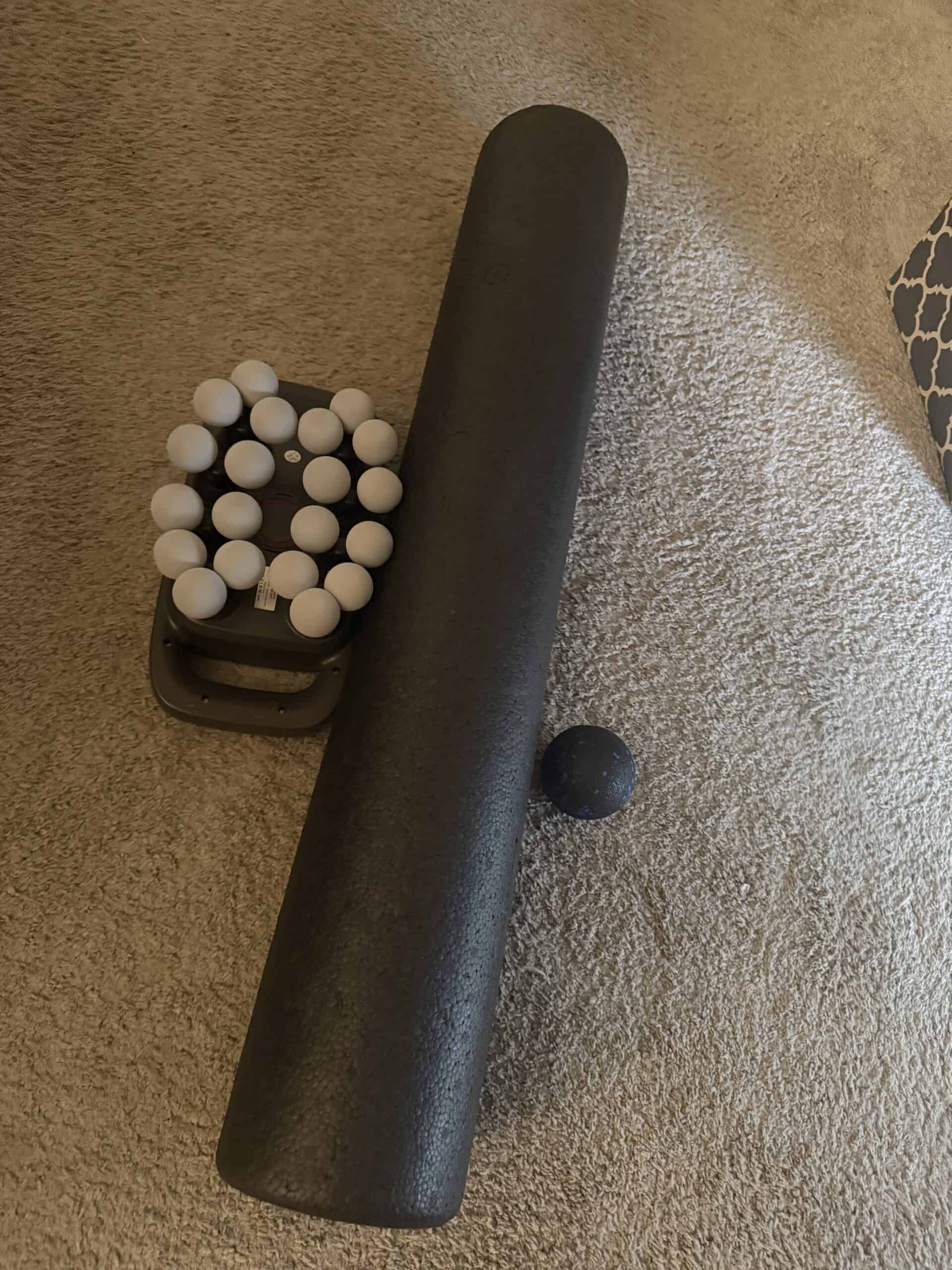
I keep three of these and they do genuinely different things. A foam roller for broad leg tension, a massage gun for something specific, a ball for something more specific still. Rolling out my legs before bed helps relieve the tension, and that is the whole claim. It does not make me sleep, it is not a sleep aid, and anyone selling it as one is overreaching.
Important
This is general information and my own experience, not medical advice. Persistent pain, numbness, or anything that is getting worse rather than better is worth raising with a doctor rather than rolling on.
Quick Verdict
A foam roller covers broad areas and is where to start. A massage gun handles a specific knot faster than a roller can. A ball gets into places neither reaches. Most people need one, and which one depends on whether your tension is spread out or concentrated.
Key Takeaways
- These relieve tension. They do not cause sleep. Different claim.
- Broad tension wants a roller, a specific knot wants a gun or a ball.
- Bigger and smooth beats textured and small for a first roller.
- You will use it in phases and that is normal.
- Pain that persists or worsens is a doctor question, not a gear question.
1. A Foam Roller, Best Overall
The one to buy first and the one I have used longest.
Mine is smooth and on the bigger side, and I have had it at least three years. The thing nobody tells you is that the best roller is the one that covers area, because the job is broad tension across a muscle rather than surgical work on a point. Timing matters more with electrical devices than with manual ones, and using a TENS unit before bed covers it.
Smooth over textured for a first one. The knobbly ones look serious and mostly deliver a more painful version of the same thing, which is a good way to own a roller you avoid. Bigger over shorter, because a short roller means constant repositioning and a long one lets you actually lie on it.
I use it on my legs before bed and it helps with tension there. That is a narrow claim and it is the accurate one. Foam rollers covers the range, choosing one covers density and size, how to use one the technique, and how often which is less than the internet implies.
Best for: legs, back, broad areas, anyone starting.
Skip if: your tension is one specific knot. That is a ball or a gun.
2. A Massage Gun, Best for Specific Spots
Where a roller is broad, this is targeted, and that difference is the entire reason to own both.
A roller needs your bodyweight and floor space and a certain amount of undignified manoeuvring. A gun needs a hand. You point it at the thing that is bothering you and it works on that spot, which is faster and considerably less effort for tension that is concentrated rather than spread.
It is also the one you can use sitting on the edge of the bed, which matters more than it sounds when the alternative is getting on the floor at eleven at night.
The tradeoff is noise, cost, and that it is a device with a battery, whereas a roller is a foam tube that lasts forever. Foam roller vs massage gun works through the comparison properly, and massage guns covers the range.
Best for: a specific knot, targeted relief, minimal effort.
Skip if: your tension is broad. A roller does that better and costs less.
3. A Massage Ball, Best for Precision
The smallest and cheapest, and it reaches places the other two cannot.
A roller is a cylinder, so it contacts along a line. A ball contacts a point, and that lets you put pressure into somewhere specific: a spot in the glute, under a foot, along the shoulder blade against a wall. Those are all places a roller either skips or cannot address.
The technique is different too. A roller is a rolling motion; a ball is mostly pressure and waiting, leaning into a spot and letting it release rather than working back and forth.
It costs almost nothing and takes no space, which makes it easy to own alongside a roller rather than instead of one. Massage balls covers the types.
Best for: glutes, feet, shoulder blades, anywhere a cylinder cannot reach.
Skip if: you want broad coverage. That is not what a point does.
4. A Stick Roller, Best for Control
Worth understanding as its own thing rather than a foam roller variant, because it is not one.
A foam roller uses your bodyweight, which means the pressure is whatever your body weighs and you modulate it awkwardly. A stick roller is handheld, so you decide the pressure directly with your arms, and you can use it sitting in a chair.
That is a real advantage for anyone who finds getting on the floor unappealing, and for calves in particular, where a stick is more precise than lying on a tube.
What you give up is the broad heavy pressure a roller delivers on a back or a quad, where bodyweight is doing useful work that arms cannot replicate. Muscle roller sticks covers the category, and back stretcher vs foam roller if your tension is spinal rather than muscular.
Best for: calves, chairs, controlling pressure precisely.
Skip if: you want the deep bodyweight pressure of a proper roller.
5. A Wall or a Floor, Best Free Option
Not a purchase, and it belongs on this list because it is genuinely half of what these tools do.
Stretching costs nothing and addresses the same tension. A ball against a wall does most of what a ball on the floor does with less effort. Lying on the floor with your legs up a wall is free and does more for tired legs than several things you can buy.
The reason this matters on a page recommending gear: if you are buying a roller because your legs feel tight at bedtime, some of that is a movement problem rather than an equipment problem, and no roller fixes sitting down for eleven hours.
Buy the tools if they help. Do not buy them instead of the free thing. Relaxing before bed covers the routine side, which does more for sleep than any of this.
Best for: everyone, before spending anything.
Skip if: nothing. Try this first.
6. A Heating Pad, Best Companion
Different mechanism, same problem, and it pairs with the rest rather than competing.
Rolling applies pressure. Heat increases blood flow and helps muscles relax, which is a different route to the same destination and it requires nothing of you. You lie there. For tension that is more ache than knot, that is often the better tool. For anyone already using a sauna, our sauna accessory picks cover what actually gets used. Our roundup of infrared sauna blankets covers the heat option that stores in a drawer.
It is also the one that works when you are too tired to work on yourself, which at bedtime is frequently the situation. A roller wants effort and a heating pad wants you to be still, and only one of those is realistic at eleven at night.
Heating pads covers the options, and back massagers if you want something that works on you rather than the other way round.
Best for: aches, stiffness, being too tired to roll.
Skip if: the issue is acute and recent, where heat may be the wrong call.
Recovery Tools at a Glance
| Tool | Coverage | Effort | Best for |
|---|---|---|---|
| Foam roller | Broad | Moderate | Legs, back, starting out |
| Massage gun | Targeted | Low | A specific knot |
| Massage ball | Point | Low | Glutes, feet, blades |
| Stick roller | Narrow | Low | Calves, sitting down |
| Heating pad | Broad | None | Aches, tiredness |
| Stretching | Broad | Moderate | Free. Try first. |
Broad or Specific Decides Everything
This is the only question that matters and it sorts the category cleanly.
If your tension is spread across a muscle, a whole quad or a hamstring or a back, you want bodyweight and area, which is a foam roller. Nothing else applies that much pressure across that much surface.
If your tension is one spot you could point to, a roller is a bad tool. You will roll over it repeatedly hoping to catch it, and a gun or a ball addresses it directly in a fraction of the time.
Most people have one or the other predominantly, and buying the wrong one is why some people conclude these do not work. I own all three because the tension moves around, but if I were buying one it would be the roller, because broad leg tension is what I actually get.
What This Does and Does Not Do
Worth being careful, because this category oversells constantly.
Rolling before bed relieves tension. It does not make you fall asleep, it does not fix insomnia, and the relaxing effect is real but modest. Cleveland Clinic’s write-up on foam rolling is measured about what it achieves, and being similarly measured is the honest position.
The mechanism people reach for is that a relaxed body sleeps better, which is true and vague. If you are lying awake with a busy head, a roller will not help and neither will a gun. Does foam rolling help you sleep takes that question seriously rather than answering it the way a gear page would like.
And persistent pain is different from tension. Something that keeps coming back, or is getting worse, or comes with numbness, is a doctor’s question. Mayo Clinic’s guidance on back pain covers when that line is worth taking seriously, and no tool on this page substitutes for it.
You Will Use It in Phases
Nobody says this, and it is the most predictable thing about owning one.
I go through phases with mine. Weeks where it happens every night, then stretches where it does not come out at all. Three years in, that is just the pattern, and I have stopped treating the gaps as a failure of discipline.
That matters for buying, because the mental model being sold is a daily ritual you will maintain forever, and the reality is a tool you reach for when your legs feel like it. That is fine. A roller that gets used in bursts for years is a good purchase.
Which also argues for buying cheap and simple rather than the elaborate version. A basic smooth roller does not care that you ignored it for a month. How often to foam roll covers the honest answer to a question people expect a schedule for.
When should I see a doctor about this?
If pain wakes you regularly, persists for more than a few weeks, radiates into an arm or leg, or comes with numbness, tingling, or weakness. Those point toward causes that bedding cannot address and that benefit from being assessed early.
Recommended Reading
See choosing a foam roller, roller vs massage gun, and does foam rolling help you sleep, and using a foam roller before bed. It also helps to understand warming a stiff neck with a heat wrap.
Bedtime Recovery FAQ
What recovery tool should I buy first?
A foam roller, unless your tension is one specific spot. It covers broad areas using your bodyweight, which nothing else does as well, and it is cheap and lasts indefinitely. Smooth rather than textured, and bigger rather than shorter.
Does foam rolling before bed help you sleep?
It relieves tension, which is a narrower claim than helping you sleep. I roll my legs before bed and it helps with the tension there and nothing more. If you are lying awake with a busy head, this is not the tool, and treating it as a sleep aid is overreaching.
Foam roller or massage gun?
Broad or specific. A roller uses bodyweight across a whole muscle, which a gun cannot replicate. A gun points at one spot and works it directly, which a roller does clumsily at best. Most people have predominantly one kind of tension, and buying the wrong tool is why some conclude these do not work.
Is a textured roller better?
Not for a first one. The knobbly ones mostly deliver a more painful version of the same thing, and a roller you avoid does nothing. Smooth and large is the better starting point, because coverage is the job.
What does a massage ball do that a roller cannot?
Reach a point. A roller is a cylinder and contacts along a line, so it skips places like the glute, the foot, or between the shoulder blades. A ball puts pressure into one spot and you lean and wait rather than roll back and forth.
How often should I use these?
Less often than the internet implies, and in practice you will use them in phases. I have had my roller three years and go through stretches of every night and stretches of not at all. That is the normal pattern rather than a discipline problem.
Can I skip all this and just stretch?
Often, yes, and it is worth trying first. Stretching is free and addresses the same tension. If your legs are tight because you sat down for eleven hours, that is a movement problem and no roller fixes it.
When is tension actually a medical problem?
When it persists, worsens, or comes with numbness. Tension that eases with rolling and comes back after a long day is ordinary. Pain that keeps returning regardless, or is getting worse, is worth a doctor rather than more equipment. That line is worth respecting early rather than late.
For the bigger picture, see the complete guide to easing pain for better sleep.
Recommended Reading
- eye massagers for screen-tired eyes
- calf massagers for tired legs
- vibration plates for low-impact movement
Related: sauna session be before bed.
Tension work is most useful as a nightly step at the same point each evening. Fitting it into a bedtime routine covers the placement.
Sources
- American Academy of Orthopaedic Surgeons. OrthoInfo patient resources. https://orthoinfo.aaos.org/
- National Institutes of Health. MedlinePlus health topics. https://medlineplus.gov/
