
For the foundational guidance behind these picks, see the comprehensive bedroom setup buyer's guide.
The best bedside reading lamp for most people is the TaoTronics LED, an adjustable lamp with warm color options, low-end dimming, and a folding arm that puts light on the page instead of the whole room. A good bedside reading lamp gives warm, dimmable, directional light that lets you read without flooding the room or undermining wind-down. The right one depends on how you read, whether a partner sleeps beside you, and how much nightstand space you have. I have used a bedside lamp for years, so I will fold that in alongside six picks worth your money.
Quick Verdict
The TaoTronics LED is the best all-around reading lamp, warm-adjustable and dimmable with a folding arm. For serious nightly readers, the BenQ E-Reading lamp spreads even, glare-free light. For couples, the Glocusent clip-on book light keeps light on the page and off your sleeping partner.
Why Trust This Guide
I have used a bedside lamp on my own nightstand for years, so I know firsthand what matters in daily use: brightness, reliability, and easy switching. My lamp is a traditional table lamp rather than a task reading lamp, so I have not personally tested the reading-optimized models below; those picks are based on color temperature, dimming range, light placement, and footprint, with sources cited. I keep my own experience and the researched picks clearly separate.
Key Takeaways
- Warm light around 2700K to 3000K suits evening reading; cool daylight tones work against wind-down.
- Low-end dimming matters more than maximum brightness for late-evening reading.
- Directional light on the page beats omnidirectional light that floods the room.
- Couples benefit from clip-on book lights that keep light off a sleeping partner.
- Match the lamp height and footprint to your nightstand and bed.
Disclosure: RestRight is reader-supported. As an Amazon Associate, we earn from qualifying purchases made through links on this page, at no extra cost to you.
What I Use
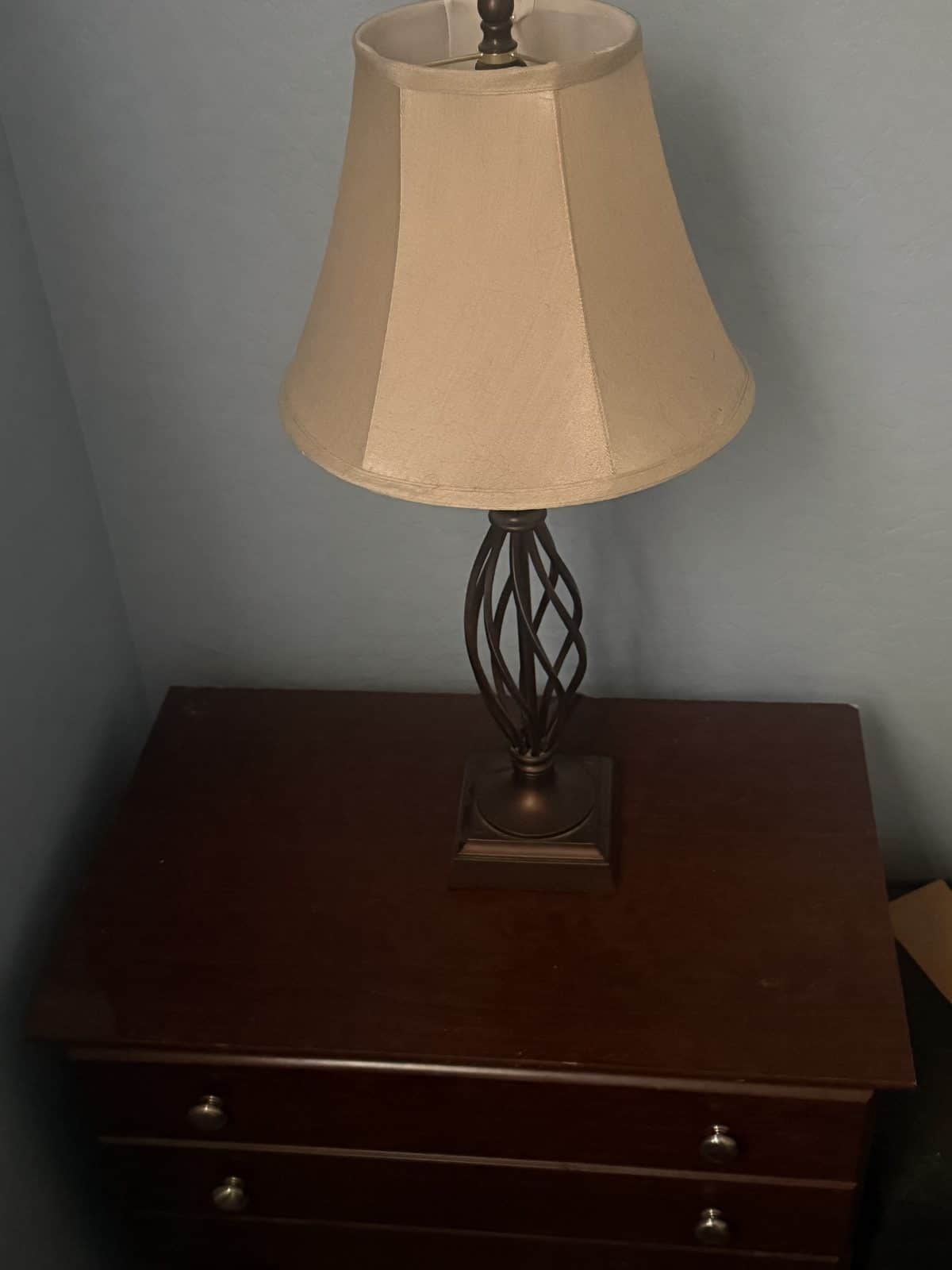
The lamp on my nightstand is a traditional table lamp with a fabric shade, and it has been there for years. It is bright, the design is nice, and in all that time it has never given me a single issue. It is the dependable, good-looking kind of bedside lamp that just works.
One thing I like about my setup: the lamp is plugged into a switch-controlled outlet, so it turns on and off with the room’s wall switch instead of reaching for a knob. If you want that kind of automatic control without rewiring, a smart bulb or plug gets you there, which is what the Philips Hue pick below is about. Being honest, though, my lamp is an ambient table lamp, not a task reading lamp; it lights the room beautifully but does not put focused light on a page the way the adjustable picks below do. For dedicated evening reading, those are the better tools, and that is where this guide focuses.
How We Chose These Bedside Reading Lamps
Four criteria drove the picks. First, a warm color temperature option, since lamps that reach 2700K or lower suit evening use while cool 5000K and up undermines wind-down. Second, a dimming range that goes genuinely low, because the minimum brightness matters more than the maximum when the room is dark. Third, focused light placement, since adjustable necks and directional shades put light on the page rather than flooding the room. Fourth, a bedside-appropriate footprint, including clip-on and wall-friendly options for tight nightstands. For the broader role of evening light, see our guide on creating a bedtime routine.
1. TaoTronics LED Desk Lamp: Best All-Around
The TaoTronics is a desk lamp by name but a strong bedside lamp by function. It offers five color temperatures from warm yellow to cool white, seven brightness levels including a usable low setting, a folding arm that aims light onto the page, a USB charging port, and a one-hour auto-off timer. That flexibility lets it work as a daytime light and switch to evening reading mode in two button presses.
Why It Stands Out
The warm-to-cool range and low dimming setting cover evening reading well, and the folding arm puts directional light on the page. The USB port adds phone charging without a separate stand. For one lamp that does most jobs, it leads.
Worth Knowing
It has a modern desk-lamp look rather than a traditional lamp aesthetic, and it can spill some light a partner may notice. The flexibility is the trade.
Get the TaoTronics for flexible, affordable reading light. Skip it if you want a traditional lamp look or zero light spill.
2. BenQ E-Reading LED Desk Lamp: Best Premium for Serious Readers
The BenQ is built specifically for the reading use case. Its curved bar spreads light evenly across a wide area without the bright-spot-and-shadow pattern of focused lamps. An auto-dimming sensor adjusts to ambient light, the warm-to-cool range is wide, and the arm articulates to position light over a book or e-reader.
Why It Stands Out
The even light distribution suits people with eye strain or sensitivity, and the refined control and build are a step above the others. It handles daytime work and nightly reading equally well. For dedicated readers, it is the premium pick.
Worth Knowing
It is the most expensive lamp here, and it is overkill for general bedroom illumination. The price reflects the premium positioning.
Choose the BenQ if you read every night and want the best light control. Skip it if budget is the priority or you want general ambient light.
3. Glocusent USB Rechargeable Book Light: Best for Couples and Travel
A clip-on book light solves the partner problem that lamps create: directed light on the page with almost no spill onto the rest of the bed. The Glocusent runs three color modes and three brightness levels, recharges by USB, and clips on or wears around the neck to put light exactly where needed without using nightstand space.
Why It Stands Out
It keeps light on the page and off a sleeping partner, uses no nightstand space, and travels well for hotels and rentals with poor bedside lighting. For couples and travel, it is the right tool. Runtime is longer at low brightness, shorter at high.
Worth Knowing
A neck-worn light can illuminate paper books poorly at oblique angles, and it is an accessory rather than a permanent fixture. It suits readers who want portability.
Get the Glocusent for couples or travel reading. Skip it if you want a permanent bedside lamp or read large-format paper books.
4. Tomons Wooden Bedside Lamp: Best Touch-Control
The Tomons is the pick for a normal bedside lamp aesthetic with built-in USB charging and easy touch control. It pairs a wood-finish base and fabric shade with three-level touch dimming and two USB ports. With a warm-toned bulb, it handles reading, ambient bedroom lighting, and device charging without looking like a tech product.
Why It Stands Out
The traditional look doubles as ambient bedroom lighting, the touch dimming is easy in the dark, and the USB ports charge a phone or e-reader. For a normal-looking lamp with modern convenience, it fits. This is the closest type to my own traditional lamp.
Worth Knowing
The omnidirectional shade scatters light rather than focusing it on the page, and the bulb is sold separately. It leans ambient over task reading.
Choose the Tomons for a traditional look with USB and touch control. Skip it if you need focused directional reading light.
5. Philips Hue Smart Bulb Starter Setup: Best for App and Voice Control
A smart bulb in an existing bedside lamp solves the lighting problem without buying a new lamp, and it is the easy upgrade if you want the automatic on-and-off I get from a switched outlet. The Philips Hue ecosystem is the most mature: app-based scheduling that dims warm in the evening, voice control through major smart speakers, and integration with sunrise simulation routines.
Why It Stands Out
It adds automatic evening warm-up and scheduling to a lamp you already own, with broad voice and smart-home integration. For smart-home households, it extends an existing ecosystem cheaply per bulb. See our smart bulbs guide for more options.
Worth Knowing
The starter kit costs more because of the hub, and the setup depends on Wi-Fi or a hub. It suits people comfortable with app-based control.
Get Philips Hue for automatic, app-controlled lighting. Skip it if you want plug-and-play with no app or hub.
6. Brightech Circle LED Nightstand Lamp: Best Traditional Table Lamp
The Brightech Circle is the pick for a traditional bedside table lamp that still reads well, the closest type to my own setup. It is a freestanding nightstand lamp with built-in dimmable LEDs bright enough to read at full output, a touch-switch dimmer that steps down for nightlight use, a built-in USB charging port, and a warm, cozy tone.
Why It Stands Out
It reads at full brightness and dims low for wind-down from one touch switch, the warm light suits evening use, and the USB port charges a device. For a normal-looking table lamp that handles both reading and ambient light, it is the pick. A long warranty backs the build.
Worth Knowing
The light is broader than a focused task arm, so it lights an area more than a single page. It is a table lamp, so it needs nightstand space.
Choose the Brightech if you want a traditional dimmable table lamp that also reads. Skip it if you need pinpoint directional light or a tiny footprint.
Bedside Reading Lamps at a Glance
The details below come from each maker’s specifications.
| Lamp | Type | Standout | Best for |
|---|---|---|---|
| TaoTronics LED | Adjustable desk | Warm-adjustable, dimmable | Best all-around |
| BenQ E-Reading | Premium bar | Even, glare-free light | Serious readers |
| Glocusent Book Light | Clip-on | No partner spill | Couples and travel |
| Tomons Wooden | Touch table lamp | Traditional look, USB | Touch control |
| Philips Hue | Smart bulb | App and voice control | Smart homes |
| Brightech Circle | Table lamp | Reads and dims low | Traditional table lamp |
What Color Temperature Works for Evening Reading
Warm light in the 2700K range, the color of traditional incandescent bulbs, is the standard recommendation for evening use, while cool light at 5000K and above reads as daylight and signals daytime to the body. The general guidance is to favor warm tones in the last hour or two before sleep. Most modern bedside lamps support color adjustment, so using the warm setting in the evening is a no-cost change with a meaningful benefit. Pair it with the broader light sequence in our guide on how to relax before bed, and consider blue-light-blocking glasses if you read on a screen.
Common Mistakes With Bedside Reading Lamps
Using a Bright Daylight Bulb in the Evening
A 5000K bulb produces cool-toned light that works against the body’s evening cues. Swap for a 2700K or 3000K bulb for the same brightness without the wake-up tone. The color matters as much as the level.
Setting Brightness Too High
Reading in bed needs less light than reading at a desk, since the eyes have adjusted to the dim room. Most lamps work better at 30 to 50 percent than at maximum when the room is otherwise dark. Dim down at night.
Picking a Lamp With No Dimmer
Single-brightness lamps lock you into a level that is wrong for most of the evening, and a dimmable bulb in a non-dimmable lamp will not dim. Choose a touch lamp or a lamp with a dimmer. Flexibility is the point.
Pointing the Lamp at the Room
Open-shade lamps that scatter light in all directions create glare and flood the room. Directional or shaded lamps that put light on the page work better for reading, and a reading pillow helps you hold a good angle. Aim the light at the page.
Recommended Reading
- nightstands and bedside tables
- smart bulbs
- nightlights better sleep
- wake up light alarm clocks
- how wake up easier morning
- red light bulbs evening wind down
- bedroom floor lamps
- making a bedroom dark
Frequently Asked Questions
What is the best bedside lamp for reading?
For most people, the TaoTronics LED is the best all-around reading lamp, with warm color options, low dimming, and a folding arm. The BenQ E-Reading lamp is the premium choice for nightly readers, and the Glocusent book light is best for couples. The right one depends on how and where you read.
Do I need a special reading lamp, or will a regular bedside lamp work?
A regular bedside table lamp, like the traditional one I use, lights the room well and works for light reading, but it scatters light rather than focusing it on the page. For nightly reading, an adjustable or directional lamp with a warm, dimmable setting is easier on the eyes. Match the lamp to how much you actually read in bed.
What color temperature is best for evening reading?
Warm light around 2700K to 3000K is the standard suggestion, since cool light above 5000K reads as daylight and pairs poorly with wind-down. Favor warm tones in the last hour or two before sleep. Many lamps let you switch, so use the warm setting at night.
How bright should a bedside reading lamp be?
Brightness preference varies, but a rough target is a lamp that can reach around 400 to 800 lumens at maximum and dim well below that for late evening. The low end matters more than the high end in a dark room. Choose a lamp with a usable dim setting.
Are LED bulbs better than incandescent for bedside use?
Yes, in practical terms; LEDs run cooler, last longer, and use less power, and modern warm-tone LEDs match incandescent color closely. Older cold-toned LEDs are no longer the only option. Look for a quality 2700K LED.
Should I avoid blue light from my reading lamp?
Blue light is part of all white light, so the practical move is to use warm-toned light, which has less blue content, and to lower brightness, rather than avoid all light. Warm and dim beats bright and cool in the evening. Screens are a bigger blue-light source than a warm lamp.
Can a smart bulb replace a dimmer switch?
Yes; smart bulbs include their own dimming independent of the wall switch, so you can dim and schedule from an app. That is one way to get automatic evening warm-up. A switched outlet, like the one I use, is a simpler low-tech alternative for on-and-off control.
What lamp is best if a partner is trying to sleep?
A clip-on book light like the Glocusent keeps light on your page with almost no spill onto the bed, which is the kindest option for a sleeping partner. A focused, low-dimmed lamp aimed at the page is a second choice. Avoid open-shade lamps that flood the room.
Recommended Reading
See also our guides to bedside lamps with usb charging, and touch control bedside lamps.
Related: sleep gear for people who read in bed.
Some lamps carry USB ports, which removes a charger from the surface entirely. Building a bedside charging setup around one covers the options.
